
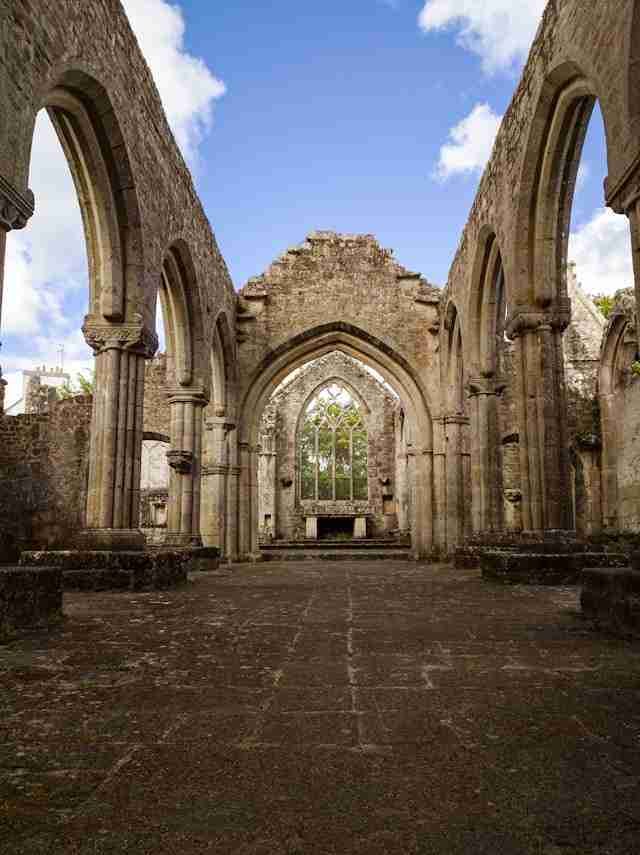
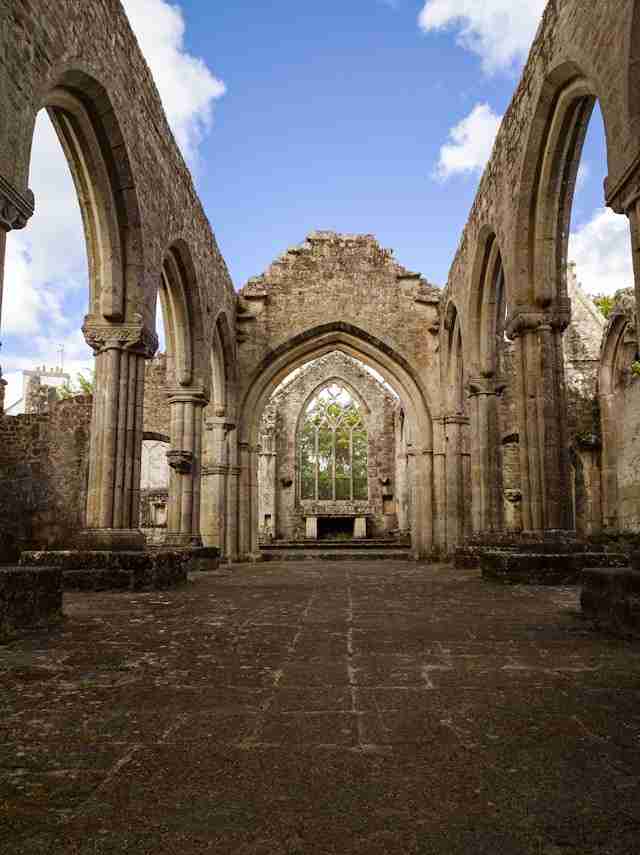
Église Saint-Jacques de Lambour is a hauntingly beautiful church ruin located in the heart of Pont-l'Abbé, in Brittany's Finistère region. With its soaring Gothic façade, roofless nave, and intricate stone carvings exposed to the elements, the site presents a rare opportunity to photograph religious architecture stripped of enclosure yet rich in detail. Built in the 14th century and abandoned after the French Revolution, the church stands today as an open-air shell where grass, stone, and sky converge. Unlike more polished heritage sites, this space retains a raw, almost forgotten quality that makes it especially appealing to photographers drawn to quiet, historic subjects. Whether you're capturing light through open arches or focusing on time-worn textures, Église Saint-Jacques offers deeply atmospheric compositions in a compact and easily accessible location.
Best Photography Opportunities
• Gothic West Façade and Tower
The towering west façade, complete with a rose window and pointed arch doorway, is one of the best-preserved features of the church and serves as a striking vertical subject. Shooting head-on with a wide-angle lens allows you to capture the full façade and its worn stone surface. Early morning light adds depth to the carvings, while a cloudy sky behind the tower gives the structure a moodier feel. Slightly offset angles from either side of the square help reveal the texture of the tower's stone while incorporating surrounding rooftops and context. Including people in the frame helps emphasize scale and offers a human element without compromising the solemn feel of the space.
• Open Nave and Roofless Interior
Once inside the ruin, the open-air nave presents a rare chance to shoot Gothic arches and aisle pillars with uninterrupted light from above. The missing roof exposes the interior to the sky, creating a layered scene of vertical columns, green ground cover, and moving clouds. This space works well with a standard zoom lens, allowing you to adjust quickly as the light changes. Overcast days reduce contrast and bring out the cool tones of the stone, while strong directional sunlight creates dramatic shadows across the floor. A tripod is helpful for long exposures that reveal texture and soften background elements.
• Carved Details and Weathered Stonework
Despite centuries of exposure, many of the church's original carvings remain intact. These include floral capitals, sculpted corbels, and worn reliefs that reward close inspection. A macro or telephoto lens is ideal for isolating these elements and emphasizing their erosion, lichen growth, and tactile surfaces. These kinds of images benefit from diffused light, which softens shadows and prevents harsh highlights on the stone. Including bits of surrounding ruin in the frame helps situate the details and preserve the sense of place.
• Contrasts Between Ruin and Modern Town
The church sits just off the main square in Pont-l'Abbé, and parts of the ruin frame views of modern life beyond. Shooting through an open arch or broken window toward the neighboring streets or shops introduces contrast between the old and new. These images benefit from shallow depth of field or careful focus stacking to manage foreground and background. The best light for these shots is late afternoon, when the warm tones of the surrounding buildings echo the stone hues of the ruin and create natural harmony in the frame.
• Night Photography and Upward Compositions
On clear evenings, the open roof of the church creates a natural frame for night sky compositions. A wide-angle lens pointed upward captures the towering walls silhouetted against stars or moonlight. Light pollution is minimal in this part of Brittany, though a faint urban glow may illuminate the stone surfaces subtly. Long exposures from a tripod help reveal structure and mood in the dark. Consider low, upward-facing compositions from inside the nave to create dramatic vertical symmetry between sky and structure.
Best Time to Visit
Église Saint-Jacques de Lambour can be photographed year-round, though spring and autumn offer the best mix of color, light, and manageable conditions. In spring, grass and moss inside the ruin are fresh and green, while morning light casts soft shadows across the interior. Autumn brings golden sunlight and cooler tones in the stone, especially in the early afternoon. Summer light can be harsh at midday but is effective in the early morning or late evening for exterior shots. Winter is quieter and often misty, adding atmosphere and subdued tones to the space, though wet conditions can make ground surfaces slippery.
Morning is best for quiet access and gentle light on the west façade, while late afternoon warms the stone and brings long shadows into the open nave. Overcast skies are excellent for photographing textures and architectural detail. Blue hour and nighttime offer more dramatic conditions, particularly when paired with long exposures and a tripod. Because the site is roofless, planning your visit around weather is important. Rain or strong sun will significantly impact both lighting and comfort.
How to Get There
Église Saint-Jacques de Lambour is located in the town of Pont-l'Abbé, in the Finistère department of Brittany, France. The site sits just off the main square, Place Gambetta, and is easily accessible on foot from anywhere in the town center. Pont-l'Abbé is connected by regional roads to Quimper and other nearby towns, and the closest train station is in Quimper, about 20 minutes away by car or local bus.
There is free or metered parking available near the town center, including spaces close to the church. Entry to the site is open and unrestricted, as it functions as a public historical space rather than an active religious building. There are no gates or fences, and photography is permitted at any time. There is no admission fee, and no staff or security present during most hours, so photographers can work freely with tripods or other gear without issue.
Recommended Photography Gear
A wide-angle lens is essential for capturing the scale of the façade and interior arches, especially in tight spaces or when shooting from ground level. A standard zoom lens, such as 24 to 70 millimeters, is useful for more versatile compositions that include street views, framed town scenes, or interior-to-exterior transitions. A telephoto or macro lens is helpful for isolating stone details and carvings, many of which are partially eroded and require careful framing to highlight their form.
A tripod is strongly recommended for long exposures, particularly in the dim or shaded areas of the ruin or during blue hour sessions. A polarizing filter helps manage glare on damp stone surfaces and enhances subtle textures. For night photography or upward compositions, a remote shutter release and lens hood are useful additions to your kit. Consider bringing a weather-sealed bag or rain cover, as the site is fully exposed to the elements and conditions can shift quickly, especially in winter or early spring.
Nearby Photography Locations
The town itself offers excellent street scenes, stone bridges, and colorful reflections along the river. Shooting early or late in the day captures the town's traditional Breton architecture in warm light, while markets and shopfronts add local character to wider compositions.
Located a short walk from the church, this former castle now serves as a museum and features a fortified tower and courtyard. Its mix of preserved and modernized structures provides useful architectural contrasts and alternative angles on Pont-l'Abbé's historic layout.
About fifteen minutes to the south, Loctudy offers fishing boats, weathered docks, and soft coastal light. It's an ideal stop for maritime photography, especially around sunrise when the boats are at rest and the water reflects subtle color gradients.
Located just across the river mouth, Bénodet provides ocean views, lighthouses, and boardwalks with long leading lines. It's a good location for wide seascapes and transitional shots that connect inland Brittany to its coastal edges.
Further west along the coast, this remote chapel is famous for its outdoor calvary and windswept placement near the dunes. The stone sculptures and open views make it an excellent subject for golden hour and black-and-white photography.
Église Saint-Jacques de Lambour is a rare photographic subject, offering a peaceful mix of history, architecture, and slow decay. It asks you to look up, down, and all around, using changing light and weather to reveal different aspects of its worn but dignified presence. For those drawn to quiet, storied places, this ruined church offers a small but deeply rewarding canvas.
Comments
Loading comments…