
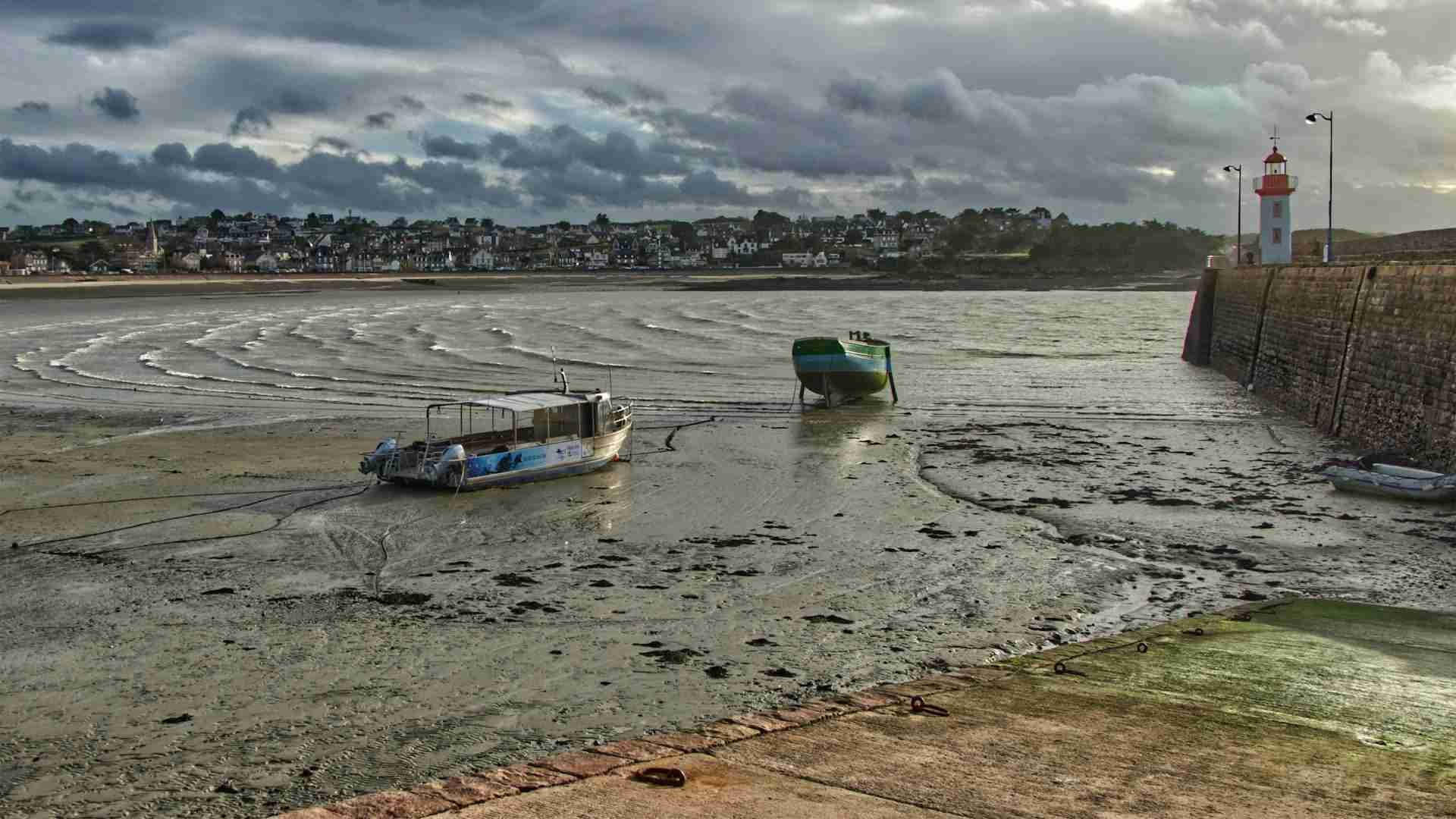
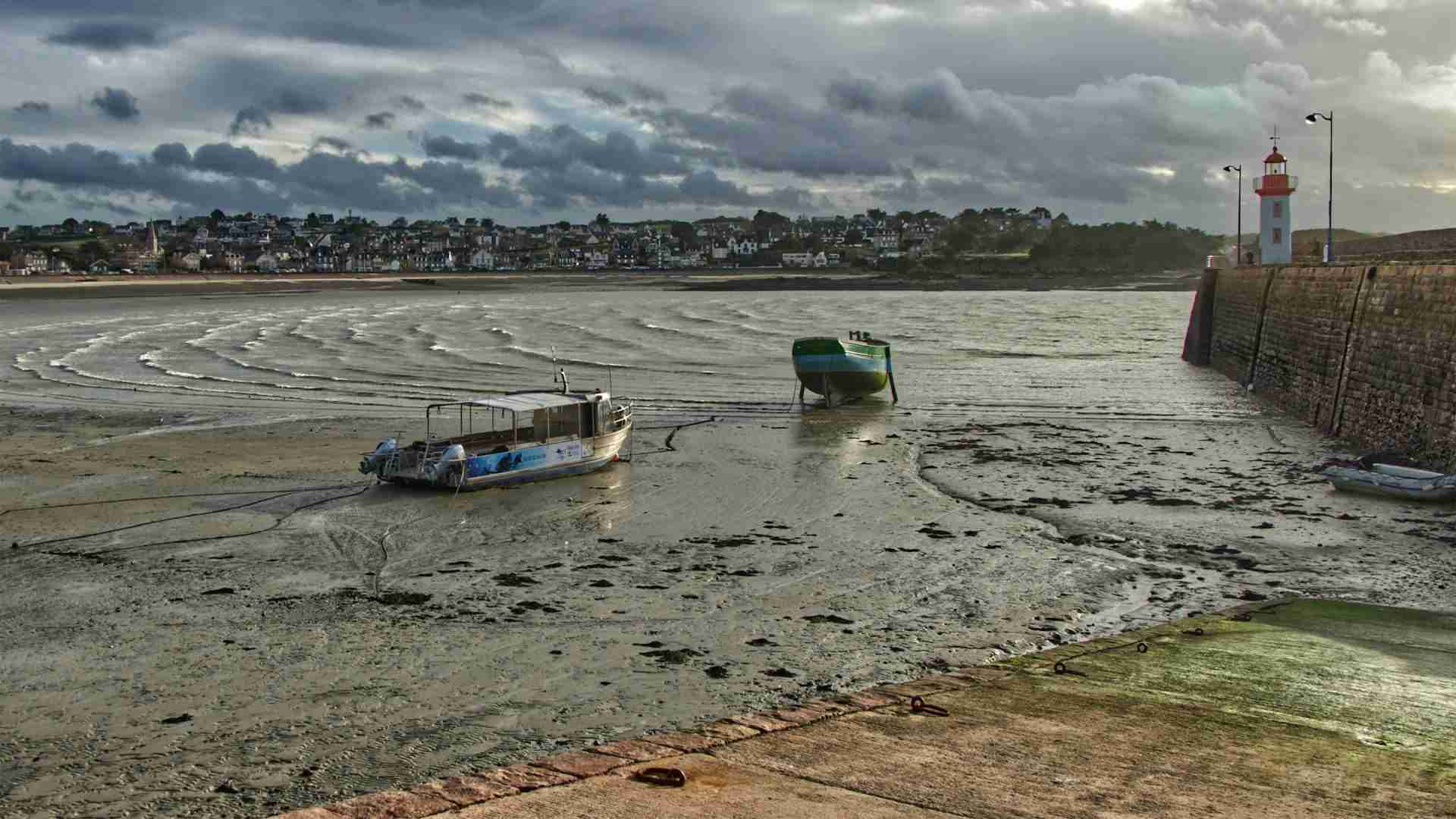
The Erquy Waterfront, located along Brittany's northern coast, offers a balanced blend of small harbor charm, working fishing culture, and natural coastal beauty. Sitting between rugged headlands and broad beaches, the waterfront in Erquy is an easygoing place to explore with a camera. Boats sway gently in the tidal basin, colorful nets are stacked near the quay, and the harbor walls curve out toward open water, giving photographers clean lines and gentle transitions between land and sea. The light here is often soft and diffused, especially in the morning, creating subtle tones and strong reflections across the water. Whether you're after layered compositions of moored boats, long exposures of tidal motion, or simple scenes of daily life, the Erquy Waterfront gives you time and space to work slowly and respond to the changing light.
Best Photography Opportunities
• Morning Reflections Across the Harbor
Arriving early gives you the best chance to photograph the boats and harbor walls in calm, reflective water. At low tide, the textures of the exposed harbor floor add detail to wide compositions, while high tide provides clean mirrors of the boats and quay. Use a wide or midrange lens to include sky reflections and dockside elements in the same frame. This time of day is usually quiet, with only a few people on the move, allowing for long exposures and tripod work without interruption. The color of the boats and the stonework of the surrounding walls often catch warm early light, adding gentle contrast and interest to an otherwise subtle palette.
• View of the Western Quay
From the western edge of the harbor, you can shoot across the basin and capture the boats angled into the moorings, with background buildings rising behind them. This is a strong composition in the late afternoon when the sun lights the waterfront from the side, casting long shadows and highlighting textures in the wood, ropes, and water. A midrange zoom lens is helpful here to frame tighter scenes or include more of the surrounding quay. Add foreground elements like chains or stacked buoys to lead into the frame. This side of the harbor feels more like a working space, which adds a grounded sense of place to the images.
• Low Tide
When the tide is out, the harbor exposes areas of sand, seaweed, and stone that can be used for detail work or quiet abstract compositions. Look for patterns in the water channels, footprints, or gear left behind by the tides. Overcast days work well for these kinds of images, as the diffused light flattens harsh shadows and emphasizes surface texture. A short telephoto lens lets you isolate shapes or work with compression across repeating forms. These moments are more personal and observational, giving variety to your set and helping you slow down between wider landscape frames.
• Evening Light
As the sun begins to set, walk out toward the end of the jetty or harbor wall and face northeast toward the open sea. The sky often turns a soft pastel pink or orange, with the tide either moving out or just beginning to return. This is an excellent time for long exposures with the water smoothing out around the rocks and harbor mouth. A tripod and neutral density filter are useful here, especially if you're shooting past sunset into blue hour. Include silhouettes of boats, pylons, or people walking the jetty for scale and storytelling.
• The Fishermen's Quarters
Just behind the main harbor area, you'll find small sheds, equipment storage, and dockside tools that make up the working side of the Erquy fishing industry. These spaces are full of color, pattern, and useful photographic subjects: brightly painted doors, nets drying on racks, or weathered textures on crates and hulls. These scenes are best captured with a midrange zoom or wide prime lens, working handheld as you move through the space. Try shooting in the early morning or under soft cloud cover to keep colors true and shadows minimal. These quieter frames help balance the larger waterfront scenes and bring attention to the life that happens behind the view.
Best Time to Visit
The Erquy Waterfront is photogenic throughout the year, but spring and early autumn offer the best mix of light, access, and color. From April through June, daylight arrives early, the air is cool and clean, and the boats are active in the harbor without the high volume of summer visitors. Morning sessions in this season give the softest water reflections and a peaceful atmosphere that suits slower paced shooting. Late afternoon and sunset sessions in autumn provide warmer tones, longer shadows, and a slightly quieter harbor as the day ends.
Summer months bring strong light and busier docks, but the long golden hours can still produce excellent images if you're patient with foot traffic and movement. This is also when the local fishing and sailing activity is most visible, which can be worked into storytelling frames. In winter, low sun angles create strong contrasts and deeper skies, while tides remain reliable for planning shoreline compositions. Cloudy or stormy days often add drama and mood to an otherwise calm setting.
Check tide schedules before you arrive, as the difference between high and low tide dramatically changes both your compositions and access points. Low tide allows for texture and detail work along the slipways, while high tide gives you clean reflections and deeper color in the water. Both are valuable depending on what kind of image you want to build.
How to Get There
Erquy is located in the Côtes-d'Armor region of Brittany, France, and is easily reached by car from Saint-Brieuc or Dinan in under an hour. The harbor is in the center of town, with clear signage and multiple parking areas within walking distance. During the off-season, parking is easy and usually free. In summer, there may be small fees or time restrictions in place, especially near the main waterfront area.
Once parked, the harbor and jetty are just a few minutes on foot, with paved paths and trails connecting the main viewpoints. The western quay and fishing quarters are directly accessible and flat, while the paths leading up to the cliffs beyond the harbor provide higher ground for additional landscape shooting. If arriving by public transport, regional buses stop in the town center, about a ten-minute walk from the waterfront. The area is compact and walkable, so it's easy to move between compositions without much effort.
Recommended Photography Gear
A flexible, lightweight kit will serve you well at the Erquy Waterfront, where you may want to switch between wide scenes, detail shots, and low light exposures throughout the day. A wide angle lens in the 16 to 35 millimeter range is perfect for capturing the full harbor, the reflections of boats in the water, and shoreline textures during sunrise and sunset. Use this lens when working close to the water or when including both sky and foreground in your frame.
A 24 to 70 millimeter lens offers the most versatility for street-level compositions, boat scenes, and dockside storytelling. It also allows you to work with tighter framing on people, patterns, or structures. A longer telephoto lens in the 70 to 200 millimeter range is useful for compressing scenes across the harbor or isolating details from a distance without breaking the natural rhythm of the space.
A tripod is helpful for early and late light or for long exposure work at the jetty. Bring a circular polarizer to reduce glare on the water and boost color contrast in the sky or painted surfaces. A neutral density filter is useful for smoothing the tide or working with motion in people or boats. Footwear should handle damp or sandy areas comfortably, and a small towel or cloth will help keep gear clean when working close to the waterline.
Nearby Photography Locations
, a headland just south of the harbor, offers panoramic views over cliffs, sea, and coastal trails. This area is excellent for sunset and early morning light, with dramatic rock formations and winding footpaths that lead into quiet corners of the landscape.
, a sheltered beach near Cap d'Erquy, provides softer compositions with curving shoreline, golden sand, and tide pools. It's ideal during low tide when textures and waterlines become part of the frame.
, located just a short drive northeast, is a wide open beach with dunes and pastel-toned water. Best at sunrise or during foggy mornings, this area gives you minimalist compositions and long exposure possibilities.
, a small hidden cove near Erquy, has steep cliffs, calm water, and a more intimate feel. It is often quiet and well-suited to careful, observational photography with a focus on natural color and form.
, farther along the coast, offers strong historic architecture in a coastal setting. It can be paired with a visit to Erquy for broader visual contrast between stone construction and working harbor life.
The Erquy Waterfront is a calm but active location where everything depends on light, tide, and how slowly you're willing to see. It doesn't ask for dramatic skies or big moments. It works best when you take the time to watch the harbor breathe, to notice how lines shift with water, and how color lives in even the smallest corners of a working coastal town.
Comments
Loading comments…