
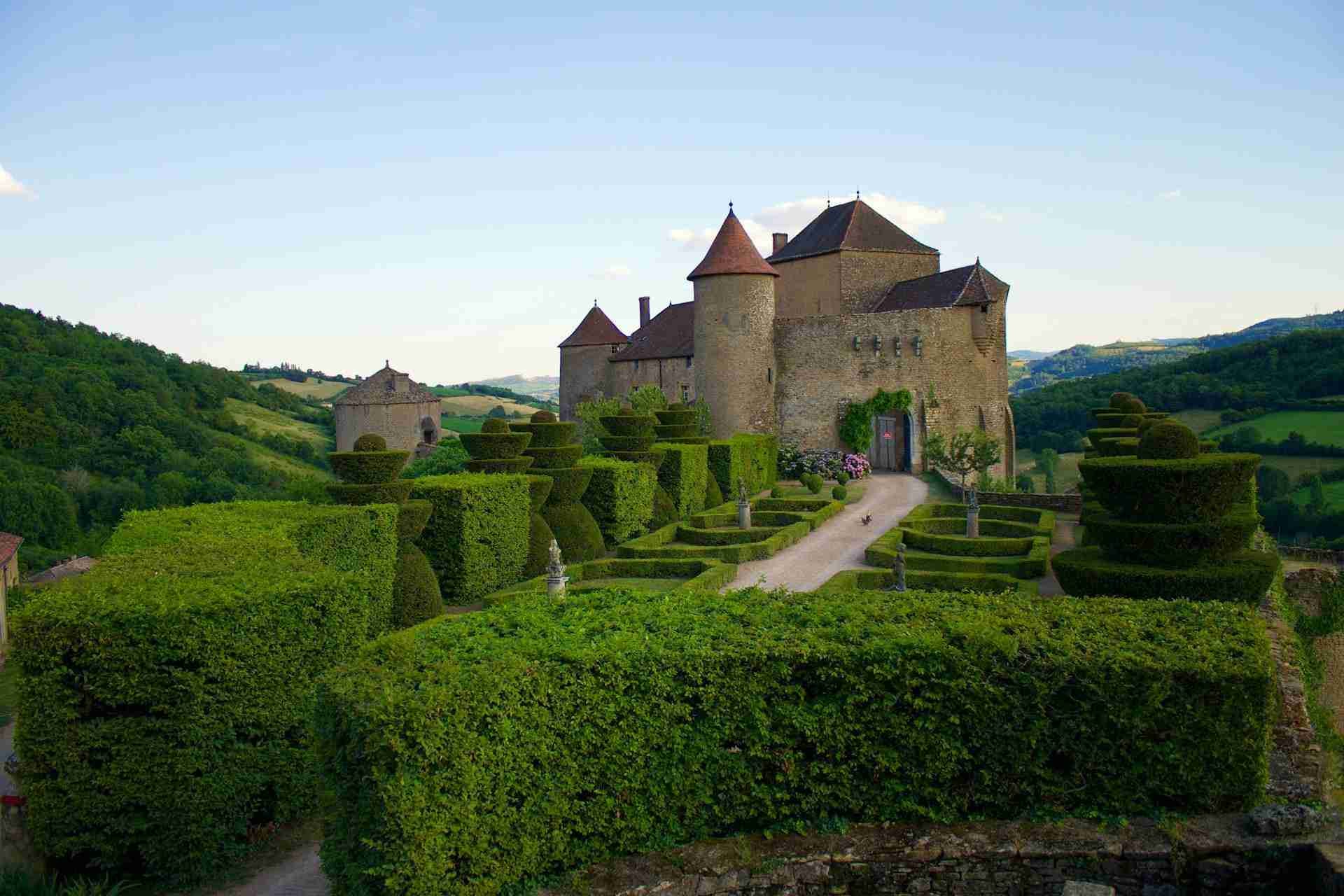
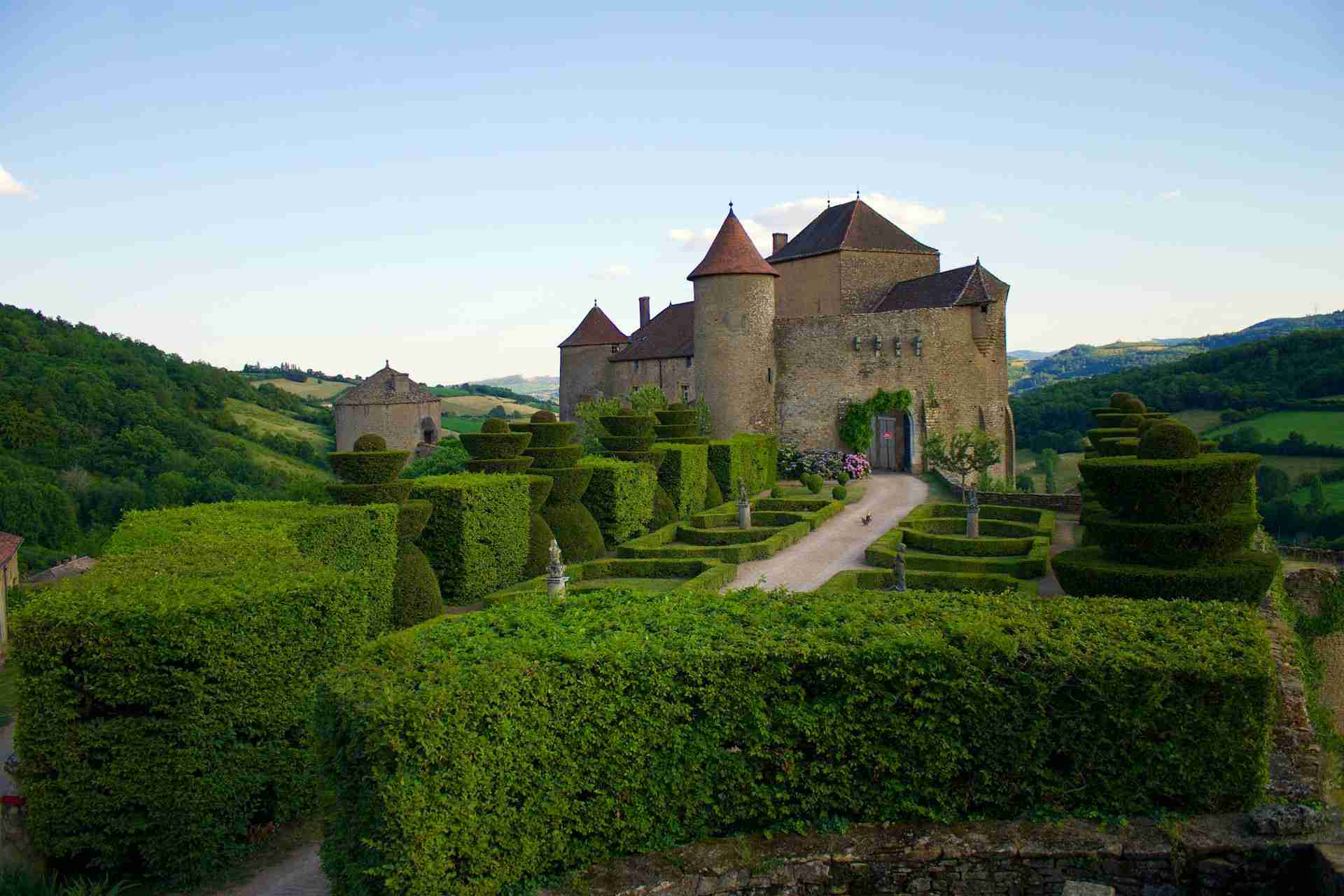
High on a hill in southern Burgundy, the Fortress of Berzé-le-Châtel rises above vineyards, farmland, and winding country roads. This medieval stronghold, with its round towers, stone walls, and terracotta roofs, looks out over the Saône Valley and the villages below. Surrounded by grapevines and gentle hills, the fortress offers photographers a setting where history, nature, and structure come together in a simple, powerful way. The view changes with the light and the seasons, but the sense of calm and quiet strength never fades.
For photographers, Berzé-le-Châtel is not just about one angle or one perfect shot. It is a place where you can work with morning mist, strong afternoon shadows, and soft evening skies. The castle can be framed from a distance with the hills and vineyards, or photographed up close to show the texture of the stone and the curve of its towers. Whether you are capturing big scenes or small details, the fortress offers space and variety for both quiet, careful images and wide landscape work.
Best Photography Opportunities
• Elevated Vineyard Paths Looking Toward the Fortress
Just below the fortress, vineyard paths wind through soft hills and rows of grapevines. These paths offer some of the most rewarding views of the fortress, especially during the growing season when the vines stretch out in every direction. The castle appears at the top of the slope, surrounded by the green and gold of the countryside. From here, you can shoot wide-angle compositions that place the fortress above gently curving rows of plants, or you can use a telephoto lens to flatten the layers and bring the distant walls and towers closer. Early morning is the best time to shoot from this position, especially in spring or autumn, when mist sometimes clings to the lower hills and the sun rises behind you to light the castle directly.
• Close-Up Architectural Details Inside the Grounds
If you enter the grounds during visiting hours, you can explore smaller elements that show off the fortress's long history. Rounded towers, narrow slits for archers, carved wooden doors, and uneven cobblestones all provide material for closer shots. The stonework has aged naturally, with moss and wear that give it depth and character. Use a medium zoom lens or a fast prime lens to capture textures and framing elements like arches, narrow staircases, and windows. Late afternoon brings warm, angled light that reveals the rough surface of the stone and adds shadow that makes details stand out.
• Framing with Natural Elements Along the Garden Walls
Surrounding the fortress are trees, shrubs, and low stone walls that work well for building layered compositions. These can be used to frame parts of the castle or to lead the viewer's eye from foreground to background. Branches, garden gates, and flowering plants can create a soft foreground layer that adds context and scale to your images. In spring, white and yellow blooms often fill the edges of the lower gardens, and in autumn, changing leaves bring reds and oranges that contrast with the cool grey of the stone. Work with a shallow depth of field to separate the layers, or use smaller apertures to keep everything sharp.
• Evening Views from the East Hills
If you walk or drive to the higher roads east of the fortress, you'll find open views back toward the castle and the surrounding valley. This position is perfect for photographing the fortress in late afternoon or early evening when the sun drops low behind you. The landscape becomes warm and soft, with the castle lit by golden light and long shadows falling across the hills. From these higher spots, you can include fields, winding roads, and small farmhouses in your frame. A tripod can be helpful for working with longer exposures as the light fades, and a polarizer will reduce haze in the distance while deepening the colors of the sky and hills.
• Morning Fog and Low Light Atmosphere
One of the most magical conditions for photographing Berzé-le-Châtel happens in early morning during spring or autumn. On cool, quiet days, fog often settles into the valley and hangs below the level of the castle. If you position yourself on a hillside trail just above the fortress, you can shoot down into the mist with the towers rising out of it. These conditions require a bit of luck and planning, but when they happen, they offer a peaceful, almost timeless feeling. Use backlighting to create glow in the fog or side lighting to highlight the edges of the stone and the fog line. Shoot quickly, as the fog can lift in minutes.
• Seasonal Color from the Road to the Chapel
A walking path leads from the main entrance of the fortress toward a small Romanesque chapel and several viewpoints across the valley. In autumn, this path becomes a perfect location to photograph seasonal change. Trees line the trail, leaves fall along the edge, and the castle appears through gaps in the branches. Use this area for layered compositions, especially if you want to frame the fortress between tree trunks or along a curve in the path. This area works well for handheld shooting in lower light, and it is a good place to return during different times of day as the light shifts.
Best Time to Visit
The ideal time to photograph the Fortress of Berzé-le-Châtel is during the spring and autumn months. From April to early June, the landscape is fresh and green, and the air tends to be clear and crisp. Mornings often bring soft light and occasional mist that add depth and mood to your images. The sunrise strikes the eastern side of the fortress, lighting it evenly while the hills behind it remain in shade.
Autumn is perhaps the most colorful season. From mid-September to early November, the vineyards turn from green to deep orange, yellow, and red. The changing leaves and soft skies create a warm backdrop for the cool grey of the stone walls. Sunset during this time is especially rewarding, with the sun setting low and long across the valley, stretching shadows and creating soft, golden tones that last for nearly an hour.
Summer brings longer daylight hours, but midday sun is often too bright and direct for most photography. If you visit in summer, focus your sessions on early morning and late afternoon when the light is softer and the air is cooler. Winter brings more limited color in the landscape, but the bare trees and quiet setting offer a clean, minimal look that works well in black and white. The low sun angle in winter gives long, directional light all day, making it easier to work even in the middle hours.
How to Get There
The fortress is located in the village of Berzé-le-Châtel, about 20 minutes west of the city of Mâcon in the Burgundy region. If you are driving, take the D17 road toward Cluny, then follow the signs to Berzé-le-Châtel. The roads become narrower as you approach the village, but they are paved and well maintained. Free parking is available near the entrance, and from there it is a short walk to the viewpoint and the gate.
The closest train station is in Mâcon, which connects to larger cities like Lyon and Dijon. From Mâcon, you can take a taxi or rent a car to reach the village, as there is no direct public transport to Berzé-le-Châtel. Driving is the most convenient way to visit, especially if you want to explore nearby trails, vineyards, or smaller country roads for additional photography spots.
Entry to the fortress grounds is allowed during opening hours, and there is a small fee. Photography is permitted both outside and within the castle area, and tripods are allowed. If you plan to fly a drone, be sure to check local regulations and ask permission if necessary, especially near the village. The surrounding trails and vineyard paths remain open year-round and do not require entry tickets.
Recommended Photography Gear
A wide-angle lens is essential if you want to include foreground elements like vineyard rows, trails, or wildflowers in your compositions. A 24–70mm lens offers a good balance for both wide and mid-range shots, allowing you to move between close detail and broader scenes without changing lenses too often. For photographing the castle from a distance or isolating sections of the structure, a 70–200mm zoom will help compress the background and draw attention to shape and pattern.
A tripod is useful for sunrise, sunset, and foggy mornings when you want to shoot at lower shutter speeds or use filters. Bring a circular polarizer to cut glare and deepen colors in the landscape, especially when shooting toward the sky or across distant hills. A neutral density filter is helpful for slowing exposure during brighter hours or for softening moving elements like blowing grass or drifting fog.
Wear sturdy shoes with good grip, as the walking paths around the fortress are uneven in places and can be slippery after rain. Pack a weather-resistant camera bag, extra batteries, and a microfiber cloth to wipe off lenses, especially if you are shooting in damp conditions. A small flashlight or headlamp is helpful if you plan to photograph sunrise or stay past sunset.
Nearby Photography Locations
, a historic religious site about 20 minutes away, offers large stone buildings, open courtyards, and remains of one of Europe's largest medieval monasteries. Morning light through the cloisters and arches creates beautiful patterns and shadow. It is an ideal place to explore slower, detail-rich photography.
a striking limestone cliff west of Mâcon, provides sweeping views of vineyards and the Saône Valley. You can hike to the top for sunrise or sunset shots with open skies and a wide view across the land. The light here is often soft and even, especially in the evening.
, set at the foot of rocky slopes and surrounded by fields, is perfect for quiet landscape photography. Old stone houses and narrow streets add structure, while open meadows and small roads provide a natural frame for scenes looking out to the hills.
, a smaller but well-preserved castle surrounded by vineyards, adds another layer of variety. Its warmer stone and lower position in the landscape make it ideal for photographing during golden hour or after light rain when the air is clear and the vines shine with color.
• Mâcon's Saône Riverfront
, with bridges, riverside trees, and pastel-colored buildings, is a peaceful spot for ending a long shoot day. As the sun sets, the lights reflect on the water, and the town quiets down, offering relaxed, calm compositions.
The Fortress of Berzé-le-Châtel is more than a single subject. It is a setting that invites you to slow down, to notice the way light hits stone, or the way a trail curves into the frame. Whether you are working with sweeping views, old architecture, or the quiet shape of the land, this corner of Burgundy offers enough variety and calm to build a full day—or more—of thoughtful, rewarding photography.
Comments
Loading comments…