
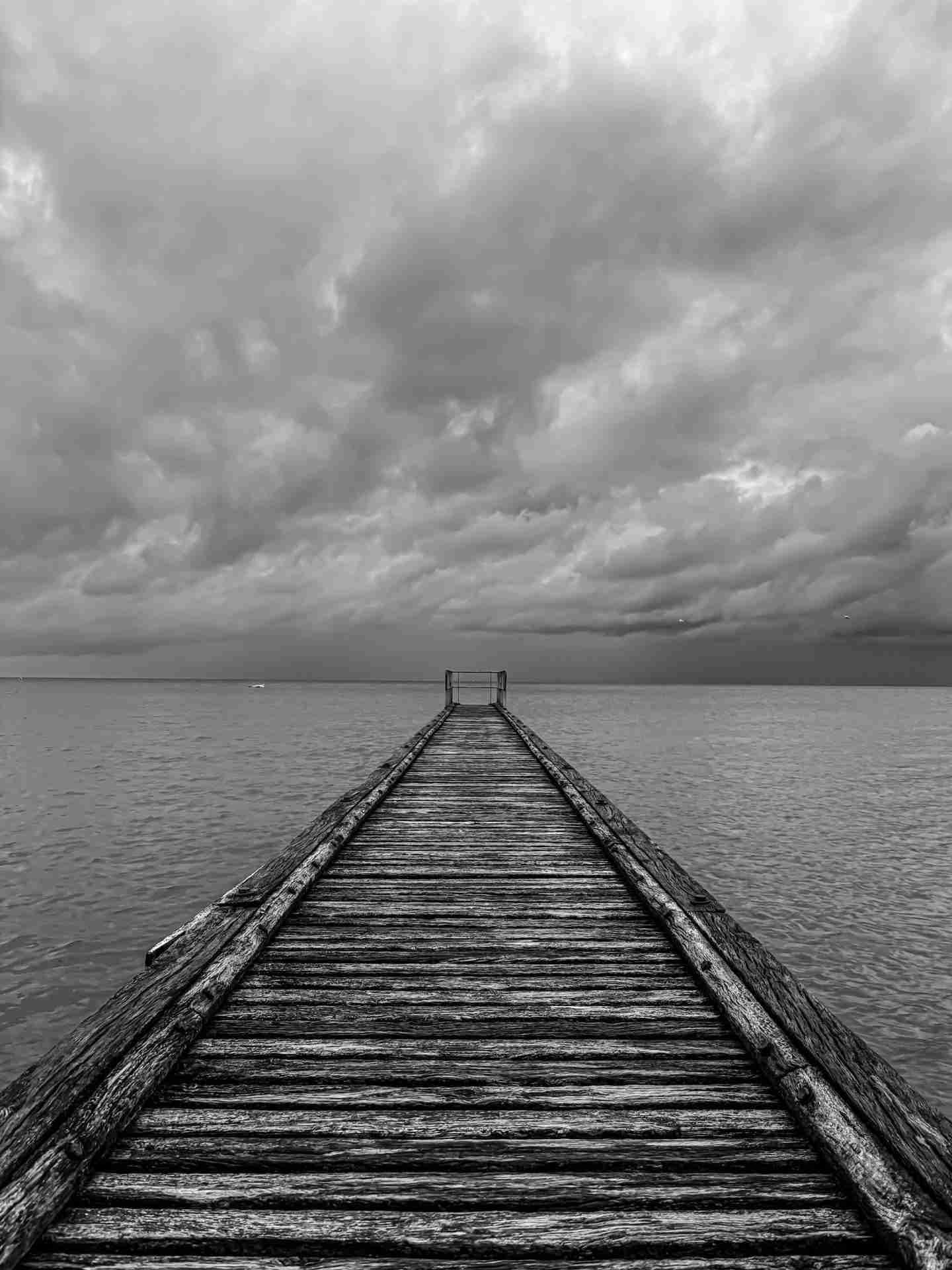
Situated on the rugged Normandy coast between Omaha Beach and Isigny-sur-Mer, Grandcamp-Maisy Pier Point offers a quiet but deeply evocative setting for photographers seeking dramatic skies, expansive seascapes, and subtle human elements woven into a coastal landscape. This working fishing port and historic town is often overlooked by visitors focused on D-Day sites, but the pier itself—jutting into the English Channel with distant views across the bay—is an atmospheric location where maritime life, military history, and natural light converge. Whether you're drawn to long exposure work, minimalist horizon shots, or storytelling with local color, Grandcamp-Maisy Pier delivers understated but powerful imagery.
Best Photography Opportunities
• The Pier and Vanishing Point Perspective
: The pier stretches out into the Channel with a strong, linear design that creates a natural vanishing point perfect for wide-angle compositions. Shooting from the landward side allows you to lead the eye toward the horizon, especially effective at sunrise or under dynamic cloud movement. The symmetry and simplicity of the scene lend themselves well to minimalist or black-and-white processing.
• Boats, Nets, and Dockside Texture
: At the base of the pier and throughout the harbor, fishing boats, lobster pots, and coiled ropes offer detail-rich foreground elements ideal for documentary or abstract photography. These textures contrast beautifully with the clean geometry of the water and sky, and are especially effective when shot in side light during golden hour.
• Long Exposures of the Sea and Sky
: This stretch of coast is known for its changing weather and fast-moving clouds, making it an excellent location for long exposure photography. With a neutral density filter, photographers can smooth out the water's surface and create motion in the clouds, turning a simple pier into a surreal, painterly subject. Blue hour is particularly effective for this technique, lending deep tonal contrast to sea and sky.
• Tidal Patterns and Beachfront Compositions
: At low tide, the beach and seabed around the pier expose ripples, shallow pools, and subtle sand formations that add texture and interest to wider coastal shots. Including these in the foreground with the pier or distant cliffs in the background provides a strong sense of place and scale. Footprints or fishing tracks offer a human imprint without clutter.
• Sunsets and Atlantic Color
: Facing west toward the open sea, Grandcamp-Maisy Pier is a perfect platform for photographing vibrant sunset skies. As the sun dips below the horizon, the clouds often catch brilliant oranges and purples, which reflect off the wet surfaces of the pier and waterline. A slightly elevated position allows for silhouettes of people, boats, or the pier itself set against the color-drenched sky.
Best Time to Visit
The best time to photograph Grandcamp-Maisy Pier Point is during golden hour and blue hour, when the light softens and the textures of the sea and pier come to life. Sunset is especially rewarding, as the pier faces west and captures the warm glow of the day's end. Low tide, which exposes the surrounding beach and sandbars, provides added foreground interest and reflection opportunities—ideal for framing the pier or distant boats.
Overcast days with heavy cloud cover are also highly effective for moody, monochrome work, allowing you to highlight texture, form, and atmosphere without distractions from harsh light. Early mornings, when the harbor is quiet and mist may linger over the water, offer a peaceful, almost meditative mood that suits slow, intentional compositions. Winter and late autumn bring fewer visitors and bolder weather, making the location feel more elemental and raw.
How to Get There
Grandcamp-Maisy is located along the Normandy coast, approximately 30 minutes west of Bayeux and less than 15 minutes from Pointe du Hoc by car. From Bayeux, follow the D613 west toward Isigny-sur-Mer, then take the D514 toward Grandcamp-Maisy. The pier is located at the town's harborfront, easily accessible on foot once you've parked in the main village lot or along the Quai Crampon.
There is no admission fee or restriction for photography at the pier, and the area is open at all times. Basic amenities, including cafés and public restrooms, are available nearby in the town center. For long exposure or sunset shoots, bring a tripod and consider weather protection—sea spray and sudden gusts are common, especially in winter or early spring.
Exploring the Surrounding Area
Beyond the pier itself, Grandcamp-Maisy offers a blend of fishing port character and understated historic relevance. The town was part of the D-Day landing zone, and nearby bunkers and ruins offer compelling additions for those interested in war history photography. The harbor remains active, with boats coming and going throughout the day, providing opportunities for candid, human-focused work. Early morning fish market activity is also photographically rich, with crates, nets, and local faces set against the backdrop of the channel.
The coastline here is particularly open and clean, making it a great stretch for beach walks and wider landscape shots. Clifftop paths to the west and rolling fields to the east create transitions from sea to countryside, offering visual variety with only modest effort. The juxtaposition of working port and peaceful scenery is one of Grandcamp-Maisy's defining photographic strengths.
Nearby Photography Locations
: A short drive west, this historic clifftop battlefield features craters, surviving German bunkers, and panoramic views of the Channel. It's ideal for dramatic landscapes and historically contextual photography, especially at dawn or dusk.
: A few kilometers east, this iconic landing site offers a broad beach with powerful light, minimalist horizon lines, and the striking "Les Braves" memorial sculpture. Best photographed in early morning mist or soft evening light.
: This quiet fishing town and its picturesque harbor provide charming, low-key waterfront scenes. The blend of boats, old stone buildings, and riverside reflections is perfect for peaceful, rural compositions.
: A lesser-known D-Day site, this former German artillery complex is partially hidden in countryside just outside the town. The overgrown trenches and gun emplacements offer gritty, historical subject matter in a quiet setting.
: Further inland, the canal-side town of Carentan features reflective water, old bridges, and surrounding pastures. It's a great change of pace for photographers seeking serenity and depth beyond the coast.
Grandcamp-Maisy Pier Point is a place of subtle drama—a location where light, water, and working life quietly coexist. Whether you're chasing storm clouds across the sea, capturing the symmetry of a low tide reflection, or simply documenting the rhythm of harbor life, this pier offers a photographic experience that's as contemplative as it is visually rich. With Normandy's broader historic and natural context surrounding it, this humble point on the coast becomes a strong anchor in any coastal photography itinerary.
Comments
Loading comments…