
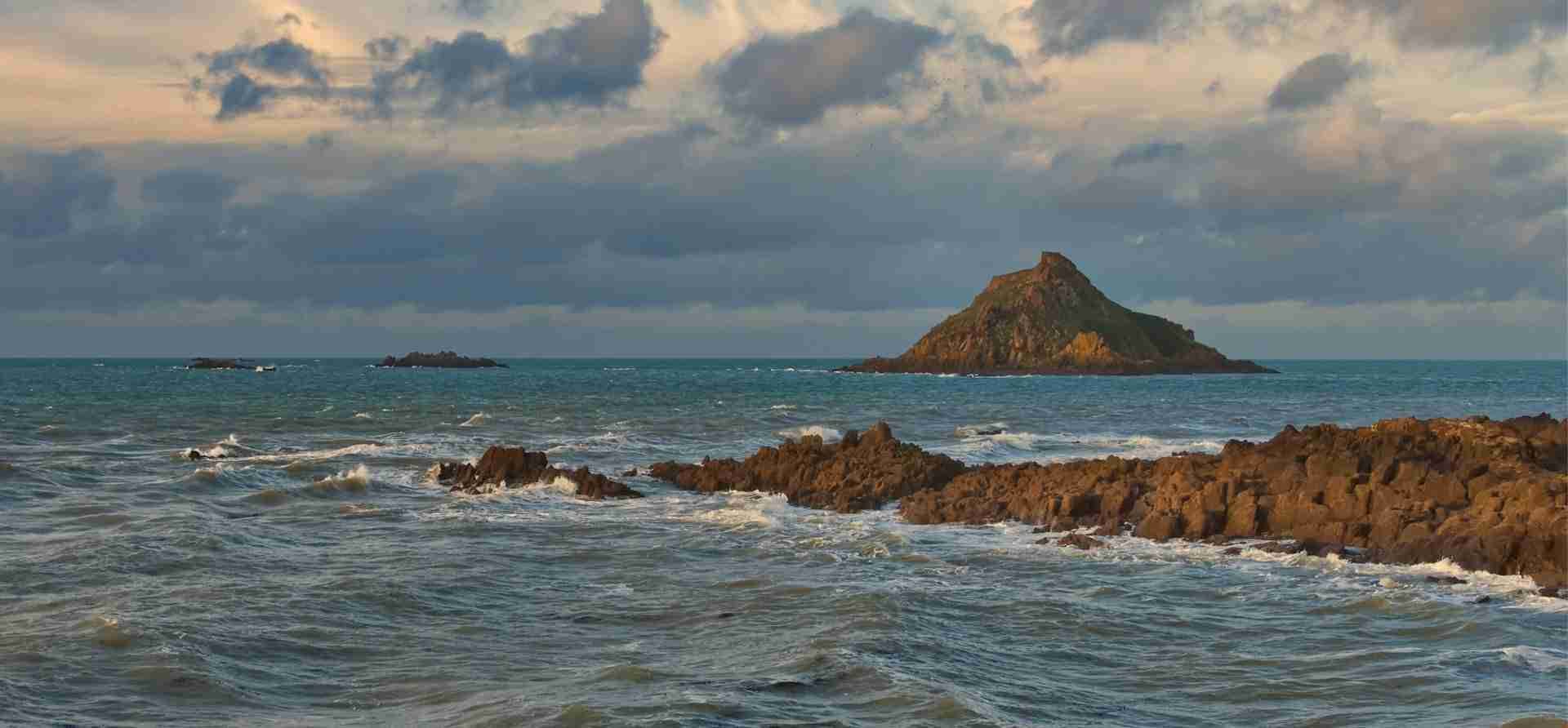
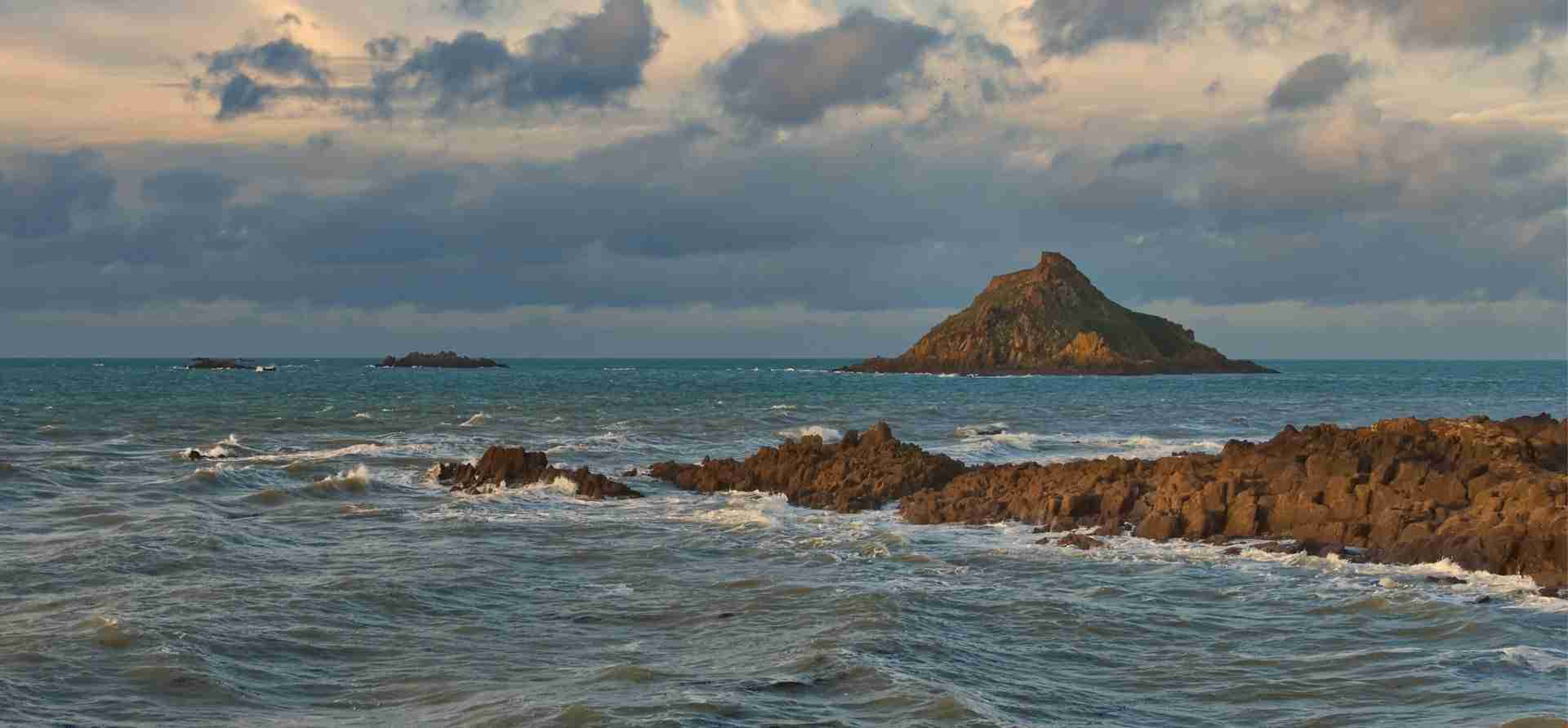
Just off the coast of Brittany in northern France, Îlot du Verdelet rises from the sea like a jagged monument to time. This small, rocky island sits at the edge of Pléneuf-Val-André, a quiet coastal town known for its wide beaches and moody Atlantic skies. What makes the Îlot particularly compelling for photographers is its dynamic presence: it's sometimes a distant island, sometimes a reachable landform depending on the tide. Accessible via a sand and rock causeway at low tide, Îlot du Verdelet offers dramatic seascapes, textured rock formations, and shifting light that transforms the same scene into countless variations throughout the day.
Best Photography Opportunities
• Low Tide Causeway and Leading Lines
: During low tide, a natural causeway of rocks and sand links the mainland to the island. This stretch becomes a perfect leading line, drawing the viewer's eye directly toward the jagged silhouette of the îlot. Photographing it at dawn or dusk with the tide receding adds a reflective sheen to the sand, enhancing depth and dimension. Wide-angle compositions work well here, especially when the sky is filled with dramatic clouds. For a more immersive image, consider positioning your camera low to the ground to capture the subtle textures of the sand and water channels that snake along the causeway. Timing is key—photograph just before the lowest tide for the most expansive surface and cleanest reflections.
• Rock Formations and Surface Textures
: The island's granite outcrops are deeply fissured and weathered by centuries of wind and surf. These formations make for compelling close-up studies, whether you're capturing the moss-covered stone, tide pools, or barnacle-covered crevices. During golden hour, the textures glow with warmth, and shadows carve deeper definition into the rock. Take advantage of the low sun to sidelight the rock faces and emphasize their tactile surfaces. If the tide is high, waves crash dramatically against the stone, offering opportunities for motion blur using long exposures. The interplay of solid rock and swirling water adds a sense of timelessness to the frame.
• Dramatic Sky and Island Silhouette
: The shape of Îlot du Verdelet lends itself to minimalist silhouette compositions, especially when framed against an open horizon at sunset or during stormy conditions. The Breton coast is known for dramatic skies that shift rapidly—ideal for long exposures that smooth the water and blur the movement of clouds. Blue hour is especially atmospheric, when the rock becomes a dark silhouette against cool-toned skies and gentle surf. Use neutral density filters to extend your exposures and isolate the island from visual clutter. Composing from the beach with the îlot centered or offset against sweeping cloud formations creates a cinematic, solitary mood.
• Wildlife and Bird Photography
: The island is a protected nesting site for seabirds, and during spring and summer months, it becomes a haven for gulls, cormorants, and other coastal species. With a telephoto lens, you can capture birds in flight, perched on cliff edges, or nesting among the rocks. The island's isolation makes it a natural stage, and with care, you can frame wildlife shots with sweeping seascapes in the background for added visual impact. Early morning offers the best light and activity levels, with birds silhouetted against the sea or sky. For more patient compositions, position yourself at a distance and observe flight paths to anticipate dynamic frames.
• Reflections and Wet Sand Patterns
: As the tide shifts, the sand flats surrounding the causeway take on mirror-like qualities. Subtle ripples and textures in the wet sand catch the light, offering an opportunity for abstract and minimal photography. These compositions benefit from low-angle light and work particularly well when color in the sky is echoed on the ground, creating a sense of fluid continuity between earth and sea. Look for natural lines in the sand that lead toward the island or curve across the frame. This area is perfect for slow, contemplative photography—focusing less on the subject and more on shape, rhythm, and tone.
Best Time to Visit
The most photogenic time to visit Îlot du Verdelet is during low tide, when the causeway becomes accessible and the foreground opens up with tide-etched textures and natural reflections. Plan your visit using local tide charts to ensure safe passage, and aim to arrive shortly before the lowest tide point for the widest range of compositions.
Sunrise and sunset are ideal for capturing long shadows, glowing color, and directional light across the rock surfaces. Morning light from the east casts the island in golden tones, while sunset silhouettes it against the broader bay. Overcast conditions are excellent for soft, diffused light that highlights surface detail, especially in close-up studies of rock, tide pools, and textures.
Seasonally, spring and autumn bring more dramatic skies and shifting weather patterns that suit moodier seascapes, while summer offers longer golden hours and clearer air. Winter visits can be stark and powerful, especially during stormy conditions, but access may be limited depending on tide and sea state.
How to Get There
Îlot du Verdelet is located just off the coast of Pléneuf-Val-André in the Côtes-d'Armor department of Brittany. From the town center, it's a short walk to the main beach—Plage du Val-André—where the island is clearly visible just offshore. The sand and rock causeway becomes accessible at low tide from the eastern edge of the beach near Pointe de Pléneuf.
Parking is available near the promenade and marina area, and the beach is accessible year-round. There is no admission fee, but crossing to the island is only recommended during low tide and should be timed carefully to avoid getting stranded. Check local tide schedules and allow plenty of time for both the crossing and your return.
Sturdy footwear is advised for navigating the rocks and wet sand, especially if you plan to climb any part of the island itself. Note that access to certain parts may be restricted during nesting season to protect local bird populations.
Exploring the Surrounding Area
The town of Pléneuf-Val-André offers more than just the island. The long crescent beach to the west is ideal for minimalist shoreline compositions and low-angle golden hour light. Traditional Breton villas along the promenade provide architectural counterpoints to the natural scenes, especially when captured in early morning or soft backlight.
Climb the nearby Pointe de Pléneuf headland for elevated views across the bay, where you can photograph the island from above with changing tides or dramatic weather sweeping across the horizon. The cliffs here are excellent for panoramic images and contextual framing that positions Îlot du Verdelet within the larger landscape.
Nearby Photography Locations
: Located east along the coast, this fortified headland offers sweeping views of rugged cliffs and historic architecture. Excellent for long-lens coastal landscapes and dramatic sunset compositions.
One of Brittany's most iconic viewpoints, Cap Fréhel delivers massive cliffs, wind-bent grasses, and a commanding lighthouse. Ideal for wide seascapes and drone photography in the right conditions.
: Just a few minutes from Pléneuf, this small harbor features fishing boats, stone piers, and classic Breton character. It's a great spot for early morning harbor light, maritime textures, and detail-rich closeups.
: To the west, the beaches and headlands of Erquy offer pink sandstone outcrops, pine-covered slopes, and clear waters—perfect for layered compositions and natural coastal color.
: Further west near Paimpol, this ruined abbey sits beside the sea and is surrounded by forest and tidal marsh. Its Gothic arches and reflective pools offer something very different from the open coast and are especially photogenic in soft, overcast light.
Îlot du Verdelet offers a rare photographic experience shaped by the sea—where each hour brings a new mood, texture, and angle. Whether you're shooting minimalist reflections, dramatic weather, or the delicate transition of tide and light, this little island rewards those who wait and watch. In a region known for its raw Atlantic beauty, Verdelet stands quietly apart—a solitary form in a shifting sea.
Comments
Loading comments…