
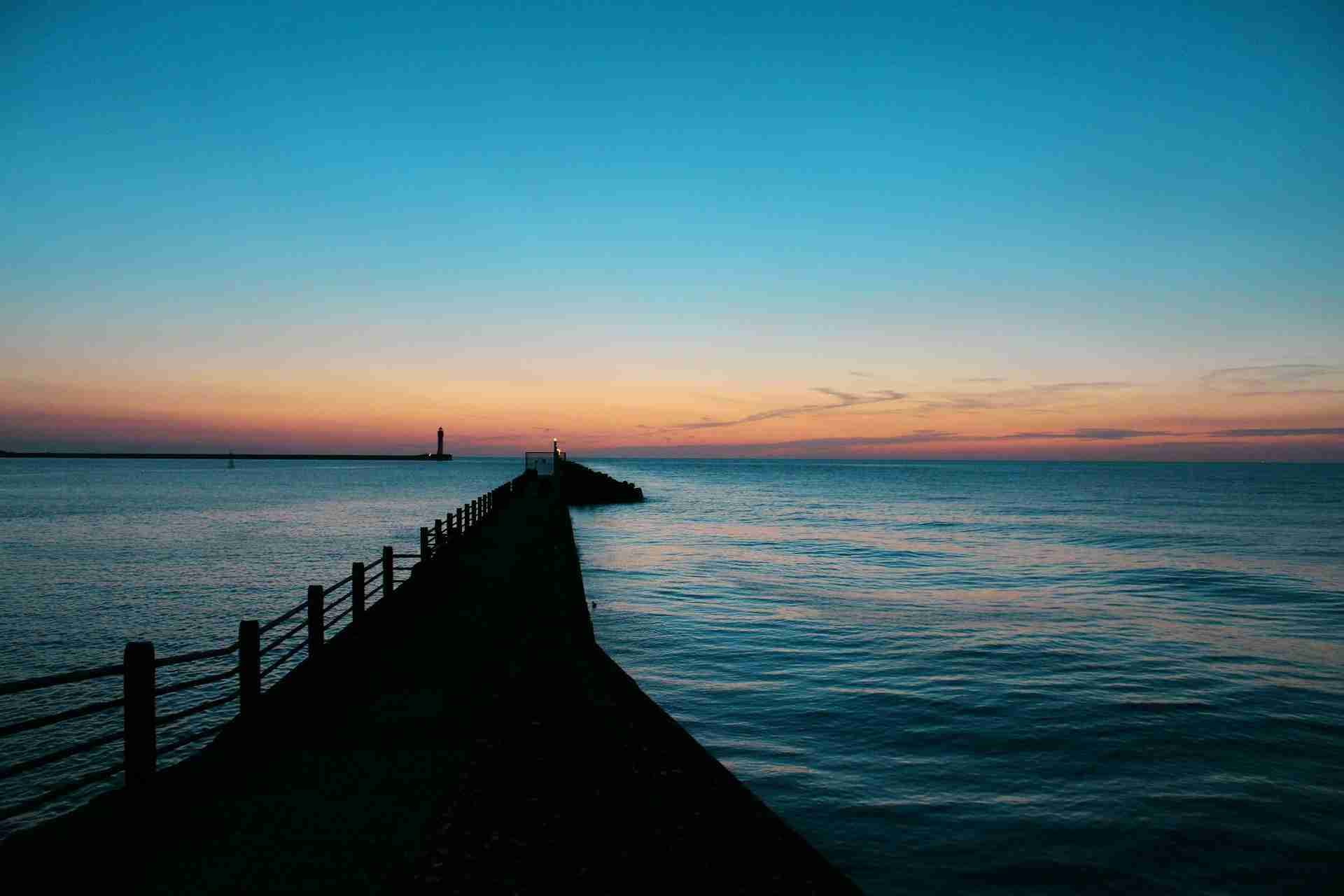
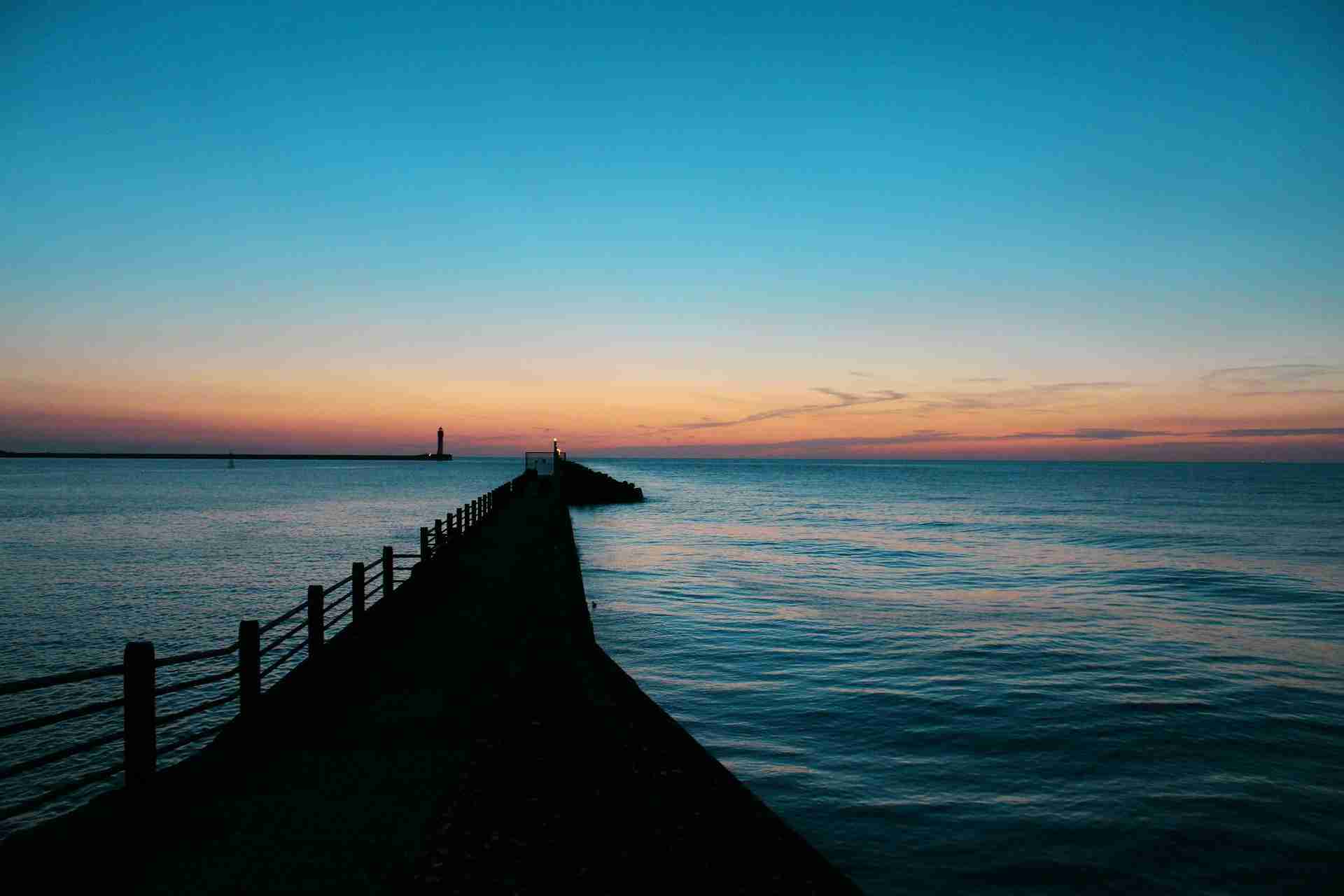
The Jetée de Malo in Dunkirk stretches gracefully into the North Sea, offering a strong leading line that naturally draws the eye toward the Feu de Saint-Pol lighthouse in the background. This location blends maritime character with open coastal scenery, giving photographers the opportunity to work with both man-made structure and natural seascape in the same frame. The wooden and metal elements of the jetty have a weathered texture that contrasts with the smooth horizon, while the lighthouse adds a clear focal point in the distance. Changing tides, shifting skies, and the movement of waves all influence the scene, creating fresh possibilities from one visit to the next. Whether shooting in calm, glassy conditions or in the dynamic energy of stormy weather, the jetty and lighthouse offer compositions that feel both expansive and intimate.
Best Photography Opportunities
• Leading Line Along the Jetty
: Standing at the entrance to the jetty, you can use its length to guide the viewer's eye directly toward the Feu de Saint-Pol in the background. A wide-angle lens emphasizes the sense of depth, particularly when you crouch low to include the texture of the planks or surface in the foreground. Early morning light can cast long, angled shadows across the structure, while late afternoon offers warm tones on the lighthouse. At high tide, the water rises close to the jetty's edge, creating a cleaner transition between structure and sea, whereas low tide exposes more sand and texture along the shore. Including elements such as fishing nets or mooring ropes in the frame can add both scale and a sense of place.
• Mid-Jetty Perspective with Balanced Sky and Water
: Walking partway along the jetty opens up a balanced view with the lighthouse centered against the horizon. This perspective works especially well during calm conditions when reflections of the lighthouse appear in the water. A mid-range zoom lens allows you to fine-tune framing to include the horizon, lighthouse, and surrounding sea without distortion. Shooting during changing light, such as just before sunset or after a passing rainstorm, can give the scene a moody richness. Adjusting aperture to around f/11 helps maintain sharpness from the jetty foreground to the distant lighthouse.
• Detail Work on Jetty Structure
: The Jetée de Malo has areas where wood grain, rusted fittings, and barnacle growth provide intricate details worth isolating. Using a macro or telephoto lens, you can focus on these textures while keeping the lighthouse softly blurred in the background for context. Side lighting in the morning or late afternoon brings out relief and depth in these surfaces. Capturing weather-worn bolts or peeling paint can work as a standalone image or as part of a series that documents the jetty's condition. These kinds of detail shots pair well with wider landscapes for a complete visual narrative.
• Dynamic Seascapes from the Side of the Jetty
: From certain points along the jetty, you can step slightly to the side to capture waves breaking against the structure with the lighthouse beyond. A telephoto lens compresses the distance, making the lighthouse feel closer and more prominent against the sea. On windy days, spray from the waves adds motion and energy, while calm days allow for mirror-like reflections if the tide is right. Neutral density filters are useful for creating long exposures that turn the sea into a soft, mist-like surface around the base of the jetty. Composing with parts of the jetty railing or posts in the foreground can frame the water and lighthouse effectively.
• Lighthouse at Sunset from the Jetty's End
: Reaching the far end of the Jetée de Malo places you closest to the Feu de Saint-Pol while still keeping the full length of the jetty visible behind you for alternative compositions. Sunset often produces a warm backlight that outlines the lighthouse and creates a gradient in the sky that reflects across the water. A tripod is essential for holding steady during the lower light of this time, especially if you want to capture longer exposures of wave motion. Turning back toward shore also gives you a reverse view of the jetty leading into the cityscape, which can make for a strong closing shot in a series. In clear weather, you may even catch silhouettes of ships on the horizon.
Best Time to Visit
The Jetée de Malo and Feu de Saint-Pol can be photographed year-round, but the conditions and mood change dramatically with the seasons. Spring often brings bright, crisp light and mild winds, which help keep the sea surface smooth for reflections. Summer provides the longest golden hours and generally calmer weather, though the midday sun can be intense, so early morning and late evening are preferable for rich colors and gentle shadows. Autumn delivers dramatic skies and more frequent storms, ideal for those seeking energetic wave action and moody tones. Winter offers stark, minimalist compositions with low sun angles throughout the day, and occasional mist or frost can create unusual textures along the jetty.
Tidal conditions also have a strong influence here. High tide makes the sea feel closer and more powerful, while low tide reveals wet sand, tidal pools, and additional foreground interest. For lighthouse photography, late afternoon and sunset sessions are often the most rewarding, as the warm light contrasts beautifully with the cooler blues of the water and sky. Overcast days are excellent for texture and detail work, as the diffused light allows you to capture weathered surfaces without harsh highlights. Blue hour adds a calm, ethereal quality, and at night, the lighthouse beacon can serve as a bright focal point in long-exposure shots.
How to Get There
The Jetée de Malo is located on the beachfront of Malo-les-Bains in Dunkirk, a short drive or walk from the city center. Dunkirk is accessible by train from Lille and other regional hubs, and by car via the A16 motorway. From the center of Dunkirk, follow signs toward the beach and promenade, where paid parking is available near the seafront. The jetty is open to the public, with pedestrian access from the main promenade area.
The walk along the jetty is flat and straightforward, though care should be taken in wet or windy conditions as the surface can become slippery. Photography is unrestricted, and tripods can be used freely, though space can be limited during busy summer weekends. The Feu de Saint-Pol itself is not accessible to the public, but it can be photographed clearly from multiple points along the jetty and nearby beach.
Recommended Photography Gear
A wide-angle lens between 16 and 35 millimeters is ideal for emphasizing the length of the jetty and creating strong leading lines toward the lighthouse. A 24 to 70 millimeter zoom works well for balanced compositions that include both the jetty and the lighthouse without distortion. For compressing distance and isolating the lighthouse against dramatic skies or wave action, a 70 to 200 millimeter telephoto lens is essential.
A tripod is useful for long exposures of the sea, blue hour work, and shooting in low-light conditions at sunset or after dark. Neutral density filters allow for creative slow-shutter images of moving water, while a polarizing filter can deepen sky tones and reduce glare on the wet surfaces of the jetty. A lens cloth or microfiber towel is important, especially on windy days when sea spray can settle quickly on your lens. Waterproof protection for both your camera and bag is recommended during stormy weather. Comfortable, non-slip footwear is also a must, as parts of the jetty can be slippery, particularly near the waterline.
Nearby Photography Locations
: Stretching for several kilometers, this beach offers wide-open views, dune landscapes, and a lively promenade in summer. It is excellent for both expansive coastal shots and intimate detail work of shells, driftwood, and tidal patterns.
The working port area provides industrial textures, ships, and cranes that contrast with the natural elements of the jetty. Sunset light often reflects off the water and metal surfaces, producing a warm, metallic glow.
: Located further along the coast, this taller lighthouse can be photographed from both land and water. Its height and bold red-and-white design make it a strong focal point against the often dramatic skies of the region.
: A World War II museum located near the beach, housed in a preserved wartime bunker. The building's historical context and location close to the sea offer interesting documentary and architectural opportunities.
: Just inland from the beach, the city center combines historic buildings, canals, and public squares. Street photography here can complement the coastal images with a sense of local culture and daily life.
The Jetée de Malo with the Feu de Saint-Pol in the background offers a blend of maritime heritage, textured structure, and open seascape that rewards both detailed studies and sweeping vistas. Working with the changing light, tides, and weather will allow you to capture this location in ways that feel fresh each time you visit.
Comments
Loading comments…