
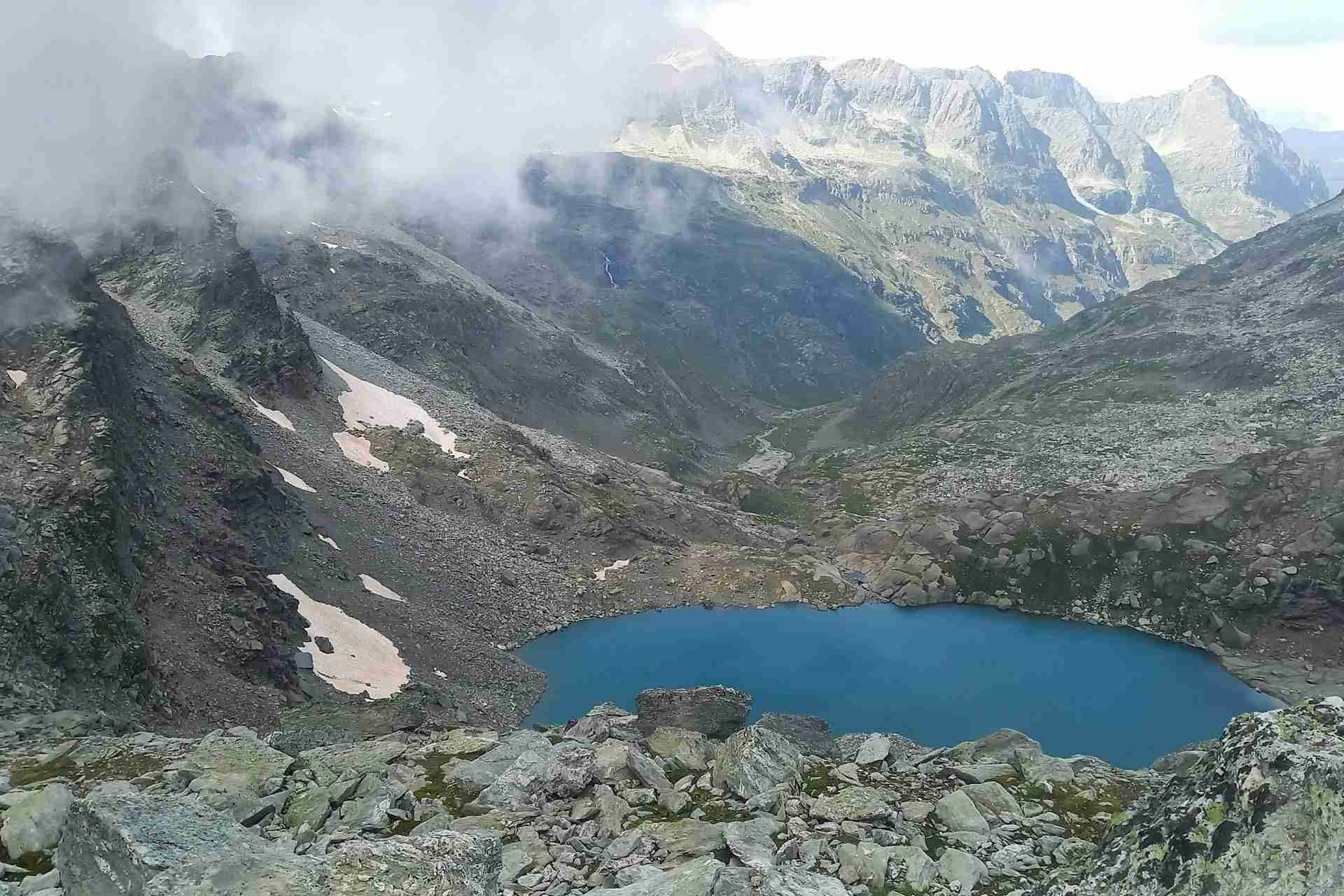
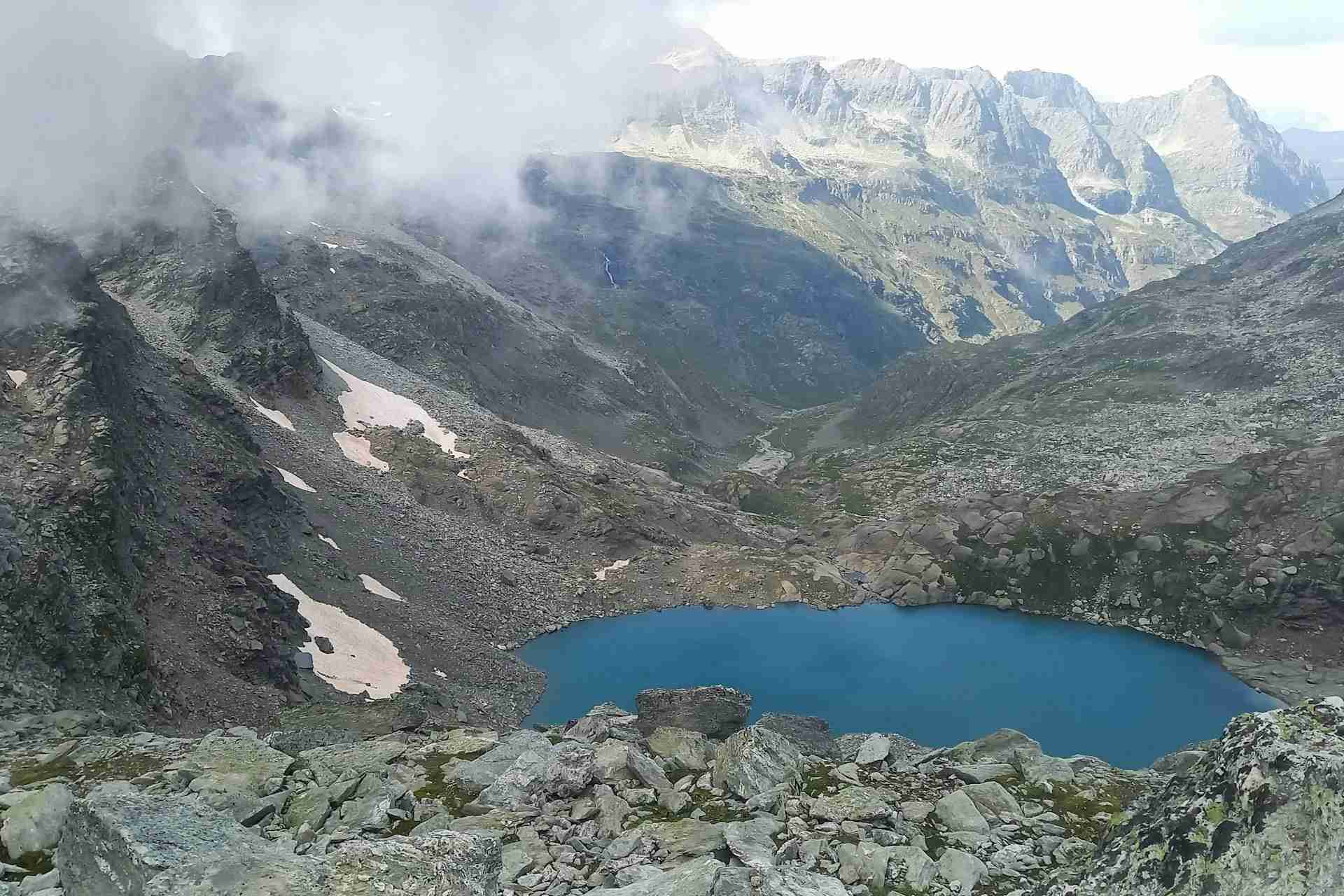
Lac d'Ambin is a remote alpine lake nestled in the high-altitude reaches of the French Alps, within the commune of Val-Cenis and close to the Italian border. Surrounded by rugged peaks, scree fields, and grassy plateaus, the lake sits quietly at over 2,400 meters elevation and offers a pristine, high-contrast environment that is both dramatic and contemplative. The still surface of the water reflects the serrated ridges and wide skies above, while the lack of infrastructure or artificial elements makes every frame feel elemental and raw. For photographers who seek alpine purity, strong lines, and a sense of true isolation, Lac d'Ambin rewards the journey with a landscape that remains visually clean and emotionally powerful. It is a place where weather, light, and geology converge with little interruption from the modern world.
Best Photography Opportunities
• Reflections and Peak Alignment
: The lake's clear, shallow water often remains still during the early morning and evening hours, creating a mirrored surface that sharply reflects the surrounding alpine walls. Shooting from the southern or southeastern shore allows you to align the peaks behind the lake in symmetrical compositions, especially when using a wide-angle lens to exaggerate the horizon. The contrast between the rocky shoreline and the blue of the sky or the warm tones of a sunrise gives each reflection additional impact. During late summer and early autumn, lower wind speeds and cooler mornings offer the best chance for undisturbed water. Framing with rocks or alpine grass in the foreground adds a sense of scale and structure.
• High-Contrast Landscape with Scree and Snow
: Even in summer, snow can linger in the gullies and shadowed slopes surrounding Lac d'Ambin. These residual patches of white create strong contrast against the darker grey and brown tones of the surrounding rock. Photographers interested in working with natural monochrome will find this an excellent location for black and white landscapes. Using a polarizer helps separate tones in the sky and adds depth to shadows, while a short telephoto lens can isolate lines and textures in the rock faces above the lake. Overcast days provide diffused light that enhances the sculptural qualities of the landscape and simplifies compositional elements.
• Long Exposure Work at Altitude
: Because the lake sits at a high elevation, weather moves quickly and clouds often form or shift rapidly across the ridgelines. This makes Lac d'Ambin ideal for long exposure photography, where cloud movement can add softness and direction to an otherwise stark scene. Use of neutral density filters allows shutter speeds of several seconds or minutes, smoothing both sky and water. Including foreground boulders or small inlets helps balance the motion and gives the composition an anchor point. The effect is especially compelling during evening hours when cloud layers take on color and structure from the setting sun.
• Midday Shadows and Abstract Rock Forms
: During the height of the day, harsh overhead light brings out deep textures in the alpine geology surrounding the lake. While less suited for broad landscapes, this lighting is excellent for capturing detail shots of rock layers, glacial deposits, or the striated textures found along the path to the lake. A macro or telephoto lens works well for abstract compositions that focus on shape, line, and tone rather than distance. These studies can be used to break up a larger series or create visual contrast when paired with the more expansive morning and evening shots.
• Night Photography and Alpine Silence
: With no light pollution and no built structures nearby, Lac d'Ambin is a superb location for night photography and stargazing. On clear nights, the Milky Way becomes visible overhead, stretching across the peaks and reflecting faintly in the water. The air at this altitude is typically dry and crisp, which helps reduce haze and bring out star clarity. Wide-angle lenses with wide apertures are essential for capturing the sky, and careful planning around the moon phase will help ensure the darkest conditions. In cooler months or during autumn, you may also see frost forming on rocks and grasses, adding texture to early morning foregrounds after a night shoot.
Best Time to Visit
The most reliable time to access and photograph Lac d'Ambin is between late June and early October, when the trails are clear of snow and the weather is generally stable. July and August offer the longest daylight and warmest conditions, but they also bring more haze and midday glare. For cleaner skies and richer light, early September is ideal. The lake is typically calmest during early morning and just before dusk, when wind is minimal and temperatures drop, making these the best windows for both reflection and long exposure work.
Midday conditions can be intense due to the sun's high position and the reflectivity of the surrounding rocks, so plan for a break during the brightest hours or shift focus to close-up compositions. Sunset and twilight at this elevation bring cooler tones and dramatic light patterns across the ridges, often turning the lake surface a deep blue or bronze depending on sky conditions. Night photography is best during the new moon phase and in periods of high-pressure weather systems, which reduce cloud interference and increase sky visibility.
How to Get There
Lac d'Ambin is accessed from the commune of Val-Cenis in the Savoie region of southeastern France. The most common trailhead begins near Le Planay or Bramans, depending on the route chosen, and leads into the Vallon d'Ambin. The hike to the lake is moderately challenging and involves elevation gain, rocky footing, and exposed terrain, with a one-way distance of roughly seven to ten kilometers depending on your chosen path. It typically takes between two and four hours to reach the lake on foot, so plan accordingly for a full-day excursion or an overnight bivouac.
There are no roads, ski lifts, or other mechanical access routes to Lac d'Ambin, and the trail crosses alpine terrain that may be snow-covered in early summer. Weather can change quickly at elevation, so bring layers, sufficient water, and navigation tools even in fair conditions. There are no entrance fees or permits required for visiting or photographing the lake, but it is part of a sensitive alpine ecosystem. Wild camping is permitted in certain areas, but check current local restrictions if you plan to stay overnight. There are no facilities at the lake, so carry all gear and provisions with you.
Recommended Photography Gear
Photographing Lac d'Ambin requires a lightweight but capable kit that performs well in remote and variable alpine conditions. A wide-angle zoom, such as a 16 to 35 millimeter lens, is essential for capturing the lake with its surrounding peaks and sky. A 24 to 70 millimeter mid-range zoom provides flexibility for switching between broad scenes and tighter framing without lens changes in dusty or windy conditions. A lightweight telephoto lens in the 70 to 200 millimeter range is useful for isolating ridgelines, cloud formations, or distant hikers and wildlife.
A carbon fiber tripod is ideal for stability and reduced weight during the hike, and a remote shutter release or intervalometer helps minimize vibration for long exposures or night shooting. Neutral density filters in both six-stop and ten-stop strengths are valuable for controlling shutter speed during daylight exposures of moving water or sky. A polarizing filter enhances water clarity and sky contrast, especially during midday. A fast prime lens, such as a 14 or 24 millimeter f/2.8, is recommended for night photography.
Weather protection is essential at this elevation. A rain cover for your backpack, microfiber cloths for lenses, and a soft brush for cleaning dust and grit are all important additions. Bring layered clothing, waterproof footwear, and a thermal layer or jacket, even in summer. A headlamp with red light mode is important for dawn or night photography, and a paper map or GPS device ensures you can navigate in poor visibility or after dark.
Nearby Photography Locations
: Just beyond the lake, this high mountain pass marks the border with Italy and opens up panoramic views across both countries. It is best photographed at sunrise or sunset, when light grazes the jagged ridgelines and reveals deep layers in the surrounding terrain.
: Accessible from the same network of trails, this valley features dramatic erosion patterns, glacial features, and streambeds that create strong natural lines. The area is ideal for shooting textures and leading lines with a combination of wide and telephoto lenses.
: While primarily used for overnight trekking, the area surrounding the refuge includes boulder fields, alpine grass, and wildflowers in summer. It is a useful base for early morning or twilight shoots and offers a wider view back toward the Lac d'Ambin basin.
: Further west, this expansive highland plateau includes Lac du Mont Cenis, rolling meadows, and historical ruins along old Napoleonic routes. It is especially productive in the evening, when warm light moves slowly across the open fields and stone structures.
: These ridge trails offer sweeping views of the Vanoise peaks and varied terrain for panoramic and wildlife photography. The diversity of elevation and terrain makes this area suitable for both minimalist compositions and broad alpine landscapes.
Photographing Lac d'Ambin is not just about capturing a beautiful alpine lake. It is about engaging with the raw geography of the Alps, reading the weather and light hour by hour, and working patiently with the shifting patterns of water, rock, and sky. For photographers who thrive in remote, high-altitude environments and want images defined by clarity and simplicity, this lake offers a quiet stage with endless compositional freedom.
Comments
Loading comments…