
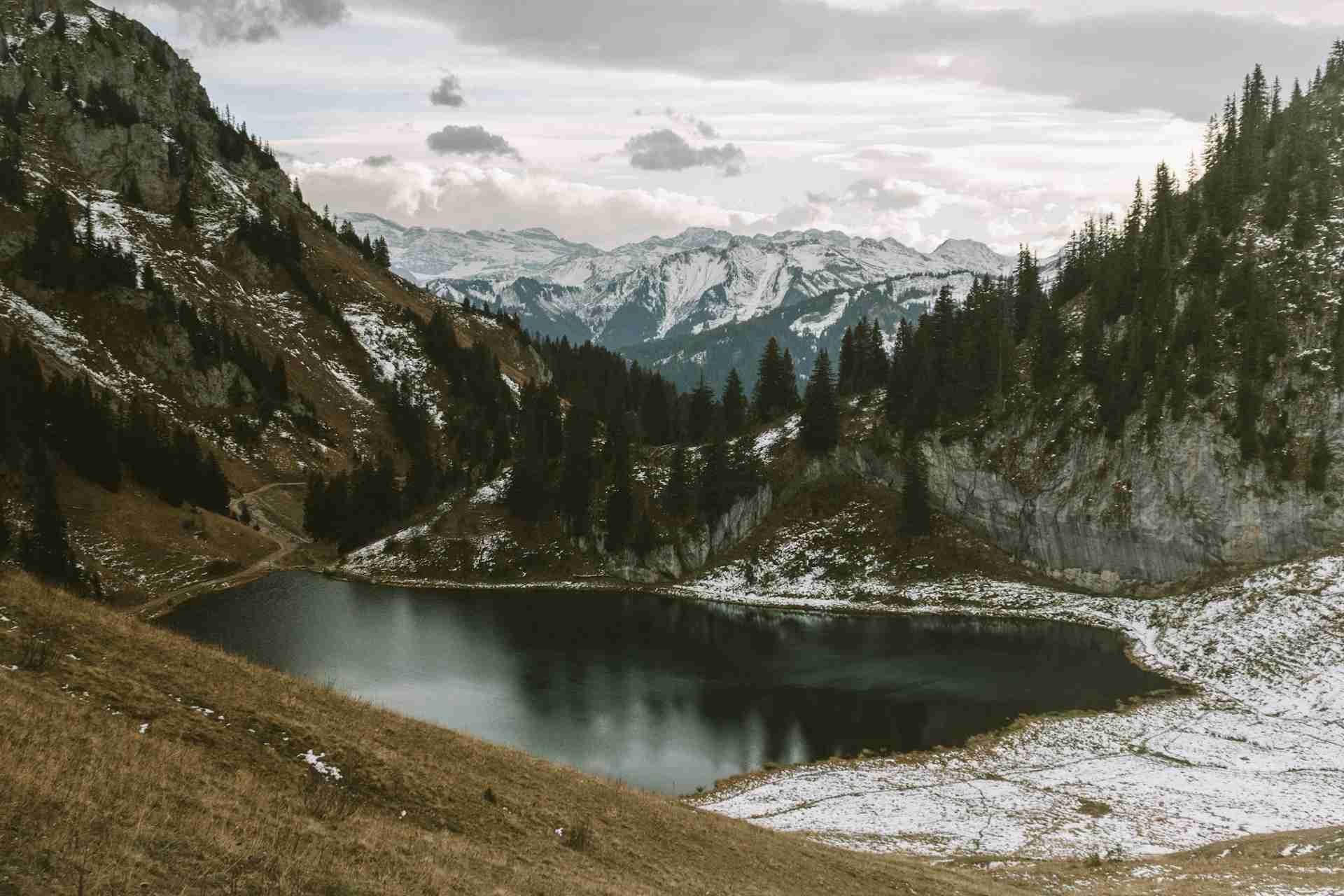
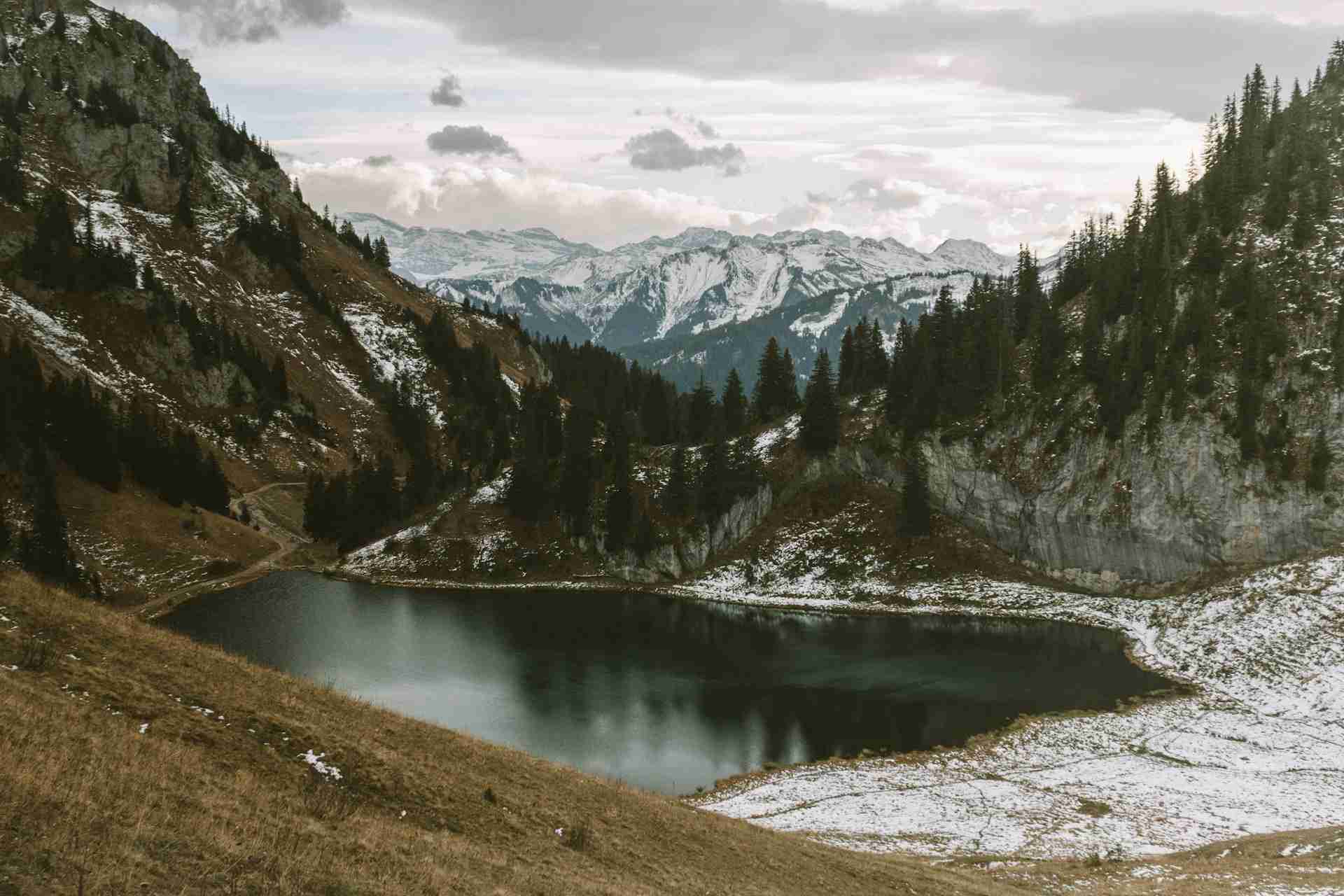
Tucked into a bowl-shaped valley near La Chapelle-d'Abondance, Lac d'Arvouin offers one of the most peaceful and photographically rich mountain lake scenes in the French Alps. Surrounded by meadows and steep limestone slopes, this small lake sits just below the towering Pointe d'Arvouin and other peaks along the Franco-Swiss border. The landscape is uncluttered, with clean lines, strong natural symmetry, and a perfect blend of reflection and elevation. For landscape photographers who favor simplicity, texture, and natural light, Lac d'Arvouin rewards slow, careful composition and early starts. The environment changes quickly with weather and season, making repeat visits especially productive.
Best Photography Opportunities
• Morning Reflections Across the Lake
The best-known image of Lac d'Arvouin comes from the northern bank, where the calm surface reflects Pointe d'Arvouin and the ridge beyond. Sunrise light brushes the peaks and slowly creeps down the slopes toward the water, creating a smooth, natural gradient. Arrive before the sun clears the ridge to set up with calm water and cool light, then shoot through the transition as color and contrast build. Use a wide-angle lens to take in the full frame, but don't overlook mid-length focal lengths that let you isolate reflected elements with precise balance.
• Framing with Alpine Meadow Detail
In spring and early summer, wildflowers and grasses emerge in the meadows around the lake. Shooting from a lower position allows you to place floral details in the foreground while still including the lake and peaks in the background. Depth of field becomes an important tool here. Use f/8 or higher to retain full sharpness across the frame, or open up the aperture to draw attention to specific flowers with a softened backdrop. The combination of texture and natural framing helps create a sense of intimacy and connection to the landscape.
• High Vantage Point from the Surrounding Slopes
A well-marked trail leads up above the lake toward the Col de Savalenne, offering a higher viewpoint that looks back across the entire basin. This is a good place to work with layering and scale, especially if you have a longer lens that can compress the forms of the lake, meadow, and distant summits. Morning is best for clear skies and light on the valley floor, while evening offers a more silhouetted profile with shadow-filled slopes and glowing sky. This perspective works well for moody edits or large-scale black and white compositions.
• Isolated Tree and Sky Compositions
A small stand of trees along the lake's western side provides a useful subject for minimalist compositions. On still mornings, they reflect clearly in the lake, and their placement against the slope creates a natural curve in the frame. Use a 70 to 200mm lens to isolate the trees and reflections or incorporate the mountains above them for stronger vertical compositions. On cloudy days, the mood shifts completely, offering soft contrast and diffused tones that are perfect for slow, intentional shots.
• Snow and Transition Seasons
In late autumn or early spring, partial snow coverage on the surrounding slopes creates layered tonal changes across the frame. The contrast between green meadow, light snow, and dark rock becomes a primary compositional element. These conditions are short-lived but powerful, especially when combined with morning mist or low cloud cover rolling through the col. Be prepared for quickly changing conditions and carry a lightweight rain cover for your camera.
Best Time to Visit
Lac d'Arvouin is most photogenic between late May and early October. During this period, the hiking path is usually clear of snow, and the lake reflects well-defined seasonal changes. In May and June, alpine wildflowers fill the meadows, and melting snow creates water runoff patterns along the slopes. This is the best time for soft light and foreground color.
Summer offers long days and easy access, though occasional afternoon storms can bring dramatic skies. Use this to your advantage when timing a visit to include changing weather. Early morning remains the best time for reflections and calm water, while late afternoon can yield warm side light on the cliffs.
Autumn brings cool, crisp air and more subdued colors, with yellowed grasses and the first dustings of snow on the peaks. Crowds are minimal during this time, and light angles are excellent for low sun photography. Winter access is limited and usually requires snowshoes or backcountry gear, but the lake and valley under snow offer a dramatically different visual experience.
The light shifts quickly here due to the enclosing peaks. Sunrise is the ideal window for capturing the most dynamic range of tones. Plan to be in position at least 30 minutes before the sun hits the water to work through the changing contrast and colors as the light climbs the valley walls.
How to Get There
Lac d'Arvouin is located near La Chapelle-d'Abondance in the Haute-Savoie region of eastern France. From the village, take the D22 toward the hamlet of Sevan Devant. Parking is available at the end of the paved road at Chalets de Bise, near the trailhead. The walk from the parking area to the lake takes about 30 to 40 minutes, depending on pace and gear load.
The trail is well-maintained and moderately inclined, suitable for photographers carrying equipment. It's passable for most of the year except during heavy snow. Early mornings require a headlamp or flashlight for safe hiking, especially in the shoulder seasons when light comes later. There are no entrance fees or restrictions on photography, and drones are generally permitted if flown responsibly and without disturbing wildlife or other visitors.
Water and snacks should be brought along, as there are no services at the lake itself. Cell service is limited in the basin, so it's best to download maps or trail info in advance. If staying in La Chapelle-d'Abondance or nearby Châtel, the lake is close enough to allow for early morning excursions with time to return by mid-morning.
Recommended Photography Gear
A full-frame DSLR or mirrorless body with weather sealing is ideal for shooting around Lac d'Arvouin, where conditions can shift quickly. A 16 to 35mm wide-angle lens captures the reflections and symmetry of the lake, while a 70 to 200mm telephoto lens is valuable for compressing background peaks and working from higher elevations.
A sturdy but lightweight tripod is essential for dawn and golden hour exposures, especially for reflection shots. A circular polarizer helps manage glare on the water and boosts sky contrast. In brighter conditions, a 3-stop or 6-stop neutral density filter allows for longer exposures of clouds and water, creating a serene surface and smoother transitions in light.
Bring a microfiber cloth for lens cleaning and a rain cover in case of alpine showers. Comfortable hiking boots with good traction are necessary for reaching upper viewpoints. A small camera bag with a hydration pouch will make the approach easier while keeping your gear secure. If you're working in early morning or late evening, pack gloves and an extra layer — the valley holds cold air well into summer mornings.
Nearby Photography Locations
Just a short hike above the lake, this mountain pass offers panoramic views over the Arvouin basin and into Switzerland. The ridgeline provides strong compositional depth with clouds often hugging the upper slopes. It's ideal for wide landscapes and dramatic weather.
A short drive and hike across the border leads to this picturesque lake framed by cliffs and forest. The scene feels enclosed and moody, offering tighter compositions and more variation in light direction throughout the day.
With wooden chalets, stone paths, and mountain backdrops, the village itself is a good subject for rustic alpine photography. Early morning or blue hour works best to avoid harsh contrast and preserve the atmosphere.
For more adventurous photographers, the summit trail provides sweeping views of the Dent d'Oche and Lake Geneva. Use a telephoto to compress the lake in the background against jagged foreground ridges.
• Châtel Valley Viewpoints
South of Lac d'Arvouin, the Châtel region includes several overlooks accessible by car or cable lift. These offer higher elevation perspectives and good evening light as the sun sets over the Rhône valley.
Lac d'Arvouin is a place where light sits gently on stone, where the wind barely touches the surface, and where every change in season brings new shapes to photograph. If you're looking for stillness in motion, for quiet shifts in color and tone, and for compositions that reward patience, this lake is worth every step.
Comments
Loading comments…