
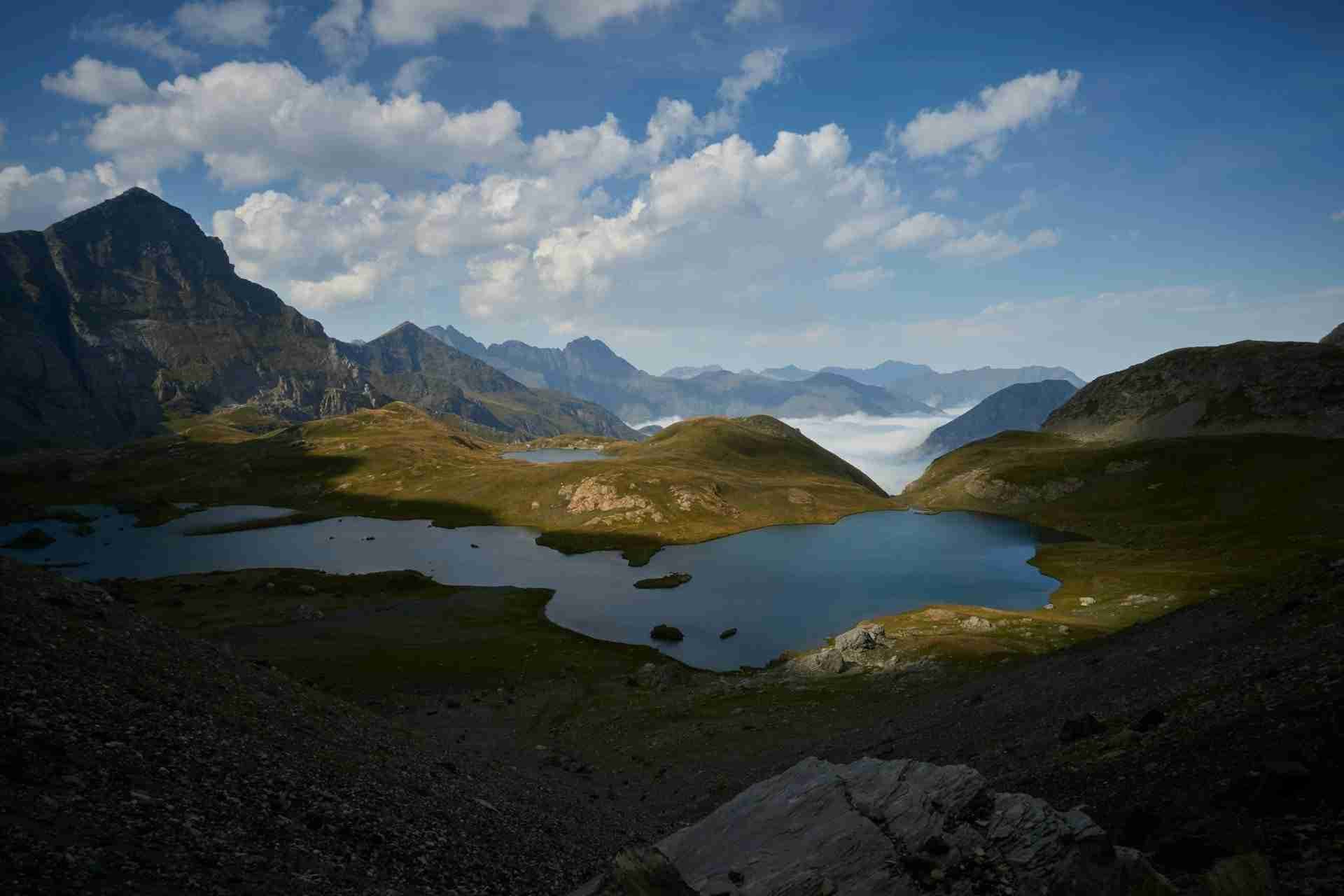
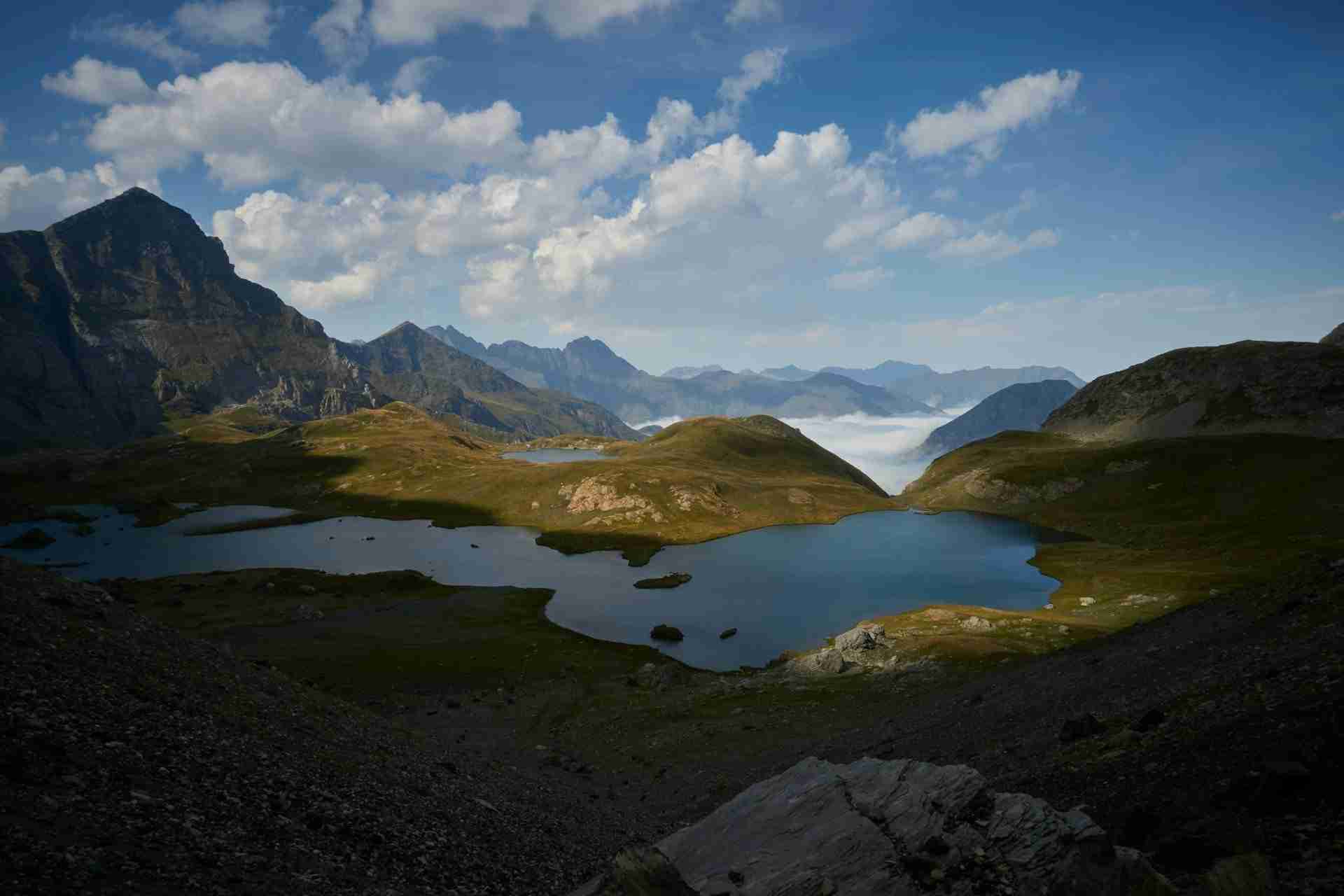
Cradled high in the Pyrenees near the Spanish border, Lac de Barroude is a stunning glacial lake that sits beneath towering limestone cliffs in the Hautes-Pyrénées department of southern France. Set within the dramatic cirque of the Barroude wall, this alpine lake offers a cinematic blend of scale, color, and tranquility. The hike to reach it is an adventure in itself, but for photographers, the reward is immense—mirrored reflections, raw geological forms, and sublime high-mountain light await those who make the ascent. With its isolation, shifting weather, and breathtaking perspectives, Lac de Barroude is a dream location for landscape purists and alpine storytellers alike.
Best Photography Opportunities
• Lake Reflections and Cliff Backdrop
: The lake's glassy surface reflects the monumental cliffs of the Cirque de Barroude, creating a symmetrical, high-contrast scene that is especially striking in the calm of morning. Position yourself at the lake's eastern edge to frame the massive rock wall mirrored across the water, using a wide-angle lens to capture both sky and shoreline. During golden hour, warm light grazes the rock face and softens into pastel tones over the lake. Look for ripples, floating ice, or submerged rocks to add subtle foreground detail.
• High-Mountain Panorama and Trail Vistas
: As you approach from the trail, sweeping views open toward the cirque and beyond, providing powerful panoramic opportunities. Shoot from elevated trail points to show the lake nestled below the cliff wall and surrounded by rugged terrain. A wide or ultra-wide lens allows you to exaggerate the depth of the scene, while a telephoto lens can compress the ridges and bring distant peaks closer for moody, layered compositions.
• Textures and Foreground Stonework
: The shoreline around Lac de Barroude features scattered alpine rock formations, lichens, and hardy vegetation that lend themselves to intimate compositions and textural studies. Get low and use a small aperture to keep foreground stones sharp while framing the cliffs or water beyond. These details help add scale to wide shots and contribute to narrative photo essays of the alpine terrain.
• Weather and Atmospheric Light
: Given its elevation, Lac de Barroude is prone to dramatic and fast-changing weather—fog rolls in quickly, rain showers sweep through, and clear skies can shift to moody overcast within minutes. These changes create a wide range of visual moods. Stormy light on the rock face, mist drifting across the lake, or shafts of sunlight breaking through clouds can all be used to dramatic effect. Be prepared to shoot quickly, and keep your camera ready during transitions.
• Night Sky and Milky Way Reflections
: Due to its remote location and lack of light pollution, the lake is an excellent location for astrophotography. On clear summer nights, the Milky Way can be seen arcing above the cliffs and reflecting in the lake's still water. Use a wide fast lens (f/2.8 or faster) and a sturdy tripod to capture long exposures. Including rocks or the cliff wall in the foreground adds grounding and scale to celestial compositions.
Best Time to Visit
The best time to photograph Lac de Barroude is from late June through early October, when the snow has melted, and the trails are clear. July and August offer lush alpine vegetation and relatively stable weather, while September brings crisp air and golden light across the landscape. Earlier in the season, patches of snow may still cling to the cliffs and trails, adding contrast to the green valleys below.
Sunrise provides calm water, soft shadows, and cool tones with gradually warming light on the cliffs. Sunset brings deeper color and long ridge shadows, but wind often picks up later in the day, making reflections less predictable. For those staying overnight in the nearby mountain refuge or wild camping, both ends of the day are available to explore under changing light.
Stormy days and passing weather fronts can create some of the most dramatic conditions—mist drifting through the cirque, sunbeams over distant peaks, or brief rainbows after a clearing squall all enhance the visual drama of the location.
How to Get There
Lac de Barroude is located near the commune of Aragnouet in the Hautes-Pyrénées, within the central French Pyrenees. The trailhead is typically accessed from the village of Piau-Engaly, a ski resort in summer dormancy that serves as a staging area for hikes into the surrounding massif.
From Piau-Engaly, the hike to Lac de Barroude is approximately 2.5 to 3 hours one-way, depending on pace and conditions. The trail climbs steeply through forest and open alpine terrain before reaching the high cirque and lake basin. The route is well-marked but requires good fitness and mountain awareness.
There are no facilities at the lake itself, but wild camping is permitted in designated zones below the cirque. The nearby Refuge de Barroude (if operating) may provide shelter, though it's recommended to check in advance, as some huts are seasonal or under renovation.
Be prepared for alpine conditions—bring proper footwear, layers for sudden weather changes, and plenty of water. Sunrise and sunset shooting will likely require either overnight camping or a very early/late hike.
Recommended Gear and Shooting Tips
A wide-angle lens (16–35mm) is essential for capturing the full breadth of the lake and cirque in a single frame. A telephoto (70–200mm or more) is useful for isolating rock formations, layering mountain ridges, or compressing light and shadow on the cliff walls. For astrophotography, use a fast wide prime (14–24mm at f/2.8 or faster) and a high ISO with long exposures.
A tripod is essential for low-light, sunrise, sunset, and night photography. A circular polarizer helps manage glare on the lake surface and deepen sky contrast, especially at midday. A 6- or 10-stop ND filter is useful for smoothing water or capturing cloud motion during long exposures.
Pack light but strategically—carry spare batteries, microfiber cloths (moisture is common), and weather protection for both you and your gear. Use a rain cover or dry bag in case of passing storms. A map or GPS device is recommended, especially if hiking in variable visibility.
Nearby Photography Locations
: Perched above the lake basin, this mountain refuge offers wide panoramic views over the cirque and down into the valley below. It's an excellent location for elevated perspectives, especially in early morning mist.
• Port de Barroude
: A high mountain pass just beyond the lake, offering a unique view into Spain and across the broader Pyrenean range. The rugged terrain and layered ridge lines make it ideal for long-lens landscapes and dramatic sky compositions.
: Located southwest of Barroude, this massive glacial cirque offers sweeping alpine views, seasonal waterfalls, and dramatic cliffs. Accessible by car and short hikes, it provides more accessible but equally grand scenery.
: Two high-altitude reservoir lakes south of Aragnouet, surrounded by jagged peaks and featuring striking turquoise water. Ideal for minimalist compositions and lakeside foreground studies.
• Pont du Moudang Valley
: A lush glacial valley leading up to Barroude, featuring streams, wildflowers, and dense pine forest. Perfect for peaceful, less-sweeping compositions, or leading-line images using the valley path and creek.
Lac de Barroude is a place where light and rock, silence and scale, converge in one of the Pyrenees' most evocative alpine scenes. Whether you're there to chase the reflections of a towering cirque or to frame a meteor shower in the pure mountain night, this high-altitude lake is a destination that rewards patience, presence, and a sharp eye for natural drama.
Comments
Loading comments…