
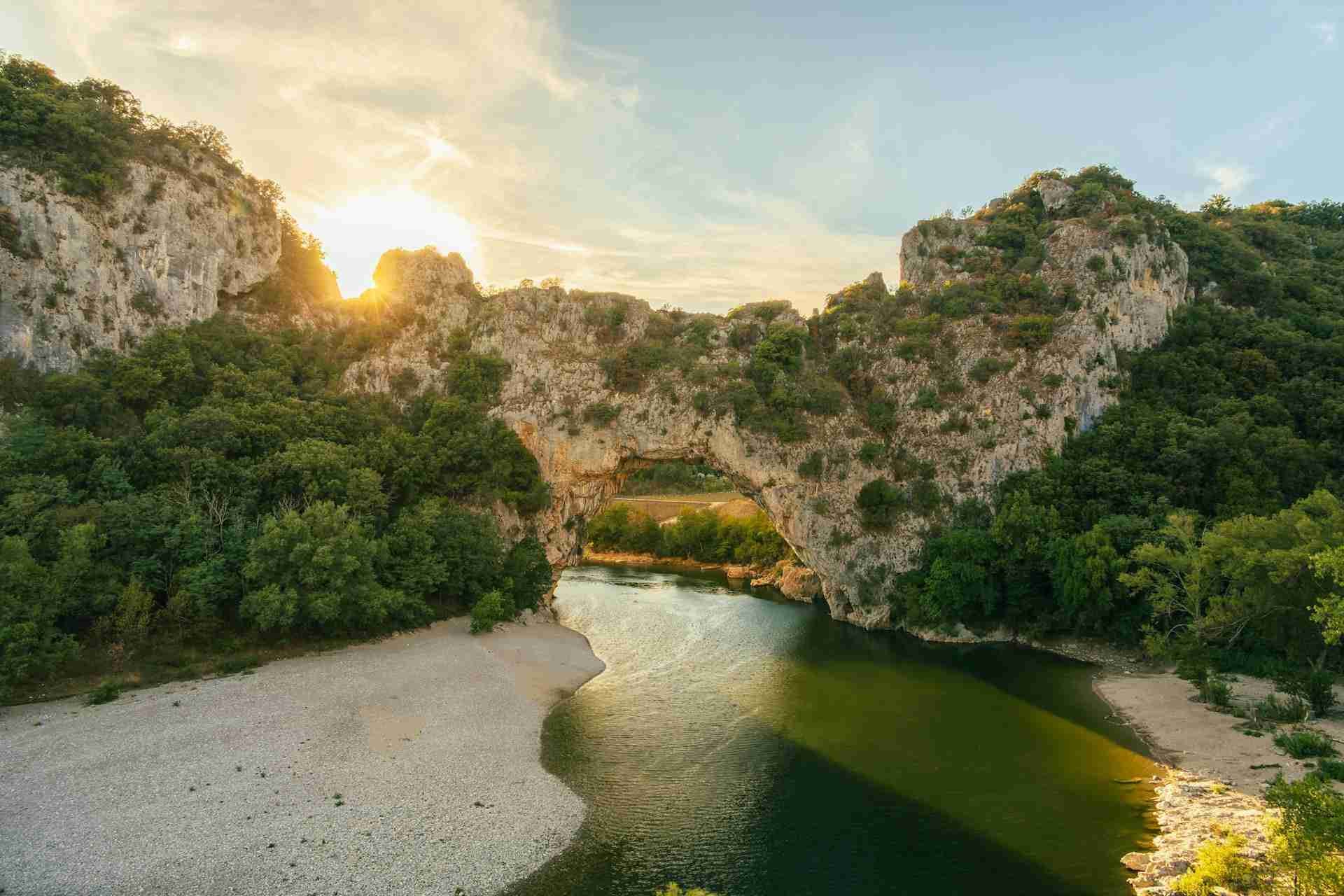
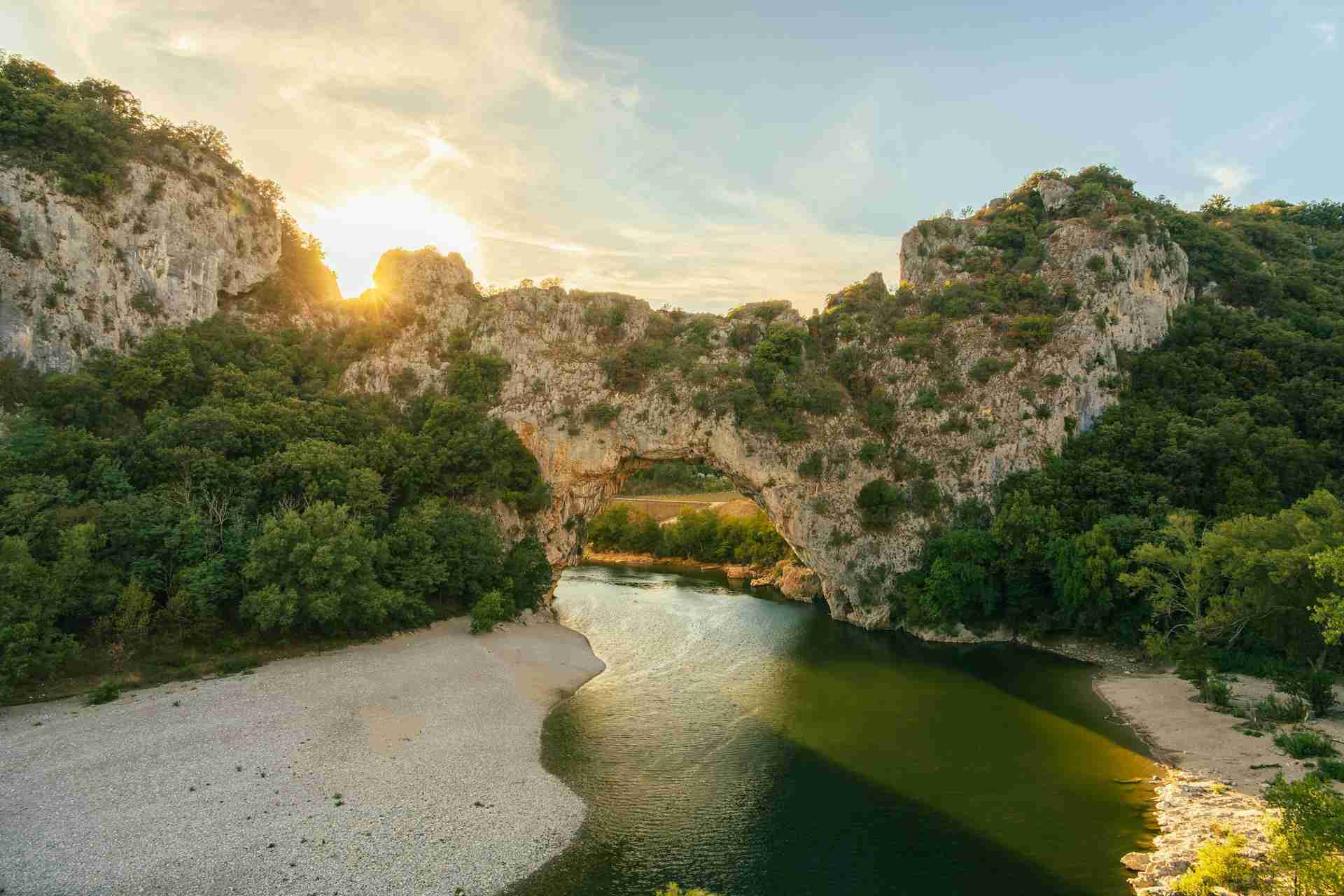
Le Pont d'Arc is a natural stone arch carved by the Ardèche River in southern France, near the village of Vallon-Pont-d'Arc. Towering over sixty meters wide and rising thirty meters above the water, the arch frames the river below in a graceful, sweeping form that invites exploration from both the shore and the surrounding cliffs. It marks the gateway to the Gorges de l'Ardèche, a region of limestone canyons, lush vegetation, and rich geological history. For photographers, Le Pont d'Arc offers a rare mix of fluid and solid elements, where the movement of water contrasts with the permanence of the stone. The scene changes throughout the day as light passes through the arch, hits the canyon walls, and reflects off the surface of the river, making this a location where timing and light truly shape the image.
Best Photography Opportunities
• Early Morning Reflections
Shooting from the eastern bank of the river at sunrise provides soft light filtering in from behind the arch. The calm water at this time of day often forms a mirror like surface that reflects the arch and surrounding cliffs with impressive clarity. Position yourself slightly upstream for a composition that includes both the full arch and its reflection, framed by overhanging branches or river stones. A wide angle lens helps include foreground elements like grasses, fallen logs, or curved shoreline, adding layers to the image. This is a quiet time with very few people, making it ideal for long exposures and undisturbed river scenes.
• Sunset Glow
The cliffs above the western side of Le Pont d'Arc offer a raised vantage point with expansive views of the arch and river below. As the sun lowers in the sky, warm light washes over the limestone and gives the entire scene a golden hue. From this height, a telephoto or mid range zoom lens allows you to compress the landscape and bring out the textures of the rock. Use side light to shape the arch and highlight the vegetation clinging to the cliff faces. This location also works well when scattered clouds reflect sunset color across the water, creating natural contrast between sky and stone.
• Under the Arch
Getting close to the base of Le Pont d'Arc provides an immersive view of its inner curve and the flow of the Ardèche River below. Here, a wide angle lens is essential to capture the full span of the arch from beneath, including the rocky banks and waterline. Long exposures help smooth the river's motion and create visual separation between the static rock and the flowing water. Late morning light begins to reach into the interior of the arch, revealing its color and texture without blowing out highlights. Use a tripod and filters to control exposure, especially when the sun reflects directly off the water.
• Kayak and Human Scale for Contextual Shots
In summer, kayakers and swimmers pass through the arch frequently, offering a strong sense of scale for photographs. Use a mid range zoom to frame the arch with one or two figures in the lower third of the frame, letting the structure dominate the composition while keeping a sense of human interaction. This kind of image works well in brighter conditions, using higher shutter speeds to freeze movement. Shooting slightly downstream allows the viewer to look through the arch and see the progression of the river into the canyon. These images are best made quickly and with awareness of water levels and sun position to avoid overexposure.
• Abstract Textures and Rock Details on Overcast Days
When the sky is overcast or hazy, shift focus to smaller compositions of the limestone walls, arch textures, and riverbank formations. The stone here is rich with layers, cracks, and color variation, all of which show well in flat, diffused light. A telephoto lens or macro setup allows you to isolate details without distractions from strong light or shadow. Look for sections of the rock face where water has etched patterns or plants have rooted in cracks. These images offer a slower, more observational perspective and pair well with broader scenes to complete a visual study of the location.
Best Time to Visit
Le Pont d'Arc is best photographed from late spring through early autumn, when access is easiest and the water level is low enough to expose riverbanks and shoreline textures. May and June offer fresh greenery and fewer visitors, with long days that provide extended golden hours and ideal conditions for sunrise and sunset sessions. July and August are the busiest months due to tourism and kayak activity, but they also bring clear skies and strong directional light that defines the rock formations well. Early mornings are essential during summer if you want clean frames without people.
September and early October are excellent for quieter sessions, with cooler air, softer light, and warm autumn tones beginning to show in the trees along the river. Sunrise light enters from the east and gradually warms the cliff walls and water surface. This is the best time for reflection photography and foggy conditions, which occasionally settle along the river before lifting midmorning. Sunset offers broader compositions and more layered scenes, particularly from higher ground. Avoid shooting during midday in summer, as the light becomes harsh and flat, and the crowds tend to gather around the water's edge.
How to Get There
Le Pont d'Arc is located just outside the village of Vallon-Pont-d'Arc in the Ardèche department of southern France. From the village, it is a short ten minute drive along the D290, with clear signage directing visitors to multiple access points. There are several parking areas nearby, including official viewing points on both sides of the river. Some of these areas are free, while others charge a modest fee during the high season. A short trail leads from the parking areas down to the riverbanks and cliffs, with relatively easy terrain and clearly marked paths.
For sunrise sessions, plan to arrive early and walk in from the eastern access point, which provides the best light and fewest obstructions. Sunset is best approached from the western side, where you can hike to higher viewpoints along the limestone plateau. Tripods and camera gear can be carried comfortably, as the paths are not technical. Water levels vary by season, so scouting the shoreline the day before is helpful to find the best composition points. In summer, be mindful of water activity zones and avoid placing gear too close to areas with high kayak traffic.
Recommended Photography Gear
Photographing Le Pont d'Arc requires a kit that covers both wide landscapes and detail work, as the location offers strong subjects at multiple scales. A wide angle lens in the 14 to 30 millimeter range is essential for capturing the full span of the arch from the riverbanks or beneath. This lens is especially useful at sunrise when you want to include reflections or foreground textures like river stones or tree roots.
A midrange zoom such as a 24 to 70 millimeter lens offers flexibility for walkaround shooting, contextual portraits, and tighter compositions that include the river and people in frame. For abstract studies or compression from higher ground, a 70 to 200 millimeter lens allows you to isolate rock textures, distant tree lines, or patterns in the water. This longer focal length is also useful for shooting across the river from the cliffs or capturing human activity without disturbing the scene.
A stable tripod is important for long exposures, especially when working at dawn or in shaded areas. Bring a circular polarizer to manage reflections on the water and enhance sky contrast. A graduated neutral density filter is helpful for balancing exposures when the sky is bright and the foreground remains in shadow. Lightweight hiking shoes and a waterproof bag are recommended, especially if you plan to wade into shallow water or shoot from low angles near the riverbed. A lens cloth is essential, as water spray and humidity can affect glass surfaces quickly during early morning shoots.
Nearby Photography Locations
follows the cliffs above the river for more than thirty kilometers, with multiple viewpoints and pullouts that overlook bends, rock formations, and forested slopes. These high vantage points are excellent for wide landscape compositions and late afternoon light as it moves across the canyon walls.
, a nearby replica of the Chauvet Cave, offers an interpretive experience and a chance to explore prehistoric themes in your photography. While the cave itself cannot be photographed inside, the surrounding trails and architecture of the facility provide abstract and modern contrasts to the natural scenes nearby.
offers traditional stone buildings, narrow streets, and lively market scenes that work well for environmental portraits and street photography. Early morning or twilight sessions here can produce strong compositions with local color and human presence.
• Aiguèze
, perched on a cliff above the river farther south, is a medieval village with sweeping views, cobbled streets, and strong afternoon light. It is quieter than Vallon and gives you access to elevated compositions looking out across the river valley and into the hills beyond.
, located along the scenic route, provides a different angle on the Ardèche River as it cuts through deeper canyons. This viewpoint is particularly effective during golden hour when side light adds contrast and reveals texture in the limestone walls.
Le Pont d'Arc is more than a scenic landmark. It is a place where water, stone, and light meet in a way that changes by the hour and the season. Whether you are drawn to sweeping arches, quiet reflections, or the interplay of people and place, this natural bridge gives you the tools to build a full and thoughtful visual story. Spend the time, watch the light, and let the scene unfold slowly—it always has more to offer than it first reveals.
Comments
Loading comments…