
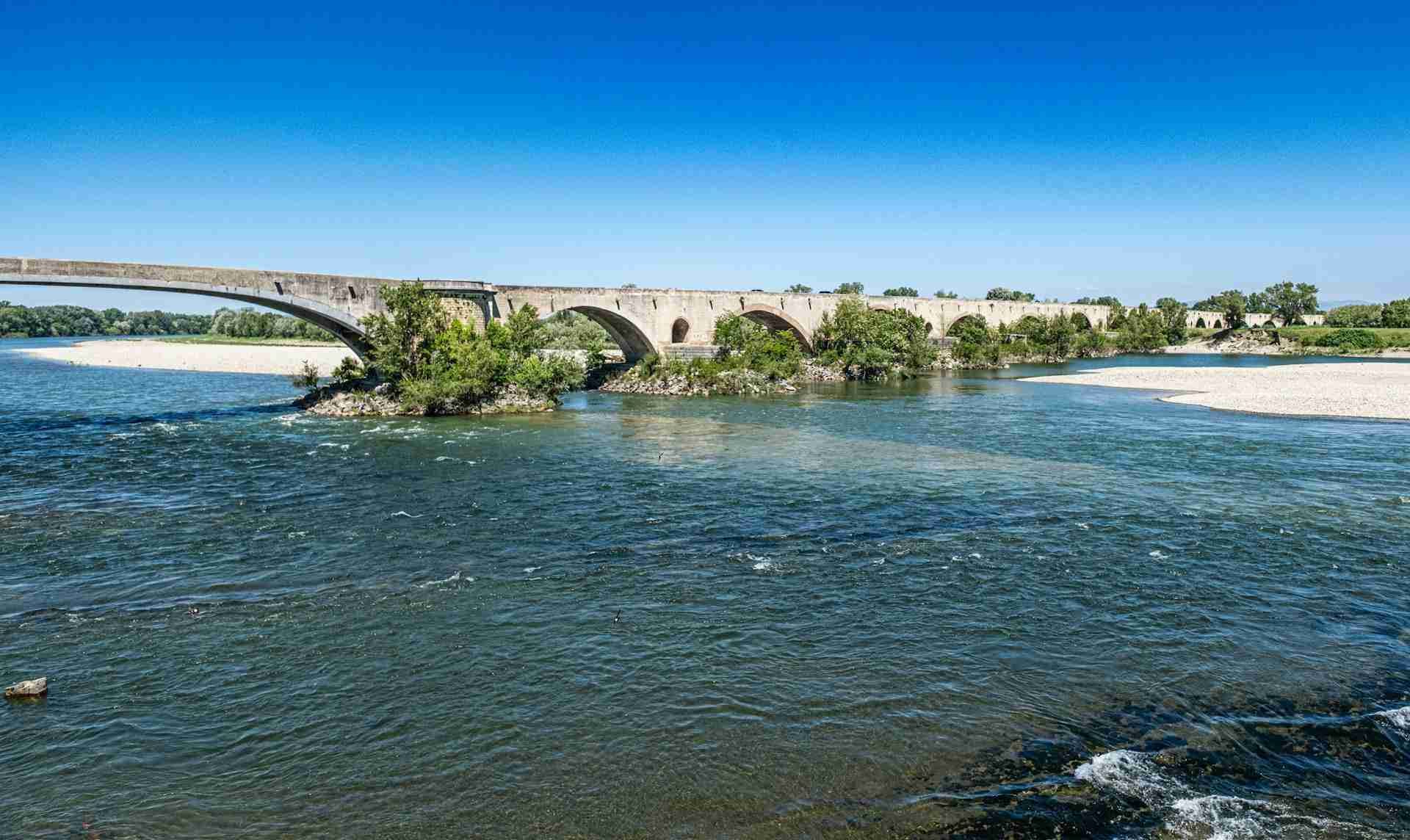
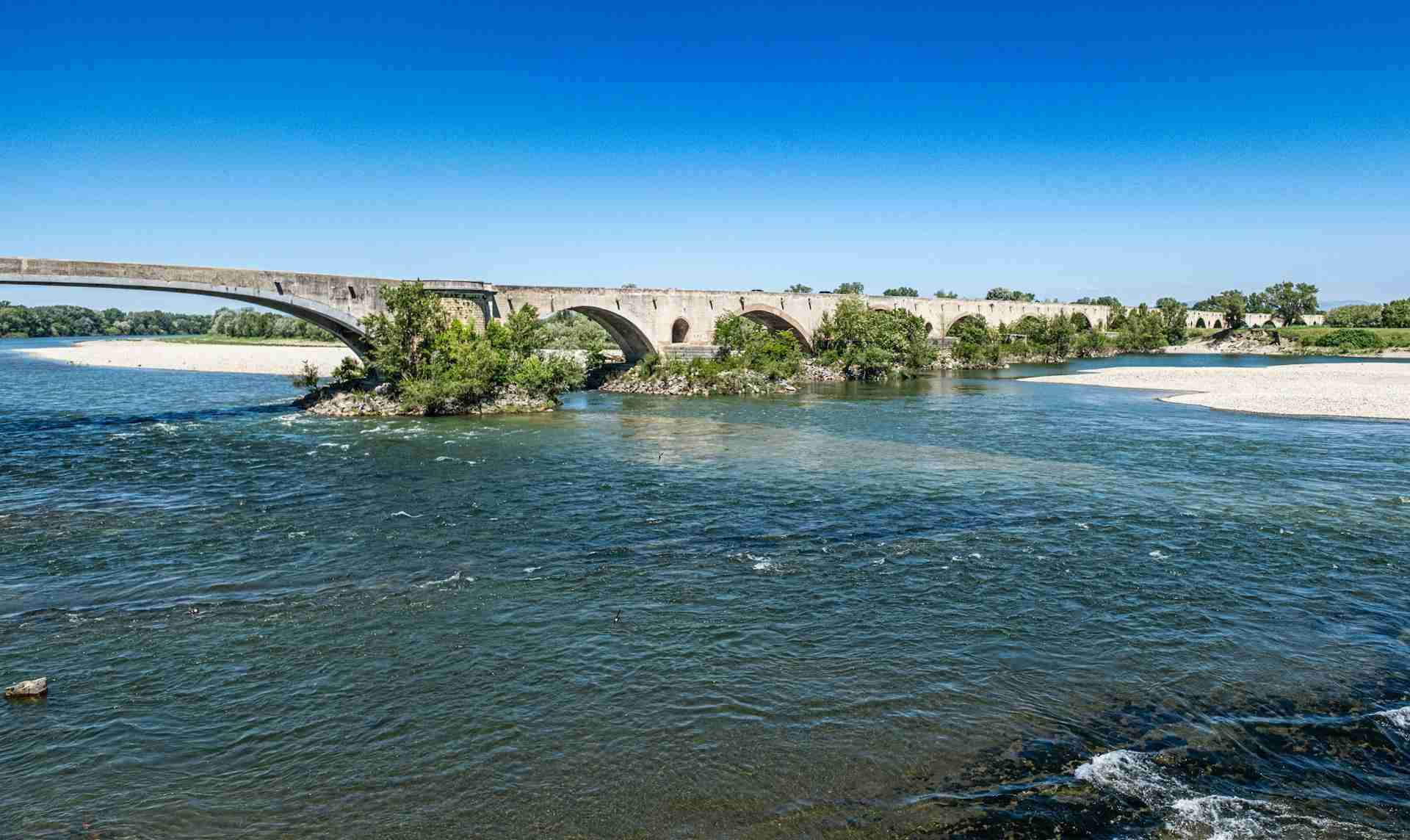
Stretching across the Rhône in the town of Pont-Saint-Esprit in southern France, Le Pont du Saint-Esprit is a masterpiece of medieval engineering and a testament to endurance, adaptation, and the evolving dialogue between architecture and history. Begun in the 13th century and completed after 44 years of labor in 1309, this bridge originally consisted of 23 robust stone arches—each one a product of painstaking craftsmanship designed to tame the wild Rhône. Over the centuries, the bridge has not only survived floods, wars, and modernization but evolved in form: in the 19th century, two of its original arches were replaced by a single iron span, which was later destroyed during an Allied bombing in 1944 and rebuilt in concrete in 1954. For photographers, Le Pont du Saint-Esprit is more than a crossing; it's a layered monument that combines medieval grace with scars of the 20th century, all reflected in the moving waters below.
Best Photography Opportunities
• Full Bridge Panoramas at Sunrise and Sunset
: The best way to appreciate the full scale and curvature of Le Pont du Saint-Esprit is to shoot it from a distance using a medium telephoto or wide-angle lens from either riverbank. Sunrise brings soft, golden light from the east that gently illuminates the stone arches, while sunset delivers warm, raking light that casts dramatic shadows beneath each vault. From the right bank, especially just north of the town center, you can capture the full arc of the bridge in context with the river, its reflections, and the rooftops of Pont-Saint-Esprit in the background. A panoramic stitch from this location allows you to showcase the transition from medieval stone to the modern concrete span at the town's entrance, emphasizing the contrast of old and new in a single frame. Including the riverbank or a low tree branch as foreground elements adds compositional depth.
• Reflections in the Rhône
: On still days—particularly early mornings—the surface of the Rhône can act as a mirror, perfectly duplicating the bridge's repeating arches and softening its historical gravitas with a painterly elegance. A tripod and low angle close to the water's edge help create a symmetrical reflection shot, while use of a polarizing filter allows you to control glare or enhance clarity. Try long exposures with ND filters during twilight to smooth the water and emphasize the lines of the bridge against a subtle gradient sky. This is also a powerful technique for isolating the quiet majesty of the stonework and softening the edges of modern intrusions in the frame.
• Architectural Detail Studies of the Arches
: Each of the original medieval arches reveals its own narrative of design and erosion, weathering and repair. Closer views allow for compositions that emphasize the interplay between curve and shadow, stone texture, and the visible wear of centuries. Use a mid-range zoom or fast prime to capture close-up segments of the arches—particularly from underneath or just beside the bridge, where the light from one side creates natural chiaroscuro across the stonework. Pay attention to the cutwater piers that jut out into the river; these details not only stabilize the structure but add a rhythmic element that works beautifully in sequences or as abstract frame studies. Rainy or overcast days enhance contrast in the textures and reduce glare from the stone.
• Juxtaposition of Medieval and Modern Sections
: One of the most compelling stories the bridge tells is visible at its town-side entrance: the original stone arches give way to a concrete span built in 1954, replacing the iron structure bombed during World War II. This visual interruption makes for a fascinating contrast in style, texture, and tone. Shoot from the left bank or from mid-span to emphasize the stylistic break. By positioning the modern section to one side of the frame and the medieval portion across the majority, you can explore themes of history, reconstruction, and continuity. This perspective is particularly effective in moody light or during stormy conditions, when the bridge's layered history seems to emerge from the scene with added gravitas.
• Night Photography with Ambient Light
: After dark, the bridge takes on a completely different character. Streetlights and nearby building lights cast a warm glow onto the stone, creating reflections in the Rhône and dramatic spot illumination on the arches. A long exposure from a tripod allows for balanced, moody nighttime compositions that highlight the bridge's elegant rhythm and enduring structure. Adjust white balance to enhance the warmth or cool the scene depending on your desired tone. When the sky is clear, stars or passing clouds can add a celestial element to a subject so firmly grounded in earthly endurance.
Best Time to Visit
Le Pont du Saint-Esprit can be photographed effectively throughout the year, but seasonal and daily timing makes a significant difference in lighting, access, and mood. Spring and autumn are the most photographically rewarding seasons. Spring offers lush riverbanks, high but calm water levels, and frequent morning mist, which adds depth and atmosphere to wider landscape compositions. In autumn, the soft amber light and changing foliage on the riverbanks provide natural framing for the bridge's neutral stone, enhancing warmth and tonal contrast in late afternoon.
Summer offers the best chance for calm water, which is ideal for reflection shots, but also brings brighter midday light and heavier tourist traffic. Sunrise sessions during summer provide excellent conditions for shooting in solitude and with directional light that sculpts the arches from an eastern angle. Winter is quieter and more subdued—perfect for moody monochrome studies, particularly when the river is higher and skies are overcast or snow-dusted. For night photography, the bridge is typically illuminated by ambient urban lighting, with the best results achieved during blue hour when a gradient sky balances the yellow warmth of artificial light.
How to Get There
Le Pont du Saint-Esprit is located in the heart of Pont-Saint-Esprit, in the Gard department of southern France. The town is easily accessed via the N86 or D6085 highways, with direct connections to nearby towns like Orange, Bagnols-sur-Cèze, and Bollène. The bridge crosses the Rhône between Pont-Saint-Esprit and Lamotte-du-Rhône, connecting the regions of Languedoc and Provence.
Parking is readily available in town, with several lots and street spaces within a short walking distance of the bridge. For panoramic shots, walk along the riverbanks on either side—the eastern bank (Lamotte side) provides the best distant views of the full bridge arc, while the western bank (Pont-Saint-Esprit side) offers closer access to the arches, textures, and the transition to the modern concrete span. Foot access to the bridge itself is open to the public, and the pedestrian walkway along the side provides unique vantage points up and down the river.
There is no cost to access or photograph the bridge from public spaces, and no fee for walking across it or shooting from the riverbanks. The bridge remains in regular vehicular use, so caution is advised when photographing from its narrow walkways or trying to compose images from mid-span.
Recommended Photography Gear
Capturing the historical and compositional complexity of Le Pont du Saint-Esprit requires a well-rounded setup. A full-frame DSLR or mirrorless camera with strong dynamic range will handle the interplay of shadows under arches and bright skies above the river. A wide-angle lens (16–35mm) is essential for capturing the entire span from riverbanks or for tight spaces near the bridge's base. For architectural and historical detail, a mid-range zoom (24–70mm) offers ideal flexibility, while a telephoto (70–200mm) is excellent for isolating single arches, texture studies, and compressing the background cityscape or hillside.
A tripod is critical for long exposures, reflections, and blue hour work, particularly when shooting from lower along the banks or for night scenes. A set of ND filters (6- and 10-stop) allows for creative control over water smoothness and sky motion, while a graduated ND filter helps balance the river with the brighter sky at sunrise or sunset. A polarizer is useful for reducing surface glare and enhancing stone textures and foliage colors along the banks.
A weather-sealed backpack or bag is strongly advised, as river spray, wind, and damp morning grass can quickly affect your gear. Lens cloths and a microfiber towel should be kept close for managing condensation or spray during long exposures. If shooting during or after rain, bring protective covers for both yourself and your equipment—post-storm light can be magical, but conditions near the river can become slick or unstable.
Nearby Photography Locations
: This 14th-century church, located in the heart of Pont-Saint-Esprit, features soaring Gothic vaults, tall stained glass, and a commanding bell tower. Photographers can capture its exterior rising above town rooftops or explore the richly lit interior for studies in color and sacred space.
• The Rhône Riverbank Promenades
: South of the bridge, both banks feature accessible walkways and small docks that allow for low-angle compositions of the bridge and reflections. These areas are perfect for sunset shooting and for including boats, fishermen, or swans in your foreground.
: Located just 15 minutes southwest, this historic town features narrow streets, old fountains, and shaded stone facades that make for excellent environmental portraits or architectural photography in soft light.
: About a 30-minute drive northeast, this fortified château sits atop a forested hill and offers commanding views of the Rhône valley. The site is especially photogenic in late afternoon when warm light floods the vineyards and stone ramparts.
• Gorges de l'Ardèche Viewpoints
: If you're willing to drive a bit farther north, the limestone cliffs and serpentine river views of the Ardèche gorges offer wild, dramatic landscapes—perfect for switching gears into grand natural scenery and aerial-style compositions from cliffside lookouts.
Le Pont du Saint-Esprit stands as a bridge between centuries, its repeating arches holding stories that span from medieval ambition to wartime resilience. For the photographer who sees beauty in endurance and form in history, this bridge offers a visual journey where every angle reveals a different chapter of France's architectural past.
Comments
Loading comments…