
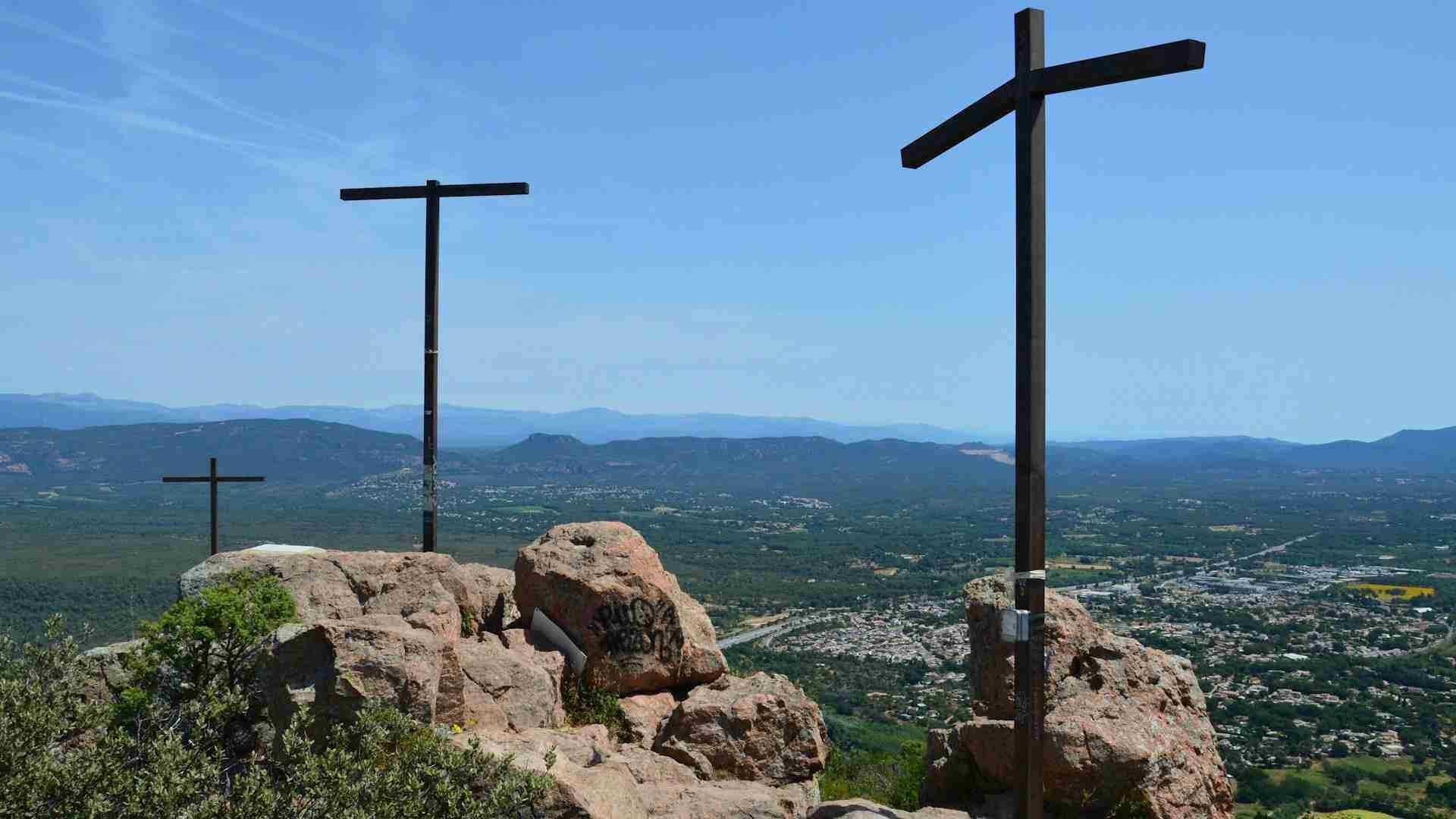
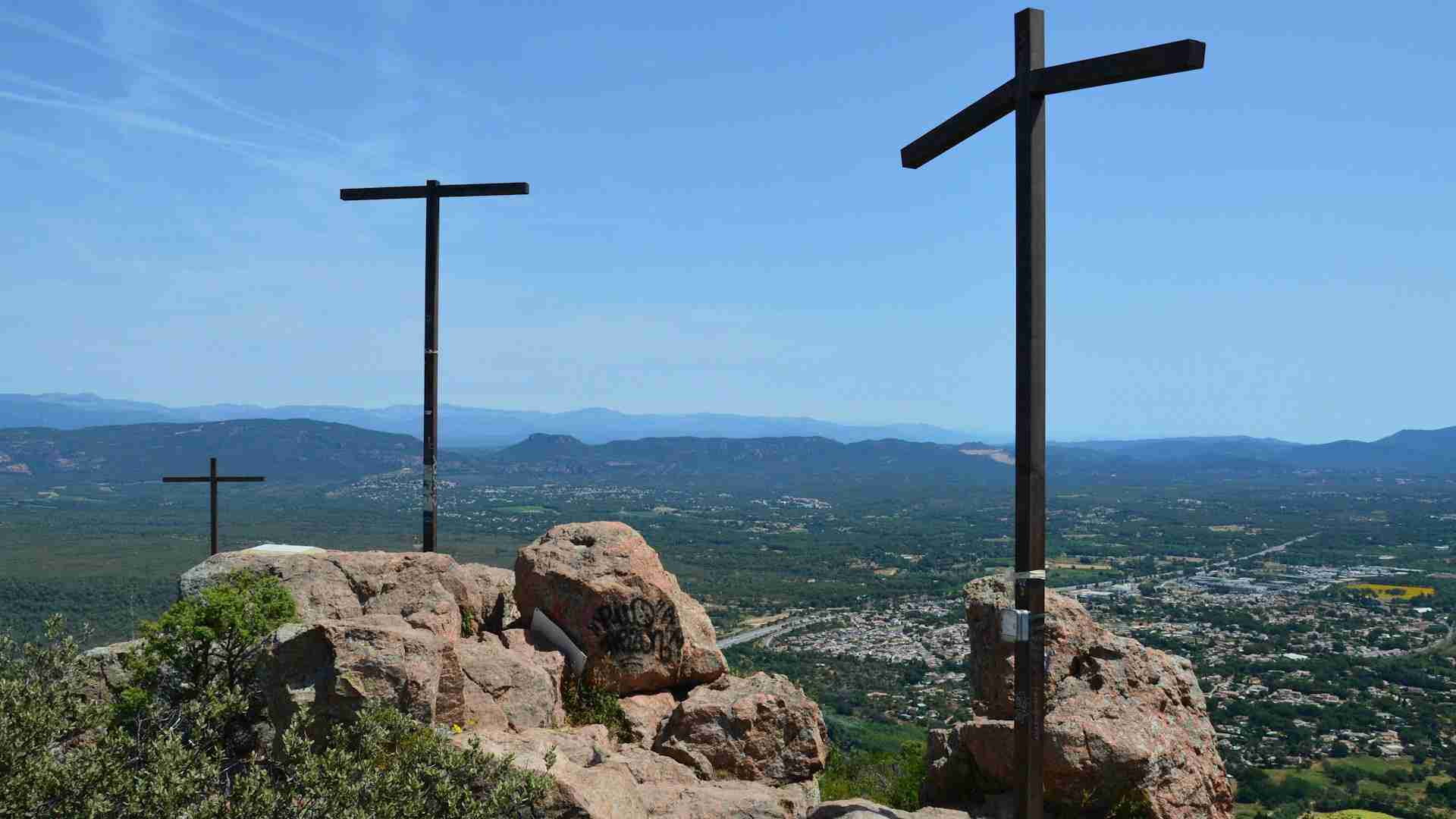
Perched atop the ochre-hued massif overlooking Roquebrune-sur-Argens, Les Trois Croix offers one of the most striking panoramic viewpoints in the Var region of southern France. These three crosses, set dramatically against the Provençal sky, mark a spiritual and visual summit that rewards hikers and photographers with sweeping views across the Argens Valley, the Mediterranean coastline, and the distant Alps. The rugged terrain, dramatic rock formations, and the ever-changing quality of Mediterranean light make this site a rewarding subject for landscape and nature photographers. From sunrise hues casting long shadows across the valley to golden-hour silhouettes of the crosses, the location offers a dynamic canvas for both minimalist and expansive compositions.
Best Photography Opportunities
• The Summit and Crosses
: The iconic crosses are more than just a religious symbol—they are compositional anchors in a sweeping, natural amphitheater. Standing high above the surrounding valley, they provide a powerful visual contrast against both sky and rock. When shooting at sunrise, the low angle of light creates dramatic shadow play along the ridgeline, and the ironwork of the crosses catches just enough light to separate them from the background without losing their stark character. Photographers can shoot from below to exaggerate their presence against a glowing sky, or position themselves laterally to frame the crosses against a backdrop of rolling hills and sea. Using a small aperture like f/16 will create starburst effects as the sun peeks through the arms of the central cross, while a slightly longer lens can compress the elements of the landscape to make the scene feel more intimate and poignant.
• Golden Hour Panoramas
: Les Trois Croix offers an unrivaled 360-degree vista over the entire eastern Var region. To the west, the rolling vineyards and olive groves of Roquebrune unfold in soft undulations, while to the east, the Maures and Esterel massifs rise in a patchwork of forested ridges. During golden hour, this landscape is bathed in deep, warm tones that gradually shift to pastel as the sun dips. This is the perfect moment for panoramic stitching: shoot handheld or use a tripod with a rotating head to capture overlapping frames from left to right. Shooting in vertical orientation maximizes sky and foreground detail. The curvature of the land, the long shadows, and the blending colors in the sky all contribute to a final image that feels immersive and multilayered. Wide-angle primes can help reduce distortion at the edges, and including foreground elements like rocks or trees helps anchor your panorama.
• Rock Formations and Texture Studies
: The massif itself is a sculptural wonder, formed from ancient sandstone whose surface has been shaped by centuries of wind, rain, and sun. As you hike to the summit, you'll find deeply fissured stone faces, overhanging ledges, and bulbous outcrops that seem to defy gravity. These formations are ideal for abstract compositions or tightly cropped texture studies. Bring a macro lens or extension tubes to highlight the grain and erosion patterns in the rock, or use a longer lens to isolate interesting shapes framed by light and shadow. On overcast days, the soft, even lighting reduces harsh contrast and allows the natural reds, oranges, and subtle greens of the stone to emerge in fine detail. When the sun is lower in the sky, grazing light brings out texture dramatically—perfect for side-lit compositions that emphasize depth and tactile quality.
• Trail Perspectives and Framing Techniques
: The hike up to Les Trois Croix is far from just a means to an end—it is a visual journey filled with photographic opportunities. The trail snakes through pine forests and over open rocky patches, often revealing sudden glimpses of the distant sea or of the crosses peeking over the ridge. Look for points where the trail curves or dips to use as leading lines, drawing the viewer's eye through the composition. Natural framing is abundant—tree trunks, boulders, and dense brush can be used to encircle the subject, whether it's a landscape or a fellow hiker. This is also a great area to experiment with depth of field: a wider aperture will soften the foreground branches and make the midground scene pop, while a stopped-down aperture brings everything into crisp detail. For those capturing visual narratives or working in series, these segments of the trail can add vital context and storytelling depth to your shoot.
• Changing Weather and Dramatic Skies
: One of the defining features of the Roquebrune region is the unpredictability of its skies. Being close to the Mediterranean means the weather can shift rapidly, and this changeability is a gift to photographers. Before a storm, low clouds rush in from the coast, creating high-drama skies that pair beautifully with the starkness of the crosses. After a rainfall, the air clears, revealing long-range views to the Alps. Use a neutral density filter during windy days to blur the fast-moving clouds above the massif, creating a sense of motion and tension. Alternatively, a polarizer will help deepen the blues and enhance the definition in broken cloud cover. During winter or early spring mornings, fog often settles in the valleys while the summit remains clear—a prime setup for capturing dreamy, ethereal layers. The juxtaposition of moody skies with sunlit peaks can make for some of the most emotionally resonant landscape images you'll take in the region.
Best Time to Visit
Photographers will find the most compelling conditions at Les Trois Croix in the spring and autumn months, when temperatures are mild, the landscape is at its most colorful, and the quality of light is particularly nuanced. In spring, wildflowers bloom along the trail and the foliage is a vibrant green, which contrasts beautifully with the red rock of the massif. The air is often crisp and clear after spring rains, making it an excellent time for capturing expansive panoramas with maximum visibility. Early mornings are especially atmospheric, with low fog draping the valleys and the sun casting warm, directional light onto the crosses and cliffs.
Autumn offers a different palette—deeper oranges, ochres, and golds that mirror the hues of the rocks themselves. The lower angle of the sun throughout the day provides soft lighting even into mid-morning and late afternoon, allowing for extended shooting sessions without harsh glare. Summer, while popular with tourists, poses challenges for photographers due to high heat and harsh midday light. However, early starts can still yield excellent results, and the potential for dramatic sunsets increases with occasional summer thunderstorms. Winter is the quietest season and offers a rare chance for solitude and clarity. After a rainstorm, the colors deepen, the skies clear, and you may even capture snow-dusted peaks in the far distance if conditions align.
How to Get There
Reaching Les Trois Croix requires a moderately challenging hike, but one that is highly rewarding for photographers. Begin your journey in the village of Roquebrune-sur-Argens, which is easily accessed by car from nearby towns like Fréjus or Sainte-Maxime. Two primary trailheads offer access to the summit. The first is located at the Parking du Col du Bougnon, off the D7 road. From here, the trail ascends gently through Mediterranean forest and shrubland, eventually giving way to more open rock and panoramic views as you near the summit.
The second access point begins from Chemin des Deux Frères, closer to the village itself. This route is shorter but steeper and more exposed, ascending quickly through rocky terrain and offering little shade. It's favored by photographers aiming to catch first light, as the climb can be completed in less than an hour with a strong pace. Regardless of the chosen route, sturdy hiking boots are essential, as the upper sections require sure footing on uneven stone. Parking at both trailheads is free but limited, so early arrival is recommended—especially in spring and summer. For sunrise or sunset shoots, bring a headlamp, extra water, and allow extra time to scout your compositions before the light peaks. There are no facilities on the trail or summit, so pack accordingly for a self-sufficient outing.
Recommended Photography Gear
To make the most of a trip to Les Trois Croix, your gear should be optimized for both versatility and durability. A full-frame mirrorless or DSLR camera will help capture the dynamic range necessary for shooting in high-contrast conditions, especially at dawn and dusk. Pair this with a wide-angle lens (14–24mm or 16–35mm) to fully embrace the sweeping vistas and large foregrounds that define the summit environment. For more detailed shots—whether isolating distant peaks, wildlife, or intricate rock textures—a 70–200mm telephoto lens is invaluable. If you enjoy tighter abstracts or subtle compositions, consider packing a macro lens or extension tubes for capturing lichen, erosion patterns, and other details in the stone.
A tripod is essential, not only for low-light and long-exposure work but also for panoramic stitching and precise compositions. Lightweight carbon fiber models are ideal due to the uphill hike and uneven terrain. A cable release or wireless remote will help minimize camera shake during long exposures or bracketed shots. Filters are particularly useful here: bring a circular polarizer to cut glare and enhance sky contrast, a neutral density filter for capturing motion in clouds or windblown vegetation, and a graduated ND for balancing bright skies with shaded foregrounds.
Also recommended are lens cloths and a weather-sealed camera bag, as morning dew and windblown dust can affect your gear, especially near the summit. A headlamp with red-light mode is a must for navigating the trail before sunrise or after sunset, and portable snacks and hydration will keep you fueled during your shoot. If you're experienced and licensed, drone photography can provide stunning aerial perspectives of the massif and its surrounding valleys—just be mindful of local regulations and potential wind gusts at altitude.
Nearby Photography Locations
: This peaceful lake, located just a few kilometers from Roquebrune-sur-Argens, offers a stark contrast to the rocky heights of Les Trois Croix. It's a great location for tranquil compositions featuring water reflections, especially at dawn when mist often rises off the surface. The surrounding vegetation, combined with the stillness of the water, creates scenes rich in serenity and balance.
: The ancient Roman sites of Fréjus—including the amphitheater, aqueduct, and city walls—are steeped in historical character and bathed in the region's signature golden light. In late afternoon, long shadows stretch across crumbling stone, and the interplay of ancient architecture with encroaching nature offers compelling photographic juxtapositions.
: With its distinctive red volcanic rock and dramatic coastal cliffs, the Esterel range is a natural extension of the geological story found at Roquebrune. The terrain here is more extreme and varied, with opportunities to shoot bold contrasts between crimson cliffs and turquoise sea. Sunset shoots along the cliff edges can be particularly spectacular.
: Tucked into the forested interior north of Roquebrune, this hidden canyon presents a more intimate, enclosed landscape of vertical cliffs, winding trails, and shadowy grottos. It's ideal for moody compositions and vertical frame studies. Climbers frequent the area, offering dynamic human elements if you're inclined to photograph adventure sports.
: For seascape enthusiasts, the coastal path at Saint-Raphaël provides access to rocky coves, wind-carved outcrops, and endless views over the Mediterranean. It's one of the best places in the region for long exposure photography, especially during twilight when the ocean and sky begin to merge in soft color gradients.
Les Trois Croix stands not just as a beautiful hike but aslo a photographic playground. Whether you're capturing vast panoramas, intricate textures, or weather-driven drama, this site offers a masterclass in landscape photography against the backdrop of Provence's timeless beauty.
Comments
Loading comments…