
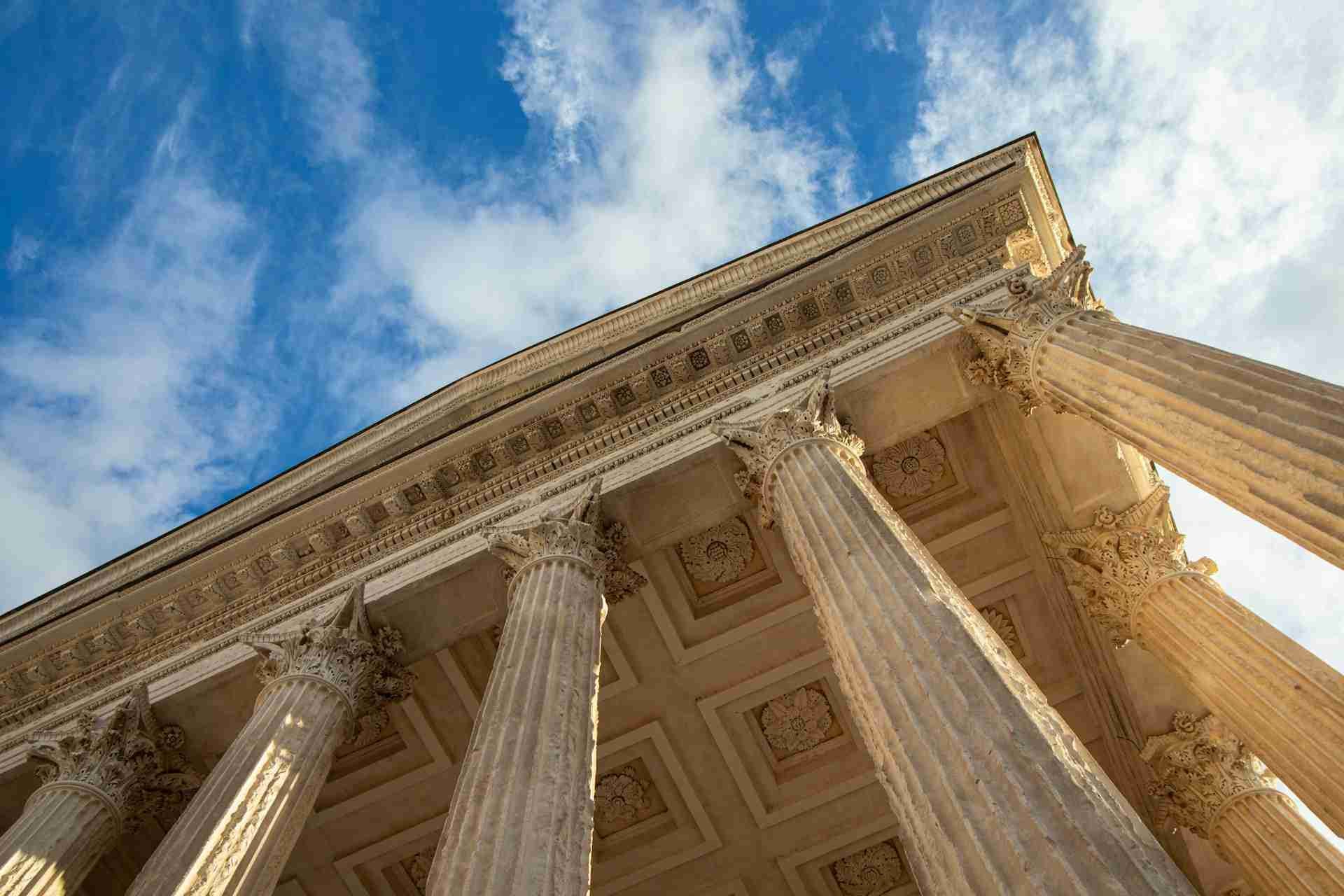
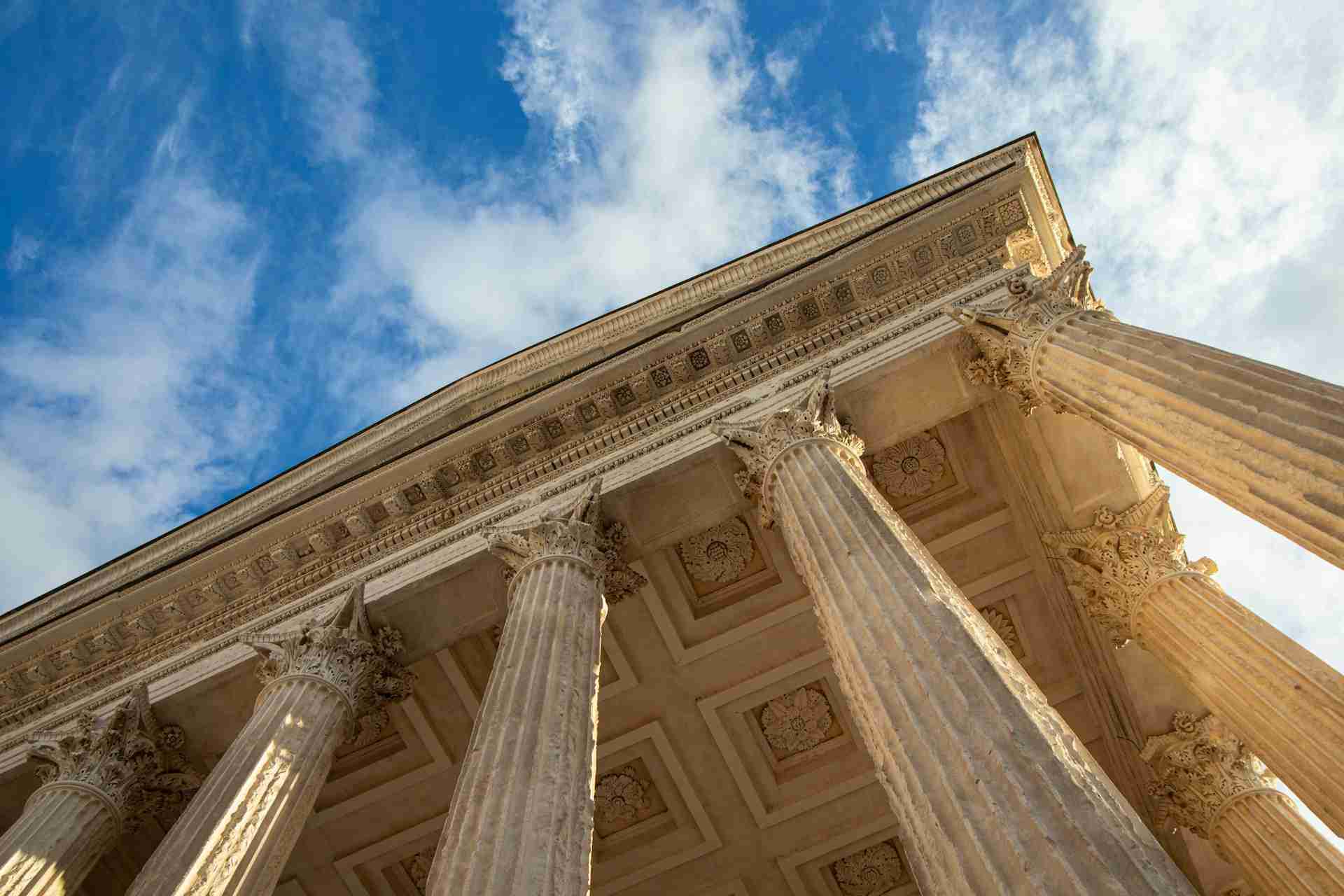
The Maison Carrée in Nîmes is one of the best-preserved Roman temples in the world, standing as a remarkably intact example of classical architecture in the heart of the city. Built in the early first century CE, its harmonious proportions, fluted Corinthian columns, and finely detailed entablature make it a masterpiece of Roman design. Set on a high podium, the building rises above the surrounding square, giving it a commanding presence that changes character depending on the light and time of day. The pale limestone exterior reflects warm golden tones in sunlight and takes on cooler shades under cloud cover, providing varied photographic opportunities in any season. With its clean lines, symmetry, and deep historical significance, the Maison Carrée is a rewarding subject for photographers who appreciate both architectural detail and broader urban context.
Best Photography Opportunities
• Full Façade from the Square
: Standing directly in front of the temple offers a symmetrical view that highlights its six Corinthian columns and triangular pediment. Early morning light can create soft shadows that define the fluting on the columns, while late afternoon adds warmth to the stone. A wide-angle lens helps include the full height of the podium and steps without distortion if you position yourself far enough back. Waiting for moments when the square is quiet allows for clean, uninterrupted compositions, but including a few pedestrians can add scale and a sense of the building's continued place in modern life. Overcast days bring out the fine carved details without harsh contrast, making them excellent for close-up work.
• Side Perspective with Depth
: Moving to one side of the temple reveals the full colonnade along the building's length, creating a strong sense of depth. This angle also allows you to capture the play of light and shadow between the columns, particularly in the afternoon when the sun strikes from the west. A mid-range zoom lens works well for controlling perspective while keeping vertical lines straight. Including elements of the surrounding square in the background helps place the building in its urban setting. On clear days, the pale stone contrasts sharply with the blue sky, and a polarizing filter can enhance this effect.
• Detail Studies of Capitals and Entablature
: The carved acanthus leaves on the Corinthian capitals are intricate and worth isolating with a telephoto lens. Similarly, the frieze and cornice show fine craftsmanship that can be captured from the podium or from a distance using a longer focal length. Shooting in soft, diffused light ensures that the shadows do not obscure details. Even small sections of the building can become striking compositions when tightly framed, particularly if you focus on texture and line. These images work well in both color and black and white, depending on whether you want to emphasize material or form.
• Steps and Podium Close-ups
: The podium and steps leading to the temple offer opportunities for abstract compositions that focus on geometry, texture, and the play of light across the stone. Late in the day, long shadows create patterns that can be incorporated into the frame. Using a wide aperture can isolate specific elements, such as the edge of a step or a weathered section of stone, against a softly blurred background. These shots can be combined with wider views for a more complete photographic narrative of the building.
• Night Photography with Illumination
: After dark, the Maison Carrée is often lit by carefully positioned lights that emphasize its architectural features. Shooting at night with a tripod allows for long exposures that capture both the temple and the glow of surrounding streetlights. Including reflections from wet paving stones after rain can add another layer of visual interest. The contrast between the lit temple and the dark sky makes for dramatic images, especially when framed from slightly lower angles to enhance the sense of height. Blue hour also works well here, balancing the warm artificial light with the fading natural light of the evening.
Best Time to Visit
The Maison Carrée can be photographed throughout the year, with each season offering its own benefits. Spring and autumn bring mild weather and softer light, making it easier to work for extended periods in the square. Summer offers the brightest skies and warmest tones, but the midday light can be harsh, so mornings and late afternoons are preferable. Winter provides a quieter atmosphere and the possibility of crisp, clear light that brings out fine details in the stone.
For front-facing shots, early morning and late afternoon provide the most pleasing side lighting, helping define the columns without washing out detail. Midday can work for symmetrical, shadow-free images if the goal is to emphasize form over texture. Blue hour and night sessions allow you to take advantage of the building's illumination, with fewer people in the square. Overcast days are excellent for close-up and detail photography, as the soft light reveals textures without deep shadows.
How to Get There
The Maison Carrée is located in the center of Nîmes, in the Occitanie region of southern France. It is easily reached on foot from other central landmarks, and the city's compact layout makes it straightforward to include in a walking photography itinerary. Nîmes is connected by train to major cities such as Montpellier, Avignon, and Marseille, with the station about a 15-minute walk from the temple.
For those arriving by car, several public parking garages are within walking distance of the square. The area around the Maison Carrée is pedestrian-friendly, allowing you to move freely between vantage points. There is no fee to photograph the exterior from the public square, though entry to exhibitions inside the building may have a charge. Tripods are generally permitted outdoors but should be used with care to avoid blocking pedestrian flow.
Recommended Photography Gear
A wide-angle lens in the 16 to 35 millimeter range is essential for capturing the full structure in tighter spaces without significant distortion. A 24 to 70 millimeter zoom provides flexibility for both full-building shots and closer framing of decorative details. For isolating capitals, friezes, and other fine elements, a 70 to 200 millimeter telephoto lens is ideal.
A tripod is useful for low-light and night photography, while a polarizing filter can help manage reflections from the stone and deepen sky tones during the day. A lens cloth is handy for keeping optics clean, especially in the warmer months when dust can be an issue. Comfortable shoes are important for walking around the square and exploring the surrounding streets for alternative angles.
If you plan to shoot both day and night, carrying a compact travel tripod will save weight while still providing stability for longer exposures. Extra batteries and memory cards are recommended, especially if you intend to capture time-lapses or extended evening sessions.
Nearby Photography Locations
: This well-preserved Roman amphitheater is just a short walk from the Maison Carrée. Its massive stone arches and interior corridors offer a wealth of both exterior and interior compositions.
: A landscaped park that includes the remains of the Temple of Diana and offers elevated views of Nîmes. The formal gardens, fountains, and Roman ruins provide diverse subjects in a single location.
: An ancient Roman tower that stands on a hill above the city. From the top, you can capture panoramic views of Nîmes and the surrounding countryside.
: The modern glass-and-steel art museum directly opposite the Maison Carrée offers a striking contrast in architectural styles. Reflections of the temple in the museum's facade make for creative compositions.
• Rue de l'Horloge
: A lively pedestrian street leading toward the cathedral, lined with cafes and shops. Street photography here offers a different side of Nîmes to balance architectural work.
The Maison Carrée offers photographers a rare chance to capture a Roman temple in almost its original form, set within a vibrant modern city. Its combination of symmetry, craftsmanship, and historical weight makes it a location worth exploring from multiple angles and under varying light conditions.
Comments
Loading comments…