
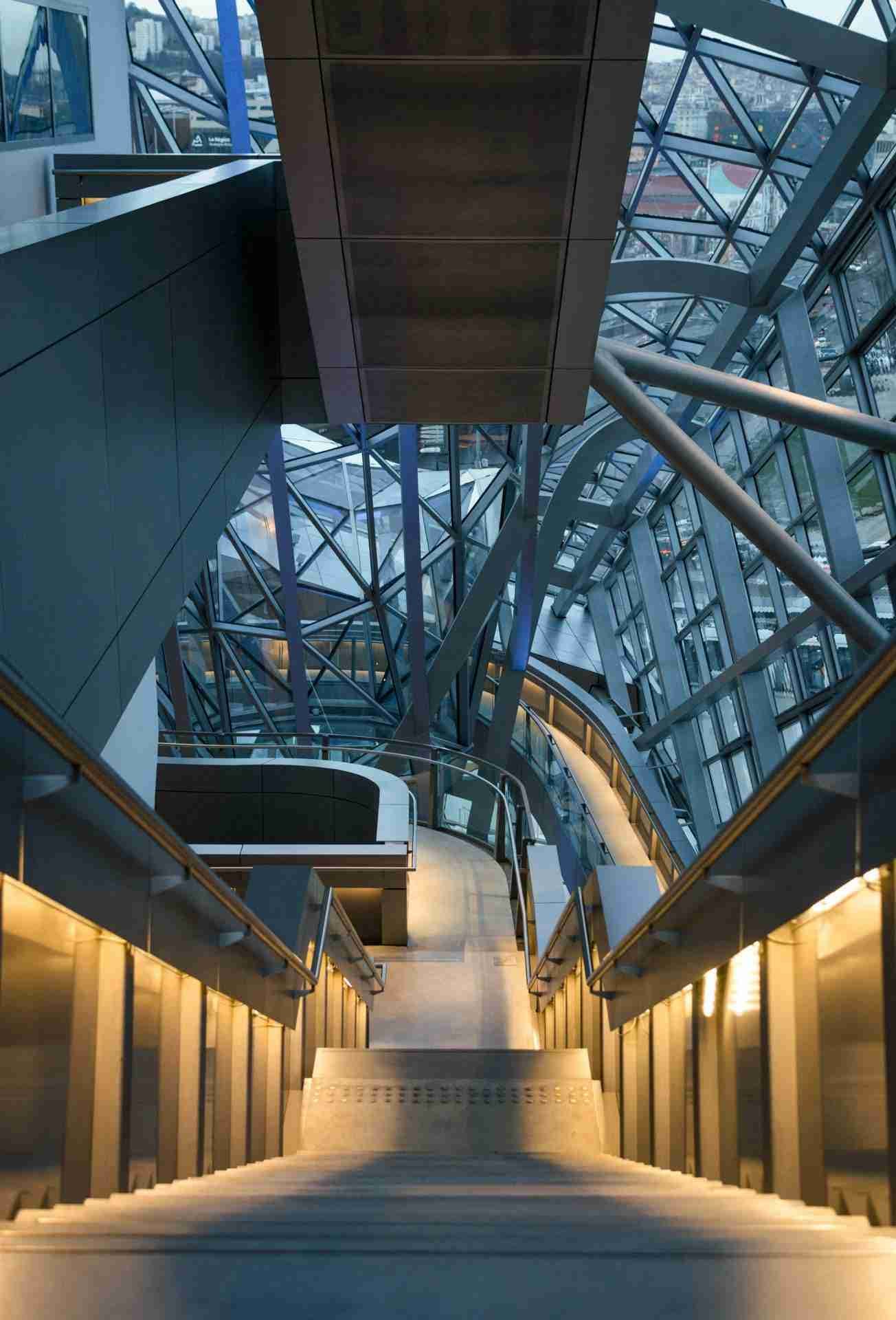
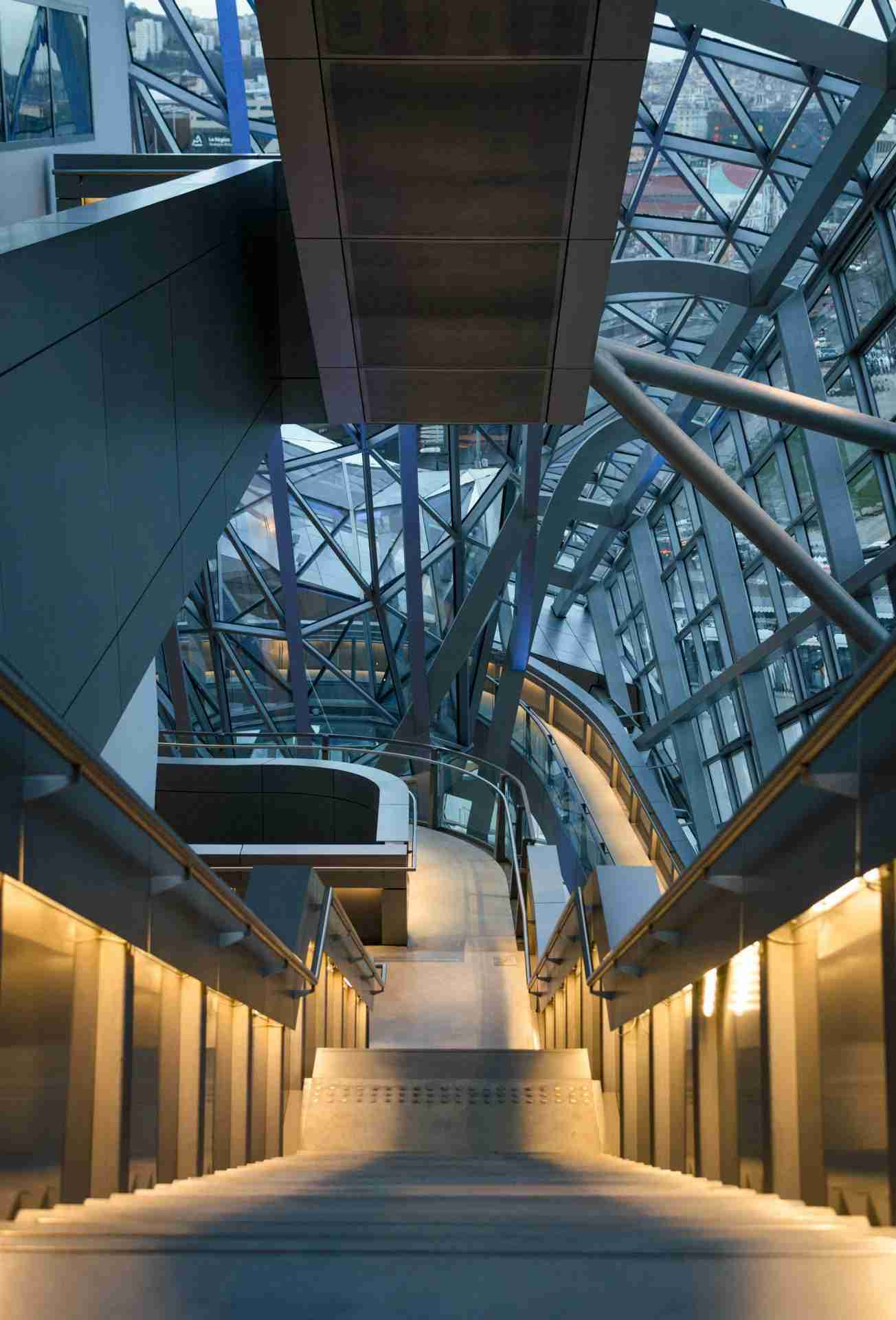
At the southern tip of Lyon's Presqu'île, where the Rhône and Saône rivers merge, the Musée des Confluences rises like a crystalline monolith—a futuristic blend of steel, glass, and concrete that has become one of the city's most dramatic architectural icons. Designed by the Austrian firm Coop Himmelb(l)au, the museum's fragmented, angular structure invites photographers to explore a wealth of visual tension between natural light and industrial form. Surrounded by water on three sides and positioned in open space that allows for wide, uninterrupted sightlines, it offers an endless range of angles, reflections, and moods depending on time of day and season. For those seeking to shoot cutting-edge architecture with compelling light and contextual landscapes, the Musée des Confluences is one of Lyon's most photogenic locations.
Best Photography Opportunities
• Abstract Architectural Geometry
: The museum's façade is composed of interlocking steel panels and angular glass volumes that twist and fold across multiple planes. Shooting close-up with a wide or ultra-wide lens allows you to abstract the geometry into layered compositions that feel more sculptural than structural. This is an ideal subject for monochrome photography, especially on overcast days when soft shadows define the overlapping forms. Varying your position around the structure reveals new alignments and intersections, making every approach feel distinct—even over short distances.
• Reflections from the Water and Glass
: The confluence of the rivers creates opportunities for dual reflections—both in the water below and on the museum's mirrored surfaces. Early morning and evening light are particularly effective for this, casting soft color gradients across the building's metal skin. The layered panels reflect different parts of the sky, giving each shot subtle variation depending on time and weather. Using a polarizer can help control glare and enhance the depth of these mirrored textures, especially when shooting diagonally across the façade.
• Wide-Angle Shots from the Riverbank
: Stepping back along the promenade or across the Pont Raymond Barre gives photographers the space to capture the museum's full silhouette against the sky. These wider compositions are especially effective during sunrise or sunset, when the light catches both the glass canopy and the steel structure's angular ridges. Including movement—like a cyclist or tram crossing the bridge—adds energy to an otherwise static shot. On clear days, distant hills and sky reflections fill out the background, making for a balanced landscape-architecture hybrid.
• Night Photography with Internal Lighting
: At night, the museum glows from within, with the internal lighting casting soft golden hues through the glass panels. Long exposures during blue hour or just after nightfall reveal a contrast between the cold steel of the exterior and the warm ambient glow spilling out. This is one of the best times to highlight the building's crystalline form against the darkening sky. Reflections from the Rhône, especially on still nights, help double the composition and create striking symmetrical results.
• Human Scale and Movement
: The museum's enormous size makes it ideal for incorporating people into the frame to provide a sense of scale. The open plaza at its base is often filled with cyclists, joggers, and museum-goers, offering opportunities for candid shots or minimalist compositions that juxtapose movement against the static, monolithic form of the building. These human elements help soften the sharp geometry and inject a sense of life into the scene. For street photographers, the museum acts as both backdrop and stage, where subjects are naturally drawn through pools of light and shadow created by the building's overhangs.
Best Time to Visit
The Musée des Confluences is best photographed during early morning or late afternoon, when the sun is low enough to bring out the texture of its metallic surfaces and provide deep shadows in the recesses of the structure. Sunrise casts soft eastern light across the glass panels, often catching mist off the rivers, while sunset lights the steel surfaces with a warm glow that deepens the building's dimensionality. The blue hour is one of the most rewarding times to visit, as the museum's internal lights begin to glow and contrast with the darkening sky and smooth water below—ideal for long exposure photography.
Each season offers unique opportunities. In winter, clear skies and bare trees emphasize the building's stark geometry, while in spring and summer, surrounding greenery and reflected color add natural contrast to the industrial tones of the museum. Autumn brings warm foliage along the riverbanks, ideal for layering textures and color in wider compositions. Because the museum is located at the tip of the Presqu'île with open space around it, light remains consistent and clean even in mid-day, making it a surprisingly viable location for daytime architectural work.
How to Get There
The Musée des Confluences is easily reached from anywhere in Lyon. The T1 tram line stops directly at "Musée des Confluences," with service running frequently from major hubs such as Perrache and Part-Dieu. For photographers arriving by foot or bicycle, the Rhône riverbanks and footpaths lead directly to the site, making it a pleasant approach with several riverside vantage points along the way. If arriving by car, there is a public parking garage beneath the museum, though availability may vary during peak hours or events. The building and its exterior plaza are freely accessible at all hours, but interior photography is subject to museum admission and possible restrictions depending on current exhibitions or special events. Exterior shooting requires no fee or permit, allowing full flexibility for light-chasing and spontaneous compositions.
Exploring the Surrounding Area
The immediate surroundings of the museum offer a seamless continuation of architectural and natural imagery. To the east, the Pont Raymond Barre provides an ideal elevated perspective for shooting the museum's full form in context with the river and distant hills. The confluence point where the Saône meets the Rhône is just steps away, marked by layered water currents, shifting reflections, and expansive skies—ideal for minimalist compositions or drone photography. On the west side, the expansive parkland and urban promenade offer both green space and abstract stonework for contextual city scenes. Whether you're capturing the museum's dynamic forms in isolation or blending it into the wider urban and natural landscape, the area rewards movement and exploration.
Nearby Photography Locations
: Just adjacent to the museum, this modern pedestrian and tram bridge offers leading lines, light trails, and sweeping views of the museum itself. The contrast between its curving profile and the museum's jagged silhouette is visually striking, especially during twilight or long exposures.
: Located to the north along the Saône, this converted industrial area features warehouses, shipping cranes, and graffiti-laced facades. It's an excellent zone for urban decay photography, and the gritty textures make a compelling counterpoint to the sleek futurism of the museum.
: The nearby shopping complex features colorful modern architecture and rooftop access points that provide elevated views across the river junction. These spots are excellent for capturing patterns, color, and sunset-lit reflections.
: Across the Rhône from the museum, this riverside park offers open grassy areas, symmetrical tree-lined paths, and a relaxed pace. From here, you can shoot back across the river toward the museum with uninterrupted sightlines and layered compositions that include foliage, pedestrians, and sky.
: Though farther north, this island on the Saône is one of Lyon's oldest settled areas. Its medieval buildings and lush riverside setting provide a sharp contrast to the Musée des Confluences, and it's ideal for those seeking a more tranquil, historic subject within the same day's itinerary.
With its ever-shifting light, bold design, and panoramic surroundings, the Musée des Confluences offers one of Lyon's most diverse and rewarding environments for photographers. Whether you're exploring the geometry of its panels, the reflections off the water, or the flow of people across its public spaces, the museum provides a perfect balance of technical challenge and aesthetic reward. As both subject and vantage point, it encourages creative experimentation and delivers striking images from every angle.
Comments
Loading comments…