
![Glass, Ocean Light, and Living Forms: Photographing Nausicaá Centre National de la Mer in Boulogne-sur-Mer, France Sitting just steps from […]](https://storage.googleapis.com/pixeo-blog.firebasestorage.app/article-images/wp-import/featured-130885.jpg)
Sitting just steps from the English Channel on the waterfront of Boulogne-sur-Mer, the Nausicaá Centre National de la Mer is both Europe's largest marine life center and a striking architectural landmark. Housed in a sleek, ultra-modern building of glass, concrete, and steel, Nausicaá is more than an aquarium—it's a space designed to immerse visitors in the rhythms, patterns, and wonder of the ocean. With its sweeping curves, textured façades, and dramatic lighting inside and out, Nausicaá is a fantastic subject for photographers interested in architectural minimalism, marine life, abstract forms, and the dynamic interplay between structure and storytelling. Whether you're shooting from the beach, from the rooftop plaza, or beneath glowing blue tanks, this location offers a unique blend of science, spectacle, and visual elegance.
Best Photography Opportunities
• Exterior Architecture and Minimalist Geometry
: The building itself, designed by architect Jacques Rougerie, features flowing lines inspired by waves and marine organisms. Its façade is composed of smooth concrete, reflective glass, and metallic textures that catch and transform light throughout the day. Shooting from the beachside promenade or the parking plaza provides strong compositions with clean lines and wide horizons, especially in early morning or late afternoon light. On overcast days, the building's cool palette blends with the sky, creating excellent conditions for minimalist or black-and-white shots.
• Curves, Details, and Light Play
: Zooming in on the architectural curves reveals subtle design elements that echo marine forms—spirals, wave patterns, and rib-like lines that suggest underwater movement. These work well in abstract compositions or detail studies. The rooftop terrace and staircases also offer angular contrasts, with shadows and reflections shifting by the hour.
• Interior Aquariums and Immersive Spaces
: Inside, the Ocean Voyage exhibit features one of the largest aquarium windows in the world—20 meters wide and 5 meters high. This enormous tank provides the opportunity to shoot slow-moving manta rays, sharks, and schools of fish drifting through shafts of dappled blue light. Long lenses help isolate silhouettes, while wide-angle views capture the immersive scale and human interaction with the display.
• Reflections and Blue Hour Vibes
: The tanks and tunnel exhibits are full of reflective surfaces—glass, polished floors, and curved walls—that mirror aquatic light and create surreal compositions. Blue hour continues inside long after the sun has set outside, making the entire space feel like a futuristic underwater world. These interior spaces are ideal for fine art and conceptual photography using slow shutter speeds or high ISO performance.
• Visitors in Silhouette
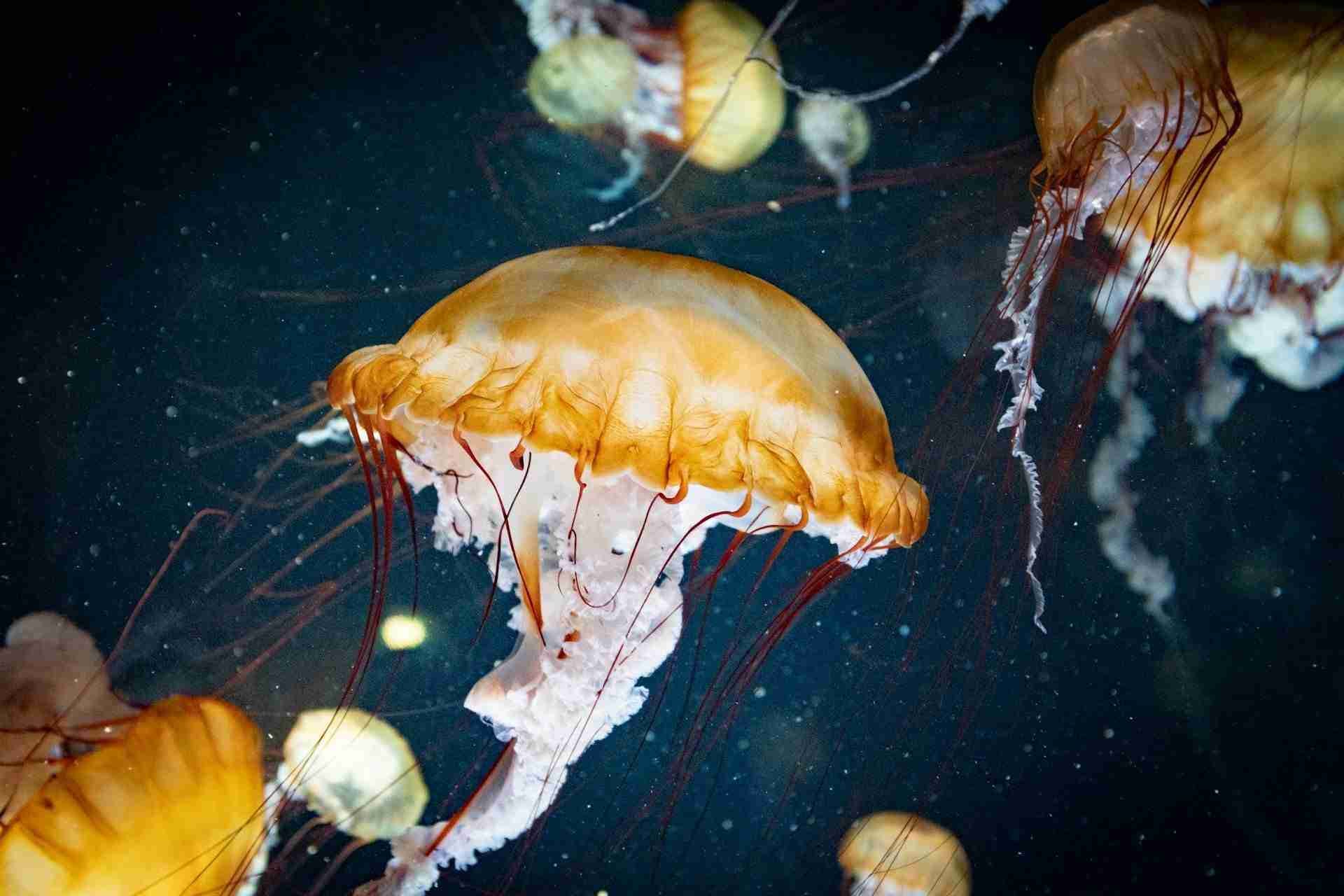
: The layout of Nausicaá encourages quiet contemplation, and it's common to find visitors silhouetted against massive glowing tanks. These moments are perfect for environmental portraiture or visual storytelling—especially when capturing the contrast between human scale and ocean life. Children reaching toward jellyfish tanks, or silhouettes framed by soft marine light, are particularly effective in emotionally resonant images.
Best Time to Visit
For exterior photography, golden hour provides the best light, casting soft, warm tones across the building's smooth exterior surfaces and helping define the structure's contours. Cloudy or misty mornings work especially well for minimalist compositions with the building's neutral palette blending into the sea and sky.
Interior photography is best done earlier in the day, when crowds are thinner and you're more likely to find clean compositions without obstructions. The aquarium lighting remains consistent, but visiting during off-peak hours allows for more controlled, quiet shots—especially important when working in low light and relying on slower shutter speeds.
Blue hour offers unique exterior compositions as the interior lighting begins to glow through the building's many windows. Reflections in puddles or across the nearby sea wall can add mood and context to shots taken from the esplanade or beach.
How to Get There
Nausicaá is located at Boulevard Sainte-Beuve in Boulogne-sur-Mer, directly on the seafront and easily accessible by foot, car, or public transportation. If arriving by train, Boulogne-Ville station is about a 20-minute walk or a short bus ride away. Paid parking is available in front of the complex and nearby lots, with ample access for pedestrians and cyclists.
The facility is open daily, with extended hours during school holidays and summer months. Photography is allowed throughout most of the building for personal use, but flash and tripods are prohibited inside the exhibits. Plan to bring a fast prime lens or high ISO-capable camera for best results in the darker interior spaces.
Exploring the Surrounding Area
Nausicaá sits at the heart of Boulogne-sur-Mer's revitalized waterfront district, just steps from sandy beaches, breakwaters, and the working harbor. After photographing inside, take a walk along the promenade for moody seascapes or shoot the exterior again as it transforms under changing light.
To the north lies the Casino de Boulogne-sur-Mer, and just beyond that, the Plage de Boulogne, where dramatic skies and long-exposure waves meet breakwaters and fishing boats—ideal for extending your shoot into classic coastal landscapes. Inland, the town's upper old quarter features the Basilica of Notre-Dame, cobbled streets, and fortified ramparts, offering contrasting architectural and documentary photo opportunities.
Nearby Photography Locations
: Just a short walk uphill from the waterfront, the old town features medieval walls, narrow lanes, and historic stonework—excellent for street photography and capturing French coastal heritage.
• Plage de Boulogne and the Jetty
: This long beach and stone jetty stretch out into the Channel and offer clean lines, minimalist wave patterns, and great light at sunset or during stormy conditions.
• Nausicaá Rooftop Viewpoint
: The top-level viewing deck provides a strong perspective over the harbor, breakwaters, and English Channel beyond. Excellent for compressed long-lens views or wide scenic captures in golden light.
: A 25-minute drive north, this high chalk cliff offers sweeping Channel views and dramatic landforms—ideal for combining with a day trip that starts at Nausicaá.
: A colorful seaside town just minutes north, with charming Belle Époque architecture, beach huts, and a picturesque promenade—perfect for lifestyle, architectural, or nostalgic beach photography.
Nausicaá is a place where design and nature meet in fluid motion—where curves of glass and concrete echo the gentle arc of fish and wave, and where light moves across both structure and sea with hypnotic grace. Whether you're drawn to the pulse of marine life, the abstraction of form, or the quiet moments where people meet the ocean in awe, this modern temple to the sea offers a rare blend of architecture, emotion, and photographic depth.
Comments
Loading comments…