
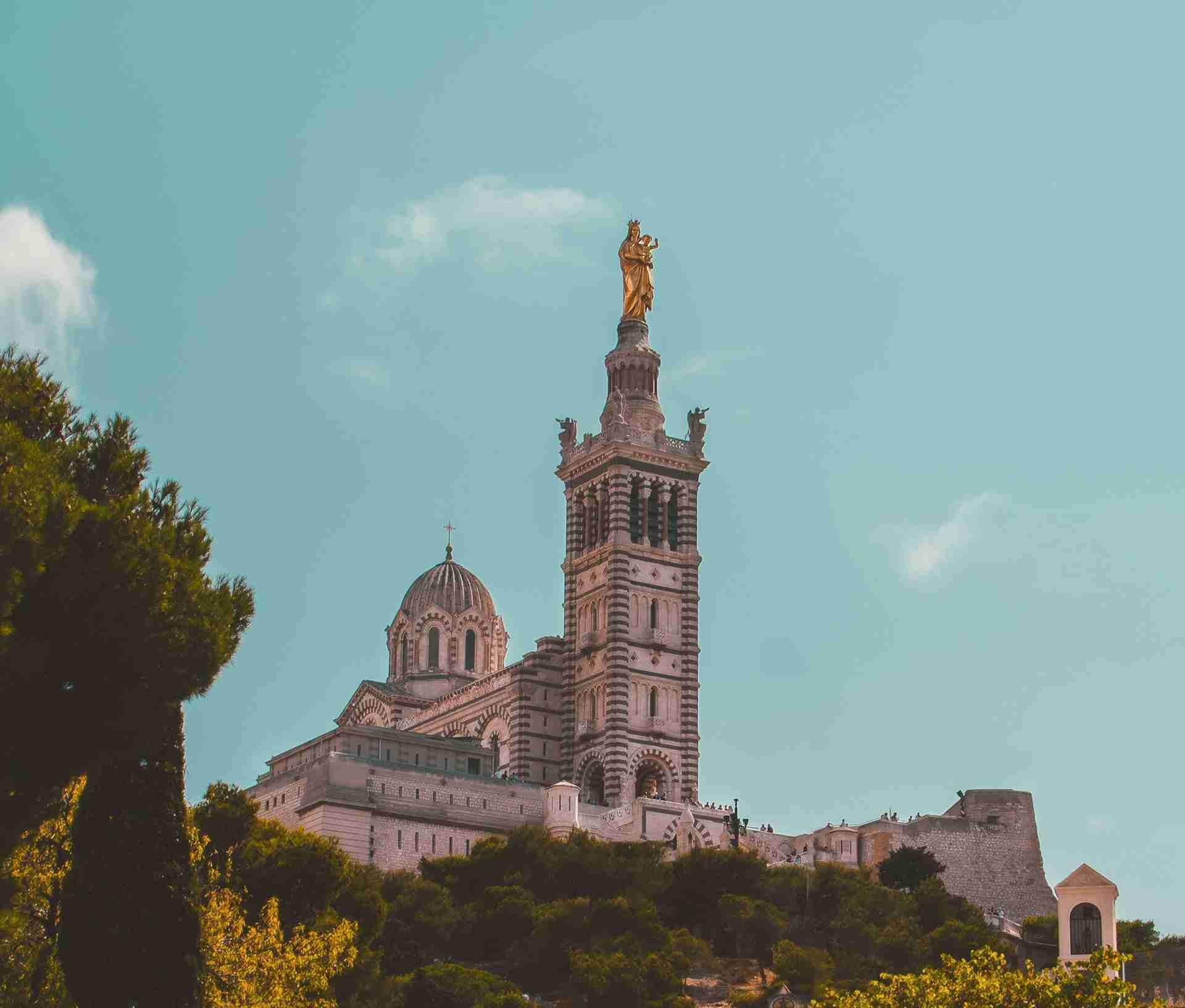
Standing sentinel over Marseille from its limestone perch, Notre-Dame de la Garde is both a spiritual beacon and a visual anchor for photographers exploring the city. Known affectionately as la Bonne Mère by locals, this 19th-century basilica crowns the highest natural point in Marseille, offering a 360-degree view that stretches from the rooftops of the Vieux-Port to the cliffs of the Calanques and the open sweep of the Mediterranean. Its Romano-Byzantine architecture—marked by striped stonework, domes, mosaics, and the iconic golden statue of the Virgin Mary—makes it a richly detailed subject up close. From sweeping skyline panoramas to intimate interior lightplay, Notre-Dame de la Garde is essential territory for any photographer working in Marseille.
Best Photography Opportunities
• Panoramic Cityscapes from the Upper Terrace
: The platform encircling the basilica provides one of the most commanding views in southern France. From here, you can shoot west over the Vieux-Port and the rooftops of the Panier district, or turn south for views of the Corniche and the jagged silhouettes of the Calanques. Golden hour casts warm light over the terracotta rooftops, while twilight reveals the city glittering with urban energy. A wide-angle lens captures the full expanse, but a telephoto will help isolate architectural details, shipping lanes, or distant landmarks like the Frioul Islands.
• The Basilica Facade and Bell Tower
: The striped stone exterior, massive bell tower, and gilded statue of the Virgin and Child are iconic elements that reward careful framing. Shooting from the lower levels of the hill or the approach road allows you to incorporate foreground steps or people into your composition, providing scale and a sense of pilgrimage. Midday sidelight works well to enhance the texture of the stonework, while morning or evening shadows create more dramatic results.
• Interior Mosaics and Light Shafts
: Inside the basilica, rich gold-and-blue mosaics, hanging model ships, and columns of striped marble make for visually arresting compositions. Look for shafts of natural light filtering through narrow windows, especially in the early morning or late afternoon. A fast lens and high ISO can help in the low light, though a tripod may be difficult due to foot traffic and interior restrictions.
• Pilgrims and Processions
: On religious feast days or weekends, the site is filled with visitors lighting candles, leaving offerings, or climbing the steps in quiet procession. These moments present opportunities for narrative or documentary-style photography. Shooting with a longer lens from a discreet distance allows you to capture emotion and gesture without intruding, especially against the backdrop of the basilica's monumental scale.
• Framing with the Surrounding Landscape
: Step back onto nearby hillsides or road bends on the Corniche Kennedy to photograph Notre-Dame de la Garde rising from the Marseille skyline. These mid-distance views allow you to balance the church against the density of the city below, or silhouette it against coastal skies during sunset. It's also an ideal opportunity to incorporate Marseille's varied geography—harbor, hill, and sea—into a single, layered frame.
Best Time to Visit
The basilica's hilltop position means that lighting changes dramatically throughout the day, offering unique moods and exposures depending on when you shoot. Early morning provides soft, golden light from the east, bathing the eastern side of the building and creating excellent conditions for interior work as sunlight streams in through the high windows. Sunrise sessions also mean fewer crowds, ideal for tripod work or wide shots without obstruction.
Late afternoon to sunset is arguably the most photogenic time to capture exterior and panoramic cityscape shots. The sun sets over the sea to the west, casting a glowing wash over Marseille's varied architectural layers. Blue hour is particularly stunning here, with the basilica lit from below and the city lights beginning to sparkle far beneath it.
Summer months offer consistently clear skies, but also high foot traffic and hazy midday light. Spring and autumn bring better atmospheric clarity and a more relaxed pace, perfect for slower, more deliberate shooting. In winter, strong winds and sudden storms can create dramatic skies, though cold conditions and limited daylight may require faster, more spontaneous work.
How to Get There
Notre-Dame de la Garde is accessible via road, public transport, or on foot, with each option offering its own photographic benefits. The most scenic route is the uphill walk from the Old Port, either via Rue Fort du Sanctuaire or through the Jardin du Bois Sacré. The walk takes about 30–40 minutes and offers progressively wider views of the city as you ascend.
For those arriving by public transit, RTM Bus 60 departs regularly from the Old Port and drops visitors at the base of the hill, just a few minutes' walk from the basilica. Parking is available near the top, though spaces are limited, especially in the afternoon. Photographers carrying heavy gear should consider an early start to beat the crowds and secure a good spot. For drone operators, note that the site lies within a restricted urban airspace zone, so be sure to check current regulations and restrictions.
Exploring the Site and Its Surroundings
The hilltop that Notre-Dame de la Garde sits on offers more than just a view—it's a natural frame for observing Marseille's layered history and diverse topography. Wander the paths that circle the summit for alternate perspectives of the basilica and sweeping shots of the coastline. Nearby staircases and stone paths descend toward the city, where changing elevation allows for varied framing opportunities—from compressed city grids to sweeping harbor curves.
Small shrines and sculptures dotted along the perimeter paths provide foreground interest for wider shots, especially when using a shallow depth of field. In early spring, wildflowers bloom in the cracks of the stone, offering subtle color accents for close-up work or atmospheric scene-setting. As light shifts across the city below, so too does the mood from this high vantage point, making it a rewarding location to revisit at different times of day.
Nearby Photography Locations
: Just down the hill along the Corniche, this traditional fishing cove is full of charm and contrast. With its arched viaduct, colorful boats, and quiet harbor waters, it's ideal for early morning reflections or blue hour street scenes that feel worlds away from the city above.
: Only a short distance away, the Old Port is a lively mix of modernity and tradition. Capture early morning markets, mirrored reflections beneath the Ombrière, or sweeping views framed by boats and harbor activity. It's particularly photogenic at sunrise and sunset.
: Located just west of the Old Port, this 19th-century palace offers manicured gardens and dramatic views back toward Notre-Dame de la Garde and the Vieux-Port. It's one of the best places to photograph the basilica as part of Marseille's skyline, especially in the late afternoon.
: A lesser-known green space on the slopes below the basilica, this park offers filtered views of the dome and statue through pines and stone terraces. It's a good spot for more intimate, natural-feeling compositions and a welcome retreat from tourist crowds.
: These two historic military structures bracket the entrance to the Old Port. From their elevated viewpoints, you can frame the city's architectural evolution—from medieval walls to modern waterfronts—with Notre-Dame de la Garde always rising in the background as a visual anchor.
Notre-Dame de la Garde is more than just a monument—it's Marseille's watchtower, its compass, and its most enduring photographic subject. From every angle and at every hour, it offers new ways to frame the city, to chase the light, and to capture the relationship between the sacred and the urban. Whether you're after sweeping vistas or quiet, sacred detail, this hilltop basilica is not just a place to shoot from—but a place to truly see Marseille.
Comments
Loading comments…