
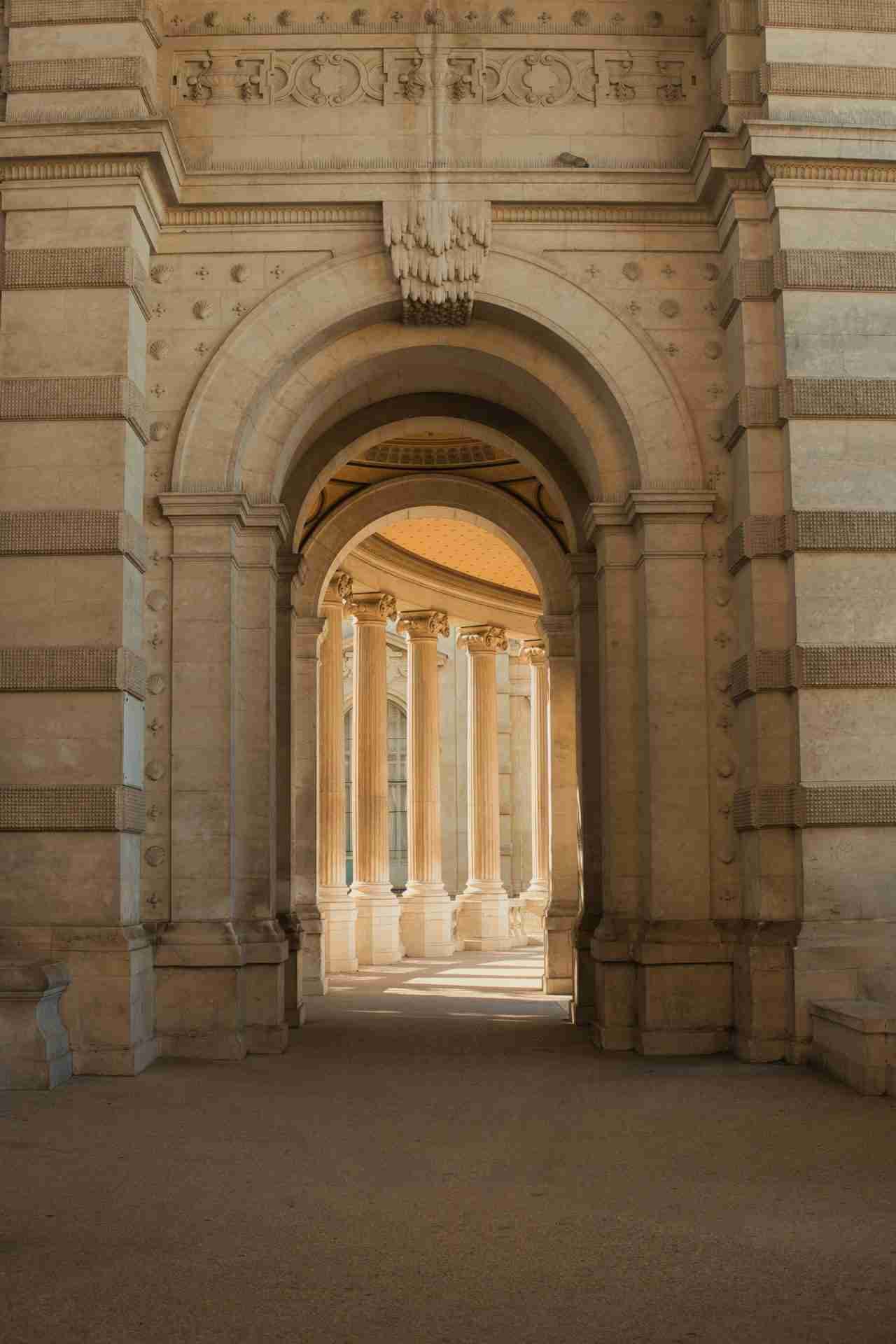
Palais Longchamp sits slightly elevated above the surrounding streets of Marseille, opening up into a wide, formal space built around its central fountain and sweeping arches. The structure was originally designed to celebrate the arrival of water into the city, and that connection still defines how the space feels today. Water flows through the fountain and down the steps, with the long colonnades stretching out on either side and two museum wings anchoring the layout. The whole area feels open, with clear sight lines and a strong sense of symmetry built into the design. At the same time, there is enough space around it to step back, walk the edges, and see how the structure fits into the surrounding park.
Best Photography Opportunities
• Central Fountain and Staircase Compositions
The main fountain is the anchor of the whole space and the easiest place to start building a strong shot. Standing directly in front gives you a very balanced composition, with the water leading up toward the arches and everything lining up naturally. From there, you can make small adjustments left or right to fine tune how symmetrical you want the frame to feel. The steps and cascading water add layers without making things complicated, so you can keep the composition clean while still having depth. It's worth trying a few variations here, especially with different focal lengths to see how much of the scene you want to include. This is one of those setups that works in almost any light.
• Side Colonnades and Repeating Arches
Once you move away from the center, the long rows of columns on either side open up a completely different set of shots. Shooting along the colonnades gives you strong leading lines and repeating shapes that naturally pull the viewer into the frame. You can keep it simple by focusing just on the arches, or include parts of the fountain and open space to add more context. Light and shadow play a big role here, especially when the sun starts to create contrast across the columns. It's a good area to slow down and work through a few compositions rather than just grabbing one shot. There's a lot of variety in a relatively small space.
• Upper Level Views Looking Back Over the Fountain
Heading up the steps gives you a higher angle that changes how everything fits together. From here, you can see more of the layout, with the fountain basin, steps, and surrounding space all connecting in one frame. This works well if you want to show the full design rather than focusing on a single element. You can control how much foreground you include by shifting your position slightly along the upper level. It's also a good place to step back and reset if you've been working tighter compositions below. The perspective shift makes it worth revisiting more than once.
• Framing with Arches and Sculptural Details
There are plenty of opportunities to shoot through parts of the structure rather than just at it. Using arches or statues in the foreground helps build depth and gives your image a more layered feel. You can frame sections of the fountain or isolate parts of the architecture depending on your angle. Small movements make a big difference here, especially in how the elements overlap. It's a good way to move away from the obvious compositions and create something that feels a bit more considered. This approach works across most of the site.
• Garden Side Compositions Behind the Palace
Behind the main structure, the atmosphere shifts into a more relaxed park setting. Trees, paths, and open grass give you softer compositions that contrast nicely with the strong lines out front. You can frame parts of the building through the trees or focus on smaller scenes within the garden itself. It's also a useful area if the front is busy, giving you space to keep shooting without interruption. The change in environment helps add variety to your overall set of images. It's worth spending time back here rather than just focusing on the main façade.
Best Time to Visit
Early morning is easily one of the best times to shoot here. The light is softer, the stone picks up more subtle tones, and you're far more likely to have space to work without people constantly moving through your frame. This is the time to focus on cleaner compositions, especially around the central fountain and main axis.
Late afternoon into early evening is another strong window, with warmer light adding depth to the structure and more contrast along the colonnades. Shadows start to stretch across the space, which helps define shape and texture in a way that midday light doesn't. Midday is still workable, but the light can feel flatter and harsher, especially on the lighter stone. If you're there at that time, shifting toward the side colonnades or garden areas can help you manage it better. Overcast conditions are actually very usable as well, especially if you want even light across the entire scene without strong shadows.
How to Get There
Palais Longchamp is located in Marseille and is very easy to reach using public transport. The closest metro stop is Cinq Avenues Longchamp, just a short walk from the entrance. Trams and buses also run through the area, making it straightforward to access from most parts of the city.
If you're driving, there is street parking nearby, though it can take a bit of time to find a spot depending on the time of day. The park and exterior areas are free to access, while the museums inside the buildings may require a ticket. Once you're there, everything is easy to navigate on foot, with wide open space and clear paths connecting different parts of the site.
Recommended Photography Gear
A standard zoom lens is all you really need to cover most situations here. It gives you the flexibility to move between wider shots of the full structure and tighter compositions without constantly switching lenses. A wide lens is useful for emphasizing symmetry and capturing the full scale of the fountain and arches. A short telephoto can help isolate details in the architecture or compress patterns in the colonnades.
A tripod can be useful if you want to experiment with longer exposures of the water or shoot in lower light, but it can be less practical when the area is busy. A polarizer can help manage glare on the water and slightly deepen tones in the stone and sky. Since you'll be moving around a lot, keeping your setup light makes it easier to work through different angles without slowing yourself down.
Nearby Photography Locations
The old port is one of the most active areas in the city and gives you a completely different kind of subject. Boats, reflections, and surrounding buildings create a layered scene that works well in both wide and tighter compositions. Early morning is especially good if you want calmer water and fewer people.
This cathedral stands right near the waterfront and has a very bold look with strong lines and contrasting stonework. It's a great subject for both exterior and interior photography if access is open. The scale of the building makes it easy to work with from multiple angles.
Le Panier is full of narrow streets, textured walls, and small details that are perfect for street photography. It's a nice contrast to the open space of Palais Longchamp, giving you something more intimate to work with. You can easily spend time just wandering and picking out smaller scenes.
Sitting above the city, this spot gives you wide views across Marseille and out toward the sea. It's one of the best places to get a sense of the city as a whole. The elevation makes it especially strong in early or late light.
Parc Borély offers a mix of formal gardens, open lawns, and water features. It's a good place to continue shooting in a more relaxed environment after the structure of Palais Longchamp. The variety makes it easy to find something different to work with.
Comments
Loading comments…