
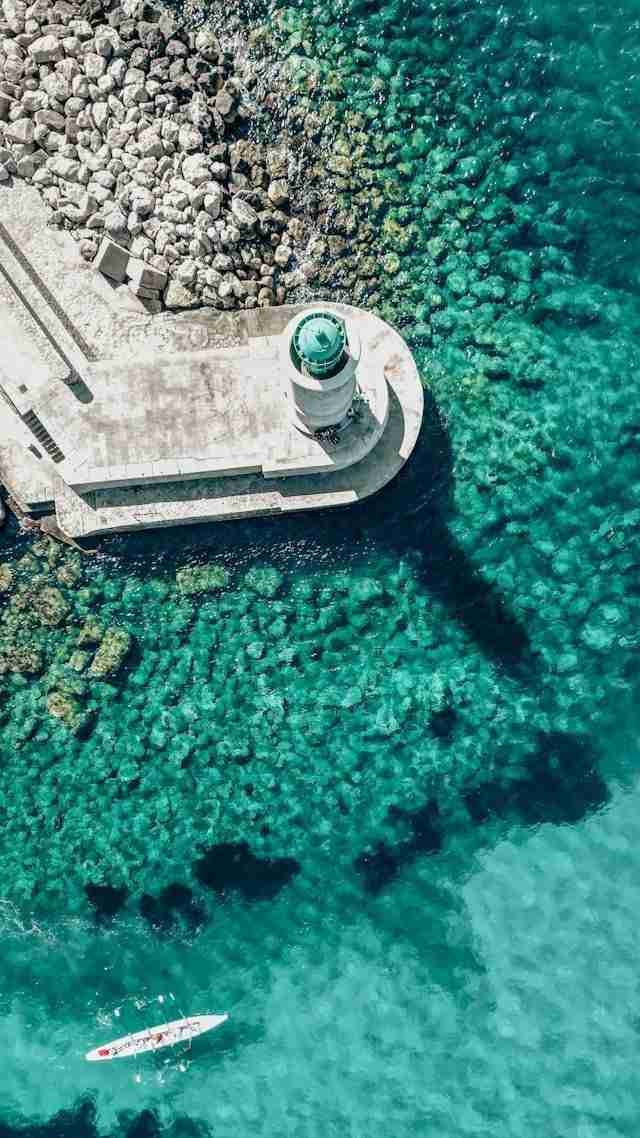
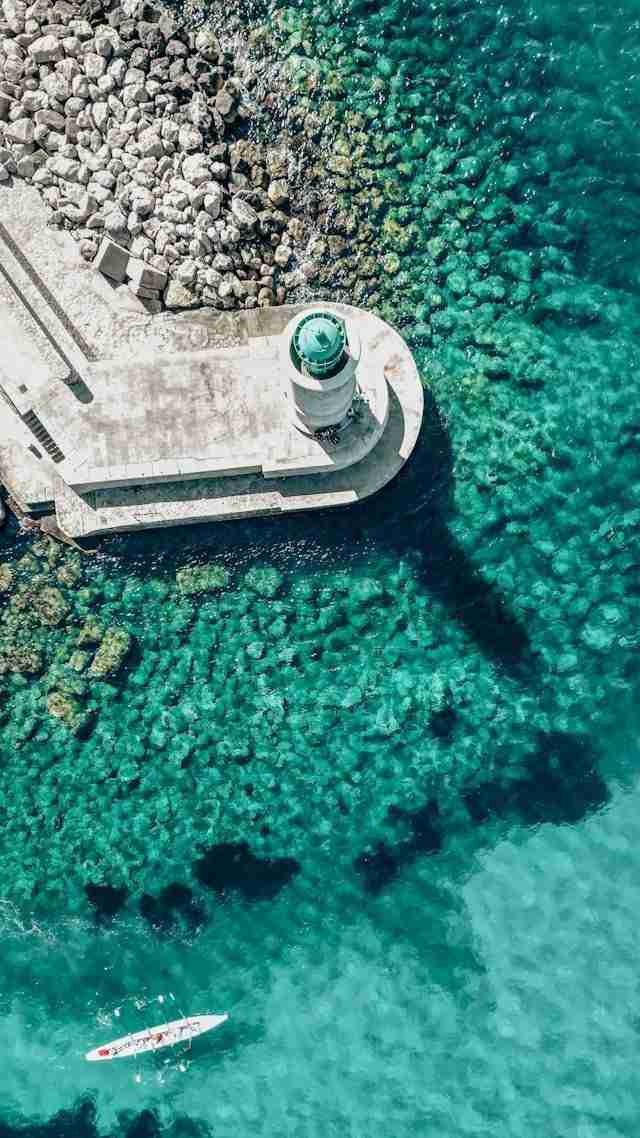
Guarding the entrance to the picturesque port of Cassis, the Phare de Cassis (Cassis Lighthouse) is a modest but elegant maritime structure perched at the end of a long stone jetty. Set against the deep blues of the Mediterranean and backed by the limestone cliffs of Cap Canaille, this lighthouse is a compelling subject for seascape and coastal photographers alike. With its soft green lantern dome, pale stone tower, and sweeping harbor views, the Phare de Cassis offers minimalist beauty, subtle geometry, and a strong sense of place within the dramatic Provence coastline.
Best Photography Opportunities
• Phare de Cassis from the Breakwater
: The best vantage point is along the curved jetty that leads directly to the lighthouse. From here, you can photograph the lighthouse with dramatic foreground waves or with calm reflections at dusk. The shape of the breakwater provides strong leading lines, drawing the viewer's eye straight to the lighthouse. This spot works particularly well for low-angle compositions, especially when waves are crashing against the rocks, adding texture and energy to the frame. A wide-angle lens captures the arc of the jetty, while a longer lens compresses the lighthouse against the distant cliffs of Cap Canaille.
• Sunrise from the Harbor
: Early morning offers a soft, diffused light that backlights the lighthouse while illuminating the boats moored nearby. The soft pink and orange tones of the sky often reflect off the harbor's surface, creating a tranquil mood that complements the rustic architecture. Position yourself near the café terraces or along the inner harbor wall to incorporate elements of Cassis' waterfront charm—awning-covered patios, pastel façades, and moored fishing boats—framing the lighthouse in context with the village's daily rhythm just beginning to stir.
• Golden Hour with Cap Canaille
: Position yourself across the harbor in late afternoon to frame the lighthouse with Cap Canaille looming behind. The steep, glowing cliffs during sunset contrast beautifully with the green lantern of the Phare de Cassis, giving a dramatic sense of place. This angle is ideal for horizontal compositions that showcase the juxtaposition between natural geology and maritime structure. The play of warm light on the cliffs adds dimensionality, while reflections in the harbor water can serve as a mirror for the entire landscape when conditions are calm.
• Long Exposure Seascapes
: Use an ND filter to capture long exposures of the lighthouse with silky water movement. This technique works best on overcast days or just before sunset, when the light is even and the harbor's activity has slowed. The smoothness of the water contrasts beautifully with the textured stone of the jetty and the lighthouse itself, emphasizing form and mood over detail. Incorporating cloud movement adds dynamic flow to the scene, and the elongated exposures tend to strip away the distractions of passing boats, allowing the structure to stand in solitary prominence.
• Drone Perspectives
: Aerial shots of the Phare de Cassis highlight the curvature of the harbor and its relation to the town's layout. From above, the transition from turquoise water to red-roofed buildings is visually rich, especially when shooting at a low oblique angle during late afternoon light. A top-down view captures the geometry of the port and breakwater, while pulling back slightly reveals the broader sweep of Cap Canaille and the village tucked between sea and cliff. This is a particularly effective way to contextualize the lighthouse within the broader Provençal coastal environment.
Best Time to Visit
The Phare de Cassis rewards photographers year-round, but the most favorable conditions are typically found in late spring and early autumn. From April to early June, the weather is mild and skies are often clear, allowing for excellent morning and evening light. The harbor is active but not overcrowded, and the water retains its deep blue clarity. September to October offers similarly gentle lighting and fewer tourists, with warmer tones enhancing the golden cliffs behind the lighthouse.
For sunrises, aim for the months when the sun rises directly behind or beside the lighthouse as seen from the harbor, typically around March and October. These months also offer cleaner air and less humidity, which improves contrast and visibility—particularly valuable when capturing distant background features like Cap Canaille. Sunset sessions benefit from positioning across the bay, ideally between 6 p.m. and 8 p.m., when the cliffs behind Cassis catch the last light. The harbor's orientation to the west makes it especially responsive to golden hour illumination, with long, warm reflections trailing across the water.
Avoid high summer afternoons when harsh, overhead light flattens the textures of stone and sea. July and August also bring heavy tourist traffic, which can crowd the harbor and breakwater, making it difficult to set up a stable composition. Winter months are quieter and can offer moody skies and dramatic weather—ideal for monochrome or long exposure work—but be prepared for unpredictable wind and rougher sea conditions that may limit drone or seascape shooting. With some flexibility, shoulder seasons offer the best mix of quality light, atmosphere, and photographic access.
How to Get There
Cassis is accessible via train or car from Marseille, located roughly 30 minutes to the west. From the Cassis train station, it's a short bus ride or taxi trip into the town center. If you're driving, there are multiple paid parking options near the harbor, such as Parking Mimosas or Parking des Gorguettes, though these can fill quickly during peak seasons.
Once in town, the lighthouse is easily reached on foot by strolling through the old port. Follow the waterfront past the cafés and boats, and you'll find the stone jetty extending out to sea. The path is flat and well-maintained, making it accessible for carrying tripods or gear bags. For sunrise shoots, it's best to arrive early, as the area remains quiet before the shops and restaurants open.
Scenes Beyond the Lighthouse
The immediate surroundings of the Phare de Cassis offer a bounty of photographic subjects. The harbor itself, lined with colorful buildings and traditional fishing boats called pointus, is a fantastic setting for detail shots and ambient street scenes. Turn inland and the narrow, winding streets of Cassis present opportunities for intimate village photography—shuttered windows, stone façades, and vibrant market life. Meanwhile, the waterfront cafés glow invitingly during blue hour, casting warm reflections into the water that add life to nighttime compositions. For a wider perspective, climb the nearby Sentier du Petit Prince for elevated views over the lighthouse and harbor, ideal for capturing the relationship between Cassis, the sea, and the cliffs.
Nearby Photography Locations
: Just a 15-minute walk from the lighthouse, Port-Miou is the easternmost calanque and one of the most accessible. Its narrow inlet lined with sailboats offers exceptional compositions combining rock, water, and geometry. At golden hour, the limestone cliffs glow with soft pastel hues that make for serene and balanced images.
: Towering above Cassis, this dramatic cliff is one of the highest maritime bluffs in Europe. Drive or hike to the Route des Crêtes for panoramic views that stretch from the lighthouse to the Calanques. At sunset, the stratified cliff faces turn amber and red, contrasting beautifully with the deep blues of the sea below.
: Though more challenging to reach, En-Vau is perhaps the most iconic calanque near Cassis. The steep hike is rewarded with towering limestone walls, crystalline turquoise water, and superb framing opportunities from the clifftops above. Midday is ideal here, as the sun lights the narrow canyon directly.
: Located less than an hour away, this tiny fishing cove on the edge of Marseille blends rustic charm with urban contrast. The stone bridge, anchored boats, and seafood restaurants give it a character that's very different from Cassis, making it an intriguing counterpoint for street and seascape photography.
: East of Cassis, La Ciotat's historic port offers a more industrial feel with a blend of shipyards and quaint coastal architecture. The juxtaposition of working docks and Mediterranean charm makes it ideal for those seeking maritime photography with a documentary edge.
Whether you're chasing dawn light over a quiet harbor or capturing bold sunsets against towering cliffs, photographing the Phare de Cassis is as much about mood as it is about structure. Its modest scale is offset by its cinematic setting, making it an ideal study in composition, light, and local atmosphere. For those seeking a coastal location rich in nuance and Provençal identity, this lighthouse delivers more than its size might suggest—inviting both patience and experimentation in every frame.
Comments
Loading comments…