
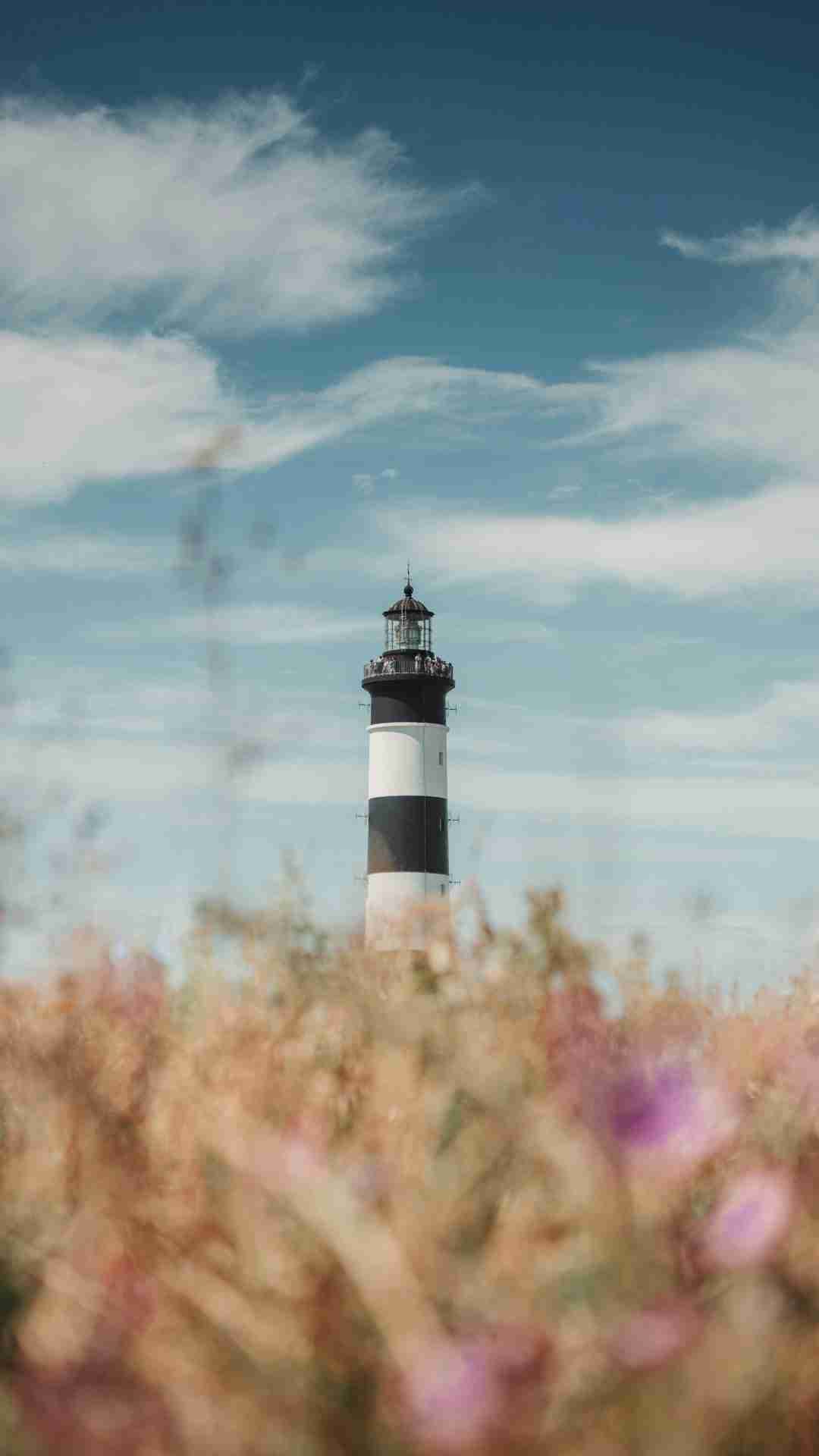
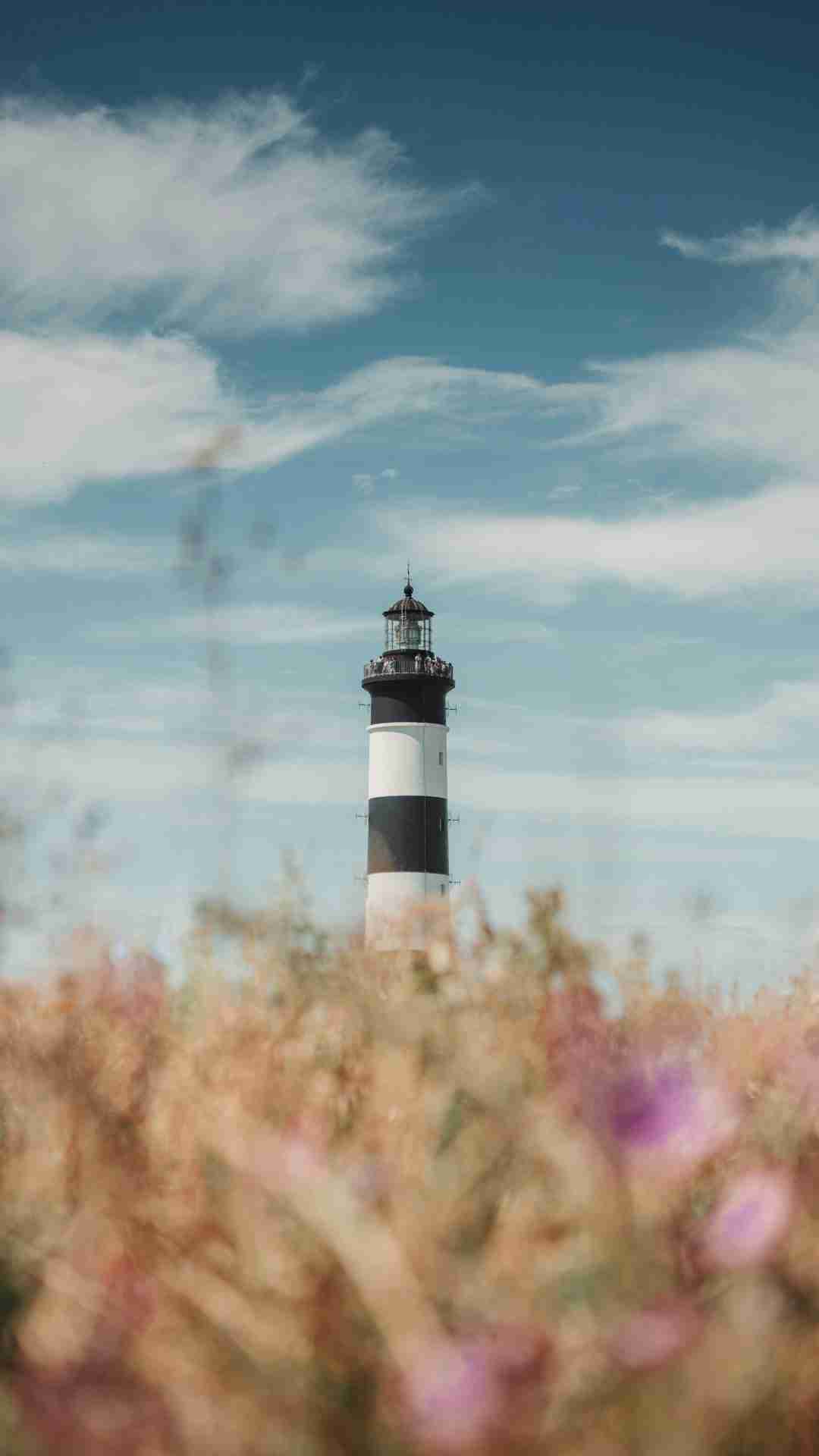
At the northernmost point of Île d'Oléron, the Phare de Chassiron rises above the cliffs like a black and white sentinel watching over the Atlantic. This 19th century lighthouse is not only a navigational landmark but also a striking photographic subject set against the drama of sky, sea, and stone. The stark contrast of its striped cylindrical form and its exposed coastal setting offers rich opportunities for seascape composition, geometric framing, and minimalist detail work. With its landscaped gardens, surrounding cliffs, and ever changing weather, the Chassiron Lighthouse is an ideal location for photographers looking to capture the rhythm of the sea meeting the edge of land.
Best Photography Opportunities
• From the Clifftop Path
From the circular trail that loops around the headland, you can capture full views of the lighthouse standing tall against the ocean or sky, depending on your angle. A wide lens in the 16 to 35mm range helps fit both the structure and the surrounding gardens or cliffs into frame without distortion. On clear days, the bold black and white stripes contrast beautifully with the blue Atlantic and the pale limestone terrain. Early morning or late afternoon light brings soft shadows and rich color to the scene, emphasizing the cylindrical depth of the tower.
• Symmetry and Leading Lines in the Garden Pathways
The lighthouse grounds are laid out in a geometric pattern of hedges and walkways that radiate outward from the base of the tower. From directly in front, you can use these lines to lead the viewer's eye up to the tower itself. This symmetrical approach works well with a standard focal length and benefits from centered, balanced compositions. Shooting during golden hour softens the light on the white stone and allows for even exposure between the sky and the foreground. Including visitors in the frame can add scale and narrative.
• Detail Shots of Texture and Contrast
Close ups of the lighthouse's painted surface reveal textures in the aging stone and subtle wear in the black and white paint. The cast iron lantern gallery and windows provide strong subjects for tight framing. These abstract compositions are best captured on overcast days, which eliminate harsh shadow and bring out tonal subtleties. A short telephoto lens helps isolate the details from background clutter and lets you crop out surrounding elements when focusing on line and texture.
• Seascapes from the Cliffs Below
Just beyond the lighthouse grounds, a narrow trail leads down toward the rocky shoreline. From here, you can photograph the cliffs and the sea below the tower. Long exposures at the water's edge smooth out the tide and reveal movement in the waves, while including the tower in the upper frame adds vertical contrast. These compositions are strongest at sunrise or sunset when the sky glows behind the structure or casts warm tones on the rocks. Be cautious of slippery surfaces near the water, especially during high tide or windy conditions.
• Night Photography Under Clear Skies
On clear nights, the Phare de Chassiron becomes an elegant beacon set against a darkened sky. The rotating light beam adds a dynamic element to long exposures, while the tower's shape remains bold and centered in frame. Bring a tripod and a wide lens for sky coverage. If conditions allow, you may capture faint stars or a glowing horizon. The lighthouse itself is softly lit from below, providing enough illumination for balanced exposures without additional lighting. Plan for a moonless night to maximize sky visibility and minimize glare.
Best Time to Visit
Photography at the Phare de Chassiron is rewarding throughout the year, but timing matters for light quality, access, and weather. Sunrise and sunset provide the best natural light, with golden tones warming the lighthouse façade and softening the sky sea transition. Summer months bring long days and clearer skies, while autumn introduces more cloud texture and dramatic weather fronts for moody seascapes. Winter offers solitude and low angled light but comes with cold winds and rougher sea conditions. Overcast days are ideal for detail shots and balanced exposures without harsh contrast. Arriving early in the morning or in the final hour before sunset gives you quieter access and more controlled lighting.
How to Get There
Phare de Chassiron is located at the tip of Saint-Denis-d'Oléron on Île d'Oléron, accessible via a causeway from the mainland. From the town of Saint-Denis, follow signs north to the lighthouse parking area. The site is well marked and includes a visitor center, café, and public restrooms. Parking is available nearby and is free or low-cost depending on season. Entry to the lighthouse grounds is unrestricted, but access to the interior and tower viewing deck requires a ticket during operating hours. Photographers should check closing times if they plan to shoot from inside. Drones are not allowed near the tower due to local airspace restrictions. The clifftop paths and gardens are fully open to the public year round.
Recommended Photography Gear
A wide zoom in the 16 to 35mm range is ideal for full compositions and garden symmetry, while a 70 to 200mm telephoto lens is excellent for isolating lighthouse details and capturing compressed views of the coastline. A tripod is essential for low light and long exposure seascapes. A circular polarizer can enhance sky contrast and reduce surface glare off the sea and glass. For long exposures at the shore, bring a neutral density filter to extend shutter speeds. Sturdy footwear is recommended for the cliff paths and shoreline trails.
Nearby Photography Locations
Just a short drive south, this working port offers boats, stone quays, and quiet morning reflections. It is best photographed at dawn when the light hits the water and the port activity begins. Long lenses work well for isolating colorful details.
Located west of the lighthouse, this long sandy beach features dunes, tidal pools, and strong wave action. It is ideal for minimalist compositions or wide seascapes under dramatic skies. Sunset light here is especially rich and warm.
On clear days, you can see Fort Boyard from viewing points along the coast. A long telephoto lens allows you to capture the fortress rising from the sea, especially at sunrise when the sky behind it glows. It makes a compelling contrast to the nearby landforms.
Further south on the island, this historic citadel offers stone ramparts, fishing huts, and changing tidal flats. It is ideal for urban texture studies and coastal landscape work. Visit during high tide for dramatic water reflections against the fort walls.
This family beach features wooden groynes, shallow tidal waters, and a clean open horizon. The area works well for long exposure studies of water motion and is especially photogenic in soft twilight light.
Comments
Loading comments…