
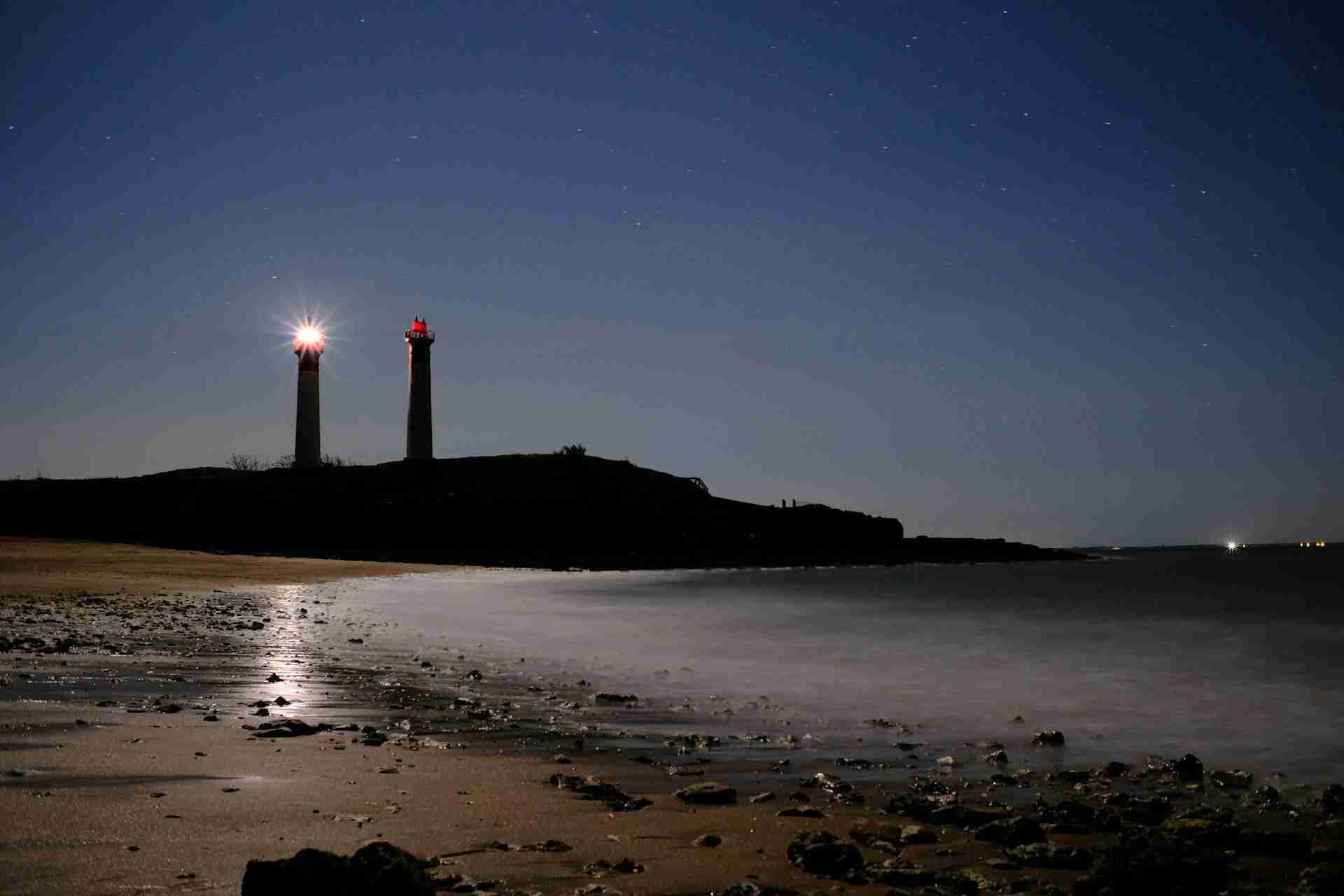
On a small, car-free island off the west coast of France, the twin lighthouses of Phare de l'Île d'Aix rise above windswept dunes and tidal inlets, offering a scene that feels frozen in time. These red-and-white striped towers, standing side by side near the island's northern tip, are among the most striking coastal landmarks on the Atlantic seaboard. Photographers are drawn here for the clarity of line, the sweeping horizon, and the shifting interplay between water, sky, and light. Whether approached as subjects in a minimal composition or as anchors within a broader coastal landscape, the lighthouses reward both abstract vision and documentary precision. The island's compact size and pedestrian-only pathways allow for patient exploration, with the opportunity to frame the towers from dunes, cliffs, or open shoreline depending on tide and weather.
Best Photography Opportunities
• The Twin Towers in Alignment from the Southern Path
As you approach the lighthouses from the south via the main island path, the two towers come into view in a neat vertical alignment. This perspective allows for a symmetrical composition that highlights their near-identical forms. The grass-covered dunes and sandy trail create a natural leading line toward the structures, making this a strong anchor shot for any photographer's visit. In the early morning, soft light from the east casts warm highlights on the sides of the towers while keeping the sky a gentle gradient of blue and orange. Shooting from a lower angle, you can include the footpath or foreground vegetation to give depth to the frame and guide the viewer's eye toward the towers.
• High Perspective from the Western Bluffs
To the west of the lighthouse site, a gentle rise in the landscape offers one of the best elevated views on the island. From here, the two towers can be captured with the open ocean stretching behind them and Fort Boyard appearing faintly on the horizon. With a longer lens, you can compress the elements in the scene and create a layered image where land, sea, and sky are in harmony. Sunset is particularly rewarding from this angle, as the golden light washes over the ocean and gives the towers a glowing outline. The movement of clouds across the open sky also adds interest, especially if you are shooting with a slower shutter speed to bring out motion blur.
• Beachfront Compositions with Tidal Foregrounds
When the tide recedes from the northern beaches, it leaves behind an intricate network of tidal pools, sandbars, and smooth stones. These natural elements form engaging foregrounds that can be used to frame the lighthouses from below. The pools often reflect the twin towers, especially in the calm light of dawn or early evening. Shooting during low tide allows you to walk further out onto the exposed seabed and find new angles. A wide-angle lens can help capture the expansive nature of the scene while keeping the towers as the visual focal point. The reflective surfaces also respond well to polarizing filters, which cut down glare and enhance contrast between wet sand and sky.
• Twilight and Night Photography Under Open Skies
With no vehicles and very little artificial lighting, Île d'Aix offers an unusually clear view of the night sky. The twin towers become bold silhouettes against the stars, and on moonless nights you can experiment with long exposures to capture star trails circling above the structures. In summer, the Milky Way is often visible and can be aligned with the towers for a dramatic celestial composition. The active lighthouse beam creates a rotating arc of light that can add a dynamic element to your frame. Because the light is bright and intermittent, it is best to meter carefully and consider stacking shorter exposures to control the highlights. A sturdy tripod and remote shutter release are essential tools for working in these low-light conditions.
• Detail Work with Coastal Textures and Maritime Elements
While the towers dominate the skyline, the area surrounding them is full of smaller details that deserve attention. Rusted chains, driftwood, crumbling stone walls, and wild grasses all contribute to the story of the location. By shifting focus from the large structures to the elements at ground level, you can create a more intimate set of images that complement your wide shots. A macro or mid-range lens works well here, especially in overcast light when textures are more evenly lit. The contrast between the red and white paint of the towers and the muted earth tones of the nearby landscape can also provide opportunities for minimalist compositions that focus on color, shape, and surface.
Best Time to Visit
The light and mood at Phare de l'Île d'Aix change dramatically with the seasons and time of day. Spring is one of the best times to visit. The landscape begins to bloom with coastal wildflowers and the air is clear and crisp, ideal for shooting sharp, well-lit images. The towers are often bathed in soft golden light just after sunrise, which falls perfectly on their eastern faces. Morning sessions also tend to be quieter, allowing you to set up without interruption.
Summer brings more consistent weather and longer shooting windows, especially in the evening when the sun lingers low above the Atlantic. However, midday light can be harsh and reflective, so using a polarizer is important to control glare from the sand and sea. Early mornings and late afternoons remain the best periods for balanced lighting and atmosphere.
Autumn is less crowded and full of character. The grasses around the towers begin to turn pale gold and brown, and the skies often carry moving layers of cloud that bring energy to long exposures. Low-angle light enhances texture in both the towers and surrounding terrain. Winter, though more challenging, offers a unique experience. The lighthouses take on a stark presence under cold light and wind, and occasional sea fog creates ethereal conditions for more experimental work. The short days make it easier to catch both sunrise and sunset in a single session, but you will need to dress for wind and bring waterproof covers for your gear.
How to Get There
Île d'Aix is only accessible by ferry, which contributes to its peaceful and unspoiled atmosphere. The most common departure point is Fouras-les-Bains on the mainland, where ferry services run regularly from April through October. The journey takes about twenty minutes and delivers passengers to the island's southern dock. From the ferry terminal, it is roughly a fifteen to twenty-minute walk to the lighthouse area at the northern tip of the island. The path is clearly marked and follows a pleasant route through small roads and natural trails.
Cars are not allowed on the island, which means you will need to carry all of your photography equipment by hand or in a backpack. Bicycle rentals are available near the ferry terminal and can help you reach different points of interest quickly, though walking is often more rewarding since you can stop easily to scout for shots. There is no entrance fee to visit the lighthouses or the surrounding land, and the area is open year-round. Facilities on the island include a few cafes, restrooms, and shaded rest areas, but it is always a good idea to bring your own water and snacks, especially if you are planning a full day of photography.
Recommended Photography Gear
Because of the wide variety of compositions possible at Phare de l'Île d'Aix, bringing a flexible but thoughtful kit is the best approach. Start with a sturdy tripod that can handle uneven terrain and coastal winds. This is especially important for long exposures on the beach or during night sessions when stability is essential. A wide-angle lens, such as a 16–35mm, allows you to capture the towers in their full context along with sweeping views of the sea and sky. Pair this with a telephoto lens in the 70–200mm range for more focused compositions, including details on the towers, layered cloud formations, or distant views of Fort Boyard.
Filters are particularly useful here. A circular polarizer helps manage reflections from wet sand and tidal pools and enhances color saturation in skies and vegetation. A graduated neutral density filter can balance exposure between the bright sky and darker foreground when shooting at sunrise or sunset. For long-exposure work, bring a solid ND filter in the 6 to 10 stop range to stretch shutter speeds even in daylight. A remote shutter release and extra batteries will make your setup more reliable, especially during night photography or cold conditions.
Given the amount of walking involved, a comfortable backpack with waist support will help carry your gear across the island's trails. A rain cover for your camera and backpack is highly recommended, as weather conditions can change quickly near the coast. Footwear should be sturdy, with grip suitable for sandy and occasionally muddy paths. In summer, light breathable clothing with sun protection will keep you comfortable. In winter or late autumn, bring windproof layers and gloves that still allow you to operate your camera controls with precision.
Nearby Photography Locations
• Fort Boyard from the Northern Shoreline
While Fort Boyard itself is not open to visitors, it is clearly visible from the northern edge of Île d'Aix. When conditions are clear, the massive oval structure appears to float on the sea. Photographed from the beach using a telephoto lens, the fort adds a strong focal point to wide ocean compositions. During sunrise, the warm glow on the stone walls of the fort adds a striking contrast against the cool tones of the sky and water.
• Anse de la Croix and the Southern Beaches
Just a short walk from the ferry landing, this beach offers long curves of pale sand, shallow surf, and gentle wave patterns. At low tide, the beach reveals a large stretch of exposed seabed with interesting textures and shell fragments. It is an excellent location for shooting sunset reflections or working with minimalist seascapes. This area also gives clear views of Fort Enet and the straits separating Île d'Aix from the mainland.
• Fort de la Rade and the Harbor Area
Near the southern tip of the island, Fort de la Rade stands as a quiet relic of military architecture. Its angular stone walls, worn by time and tide, provide an excellent contrast to the clean lines of the lighthouses. The nearby harbor is lined with boats and piers that add character and structure to coastal compositions. Morning light is best here, especially when the harbor is still and reflections are most vivid.
• Interior Trails and Pine Groves
The inner part of the island features winding trails that lead through pine groves, open meadows, and fields bordered by low stone walls. These inland areas are perfect for capturing soft morning light filtering through branches or for composing quiet, balanced frames using trees and paths. After rain, the ground takes on a richer texture and the scent of pine fills the air, making it a peaceful and engaging place to work with slower, more deliberate compositions.
Phare de l'Île d'Aix is not a location that overwhelms you with drama. Instead, it offers clarity, calm, and space to think. The simplicity of the twin lighthouses, the natural rhythm of the sea, and the quiet movement of light across the landscape all work together to invite careful observation. Whether you are capturing bold geometry, soft seascapes, or small moments hidden in the grasses and stones, this island encourages you to slow down, look closely, and photograph with intention.
Comments
Loading comments…