
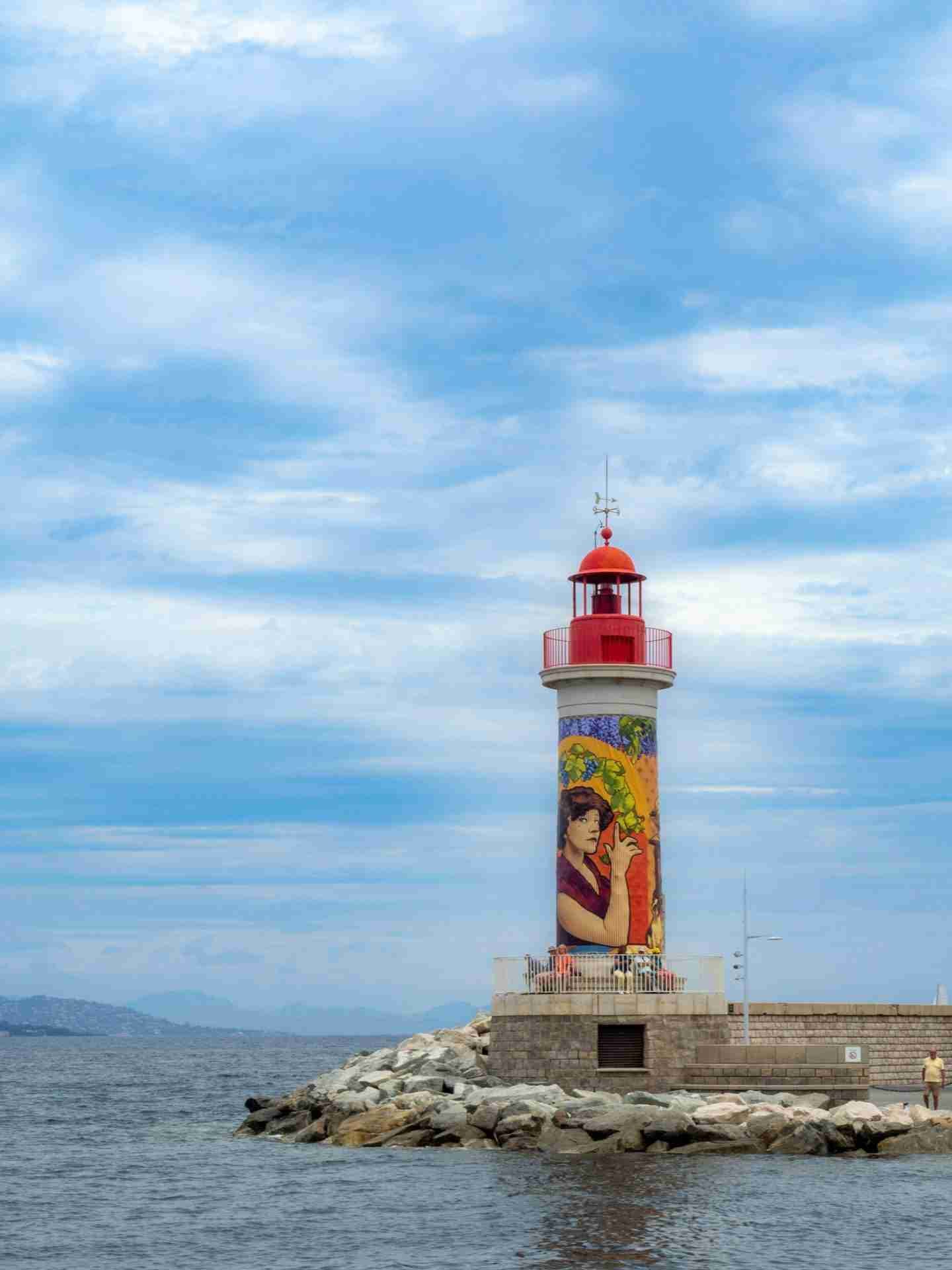
At the edge of Saint-Tropez's old harbor, the Phare de Saint-Tropez stands as a small but striking landmark on the Mediterranean coast. This cylindrical lighthouse, painted in white with a vivid red lantern, sits at the end of the jetty, guiding vessels into one of the most famous harbors in southern France. Surrounded by turquoise waters, luxury yachts, and the terracotta rooftops of the town, it provides photographers with a subject that bridges maritime tradition and modern coastal life. Unlike towering ocean lighthouses, its charm lies in its scale and setting: the lighthouse becomes both a focal point in wide harbor scenes and a distinctive detail in tighter compositions. With the ever-changing light of the Riviera, from golden dawn to pastel dusk, the Phare de Saint-Tropez is a rewarding location for photographers drawn to seascapes, urban context, and maritime culture.
Best Photography Opportunities
• Harborwide Compositions with Lighthouse Accent
One of the best ways to photograph the Phare de Saint-Tropez is to place it within the broader harbor scene. From the opposite quay, wide-angle compositions capture the lighthouse at the tip of the jetty, framed by moored yachts and the colorful town rising behind. Early morning light bathes the buildings in warm tones while the lighthouse glows in the first sun, creating contrast between natural and man-made forms. Mid-range focal lengths allow you to compress the scene, highlighting the lighthouse as a small but important detail against the crowded harbor. This perspective shows the relationship between the town's historic architecture and its maritime gateway.
• Close Studies of the Lighthouse Structure
Walking along the jetty brings you directly to the base of the lighthouse, where its cylindrical form and bright red lantern dominate the composition. Close shots reveal the texture of the stone base, the whitewashed tower, and the vibrant paint of the lantern housing. Shooting upward with a wide lens exaggerates its height, while telephoto lenses isolate the lantern against the open sky for clean, minimalistic images. Side lighting emphasizes the surface textures and makes the red stand out vividly against deep blue skies. These intimate studies highlight the craftsmanship and color scheme that distinguish this lighthouse.
• Golden Hour and Sunset Along the Jetty
The jetty itself is an excellent leading line, guiding the viewer's eye directly to the lighthouse. At sunset, warm tones wash across the stone walkway and reflect off the water, creating atmospheric scenes with the lighthouse as the anchor. Shooting from the harbor side allows for silhouettes against the fading light, while positioning beyond the lighthouse captures it glowing warmly with the pastel horizon beyond. Neutral density filters are useful here to extend exposures, smoothing the water and creating a tranquil effect that contrasts with the structured form of the lighthouse. These images highlight both color and serenity.
• Sea-Facing Views with Open Horizon
From boats or the opposite side of the jetty, the lighthouse can be framed against the open Mediterranean, symbolizing its role as a maritime guide. These perspectives are strongest in clear midday light when the blue of the sea and sky are at their richest. Using telephoto lenses compresses the horizon and places the lighthouse within a broader seascape, emphasizing its small but essential function. In stormier conditions, waves crashing against the jetty create dramatic contrasts between natural energy and the stillness of the structure. Including distant sailboats or yachts provides additional scale and narrative.
• Night Photography and Harbor Illumination
After dark, the Phare de Saint-Tropez takes on new character as its lantern glows over the harbor. From the opposite quay, long exposures capture both the lighthouse light and the shimmering reflections of town lights across the water. Twilight is especially rewarding, when there is still color in the sky to balance with artificial illumination. Shooting from the jetty itself allows for closer studies, where the glowing lantern becomes a focal point against deep indigo skies. These night compositions highlight the lighthouse's continuing role in maritime navigation while adding a sense of quiet drama to the harbor.
Best Time to Visit
The Phare de Saint-Tropez is photogenic year-round, though seasonal conditions alter both light and atmosphere. Spring and summer bring the clearest skies and brightest colors, with turquoise waters and vibrant reflections in the harbor. These months also mean more activity, with boats filling the harbor and adding narrative opportunities for photography. Autumn is particularly rewarding for its softer light, calmer harbor conditions, and slightly reduced crowds. Winter offers a quieter setting with crisper air and fewer distractions, making for clean compositions of the lighthouse and surrounding seascape.
For lighting, mornings highlight the lighthouse as the sun rises over the town, casting warm light across the harbor and jetty. Midday emphasizes strong contrasts between the red lantern, white tower, and deep blue skies, though reflections may be harsh. Evenings are especially photogenic, with golden hour and twilight producing warm tones and pastel skies that complement the lighthouse's colors. For night photography, clear summer and autumn evenings provide the best conditions for balancing artificial light with twilight hues.
How to Get There
The Phare de Saint-Tropez is located at the end of the main harbor jetty in central Saint-Tropez, easily reached on foot from anywhere in town. Visitors arriving by car can park in the large lots near the port, though spaces fill quickly in peak summer. From the waterfront, a short walk along the quay leads directly to the jetty and the lighthouse itself. For different perspectives, boat tours departing from the harbor provide views of the lighthouse against both the town and the open Mediterranean.
There is no fee to access the lighthouse area, as the jetty is open to the public. The walkway is flat and easy to navigate, though it can become slippery in wet or windy conditions. Photographers planning night or early morning shoots should bring appropriate lighting, as the jetty itself is only modestly illuminated. The area around the harbor is well-serviced with cafés, restaurants, and shops, making it easy to combine a photography session with a broader visit. Drones are permitted in France with regulations, but given the heavy pedestrian activity around the harbor, flights should be undertaken cautiously and respectfully.
Recommended Photography Gear
A wide-angle lens in the 16 to 35 millimeter range is ideal for capturing harbor scenes with the lighthouse as an anchor. A 24 to 70 millimeter mid-range zoom provides flexibility for both wide compositions and closer architectural studies. For sea-facing perspectives or isolating the lantern, a telephoto lens in the 70 to 200 millimeter range is highly useful. A tripod is essential for twilight and night photography, as long exposures capture both the lighthouse beam and reflections on the water.
Filters add versatility in changing light. A circular polarizer reduces glare on water surfaces and enhances sky tones, especially during midday sessions. Neutral density filters are valuable for creating long exposures that smooth water or emphasize cloud movement in sunset and evening shots. For detail work, a fast prime lens allows for creative depth of field when isolating architectural elements or textures on the jetty. Photographers should also bring lens cloths to manage salt spray, particularly on windy days when sea conditions are active.
Nearby Photography Locations
The historic heart of Saint-Tropez offers narrow lanes, pastel-painted buildings, and Mediterranean street scenes. Photographs here focus on color, texture, and human scale, especially in the warm glow of late afternoon light.
Overlooking the harbor, the 17th-century citadel provides elevated views of both the lighthouse and the town. The vantage point is especially strong at sunrise and sunset, when long shadows stretch across the harbor and sea.
South of Saint-Tropez, Pampelonne Beach offers wide sandy expanses and views of the coastline. Early mornings are best for minimal compositions free of crowds, while sunsets bring soft color transitions across the Mediterranean.
A short drive from Saint-Tropez, this planned waterfront village is often called the "Venice of Provence." Its canals, bridges, and colorful facades provide a variety of compositions that complement the maritime focus of the lighthouse.
Perched above the coast, Gassin offers sweeping views across the Gulf of Saint-Tropez and out toward the sea. The village itself, with its cobblestone streets and stone houses, is a rewarding subject in golden evening light.
The Phare de Saint-Tropez may be modest in size, but its setting at the gateway to one of the Mediterranean's most famous harbors makes it an endlessly versatile photographic subject. From sunrise reflections to golden evening light and glowing lantern shots after dark, it rewards patient observation and thoughtful composition. Combined with the cultural richness of Saint-Tropez and its surrounding landscapes, the lighthouse provides photographers with a subject that ties together maritime history, architectural detail, and the timeless beauty of the Riviera coast.
Comments
Loading comments…