
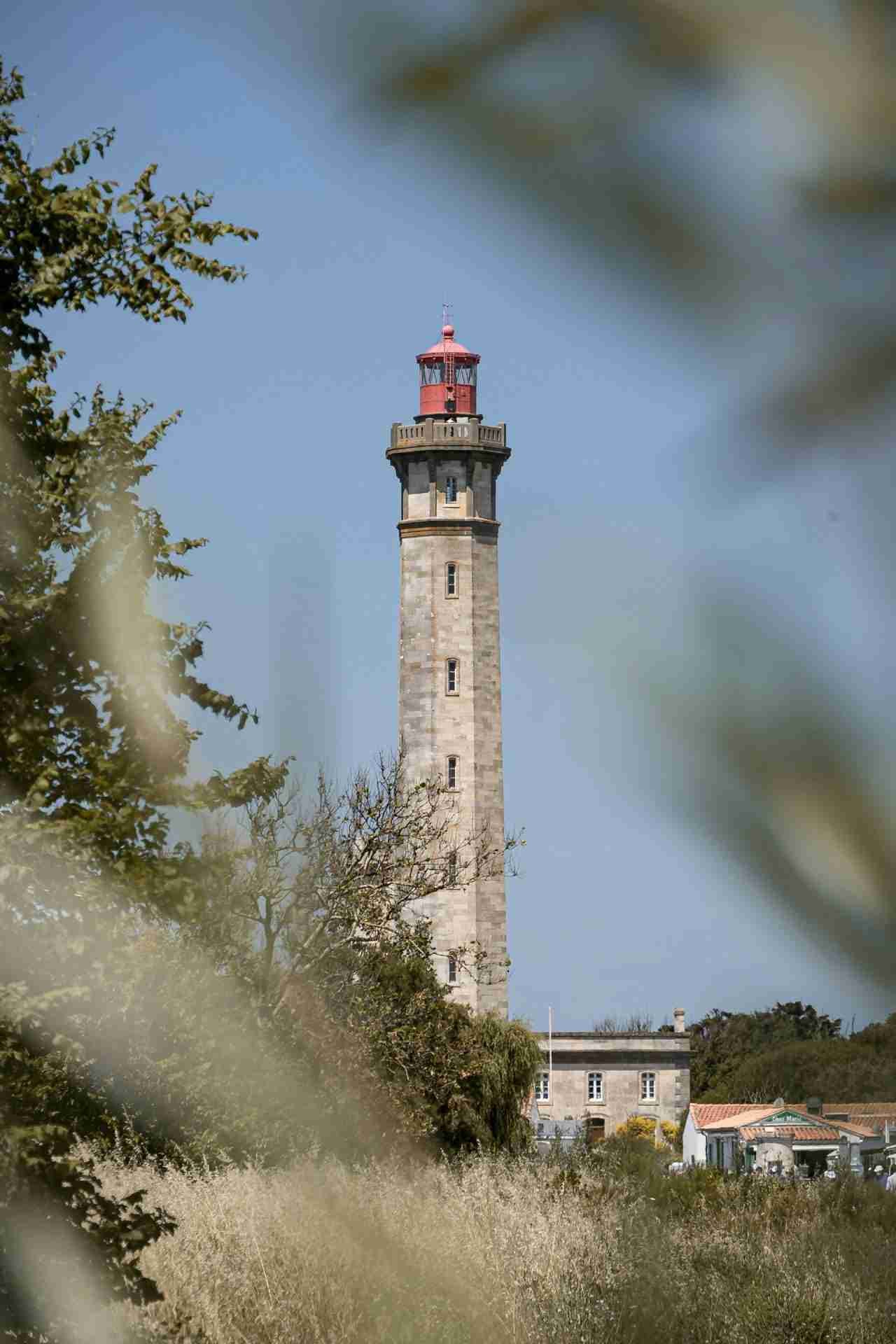
Rising from the windswept tip of Île de Ré's northwestern coast, the Phare des Baleines (Lighthouse of the Whales) stands as one of France's most storied maritime landmarks. Located in the commune of Saint-Clément-des-Baleines, this towering 19th-century lighthouse dominates the flat coastal landscape and commands sweeping views over the Atlantic Ocean. For photographers, it is a study in contrast and form—stone geometry against open sky, vertical lines rising from sand and sea. The lighthouse itself is not just a beacon for ships but for visual storytelling, framed by rugged rocks, tidal pools, and the atmospheric drama of ever-changing weather. Whether capturing it in isolation at sunrise or integrating it into coastal scenes filled with movement and texture, the Phare des Baleines offers endless creative possibilities.
Best Photography Opportunities
• The Lighthouse at Golden Hour
: The main tower of Phare des Baleines is best captured during the golden hours, when low-angle light brings out the warmth of its limestone facade and accentuates every curve and architectural detail. In the early morning, the lighthouse is bathed from the east, and the surrounding dunes remain shadowed, creating strong contrasts and a painterly quality in the scene. In the evening, the western exposure lights up the tower against an often pastel or fiery sky, particularly after a passing Atlantic weather front. This is the time for classic vertical compositions from below the tower, using foreground grasses, stone walls, or pathways to anchor the frame. Photographers with patience can wait for birds or silhouetted cyclists to pass, adding life and context to the image. Whether shot from a distance with a mid-telephoto to isolate the tower or with a wide lens up close to exaggerate height, this time of day lends majesty and clarity to your subject.
• Aerial Views and Coastal Geometry
: The flat, open expanse surrounding the lighthouse makes it an excellent subject for drone photography. From above, the radial symmetry of the lighthouse compound is fully revealed—the tower at the center, with its encircling walkways and outbuildings arranged with formal clarity. Zooming out further, the scene becomes a play of lines: the straight edge of the sea wall, the natural curve of the coastline, and the faint trails of visitors meandering over sand and scrubland. When the light is low, long shadows stretch across the terrain, adding dimensionality to the flat landscape. The interaction of sea, land, and manmade structure is particularly pronounced here, making aerial shots feel both minimal and expansive. Reflections in tide pools, patterns in the sand, and passing cloud shadows all enrich the frame. For best results, fly during calm conditions and golden hour, and watch for seagull activity, which can be both a photographic asset and an aerial obstacle.
• Minimalist Seascapes with the Old Tower
: Standing a short distance from the main lighthouse is the 17th-century Tour des Baleines, a more weathered and historically resonant structure. This smaller tower has a rounded, utilitarian silhouette that contrasts beautifully with the tall elegance of its successor. On its own, it makes a fantastic subject for minimalist compositions, especially when shot against a cloud-streaked sky or emerging sea fog. At low tide, it can be framed against bare sand or seaweed-covered rock, its simplicity inviting comparisons to ancient watchtowers or monastic ruins. During long exposures, the sea softens into mist and clouds streak overhead, transforming the tower into a lonely sentinel amid time and tide. Photographers can experiment with stark black-and-white treatments or muted color palettes to enhance the atmosphere of age and solitude that the structure evokes.
• Rocks, Tidal Pools, and Foregrounds
: The rugged shoreline directly west of the lighthouse is rich with compositional opportunities, particularly during low tide. The exposed reef flat reveals tide pools, jagged black rocks, and narrow channels that catch and reflect light from the sky. These natural elements make compelling foregrounds when looking back toward the lighthouse. Wide-angle lenses allow you to incorporate the textural richness of the rocks while keeping the lighthouse in full view. Timing is crucial—sunset light reflects off wet surfaces, creating golden highlights, while overcast days allow for more detail-focused, evenly lit shots. Watch for small marine life such as crabs, starfish, or seaweed trails, which can add scale and interest. Consider using a tripod for low-angle compositions near water level, and experiment with exposure times to either freeze the water's surface or blur its motion for painterly effect.
• The Staircase Interior
: Inside the lighthouse, the climb to the viewing platform offers one of the most visually striking spiral staircases in the region. Made from cut stone and supported by a single central column, the stairs form a geometric vortex when viewed from top or bottom. The repeating steps, metal handrails, and central shaft create a sense of infinite progression that lends itself well to both architectural and abstract photography. Light from the occasional window breaks the pattern and introduces natural highlights, helping to separate steps and accentuate depth. Shooting straight down from the top can evoke a sense of vertigo, while shooting upward from the base toward the oculus allows for a brighter, more ethereal composition. Use a fast lens with a wide aperture if handheld, or a monopod for support in the low-light environment. Photography inside is allowed, but tripods and flash are discouraged to avoid disrupting other visitors.
Best Time to Visit
The Phare des Baleines is photogenic year-round, but seasonal conditions dramatically influence both the aesthetic and accessibility of the site. Spring and early autumn strike the perfect balance for most photographers. In spring, blooming coastal vegetation and clear morning air provide vivid color and long-range clarity. The sea is often calm, and the temperature mild enough for extended sessions. Autumn introduces more dramatic skies and a soft, golden light that lingers throughout the day, enhancing both seascapes and architectural shots. The lower sun angle also brings long shadows, perfect for emphasizing textures in the landscape and the lighthouse's stonework.
Summer offers the clearest weather, with intense blue skies and long daylight hours. However, crowds peak during this season, and it can be challenging to find moments of stillness, especially in the late morning and afternoon. Arriving just after sunrise is essential if you want clean compositions and good light. The lighthouse opens earlier in the summer, allowing access to the viewing platform during prime golden hour.
Winter is far less visited but offers powerful visual opportunities. The combination of empty beaches, dramatic wave action, and fast-moving skies creates moody, cinematic conditions ideal for black-and-white work or atmospheric storytelling. After Atlantic storms, massive clouds and turbulent seas create tension-filled compositions, and low, slanted sunlight gives the lighthouse a heroic, solitary quality. Be prepared for wind and cold, and check weather and tide reports before venturing close to the shoreline.
How to Get There
Phare des Baleines is located at the extreme northwest point of Île de Ré in the commune of Saint-Clément-des-Baleines. Accessing the island is straightforward via the bridge from La Rochelle, which is open year-round and subject to a toll. From the bridge, it's approximately a 40-minute drive through the charming villages of Île de Ré to reach the lighthouse. Cycling is another popular and scenic option, thanks to a network of well-maintained bike paths that wind through salt marshes, forests, and along the coast.
Once in Saint-Clément-des-Baleines, follow signs to the main parking area marked "Parking du Phare." It's located just before the lighthouse promenade and offers ample space for vehicles and bicycles. The parking lot sits adjacent to a small commercial area with cafés, shops, and public facilities. From here, it's a short, level walk to the base of the lighthouse and the surrounding viewing points.
Visitors can access the lighthouse grounds freely, including the surrounding rocks and beach. However, entrance to the lighthouse itself—both the 19th-century tower and the historic Tour des Baleines—requires a paid ticket. This grants access to the interior staircase, exhibitions, and upper viewing platform. Tickets are available on-site during opening hours. If planning a shoot from the top, arrive early to avoid queues and scout your angles before the area fills with visitors.
Recommended Photography Gear
The coastal environment and structural variety at Phare des Baleines make it essential to bring a flexible yet resilient kit. A full-frame mirrorless or DSLR camera with excellent dynamic range will help handle strong contrasts between bright skies and shaded rocks or interiors. A wide-angle zoom (such as a 16–35mm) is critical for capturing both expansive seascapes and the scale of the lighthouse when working close to its base. For isolating details or compressing the scene—such as capturing the lighthouse against a dramatic cloudscape or framing the Tour des Baleines from afar—a 70–200mm telephoto is highly effective.
A tripod is a must, particularly for long-exposure work at twilight or in the dim stairwell interior. Choose a lightweight carbon fiber model with adjustable leg angles to stabilize on uneven rocks or sandy ground. For seascapes, a set of ND filters (6- and 10-stop) will allow for creative shutter control, while a circular polarizer is useful for managing water glare and deepening colors. A graduated ND filter can help balance bright skies during sunset shoots.
Be sure to pack microfiber cloths and lens wipes, as salt spray and windblown sand are constant factors. A waterproof camera cover or weather-sealed bag will protect your gear during storms or high surf conditions. Inside the tower, consider using a fast prime lens (35mm or 50mm at f/1.8) to maximize available light without relying on flash. If you're planning to shoot aerials, a drone with a high-resolution sensor and gimbal stability is ideal—just stay mindful of weather conditions and any local restrictions on flight paths or altitude.
Nearby Photography Locations
: This vast, gently curving beach extends south from the lighthouse and is one of the most photogenic stretches of sand on the island. At low tide, its reflective surface captures sky colors in wide panoramas, while sunrise and sunset offer pastel tones and long beach shadows. The subtle dune lines and scattered driftwood provide natural compositional elements.
• Ars-en-Ré Harbor
: A short drive southeast, this postcard-perfect fishing port offers intimate coastal scenes filled with character. Its narrow alleys, vivid shutters, and the iconic black-and-white church spire offer strong vertical accents amidst soft maritime light. Reflections in the water at dusk are particularly appealing, especially during blue hour.
: Located just east of Saint-Clément, this protected wetland area offers tranquil, low-lying trails ideal for bird and nature photography. The salt marshes are rich with reeds, tidal pools, and migratory birds, making it a peaceful contrast to the wave-battered coastline. Early morning mist and golden backlight create subtle, painterly frames.
• Portes-en-Ré Forest Trails
: Inland from the coast, this quiet region offers pine forests, sandy paths, and dappled light ideal for environmental portraiture or moody natural scenes. Fallen branches, mossy trunks, and filtered sunlight give you a very different palette and mood from the shoreline.
: One of Île de Ré's most secluded beaches, Trousse-Chemise is lined with pine trees and shallow tidal lagoons. It's perfect for peaceful minimalist compositions, especially at dawn when the light rakes across the smooth sand and the water is motionless. Long lenses can isolate sailboats on the horizon, while wide shots make use of the tree-fringed shore.
Phare des Baleines is more than a lighthouse—it's a convergence point of sky, sea, and story. For the photographer who values variety, mood, and maritime majesty, this windswept corner of Île de Ré offers not just views, but visions waiting to be captured.
Comments
Loading comments…