
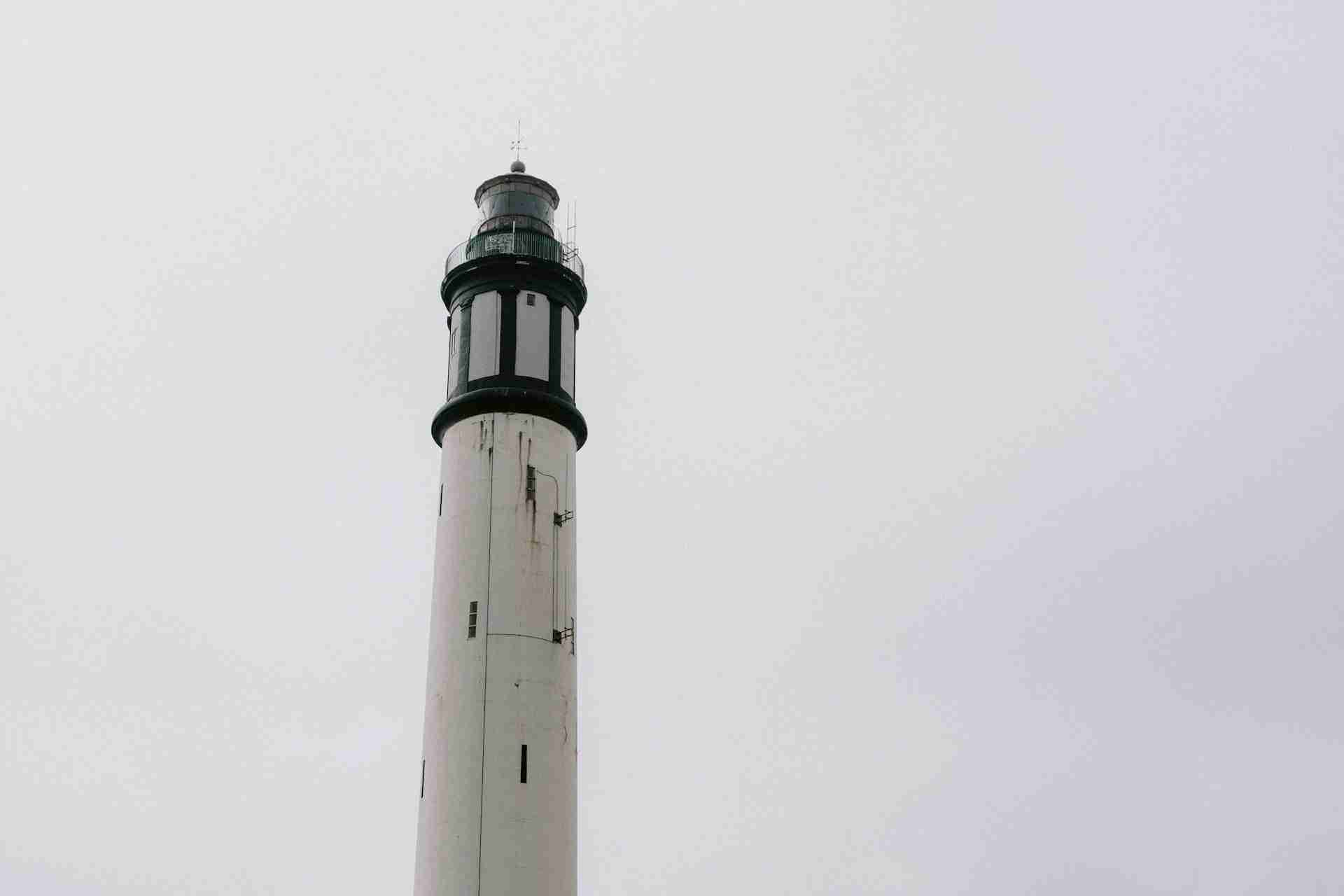
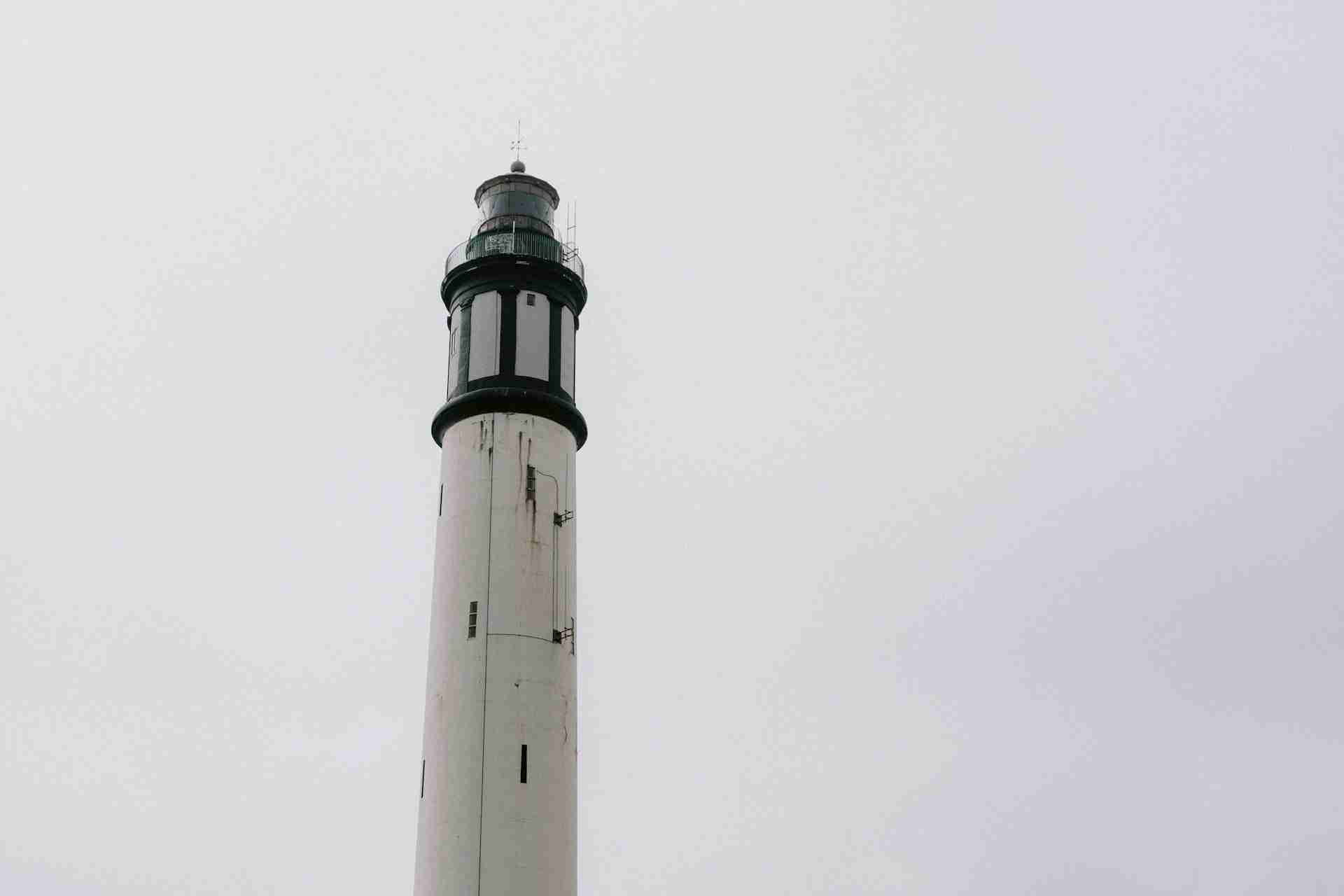
The Phare du Risban rises above Dunkirk's harbor as a tall, white cylindrical tower capped with a dark lantern and a distinctive black band beneath its upper gallery. Standing near the entrance to the port, it has guided vessels along the North Sea coast for generations. Its clean, simple geometry stands out against both calm blue skies and the heavy gray overcast often found here, making it a versatile subject for photography in a variety of weather conditions. The minimal color palette of white, black, and the muted tones of weathered metal allows the lighthouse to work well in both color and black and white compositions. With the open sea on one side and the working harbor on the other, this location offers the chance to capture both the lighthouse in isolation and as part of a wider maritime story.
Best Photography Opportunities
• Approach from the Harbor Wall
: Walking along the harbor wall toward the lighthouse provides a classic, straight-on perspective that emphasizes its height and cylindrical form. A wide-angle lens can include the length of the wall as a leading line that draws the viewer's eye directly to the tower. Morning light works well here, casting soft highlights on the side facing the harbor, while late afternoon brings warmer tones to the white surface. High tide can make the water appear closer and more dramatic, whereas low tide reveals textured harbor edges that add foreground interest. This angle is also ideal for capturing passing boats or ships to show scale.
• Side Profile Against the Sky
: Standing off to the side of the lighthouse allows you to frame it cleanly against open sky, making it the dominant subject in a minimalist composition. On overcast days, the dark lantern and black band stand out strongly against the pale background, while on clear days the blue sky provides a vivid contrast. A mid-range zoom lens is useful for balancing the tower within the frame while still including enough surrounding space for context. This perspective works particularly well for vertical compositions that emphasize the lighthouse's slender height. Including birds or distant ships can add small but effective secondary points of interest.
• Detail Study of the Lantern and Gallery
: The dark metal lantern, gallery railings, and surrounding black band provide opportunities for close-up photography that highlights textures, shapes, and contrast. Using a telephoto lens, you can isolate the lantern against the sky or focus on the weathered surfaces and structural details. Morning side light will bring out subtle shadows along the railing, while soft light on cloudy days ensures even exposure across intricate metalwork. This type of shot pairs well with wider images in a series to show both the overall form and the craftsmanship in its upper structure.
• Waterline Perspective from the Nearby Beach
: From certain points along the beach near Malo-les-Bains, you can frame the lighthouse with the waterline and sandy foreground. At low tide, wet sand and tidal pools create natural reflections that can double the image of the lighthouse for a dramatic effect. A telephoto lens compresses the scene, bringing the lighthouse visually closer to the shore. This viewpoint is particularly rewarding during sunset when the warm light on the lighthouse contrasts with the cooler tones of the water. In calm weather, longer exposures can smooth the water, creating a serene setting for the tower.
• Storm and Wave Photography from the Breakwater
: When winds pick up and the sea becomes rough, the lighthouse's position at the harbor entrance makes it a prime spot for dramatic wave shots. From a safe position on the breakwater, you can capture spray rising against the seawall with the lighthouse standing solid in the background. A fast shutter speed freezes the motion of the waves, while a slower one creates silky, misty textures. The dark lantern and black band become even more pronounced against the gray tones of storm clouds. This perspective captures both the power of the sea and the steadfastness of the structure.
Best Time to Visit
The Phare du Risban can be photographed in any season, each offering a distinct character. Spring often brings crisp light and moderate winds, making for sharp, clear images of both the lighthouse and surrounding water. Summer offers the longest shooting days, with early morning and late evening light giving warm tones to the white tower, though midday sun can produce harsh contrasts. Autumn's lower sun angles create longer shadows and more textured light across the lighthouse's surface, and the season's more frequent storms bring opportunities for dramatic sea and sky combinations. Winter provides a quieter atmosphere and soft, low-angle light for much of the day, ideal for studying surface details.
Morning is best for photographing the side facing the harbor in soft light, while late afternoon and golden hour favor the side facing the open sea. Overcast days are excellent for detail work, as the diffused light avoids harsh shadows on the bright surface. Blue hour is rewarding for creating calm, moody images, and at night the illuminated lantern provides a warm focal point against the cooler tones of the surroundings. Tidal changes also affect compositions, with high tide bringing the water visually closer and low tide offering reflective sand and exposed textures.
How to Get There
The Phare du Risban is located near Dunkirk's harbor entrance and can be reached by foot along the coastal promenade or by walking the breakwater from the Malo-les-Bains area. Dunkirk is accessible by train from Lille and other cities in northern France, and by car via the A16 motorway. Parking is available near the beach and harbor, from which it is a short walk to the lighthouse viewpoints.
While the lighthouse itself is not open to visitors, there are numerous public vantage points for photography from both the seawall and nearby beach. In windy or wet conditions, surfaces can be slippery, so caution is advised. Tripods can be used freely in these public areas, but space can be limited on narrow sections of the harbor wall.
Recommended Photography Gear
A wide-angle lens in the 16 to 35 millimeter range is ideal for incorporating the breakwater or surrounding harbor into compositions. A 24 to 70 millimeter zoom is versatile for mid-range shots that balance the lighthouse with its environment. A 70 to 200 millimeter telephoto lens is useful for isolating details in the lantern and gallery or compressing the scene from beach viewpoints.
A tripod is essential for blue hour, night photography, and long exposures of water movement. A neutral density filter allows you to create smooth, soft water effects in seascapes, while a polarizing filter helps manage glare from wet surfaces and deepen sky tones. A lens cloth is important in windy weather to keep sea spray from affecting image clarity. Waterproof covers for gear are recommended if shooting in stormy conditions, and sturdy, non-slip footwear is advisable for walking along the seawall or breakwater.
Nearby Photography Locations
: A long jetty that provides a strong leading line toward the distant Feu de Saint-Pol lighthouse. Its combination of structural elements and open sea works well in all seasons.
: A wide sandy beach ideal for sunrise and sunset photography. Wet sand and tidal pools often provide mirror-like reflections of the sky and distant structures.
: The working port offers industrial subjects such as ships, cranes, and cargo areas. The contrast between industrial activity and the sea is especially strong during golden hour.
: A preserved World War II bunker now serving as a museum. Its solid structure and historical context make it an interesting subject for both architectural and documentary photography.
The Phare du Risban stands as a clean, simple, and powerful coastal subject that rewards both wide environmental compositions and tight, detail-focused studies. Working the location in varied weather, light, and tide conditions will yield a diverse and compelling set of images.
Comments
Loading comments…