
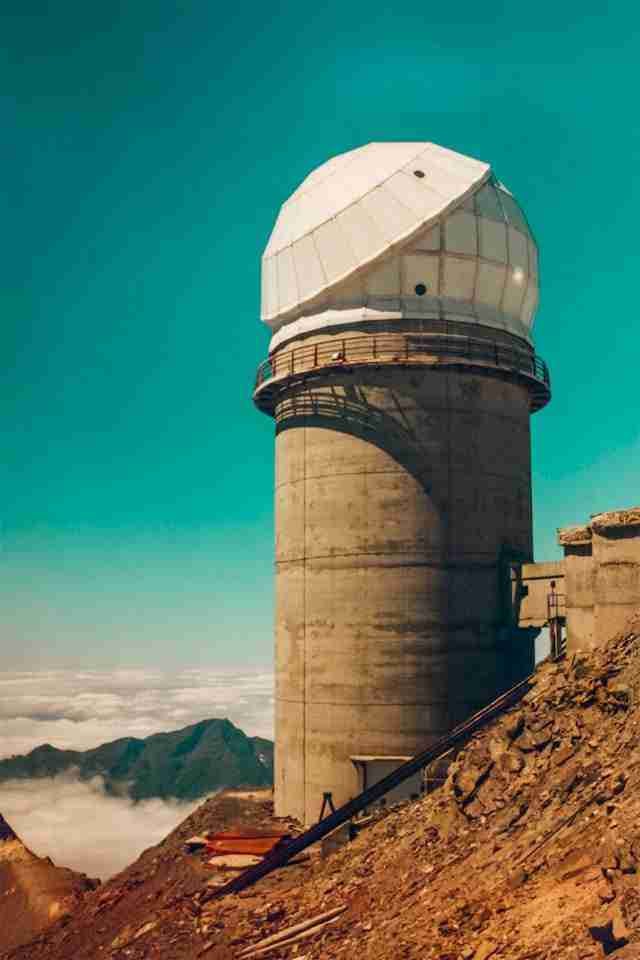
Perched at 2,877 meters above sea level, the Pic du Midi Observatory rises out of the Pyrenees like a fortress built for stargazers. This mountaintop complex near Bagnères-de-Bigorre in southwestern France is one of Europe's most unique photographic destinations. It combines high-altitude drama, scientific history, and rare clarity of light. From the summit, photographers are treated to sweeping views that span jagged mountain ridgelines, rolling cloud inversions, and on clear days, an endless sky that transitions from deep blue to violet by twilight. Whether you're interested in capturing the structure itself, the peaks surrounding it, or the night sky overhead, Pic du Midi offers something few places in Europe can match.
Best Photography Opportunities
• Golden Hour Above the Cloudline
– The real magic of Pic du Midi reveals itself when clouds fill the valleys below, creating an ocean of mist that rolls against the mountain edges. At sunrise and sunset, the observatory sits above this layer, catching the full force of the changing light. The dome-shaped structures catch low-angle light beautifully, their metal surfaces reflecting soft pastels while the jagged ridges around them glow in amber and gold. A telephoto lens allows you to isolate sections of the range, but wide shots taken from the platform give a powerful sense of scale. Arriving early or staying late during seasonal shifts increases your chances of witnessing these conditions.
• Night Sky and Deep Space Composition
– Pic du Midi is internationally renowned for its clarity of sky, thanks to the dry air and absence of light pollution. On moonless nights, the stars seem unnervingly sharp and bright. The Milky Way stretches clearly overhead from May through September, and long exposures reveal satellite paths and constellations with striking definition. Wide-angle lenses between 14 and 24 millimeters work best for these captures, and a sturdy tripod is essential given the strong winds. Including the observatory domes or railings in the foreground adds structure and narrative to your night compositions.
• Panoramic Ridge Views
– From the main terrace, you can shoot a full 360-degree sweep of the Pyrenees. The serrated edges of nearby peaks provide excellent contrast against a shifting sky, especially in changing weather. Stitching panoramas from a fixed position allows for extremely high-resolution mountain landscapes that capture the details in every fold and rock face. On clear days, visibility stretches to the plains of Gascony and sometimes as far as the Massif Central. A polarizer can help deepen the blues and cut through haze in the lower elevations, though caution is needed to avoid uneven sky tones when shooting ultra-wide.
• Architectural and Industrial Detail Work
– The observatory complex itself is a study in weather-worn utility. Pipes, gears, walkways, and domes all contribute to an industrial aesthetic that plays well in both color and black and white. Strong sunlight during midday can create harsh shadows, but this contrast enhances the textures and shapes. Look for repeating patterns, symmetry in stairwells, or shadows cast by satellite dishes. Using a mid-range zoom lens allows you to frame tightly without distortion while still responding quickly to changing light angles across the metal surfaces.
• Winter Snow and Alpine Contrast
– In colder months, heavy snow transforms the summit into a stark, high-contrast landscape. The observatory's structures take on a sci-fi quality when framed against white drifts and a deep blue sky. Sunrise and sunset are particularly dramatic in winter, when long shadows create layers across the snow and ridge lines. Exposure compensation may be necessary to prevent loss of detail in bright highlights. Gloves with tactile fingertips and lens hoods to shield from wind-blown frost are essential when working in these colder conditions.
Best Time to Visit
Pic du Midi offers rewarding photography year-round, but the conditions and opportunities vary by season. From late spring through early autumn, the air is clearest and the nights are warm enough to comfortably attempt astrophotography. This is also the best period for sunrise and sunset shots above the cloud layer. July and August tend to have the most stable weather, though crowds can be heavier. In winter, the observatory becomes a surreal snowscape, ideal for dramatic black-and-white work or minimalist alpine scenes. Night sky visibility is strongest during new moon periods from May to October, and the Milky Way is most prominent during summer months. For the longest golden hours and highest chance of clear light, aim for late September or early October when the atmosphere is crisp and the horizon glows for longer.
How to Get There
The Pic du Midi Observatory is reached via cable car from the La Mongie ski resort in the Hautes-Pyrénées. The cable car consists of two stages and typically runs from morning through late afternoon, with extended hours for special night photography or stargazing events. Parking is available at La Mongie, and tickets can be purchased on-site or online in advance, especially during high season. While there is no fee to access the area beyond the cost of the cable car, entrance to specific observatory areas may be restricted outside of guided visits. Photographers staying overnight in the summit lodging have exclusive access to the terrace during golden hour and nighttime, which is highly recommended for uninterrupted work. Weather can change quickly, and the summit is often several degrees colder than the valley, so always check the forecast before departure and bring layered clothing suitable for high alpine conditions.
Recommended Photography Gear
A full-frame mirrorless or DSLR body paired with a wide-angle lens in the 14 to 24 millimeter range is essential for night sky and panoramic work. A 24 to 70 millimeter zoom is useful for both architectural studies and ridge detail. For isolating distant peaks or atmospheric compression, a 70 to 200 millimeter lens performs well without being overly cumbersome at altitude. A solid, compact tripod is non-negotiable for both long exposures and windy terrace work. Bring extra batteries, as cold temperatures reduce battery life quickly at the summit. Lens cloths and weatherproof covers will help with moisture and sudden snow or fog. For astrophotography, consider a star tracker if you plan on extended exposures, though space on the viewing platforms can be limited. Polarizers and ND filters are helpful for daylight mountain work but should be used carefully to avoid color shifts or uneven gradients in wide skies.
Nearby Photography Locations
– One of the most famous mountain passes in the Pyrenees, the Col du Tourmalet offers dramatic switchback roads and open views of the surrounding peaks. It is best photographed at sunrise or sunset when long shadows stretch across the terrain. The winding road itself serves as a strong leading line in both aerial and ground-level compositions.
– About 40 minutes from La Mongie, this tranquil alpine lake reflects the surrounding forested hills and makes a perfect stop for calm, mirror-like landscape shots. Early morning often brings mist over the water, while late afternoon light filters through the surrounding pine trees. It is a quieter location with good variety for both wide shots and intimate natural details.
– A bit farther afield but well worth the trip, this glacial amphitheater is one of the most photogenic natural formations in the Pyrenees. The massive rock walls and cascading waterfalls create a powerful backdrop, especially in spring when snowmelt is at its peak. The cirque offers both dramatic wide shots and vertical compositions that emphasize the scale of the cliffs.
• Sainte-Marie-de-Campan
– This small mountain village at the foot of the Tourmalet pass offers traditional Pyrenean architecture and rural charm. It is a great spot for photographing local life, stone farmhouses, and surrounding meadows. Morning fog sometimes drifts through the valley, creating soft light and subtle gradients that suit slower, more contemplative work.
– The gateway town to the Pic du Midi, Bagnères combines old thermal bath buildings, cobbled streets, and lively markets. It offers excellent urban detail work and candid street photography opportunities. The surrounding hills provide elevated views for framing the town in its mountain setting.
Pic du Midi is more than just an observatory. It is a place where light, altitude, and atmosphere collide to create some of the most challenging and rewarding photographic conditions in France. Whether you are drawn to cosmic compositions, panoramic vistas, or the textures of human-built science stations in extreme environments, this summit invites serious photographers to push their craft and return with work that feels truly elevated.
Comments
Loading comments…