
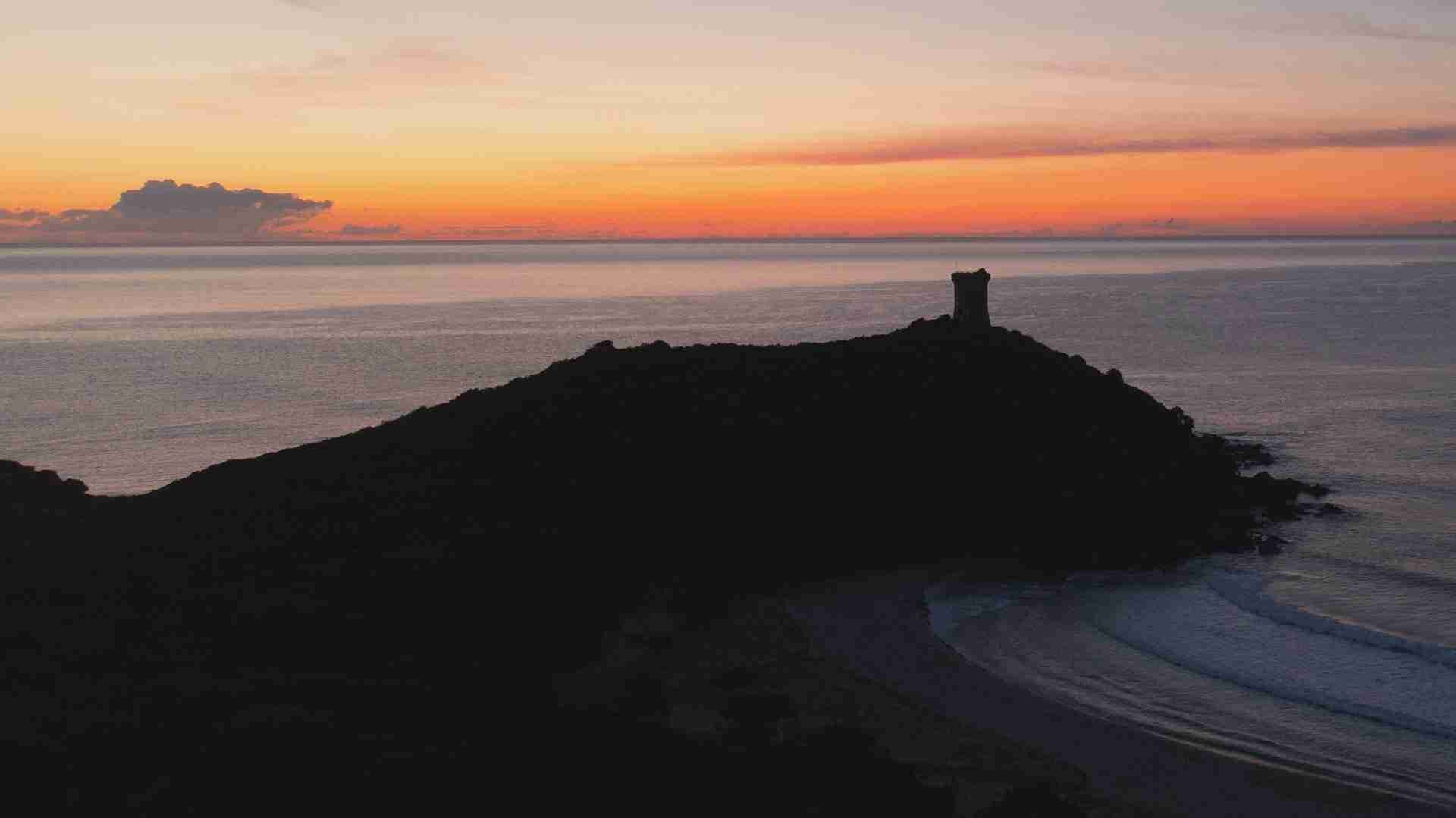
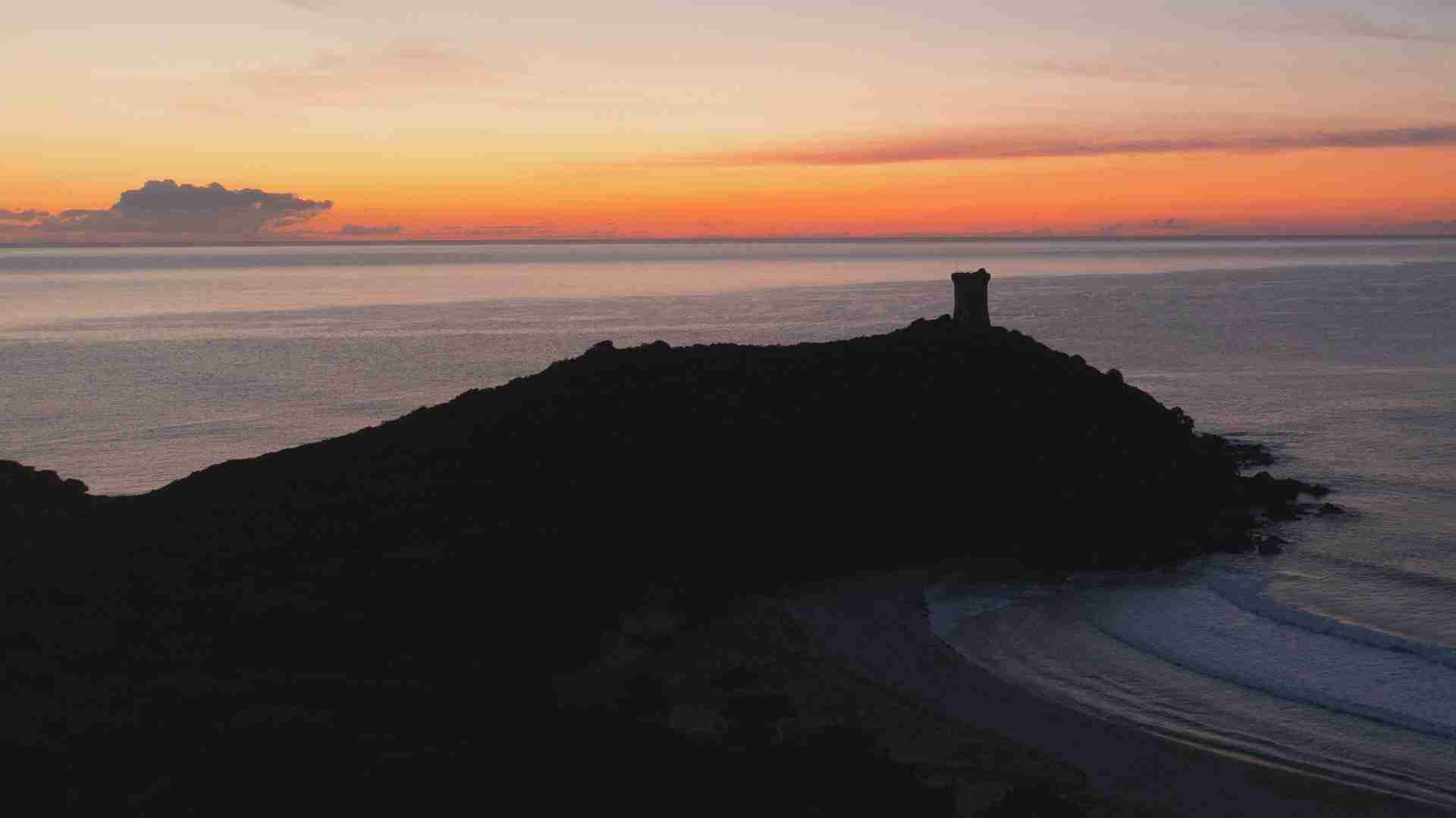
On the eastern coast of Corsica, just north of Porto-Vecchio, Plage de Fautea offers a rugged blend of Mediterranean shoreline, crystalline waters, and historical architecture. Backed by maquis-covered hills and fronted by white sand and turquoise surf, this beach is dominated by the watchful presence of the Torra di Fautea—a Genoese tower perched on a rocky promontory above the bay. The combination of coastal seascape, accessible elevation, and 16th-century architecture makes this location a rewarding site for photographers seeking sunrise compositions, long exposures, and layered natural-meets-historic imagery.
Best Photography Opportunities
• Torra di Fautea from the Beach
: The Genoese watchtower rises dramatically from a small headland above the bay, best viewed from the southern edge of Plage de Fautea. Use a wide-angle lens to frame the tower with foreground beach textures—driftwood, seaweed, or patterned sand. Morning light lights the tower's eastern face and cliffs, while late afternoon creates silhouettes against the setting sun. Use tidal pools or wet sand for reflections, or position low behind beach grasses for a layered frame.
• Long Exposures of Water and Rock
: The beach's northern end is flanked by smooth granite formations and tide-washed boulders, ideal for long exposures during soft light. Use a 6- or 10-stop ND filter to smooth the movement of waves, creating a contrast between still rock and motion-blurred sea. These compositions work especially well during golden hour or under soft overcast conditions, emphasizing the island's natural textures and serene light.
• Hike to the Tower for Panoramic Views
: A short but rewarding trail leads from the beach up to the Torra di Fautea, offering panoramic views of the coastline and inland ridges. From the top, shoot back toward the curve of the beach, capturing the full arc of the bay and the mountain backdrop beyond. A mid-range zoom lens (24–70mm) allows for wide scenes and tighter frames on breaking waves or boats in the bay below. Use the stone structure as a foreground anchor or dramatic subject against a dramatic cloud-streaked sky.
• Details of Stonework and Coastal Flora
: The tower itself features weathered stone blocks and narrow slits that offer moody detail compositions, especially in side light. Use a macro or short telephoto lens to study lichen on the rock, cracks in the masonry, or windswept vegetation clinging to the surrounding headland. These details are ideal for visual storytelling or environmental studies that contrast natural erosion and human construction.
• Sunrise and Blue Hour on the Shoreline
: While the beach faces east, it catches sunrise perfectly, with early light spilling across the water and up the cliffs. The pre-dawn hour brings pastel tones to the sea and sky, ideal for minimalist compositions. Use a tripod for blue hour exposures, capturing moody gradients and the shifting color palette of the coast before the sun emerges. The stillness of early morning makes this time ideal for reflection shots or soft-toned abstracts.
Best Time to Visit
The most photogenic season at Plage de Fautea is between late spring and early autumn, when the water is clear, vegetation is lush, and the skies are most dynamic. April to June brings green hillsides and fewer crowds, while September and October offer warm water, golden light, and a quieter coastline with less tourist activity.
Sunrise is the prime time for serious photography, especially for compositions facing the open sea and capturing the first light hitting the tower. Late afternoon through sunset is also beautiful, particularly for side-lit textures and moody silhouettes of the Torra di Fautea against a Mediterranean dusk.
Avoid midday hours in summer, when light is harsh and contrast is extreme. Cloudy or misty mornings, on the other hand, can create soft atmospheres ideal for detail shots, long exposures, and layered environmental compositions.
How to Get There
Plage de Fautea is located just off the N198 coastal highway, north of Sainte-Lucie de Porto-Vecchio in southern Corsica. From the main road, a small access path leads down to the beach, with parking available near the roadside. The walk to the beach is short and straightforward, though access may be limited in peak summer months due to local restrictions or crowding.
To reach the Torra di Fautea, take the marked trail at the southern end of the beach. The hike is short—less than 15 minutes—but includes some elevation and rocky footing. The trail is well-worn and provides multiple vantage points as you ascend toward the tower.
There are no entrance fees or restricted hours, though sunrise and early morning provide the best light and solitude. The area is undeveloped beyond signage and informal trails, so plan to bring water, sun protection, and appropriate footwear if you intend to explore beyond the beach.
Recommended Gear and Shooting Tips
A wide-angle lens (16–35mm) is best for capturing the full bay, beach scenes, and tower shots with foreground interest. A mid-range zoom (24–70mm) provides versatility for seascapes, headland views, and tighter compositions on rocks or boats. A longer telephoto (70–200mm) can isolate the tower, waves, or distant mountain ridges under shifting weather.
A sturdy tripod is essential for sunrise, blue hour, and long exposure photography. Bring a circular polarizer to reduce sea glare and deepen sky contrast, especially in mid-morning. ND filters (6- or 10-stop) allow for slow shutter speeds that smooth waves and add mood to water-edge scenes.
Arrive early to scout foreground textures—sand patterns, tide lines, and reflective pools can change quickly with light and tide. Use leading lines from rocks, driftwood, or paths to draw the eye toward the tower or horizon. Pack light for the short hike, but keep essentials protected from sea spray and sand.
Nearby Photography Locations
: A broad, pine-fringed bay south of Fautea, offering long beach views, calm water, and a picturesque stone tower on a distant peninsula—perfect for sunrise water-level compositions.
: Inland from the coast, this mountain pass features jagged peaks, pine forests, and dramatic views over the island's rugged interior. Ideal for high-altitude landscape photography and atmospheric golden hour shots.
: Known for its white sand and turquoise water, this iconic Corsican beach includes leaning umbrella pines and rocky outcrops, best photographed in soft evening light or from elevated trails above the shore.
: North of Fautea, this inland river offers refreshing swimming holes, smooth boulders, and cascading water features—great for long exposures and forested detail photography in dappled light.
: For a change of pace, the historic core of Porto-Vecchio features weathered stone buildings, narrow alleyways, and harbor views. Perfect for architectural textures and ambient street scenes at golden hour or blue hour.
Plage de Fautea and the Torra di Fautea combine Corsica's raw coastal energy with centuries of maritime history. With every shift in light and tide, the beach and tower reveal new compositions—sunrise reflections, stormlit cliffs, and the timeless silhouette of stone against sky. For photographers, it's a landscape that rewards both patience and exploration.
Comments
Loading comments…