
Coastal Harmony: A Photographer's Guide to Plage du Casino Overlook in Saint-Quay-Portrieux
Tucked gracefully between the golden stretches of Plage du Casino and the intimate cove of Plage du Châtelet, the Plage du Casino Overlook in Saint-Quay-Portrieux offers one of Brittany's most photogenic coastal scenes. With uninterrupted views of the Bay of Saint-Brieuc, iconic Breton rock formations, and the rhythmic interplay of tide and sky, this overlook combines maritime charm with natural drama. Whether capturing reflections at low tide, the geometric beauty of seawalls, or silhouettes against the Atlantic sky, this is a prime location for coastal landscape photographers seeking to balance human presence with untamed shoreline.
Best Photography Opportunities
• Golden-hour panorama across twin beaches:
Positioned between two contrasting shorelines, the overlook provides an expansive, elevated vantage point. At sunrise and sunset, the low-angle light casts golden highlights across the sand and rocky headlands. A wide-angle lens captures the symmetry of Plage du Casino's open shore to the west and the cozy arc of Plage du Châtelet to the east. The seawall separating the two can be used as a strong leading line, and on calm days, small boats anchored offshore add narrative depth to wide compositions.
• Backlit silhouettes of the promontory and tidal structures:
Just beyond the overlook, natural rock outcrops and human-made seawalls extend into the sea. These elements create sharp silhouettes when photographed against a setting sun. Using a telephoto lens, you can compress distance and emphasize shape, isolating the vertical geometry of cliffs and fishing huts. Moody skies with streaks of pink and grey lend additional contrast and atmosphere, while long exposures allow the sea to blur into a painterly backdrop.
• Reflections and tidal pool textures at low tide:
At low tide, the sands between the two beaches are etched with pools and channels that mirror the sky above. These shallow basins, some filled with seawater and others exposed as glossy sand, offer minimalist compositions that change hourly. Shooting from a low angle with a wide lens emphasizes these foreground elements. Polarizing filters help control glare and reveal details below the water's surface. Consider positioning rocks or seaweed as compositional anchors to guide the eye toward the horizon.
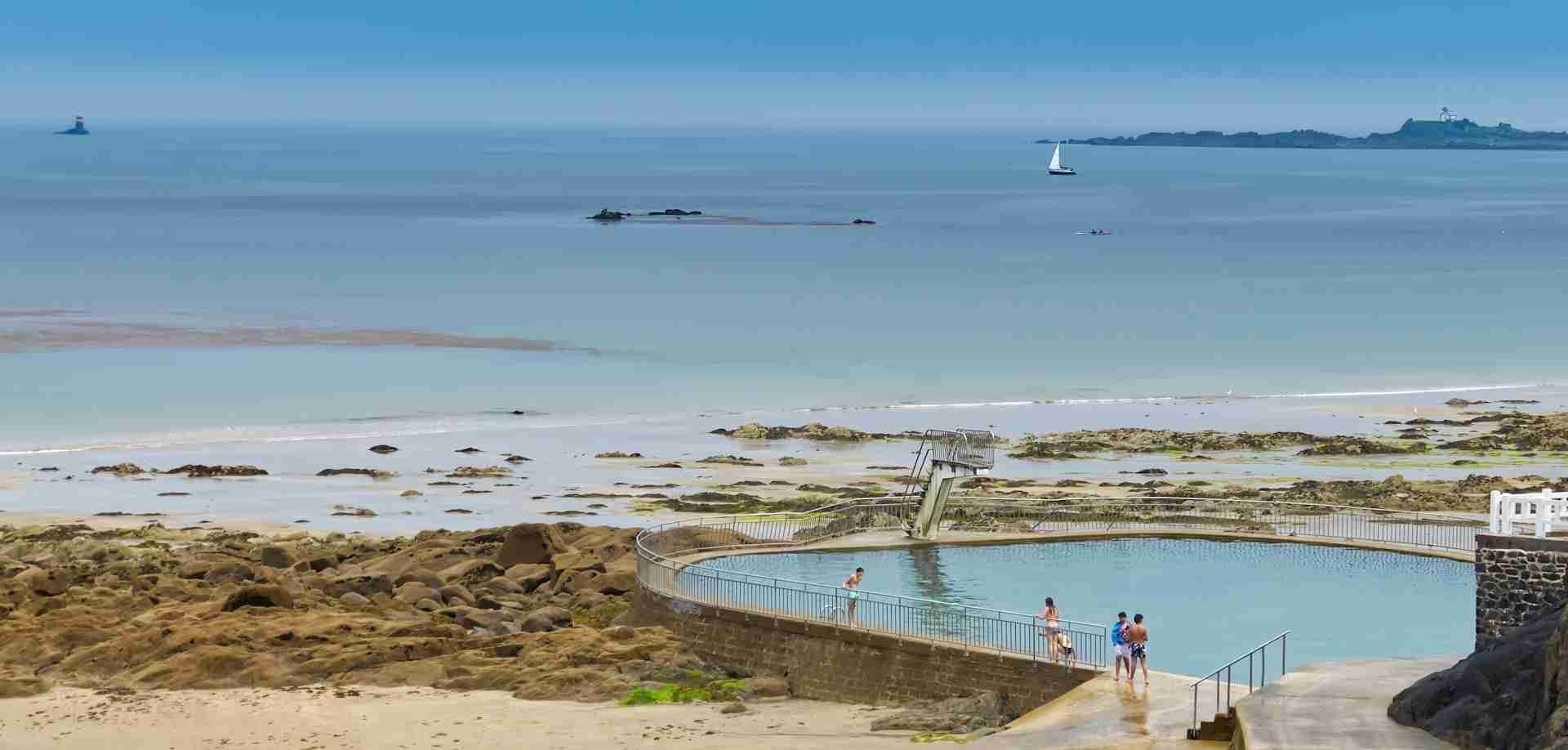
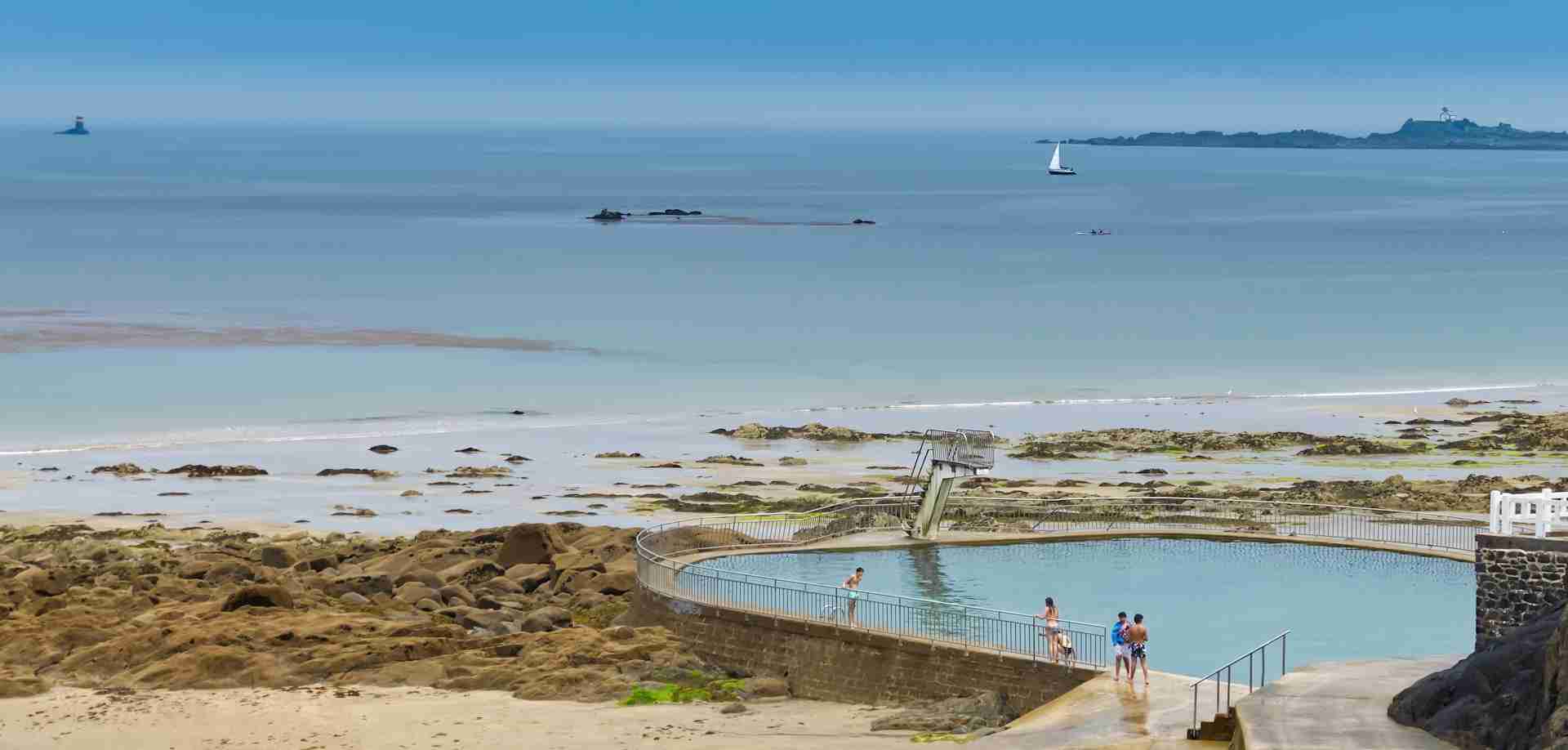
• Candid beach scenes at the seawater pool:
Nestled between the two beaches lies a unique open-air seawater pool, active in summer and flanked by beachgoers and swimmers. A mid-range zoom allows you to frame dynamic moments with the backdrop of cliffs and coastal flora. Capturing this scene in the morning or late afternoon light avoids harsh shadows and highlights the pastel tones of umbrellas, towels, and sea-reflected color. Frame the pool from the overlook or descend closer to capture interaction and layered depth.
• Framing boats and headlands from the coastal path:
The GR34 coastal path curves behind the overlook, offering opportunities to frame Plage du Châtelet and the wider sea beyond. Through tree branches, railings, or natural rock windows, you can isolate sailboats and fishing vessels. Use a fast prime lens to blur the foreground subtly while keeping the vessel tack-sharp. Overcast skies often produce rich sea tones, allowing the crisp outlines of boats and distant promontories to stand out in quiet compositions.
Best Time to Visit
The Plage du Casino Overlook rewards patient observation at nearly all times of year, but specific seasons and times of day offer the most dramatic light and tidal interactions. Late spring and early autumn are particularly favorable, with warm, golden light, moderate temperatures, and fewer crowds. During these months, you'll find both active beach scenes and tranquil moments of low-tide stillness.
Summer brings full activity to the seawater pool and beach facilities, making it ideal for photographing candid moments and local life. Early morning sessions avoid the harsh midday glare and allow soft blue tones to dominate both sky and water. In winter, the coastline transforms under diffused light and more frequent storms, offering moody, monochromatic images and sweeping sea spray.
Tide conditions are crucial here. Low tide unveils textural patterns and reflective pools that lend themselves to abstract or layered compositions. Golden hour—shortly after sunrise or just before sunset—illuminates both beaches in a warm wash of light, especially striking when waves catch the glow and reflect it across the sand.
How to Get There
The overlook is easily reached via Boulevard du Général de Gaulle in Saint-Quay-Portrieux. From the town center, it's a five-minute walk or two-minute drive toward the seafront. Parking is available along the road near Plage du Casino or at nearby Rue du Châtelet, where a short promenade leads to the overlook. Public transportation is available from Saint-Brieuc with seasonal buses stopping in town.
The overlook sits on a paved pedestrian path between Plage du Casino and Plage du Châtelet and is accessible to wheelchairs and strollers. The GR34 coastal trail intersects here, allowing photographers to explore both directions along the cliffs. There is no fee to access the overlook or nearby beaches, though certain summer weekends may see parking restrictions or limited road access due to events. The area is well-maintained with benches and viewing points ideal for setting up tripods.
Recommended Gear for Plage du Casino Overlook
Start with a wide-angle lens in the 16–35mm range to capture panoramic views across both beaches and the expansive sky. A mid-range zoom such as a 24–70mm is ideal for candid shots around the seawater pool or capturing reflective tidal pools. For compressing elements like boats, cliffs, or the distant horizon, a 70–200mm telephoto adds versatility.
A sturdy tripod is essential, particularly for golden hour or evening long exposures. Circular polarizing filters are helpful for cutting glare on wet sand and water, enhancing color saturation, and improving clarity in tidal reflections. A neutral-density filter allows for longer exposures during the day, creating smooth water effects or streaking clouds.
Sea spray and wind can affect equipment, so bring lens cloths and weather protection for your gear. A remote shutter release or timer setting helps avoid camera shake. If shooting in winter or on stormy days, waterproof footwear and layered clothing will ensure comfort while you wait for the perfect light.
Nearby Photography Locations
This more secluded beach curves gently into the cliffs and offers quiet tidal scenes, old stone steps, and intimate compositions. At sunrise, the light pours in from the open sea, illuminating the beach with a soft pink glow.
Just east of the overlook, this beach is defined by a tidal island and calm waters. Low tide reveals walkable sand bars and pools, with opportunities to shoot Isle de la Comtesse in layered context against receding waterlines.
• Grève Noire:
A dramatic stretch of darker, mineral-rich sand west of Plage du Casino. The texture here creates graphic black-and-white imagery, especially when wet and patterned by the tide. Rocky outcrops nearby serve as compositional anchors.
• Port d'Armor:
The town's fishing harbor is filled with character—rows of colorful boats, coiled nets, and daily catches being offloaded. Photographers can capture both fine detail and broader maritime scenes, especially during golden hour when the harbor reflects warm light.
• Bec de Vir viewpoint:
A coastal headland reachable by foot from the overlook along the GR34 path. It offers sweeping sea views and elevated perspectives perfect for sunrise or sunset silhouettes. The rugged trail and sparse vegetation add wildness to your compositions.
Comments
Loading comments…