
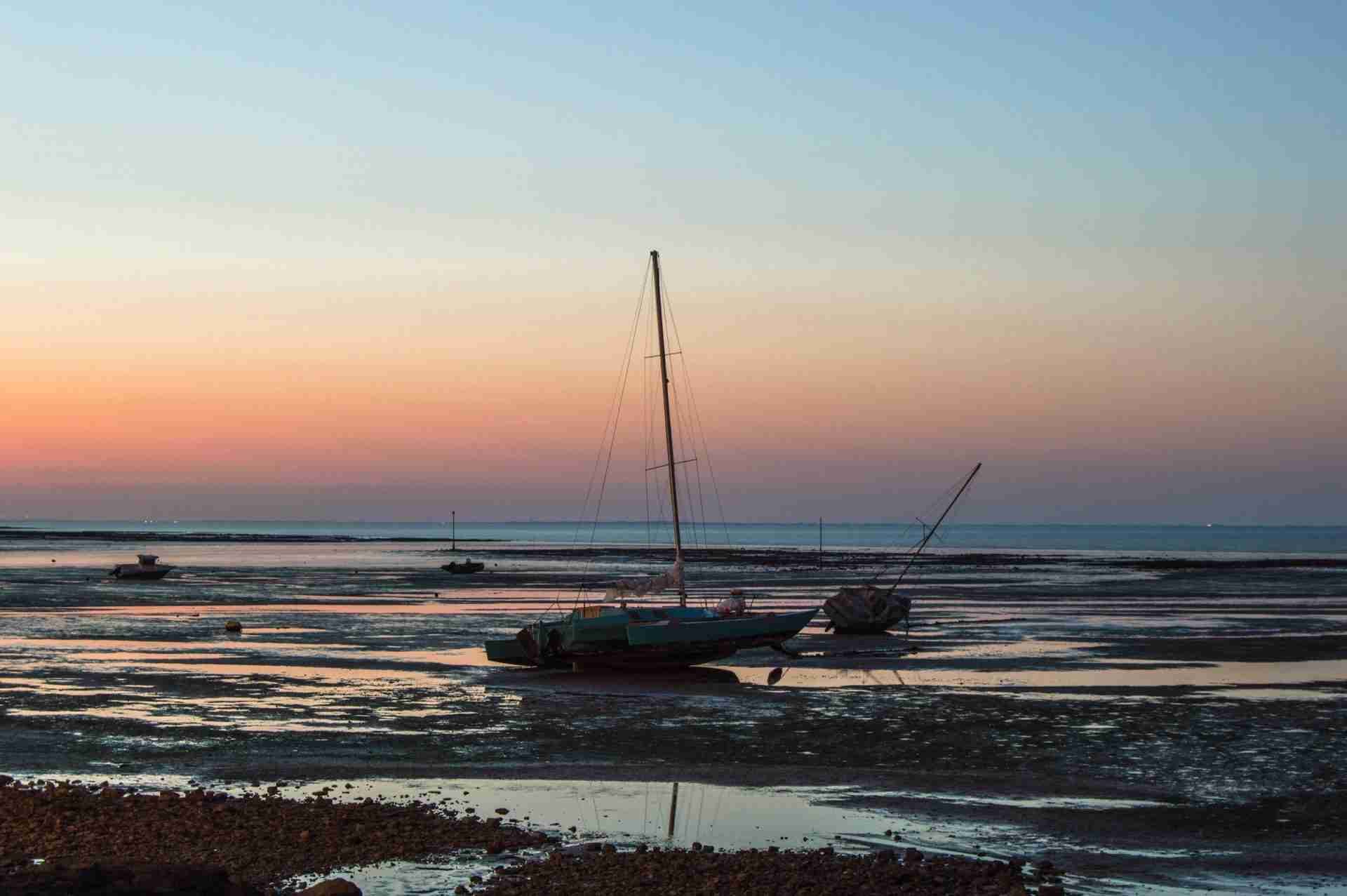
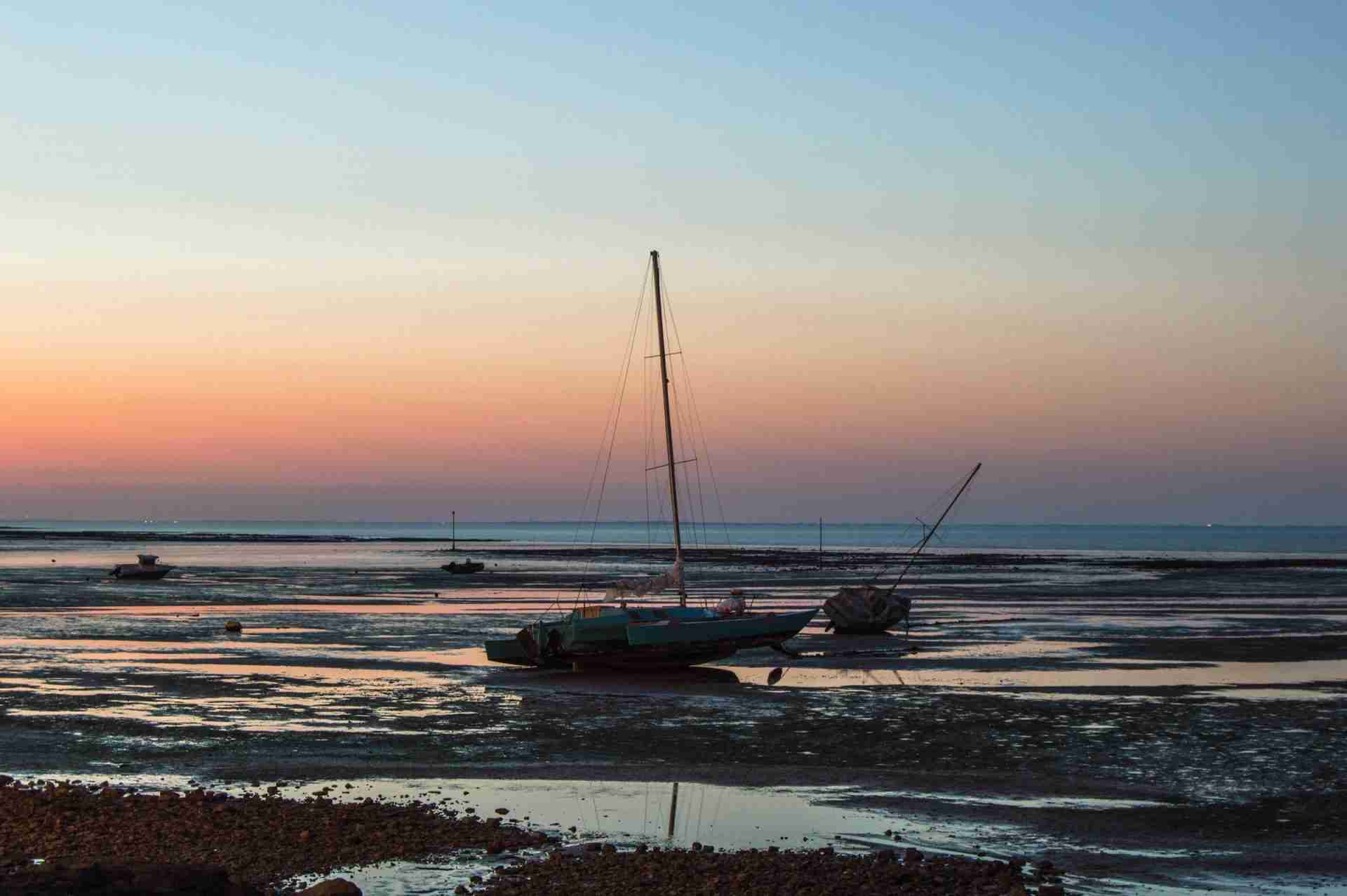
Plage Nord in Rivedoux-Plage sits along the northern shoreline of Île de Ré on France's Atlantic coast. The beach stretches out in a wide band of sand and shallow water facing the Pertuis Breton, with open views across the bay toward the mainland. What makes this location especially interesting for photographers is the way the tide transforms the scene throughout the day. When the tide is low, large areas of sand and mudflat are exposed and small boats rest directly on the beach, tilted slightly as they wait for the water to return. As the tide rises, those same boats begin to float again, changing the entire character of the shoreline. Wooden groynes, simple docks, and the quiet harbor atmosphere of Rivedoux-Plage add additional elements to photograph. The combination of tidal movement, working boats, and wide open coastal views creates a location that feels both peaceful and distinctly maritime.
Best Photography Opportunities
• Boats at Low Tide –
One of the most distinctive scenes at Plage Nord appears when the tide recedes and boats are left resting directly on the sand. These small vessels lean slightly to one side while waiting for the water to return, creating a strong visual subject that reflects the rhythm of life along the Atlantic coast. Photographing from a low position on the beach allows the boats to stand clearly against the open water and sky beyond. A moderate wide lens works well because it captures both the boats and the wide expanse of exposed sand around them. The lines of anchored ropes and the patterns left by receding water can add subtle foreground texture. Early morning light often brings soft color to the scene while keeping the beach relatively quiet.
• Reflections in Shallow Tidal Pools –
As the tide pulls away from the shoreline, shallow pools of water remain scattered across the sand. These pools can reflect the sky, boats, and surrounding structures when the surface is still. Photographing from a low angle helps strengthen the reflections and adds depth to the composition. A wide lens works well here because it allows the reflection and the subject above the horizon to share the frame evenly. The effect can be especially strong when clouds fill the sky and mirror across the water. These reflections create simple but visually balanced coastal images.
• Mooring Lines Across the Tidal Flats –
When the tide drops at Plage Nord, the anchored boats remain connected to fixed moorings and ropes that stretch across the exposed sand. These lines create natural leading elements that guide the viewer's eye toward the boats resting farther out on the flats. Positioning yourself low on the beach allows the ropes and textured sand patterns to form a strong foreground leading toward the boats. A wide lens works well because it captures the relationship between the empty tidal flats, the boats, and the open water beyond. Early morning light often brings soft color to the sand and sky while keeping the beach quiet. This composition highlights the working character of the harbor and the daily rhythm created by the tide.
• Boats Floating as Tide Returns –
When the tide returns, the same boats that once rested on the sand begin to float again in the shallow harbor water. This change creates a completely different atmosphere compared to low tide conditions. Photographing from the shoreline allows the boats to sit calmly on the water with their reflections appearing beneath them. A mid range zoom works well here because it lets you isolate individual boats or small groups within the harbor. Soft light and calm water can produce clean reflections and balanced compositions.
• Sunset Light Across the Bay –
Evening light often spreads warm color across the wide horizon of the Pertuis Breton. From the beach at Plage Nord you can photograph the sun lowering behind the distant coastline while boats and tidal flats sit in the foreground. A wide lens helps capture both the sky and the open shoreline together. If the tide is low, wet sand and shallow pools can reflect the warm colors of the sky. These conditions can produce calm, atmospheric coastal images that highlight the quiet character of the area.
Best Time to Visit
Tide levels play a major role in photography at Plage Nord. Low tide reveals exposed sand flats, tidal pools, and boats resting on the beach, creating some of the most distinctive scenes. High tide transforms the area into a calm harbor setting with boats floating on the water.
Early morning often provides the quietest conditions and softer light across the shoreline. Evening can also produce beautiful color in the sky, especially when clouds catch the last light of the day. Checking tide charts before visiting can help you plan which type of scene you want to photograph.
How to Get There
Plage Nord is located in the village of Rivedoux-Plage on the eastern end of Île de Ré in France. The island is connected to the mainland by the Île de Ré Bridge, making it easily accessible by car from the nearby city of La Rochelle.
Parking areas are available within Rivedoux-Plage near the waterfront. From the village center it is only a short walk to reach the beach and harbor area. The shoreline and surrounding walking paths are publicly accessible and there is no admission fee required to explore or photograph the beach.
Recommended Photography Gear
A wide lens is particularly useful at Plage Nord because it allows you to capture the boats together with the expansive beach and sky. A mid range zoom provides flexibility when isolating individual boats or composing tighter maritime scenes.
A tripod can be helpful during sunrise or sunset when light levels drop and longer exposures are needed. A polarizer may reduce glare on wet sand and water, though removing it can sometimes strengthen reflections in tidal pools. Because coastal conditions can be windy, bringing a stable tripod and weather protection for your gear is often a good idea.
Nearby Photography Locations
stands offshore in the Pertuis Breton and marks the entrance to the bay. The lighthouse sits isolated in the water and can be photographed from the shoreline during clear conditions. Long lenses help isolate the structure against the open sea.
sits on the opposite side of the village facing the open Atlantic. The beach features wider sandy stretches and views of the Île de Ré Bridge. Sunrise and sunset often produce strong light across this side of the island.
is lined with stone quays, fishing boats, and traditional buildings. The harbor entrance and surrounding waterfront create strong maritime compositions. Reflections in the calm harbor water often appear early in the morning.
is a historic coastal fort built in the 17th century to defend the island. The stone walls and surrounding grassy areas create strong architectural subjects. Elevated positions around the fort also offer views across the coastline.
are a trio of historic stone towers guarding the entrance to the port. The towers and surrounding waterfront provide dramatic historic architecture scenes. Blue hour often produces particularly striking photographs here.
Comments
Loading comments…