
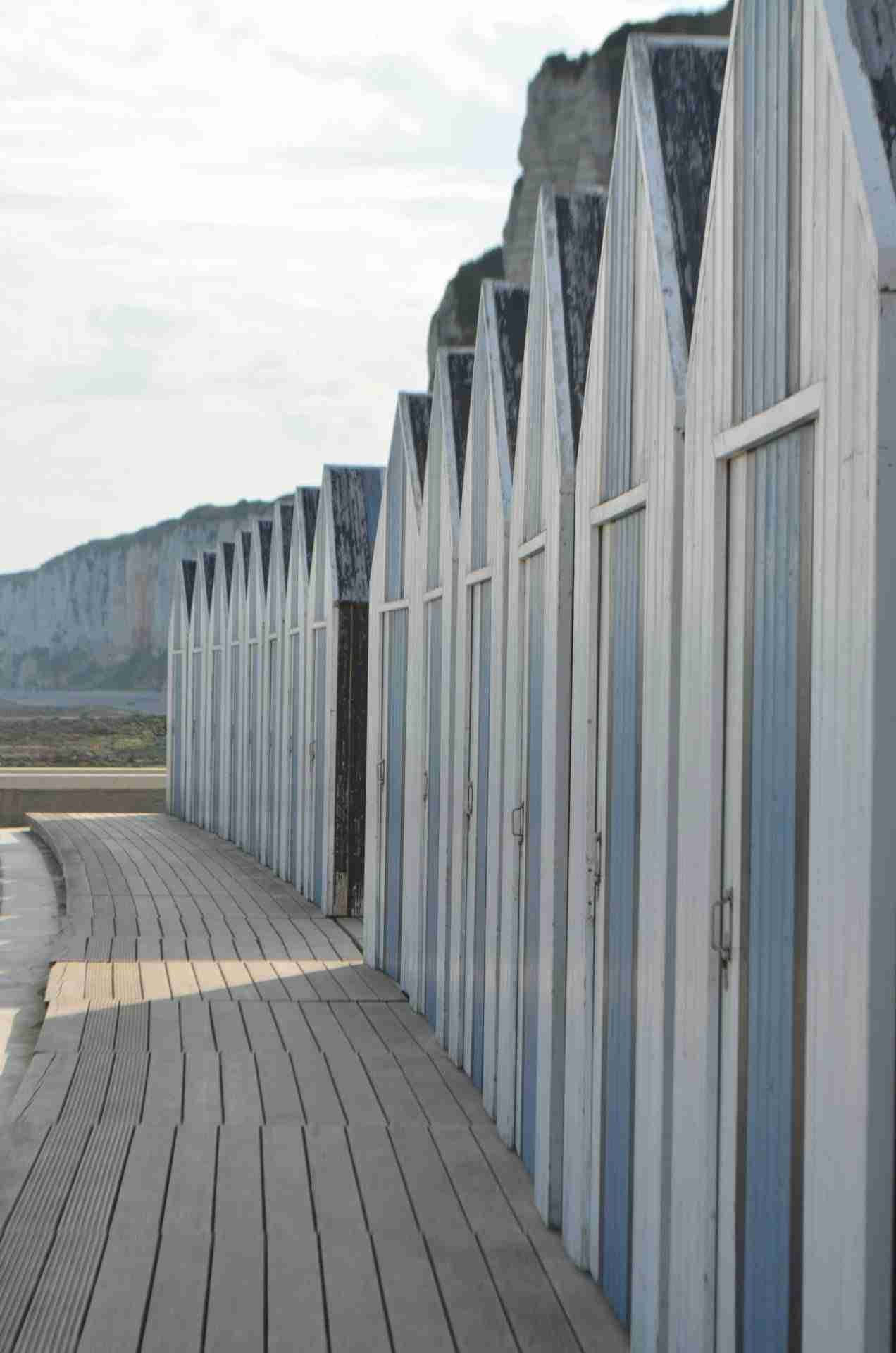
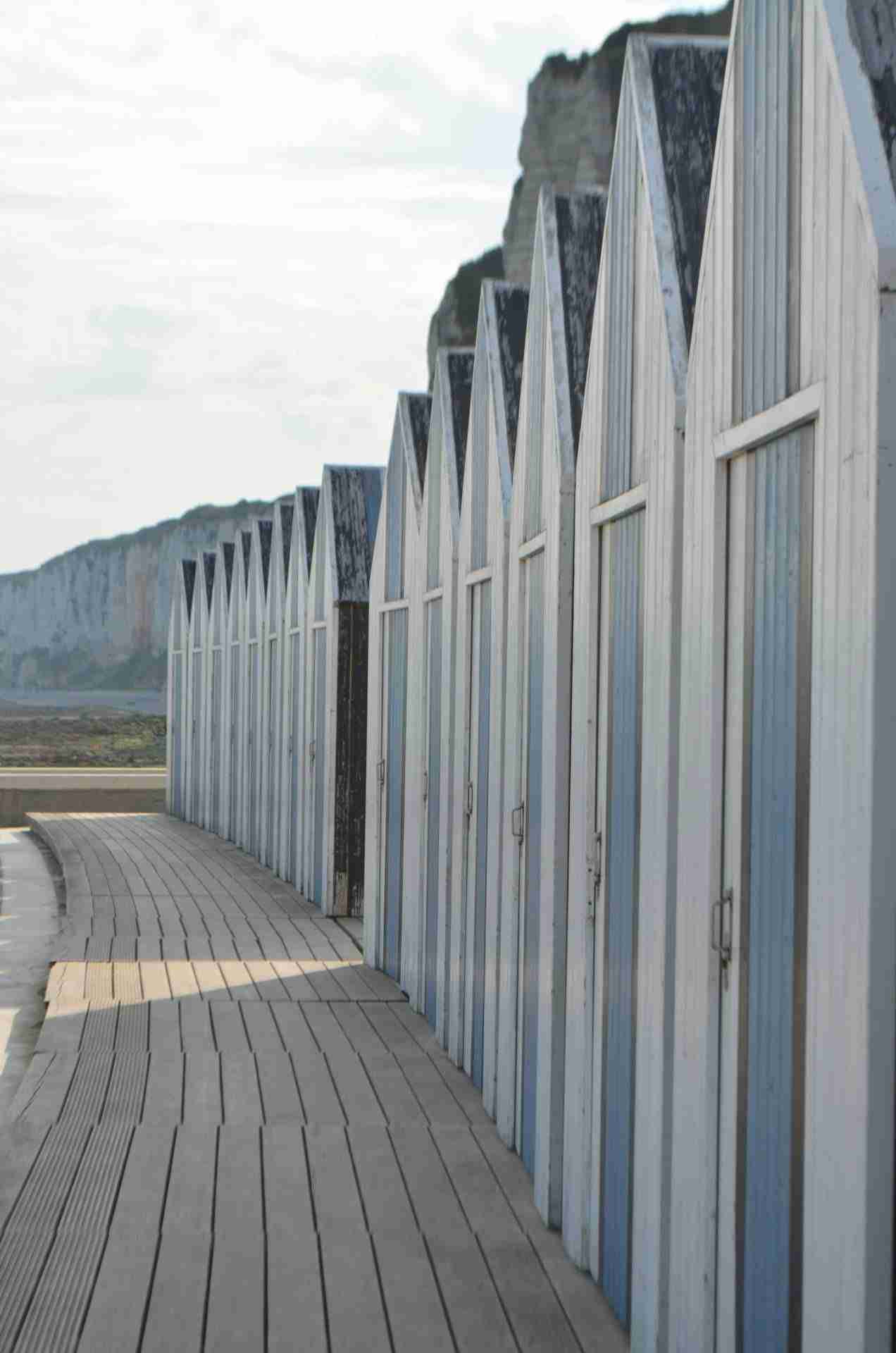
Nestled between the iconic chalk cliffs of Normandy's Côte d'Albâtre, Plage d'Yport is a stony beach of striking contrasts—white cliffs rising abruptly from deep blue sea, rows of colorful fishing boats resting on pale shingles, and an atmospheric interplay of weather, texture, and tide. Unlike its more photographed neighbors Étretat and Fécamp, Yport remains quieter, more authentic, and less composed for tourists. For photographers, it offers a rich palette of visual possibilities: seascapes in changing light, rugged cliff profiles, weathered boats, and minimalist studies in cloud and stone. This is a location where geology and human rhythm meet—perfect for long exposures, abstract compositions, and coastal storytelling.
Best Photography Opportunities
• Cliff Faces from the Eastern End of the Beach
: From the eastern end of Plage d'Yport, you can frame the white chalk cliffs as they curve around the bay, catching early morning or late afternoon sidelight. These formations, weathered and fractured by centuries of Atlantic exposure, offer strong lines and tonal contrast. A medium telephoto lens (70–200mm) works well to isolate cliff textures, while a wide-angle setup captures the full sweep of shore and sea. As the tide retreats, bands of darker shingle and seaweed stretch across the foreground, creating natural lines that lead the viewer's eye toward the headland. During stormy or overcast conditions, the cliffs take on a more austere, sculptural tone, especially when paired with moody skies and softened sea movement.
• Fishing Boats on the Pebbles
: The beach is often lined with small, colorful wooden boats resting on the white pebbles, tethered loosely or pulled ashore. These vessels provide both visual rhythm and narrative tension—evidence of the town's working heritage. Composing low and tight with a 35mm or 50mm lens helps anchor the boat in the foreground while drawing the cliffs or sea into the background. Look for weathered paint, ropes, and nameplates to add detail and texture. Early morning light from the east side of the bay adds shadow and contour to the boats' hulls, while cloudy conditions let their colors stand out with greater saturation and contrast. These boats are perfect subjects for story-driven images that speak to time, place, and labor.
• Long Exposure Minimalism at High Tide
: As the tide rolls in and covers the lower pebble banks, the beach becomes ideal for long exposure seascapes. Use a 6- or 10-stop ND filter to flatten the water and let the headlands loom as dark shapes against a softened sky. Compose with symmetry in mind or include a solitary subject—such as a fishing pole, a groyne, or a stranded boat—to introduce a subtle focal point. These compositions thrive in mist, gray light, or approaching storms, when atmosphere outweighs color. The slight curvature of the shoreline can also be used to create depth or lead-in lines, especially when shooting from a low angle. Keep shutter speeds long enough to blur wave movement without losing the edge definition of nearby rocks or groynes.
• Aerial Views from the Coastal Trail
: From the clifftop path east of Yport, accessible via a short but steep footpath, you gain expansive views back across the town, beach, and channel beyond. This elevated position allows for wide scenic captures with layered elements: cliffs, sea, sky, and rows of boats or buildings below. A drone extends these perspectives further, especially in early light when shadows sculpt the terrain. Capture the contrast between the strict geometry of the town's red-roofed homes and the organic curve of the shoreline. From above, the chalk cliffs become textured bands of white and green, and their interplay with the sea offers strong natural diagonals. Be mindful of seagulls, sudden gusts, and the ever-present Atlantic wind when flying.
• Late Day Glow on the Western Cliffs
: At golden hour, the sun drops low behind the town and casts a warm, raking light across the western cliffs. These tones contrast beautifully with the cooler hues of the sea and sky. From the beach, aim to shoot westward with a telephoto to compress the light on the rock face, or use a wide frame to include the sweep of the beach curving toward the sunset. In the right conditions, the chalk glows with amber tones that pop against the blue-green water, especially in late summer and early autumn. These scenes work especially well with people or birds silhouetted against the light, adding life and scale to the vast coastal forms. Tripod work here allows for careful framing, but handheld is ideal if you're chasing the fast-changing glow in shifting clouds.
Best Time to Visit
Plage d'Yport transforms across the seasons, with each period offering distinct photographic moods and challenges. Spring and early summer (April to June) deliver crisp air, soft light, and relatively low crowds. Cliff foliage begins to green, and the sea often reflects soft pastel hues in the morning. These months offer the best visibility and balance between calm and drama.
Autumn (September through November) brings moodier skies and shifting light patterns. Clouds move quickly along the coast, and the sea becomes more dynamic—perfect for long exposures or expressive seascapes. The boats remain on the beach into late autumn, and the sun's lower angle enhances cliff texture and directional light. These months are excellent for atmospheric work.
Winter strips the scene to its bones—bare cliffs, empty boats, and powerful weather. Harsh winds and low tides open up more abstract opportunities: broken pebbles, dark waves, and minimalist skies. While colder and more physically demanding, this season delivers profound tonal contrast, ideal for black and white photography and visual solitude.
Tide times are crucial. At low tide, the beach stretches farther, exposing rock formations and deep shingle beds; at high tide, waves lap close to the seawall, and the beach narrows to a photographic sliver. Sunrise and sunset both work here depending on the direction of your composition, but late afternoon often gives the richest textures on the cliffs and boats.
How to Get There
Plage d'Yport lies on the Normandy coast between Fécamp and Étretat, within the commune of Yport in the Seine-Maritime department. The most straightforward access is by car: from Le Havre, take the D940 coastal road north toward Fécamp, then turn off to Yport on the D79. From Rouen, follow the A150 and D926 westward. Free parking is available in Yport, with spaces just above the beach on Rue Emmanuel Foy and along the town center.
For those arriving by public transport, regional trains run to Fécamp from Le Havre or Rouen, with buses or taxis available for the final 10-minute leg to Yport. Once in the village, the beach is a short walk down from the town square via Rue du Général Leclerc.
There are no access restrictions or fees for the beach, and it is publicly accessible year-round. The area is compact and walkable, with easy shoreline paths and steps leading up to the cliffs. Tripods and small drone setups can be used freely, but caution is advised near the cliff edges and during high winds. Early mornings see fewer visitors, and the best light often coincides with the quietest hours.
Recommended Gear and Shooting Tips
Because Plage d'Yport lends itself equally to expansive landscapes and fine details, a flexible kit is ideal. A wide-angle zoom (16–35mm) is excellent for capturing the beach, cliffs, and sky in a single frame. A mid-range zoom (24–70mm or 24–105mm) covers scenes involving boats, buildings, and sea, allowing for both compositional control and fast adaptability. A telephoto (70–200mm) is invaluable for isolating cliff textures, compressing layers, or working with directional light.
Neutral density filters (6- or 10-stop) are essential for long exposures, especially on misty or overcast days when the mood lends itself to stillness and softness. A circular polarizer helps reduce glare from wet stones and intensify sea color. A sturdy tripod is critical—coastal wind can be persistent—and a remote shutter or timer ensures stability during long exposures.
Footwear should be solid and waterproof; the beach is steeply pebbled and can be slippery near the tide line. Gloves and a lens cloth are useful in colder seasons or in misty conditions. If hiking the cliffs, pack light and ensure you have weather protection—conditions change quickly, and even a brief rain can drench equipment.
Scout the beach at different tides to understand how the space transforms. Use the pebble texture as foreground, and remember that color can come from unexpected places: boat hulls, worn rope, oxidized metal, or patches of seaweed. Yport rewards a slow approach and a patient eye.
Nearby Photography Locations
: Just 15 minutes to the southwest, Étretat's famous chalk arches and natural pillars rise out of the sea in bold formations. While more crowded than Yport, early morning or late evening shoots reveal why this coastline inspired Monet and Boudin. Sunset from the cliff path above the Aiguille is particularly powerful.
: To the northeast, the port of Fécamp offers strong maritime subjects—fishing boats, harbor walls, lighthouses—and industrial contrasts. From Cap Fagnet, you can shoot southward back toward Yport and capture the coastline in layered silhouette under soft northern light.
: This lesser-known coastal notch offers access to a small, pebbled cove surrounded by cliffs. The beach feels hidden and intimate, with dramatic verticals and almost no foot traffic. Ideal for minimalist compositions and long exposure work in solitude.
: Tucked between Yport and Étretat, this quiet beach is known for its red-roofed villas and steep cliff backdrop. It's a good choice for detail-rich architectural and shoreline photography under changing light.
• Saint-Jouin-Bruneval and the Port of Antifer
: Just to the south, this working port offers a contrast to the natural drama of the cliffs. Cranes, tankers, and concrete breakwaters give photographers a completely different palette—one of scale, industry, and sea-weathered structure.
Plage d'Yport doesn't demand attention—it invites it quietly. It's a place where the coast doesn't shout, but whispers, in texture, curve, and shadow. For those who take the time to listen through the lens, it offers images that hold not just light and form, but feeling.
Comments
Loading comments…