
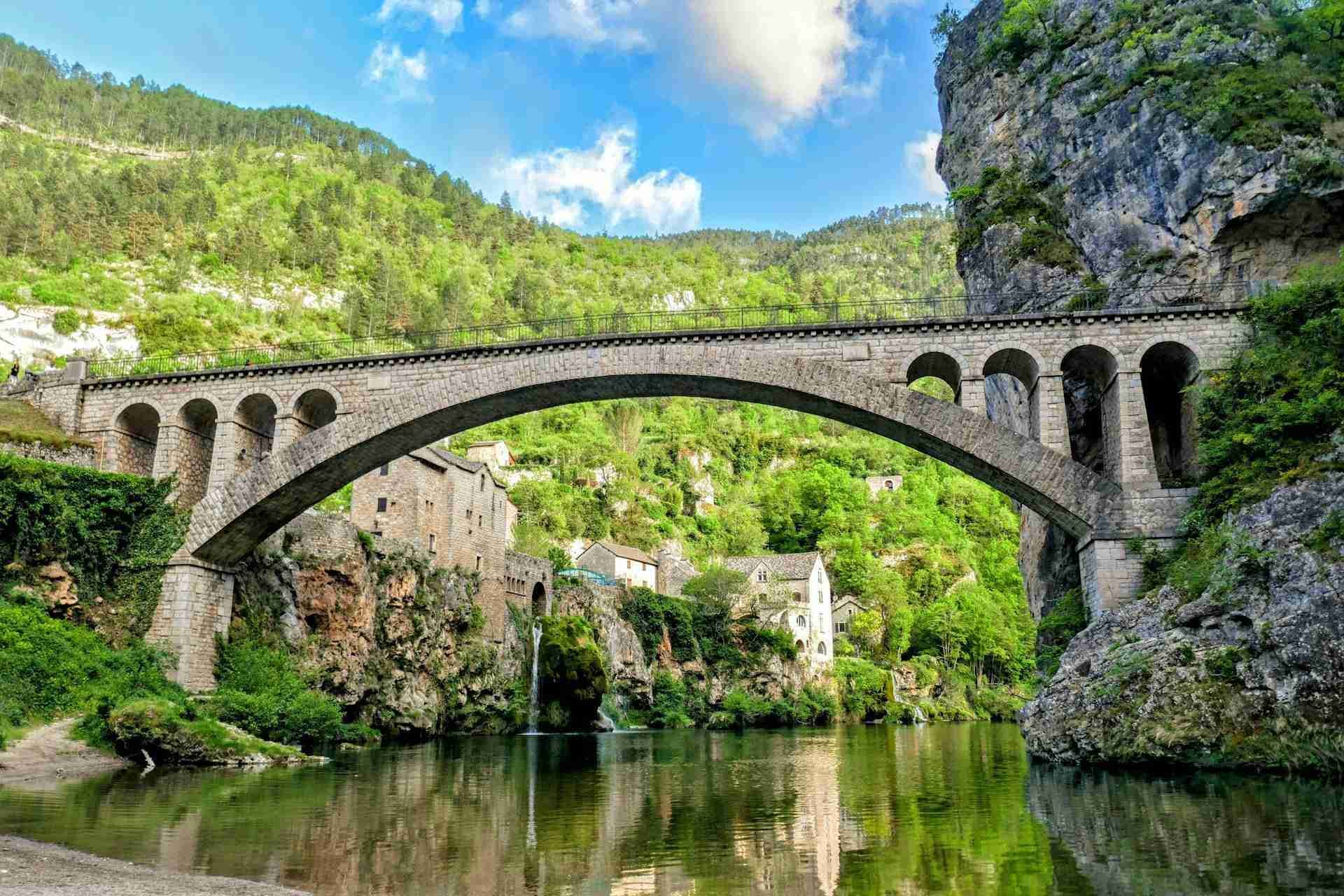
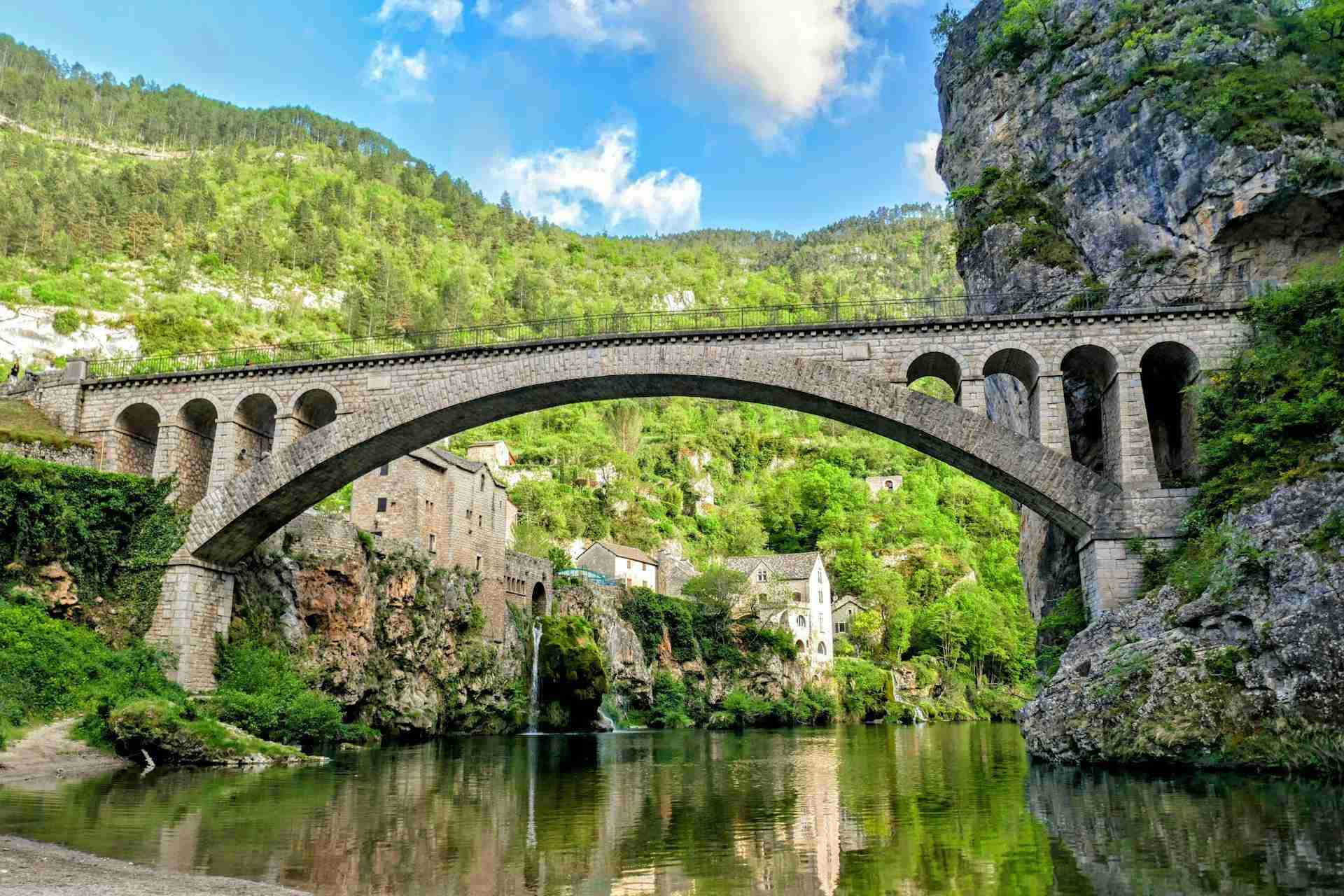
The Pont de Saint-Chély-du-Tarn is a graceful stone bridge arching over the emerald waters of the Tarn River, set in one of the most photogenic stretches of the Gorges du Tarn. Located in the heart of the Causses and Cévennes UNESCO-listed landscape, this centuries old bridge connects the tiny hamlet of Saint-Chély-du-Tarn to the scenic road that winds along the river canyon. The surrounding limestone cliffs, traditional stone houses, and slow moving river create an ideal environment for landscape and travel photography, with the bridge acting as both a subject and a framing element. Light here moves quickly through the canyon, casting reflections and changing the mood from warm to cool throughout the day.
Best Photography Opportunities
• Front Views Framing the Village
One of the strongest compositions comes from photographing the bridge straight on from downstream, where you can use its central arch to frame the buildings of Saint-Chély-du-Tarn nestled into the cliff behind. This perspective takes advantage of the bridge's symmetry and the way the village seems to rise organically from the stone around it. Shooting in the early morning or late afternoon allows soft, raking light to catch both the village and the reflections in the river. A tripod and mid range focal length help balance foreground texture with background detail. Including trees or foliage at the frame's edge adds a natural vignette to anchor the composition.
• Reflections from the Riverbank
The Tarn River flows slowly at this bend, often creating mirror like reflections of the bridge and the limestone cliffs. Shooting from the water's edge or a slightly elevated spot on the riverbank allows you to compose symmetrical frames with the bridge reflected cleanly below. These shots benefit from calm weather and low foot traffic, so early morning is often ideal. A polarizing filter can help control glare on the water, though turning it partially allows you to retain some of the reflections while still cutting haze. Reflections are especially vivid in spring and autumn when the surrounding greenery or foliage adds color to the frame.
• Side Angles with Canyon Walls
From either side of the river, you can work with more angled views of the bridge that show its full arc across the water with the dramatic canyon walls rising behind. These compositions give a sense of scale and geography, especially when you include parts of the road or surrounding forest. Shooting from the cliff paths or road turnouts above the village provides a higher perspective where the bridge, village, and river are all visible in one sweeping frame. A wide angle lens is helpful here, especially for capturing the verticality of the cliffs and the snaking path of the water below.
• Detail Shots of Stonework and Textures
The bridge itself is built of rough hewn limestone blocks that show their age beautifully in low angle light. These textures are ideal for tight compositions that focus on the craftsmanship and weathering of the stone. You can also photograph elements like the bridge's shadow falling across the river or the interplay of stone and moss along the base of the arch. These types of images are best captured on overcast days or when the light is diffused, to avoid harsh contrast. A standard zoom or short telephoto lets you frame cleanly without needing to stand directly beneath the structure.
• Golden Hour with Clifftop Light
The surrounding cliffs catch warm light near sunrise and sunset, casting a golden hue across the village and the bridge. During these times, the canyon takes on a layered look, with deep shadows and rich highlights that can be emphasized using longer lenses or HDR blending. The bridge becomes part of a larger composition where light, geology, and architecture meet. Fog or low cloud after a cool night can add further mood and separation between foreground and background. Golden hour is also the best time for photographing people or activity on the bridge, with light that flatters both landscape and human subjects.
Best Time to Visit
Saint-Chély-du-Tarn is best photographed in spring or autumn, when the surrounding vegetation is either vibrant green or turning gold and red. Summer can be bright and busy, with midday light reflecting off the limestone and water, which sometimes causes blown highlights. Early mornings are quiet and often offer mist along the river, while late afternoons provide side lighting that adds dimension to the cliffs and village. Winter is quieter and may bring fog or frost, creating a more subdued but moody look, particularly in monochrome.
Weather in the gorge can shift quickly, so it's worth checking forecasts and allowing time for changing conditions. Overcast skies help bring out the textures of the stone and forest, while clear skies give better light on the village and canyon walls.
How to Get There
Saint-Chély-du-Tarn is located along the D907 Bis road within the Gorges du Tarn, between Sainte-Enimie and La Malène in southern France. The village is accessible by car, with a small parking area just before the bridge. From there, it's a short walk across the bridge into the village or down to the riverbanks for better photographic angles. Public transportation is limited in this region, so driving is the most practical option. Walking trails along the river and into the hills provide additional viewpoints, though most primary compositions can be reached without strenuous hiking. There is no fee to access the bridge or surrounding area, and photography is permitted throughout.
Recommended Photography Gear
A wide angle lens is essential for capturing the bridge, river, and cliffs in single compositions. A standard zoom allows for flexibility when switching between wide scenes and tighter detail work. A telephoto lens is useful for compressing layers of cliffs and structures or isolating distant parts of the gorge. A tripod is helpful for low light shots, long exposures, or reflections on the water. A circular polarizer helps with water glare and adds contrast to the sky and foliage. Neutral density filters can be useful for smoothing water movement, especially in overcast conditions or during twilight.
Nearby Photography Locations
Just a short drive away, this medieval village offers cobbled alleys, stone bridges, and dramatic views over the Tarn River. It's especially atmospheric at sunrise or in soft light after a rain.
• La Malène and Les Détroits
Further downstream, this stretch of the gorge features steep canyon walls and mirror-still water, ideal for long exposures and minimalist landscapes from a boat or riverside trail.
• Castelbouc Ruins
Clinging to the cliffs above the river, these dramatic castle ruins add vertical tension to the landscape and work well in silhouette or backlight. A short walk from the roadside gets you into position.
• Point Sublime Viewpoint
A high panoramic overlook offering a complete view over the Gorges du Tarn and its winding course. Excellent at golden hour for soft light and layered distance.
An isolated riverside village accessible only by footpath or boat, Hauterives makes a rewarding stop for secluded photography of traditional architecture and river scenes with no modern intrusion.
The Pont de Saint-Chély-du-Tarn offers a well balanced scene that combines elegant manmade design with raw natural elements. The stone arch, reflective water, and vertical cliffs all lend themselves to compositions where light, texture, and timing define the results. Whether you are working wide to capture the entire landscape or slowing down to study the surfaces and shapes, this bridge serves as both subject and gateway to one of southern France's most photogenic regions.
Comments
Loading comments…