
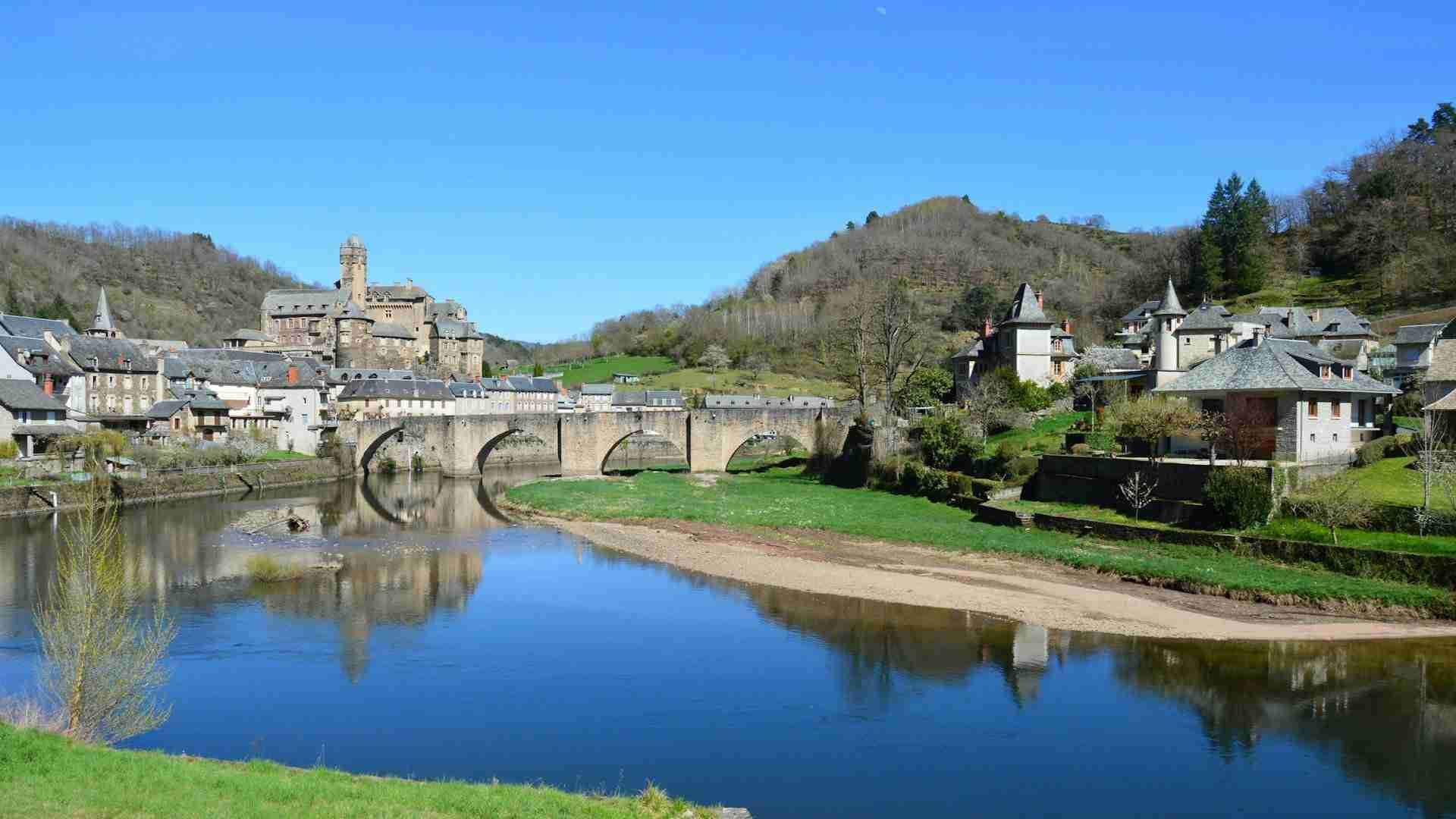
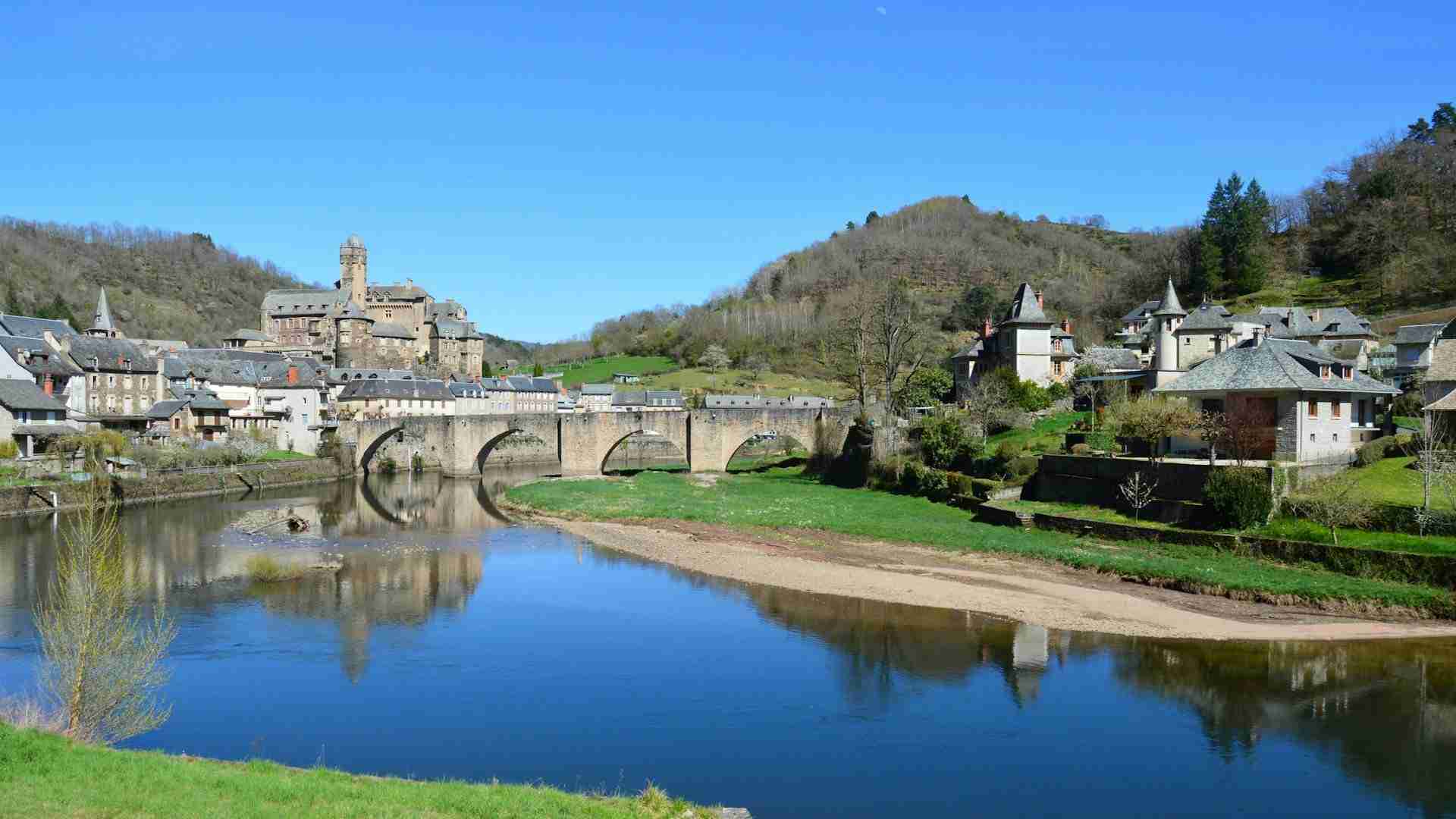
Spanning the River Lot in the historic village of Estaing, the Pont d'Estaing is a striking 14th-century Gothic bridge that seamlessly blends fortified architecture with picturesque landscape. Designated as part of the UNESCO-listed Routes of Santiago de Compostela, this stone bridge is defined by its pointed arches, central cross-bearing niche, and dramatic approach through the medieval heart of the village. Backed by the turreted Château d'Estaing and framed by wooded hills and rustic stone houses, the bridge is an exceptional subject for photographers interested in historical architecture, river reflections, and timeless European village scenes. Whether enveloped in golden evening light or softened by early morning mist, the Pont d'Estaing is as atmospheric as it is structurally elegant.
Best Photography Opportunities
• Reflections from the Riverbank at Sunrise or Sunset
One of the most rewarding compositions is from the south bank of the River Lot, where the bridge's five stone arches and central cross reflect cleanly on the water during calm conditions. Early morning mist or golden hour light creates a mirror effect that enhances the symmetry and mood. Shoot wide to include the château rising behind the bridge, or crop tighter to emphasize the interplay between arches and reflection.
• Silhouettes and Backlighting from the Village Side
From the northern end of the bridge, backlighted evening compositions can capture the central niche cross as a silhouette against the setting sun. The warm stone glows beautifully under raking side light, revealing texture in the masonry and the fine Gothic details. Wait for pedestrians or pilgrims to walk across the span to add human scale and story to the frame.
• Framing the Bridge through Village Alleys
The narrow medieval streets of Estaing offer excellent framing opportunities for the bridge. Look for arched windows, iron balconies, or cobbled lanes that lead the eye naturally toward the bridge in the distance. These compositions work well with a 35mm or 50mm lens and benefit from directional light during golden hour.
• Drone Views and Aerial Perspectives
From above, the full layout of the bridge, river, and village unfolds in a tapestry of stone, slate, and green. Aerial compositions allow you to capture the geometry of the bridge against the meandering River Lot and surrounding farmland. Early morning or evening flights are ideal for soft light and atmospheric haze that enhance the medieval character of the scene.
• Architectural Details of Arches and Cross
Up close, the bridge's stonework reveals centuries of weathering—carved blocks, moss-covered joints, and iron fittings that hold the structure together. Isolate the pointed arches or the central cross niche with a telephoto lens or shallow depth of field to create detail-rich studies in light, shadow, and texture. These shots are best captured under soft light or overcast skies to minimize contrast.
Best Time to Visit
Pont d'Estaing can be photographed in every season, though spring and autumn offer the most compelling conditions. In spring, the riverbanks burst with greenery and flowers, providing natural framing and reflections. The air is often crisp, and early morning mist over the Lot adds drama to wide compositions.
Autumn brings rich foliage colors to the surrounding hills and riverbanks, complementing the golden tones of the stone bridge and the warm-hued rooftops of the village. Late afternoon light at this time of year is especially soft and directional—ideal for both architectural and landscape work.
Summer sees longer daylight hours and lush vegetation, though midday light can be harsh. Morning and evening shoots are best for capturing the full charm of the setting without flattened contrast. This is also when village life is most active—photographing pilgrims, cyclists, and local life can add vibrancy and narrative to your series.
Winter offers moody, low-light scenes with bare trees and muted tones, which work well for black-and-white treatments and more introspective compositions. Rain and low river levels can alter reflections, but also expose new textures and shoreline features.
How to Get There
Estaing is located in the Aveyron department of southern France, along the D920 road between Espalion and Entraygues-sur-Truyère. The village is best accessed by car, though long-distance walkers on the Chemin de Saint-Jacques will also pass directly over the bridge on their route toward Conques and beyond.
Once in Estaing, free public parking is available on the outskirts of the village, just a short walk from the river. The bridge is entirely pedestrian-friendly, with no access restrictions, allowing for full exploration at different angles and times of day.
There is no entry fee to access or photograph the Pont d'Estaing, and the riverbanks on both sides provide ample space for setting up tripods or moving between vantage points. Narrow stone walkways along the river may be slippery in wet weather—appropriate footwear is essential for riverside shooting.
Exploring the Surrounding Area
The village of Estaing itself is a photographic treasure, filled with cobbled streets, half-timbered buildings, wrought iron signs, and quiet courtyards. The Château d'Estaing dominates the skyline and offers elevated views of the bridge and river below. If open to the public, its upper levels provide an ideal spot for shooting wide compositions with the bridge in context.
Walking trails along the Lot offer riverside perspectives of the bridge framed by overhanging trees and old stone walls, especially rewarding in spring or autumn. Small jetties and garden paths closer to the water provide strong low-angle reflection shots, especially during windless conditions.
During twilight, the bridge is softly illuminated by warm lighting, creating atmospheric opportunities for low-light photography with the village softly glowing behind it. Longer exposures across the river can smooth the water surface and amplify the golden reflections—ideal for tripod work.
Nearby Photography Locations
A short drive south, Espalion features another beautiful medieval bridge, Pont-Vieux, along with colorful facades and arcaded walkways that reflect in the Lot River. It's an excellent pairing for a comparative architectural series.
One of France's "Plus Beaux Villages," this nearby town is known for its twisted church spire and charming streetscapes. Photographers will find strong lines, stonework, and historical character in abundance.
• Conques
A major pilgrimage destination, Conques is a stunning medieval village nestled in a wooded valley with an iconic Romanesque abbey. Ideal for golden hour street photography and wide shots of the entire village perched above the Dourdou River.
A dramatic geological formation just north of Estaing, this horseshoe-shaped canyon cradles the village of Bozouls and offers dramatic aerial and panoramic compositions—especially at sunrise or during changing weather.
The surrounding Lot Valley is filled with terraced vineyards, chestnut groves, and panoramic hilltop lookouts—perfect for rural landscape photography and soft rolling scenes during early morning fog or late afternoon glow.
Pont d'Estaing is more than just a crossing—it's a convergence of history, structure, and setting. For photographers, it provides a rich canvas of stone and water, light and time, held in quiet balance at the edge of a medieval village. Whether you're capturing the Gothic arches in soft morning mist or watching the shadows stretch across the Lot at dusk, this enduring bridge invites a contemplative lens and a patient eye.
Comments
Loading comments…