
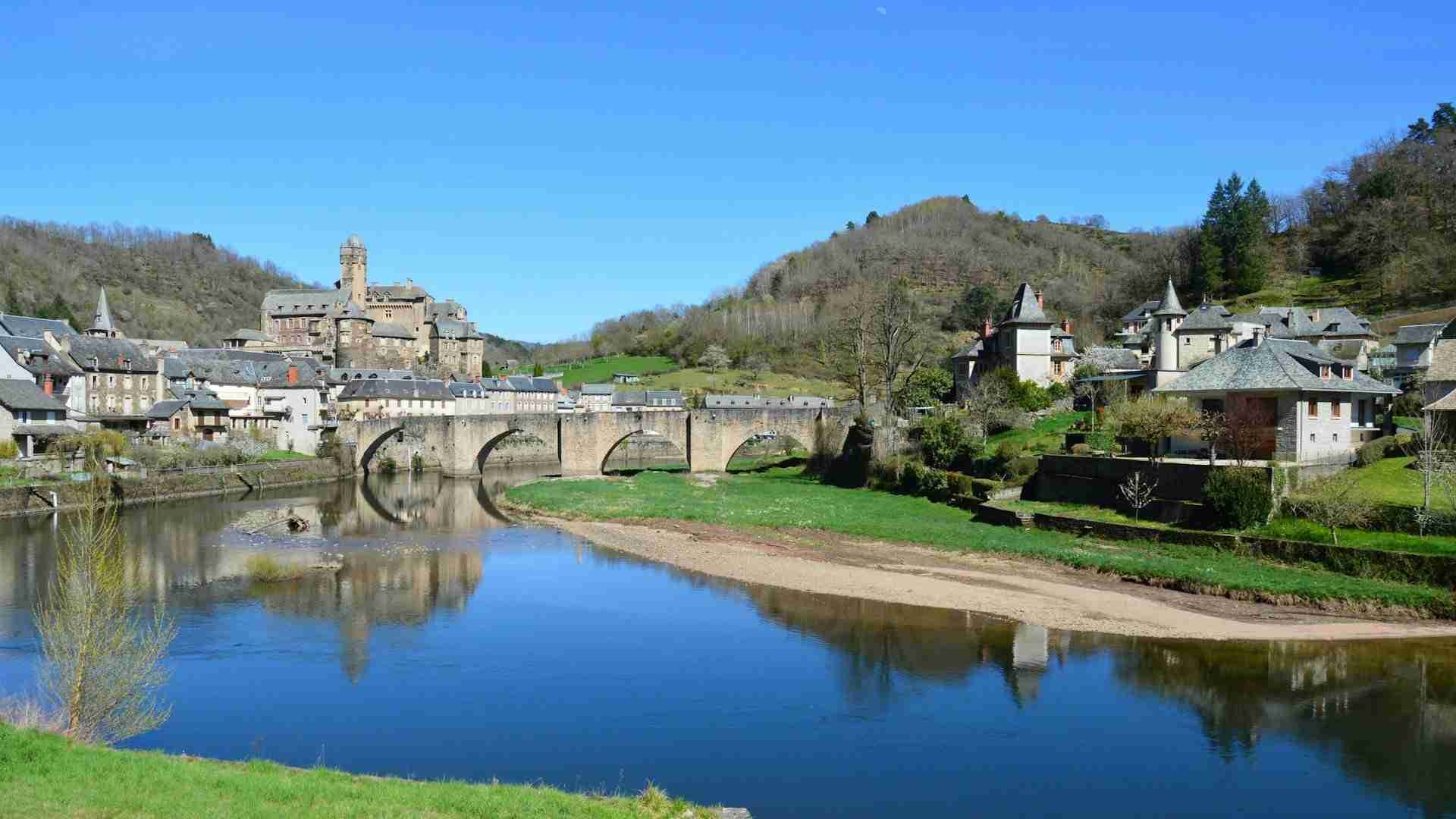
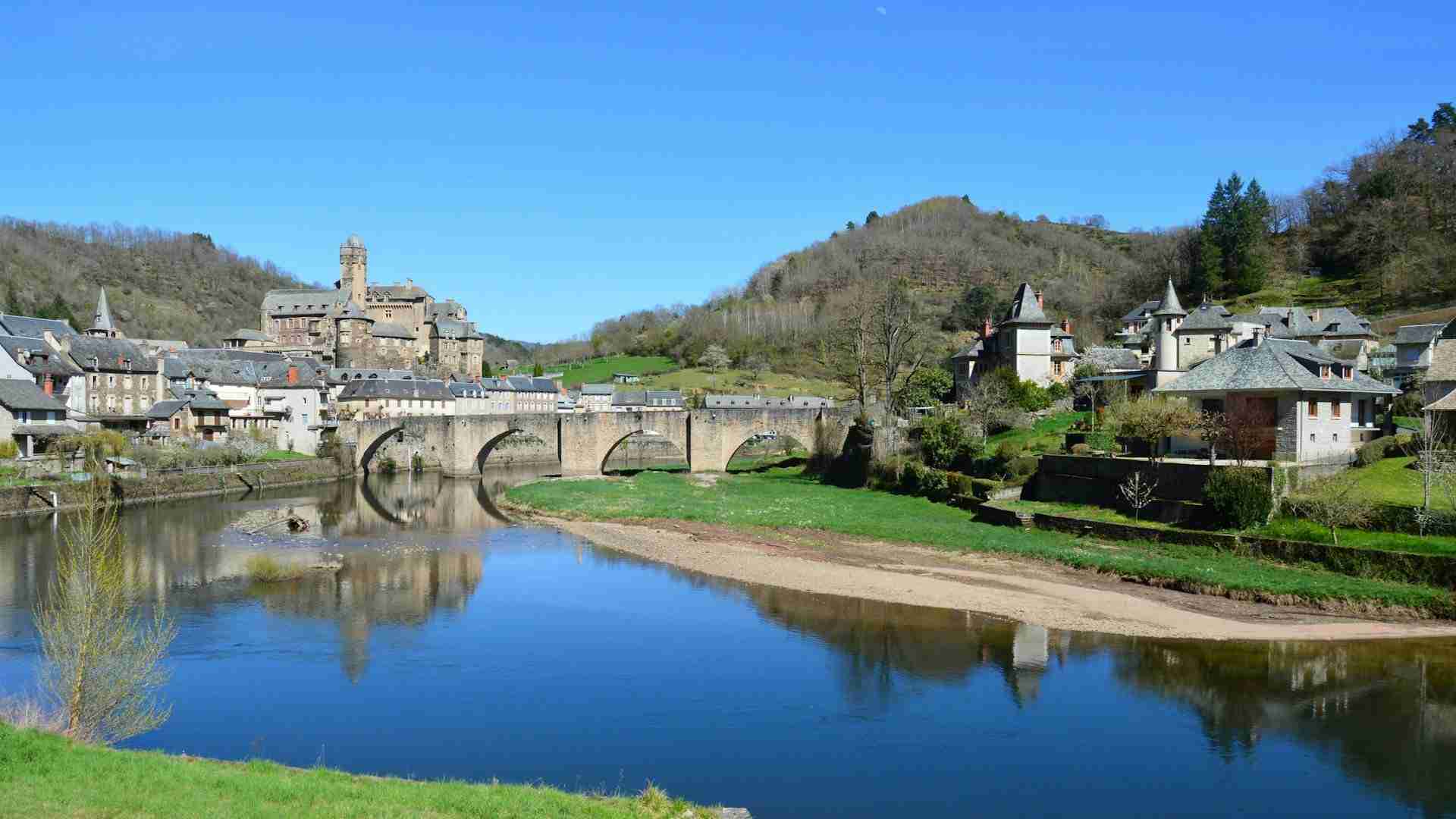
Spanning the tranquil waters of the Lot River in southern France, the Pont d'Estaing is a masterpiece of medieval engineering and one of the most photogenic landmarks in the Occitanie region. Built in the 13th century, this historic stone bridge features five elegant arches and a central pier crowned with a distinctive Gothic cross. Set against the backdrop of the picturesque village of Estaing—with its castle, slate-roofed houses, and cobbled streets rising above the river—the bridge offers a timeless scene that seems lifted from a storybook. Whether shrouded in morning mist or glowing beneath golden hour light, Pont d'Estaing is a dream subject for landscape and architectural photographers alike.
Best Photography Opportunities
• Full Bridge Profile from the Riverbank
: One of the most rewarding angles is from the riverbank east of the bridge, where you can capture the entire span of its arches with the village and Château d'Estaing rising in the background. Early morning light from the east or late afternoon sun from the west adds warmth and side-shadow that enhances the stone textures and reflections. Use a wide-angle lens to fit the full structure and village within the frame, or switch to a longer lens to compress layers of architectural detail.
• Reflections and Mirror Compositions
: On calm days, the Lot River acts like a mirror, reflecting the bridge and surrounding buildings with near-perfect clarity. Shooting just after sunrise or in the blue hour enhances these mirror images, especially when the sky is still tinged with soft color. Position the bridge in the upper half of the frame to let its reflection lead the viewer's eye downward, or shoot vertically to emphasize symmetry and depth.
• Cross and Central Pier Details
: The central pier of the bridge supports a niche with a sculpted Gothic cross—an excellent subject for detail shots or as a focal point in wide compositions. Capture it with a mid-range or telephoto lens to isolate its form against the sky or river, especially during times of angled light that bring out the sculpture's contours.
• Silhouettes and Twilight Mood
: As evening falls, the bridge becomes a strong silhouette against the soft glow of the sky. From the downstream side, the arches appear dark and bold, especially when set against a colorful sunset or under a moody sky. This is a great time to experiment with long exposures to soften the river and pull out movement in the clouds.
• Framing with Foreground Architecture
: From within the village itself, several narrow streets and terraces offer partial views of the bridge framed by archways, wrought-iron railings, or overhanging rooftops. These layers add depth and narrative to your compositions and give a more intimate, lived-in feel to the scene.
Best Time to Visit
Pont d'Estaing is visually rewarding in all seasons, but each brings a unique tone to your photography. Spring and early summer offer fresh greenery, flowering riverbanks, and soft morning light. Autumn adds warm tones and misty mornings—perfect for atmospheric work with layered fog along the water. Winter, though quieter, provides moody skies and bare trees that enhance the structure's stone detail and historic weight.
Golden hour and blue hour are the most photogenic times of day, particularly for reflections and ambient light. Sunrise often brings mist over the river and soft, diffused light ideal for capturing the full span of the bridge. Sunset creates side lighting that grazes the arches and bathes the village in amber tones. Midday light tends to be harsh but can work well for black-and-white architectural studies if you're focused on form and contrast.
How to Get There
Estaing is located in the Aveyron department of southern France, approximately 30 minutes northwest of Rodez. The village is accessible by car via the D920 or D556, with parking available just outside the historic center. Once in the village, the bridge is easily reached on foot—simply follow the main road through town, and the Pont d'Estaing reveals itself as you approach the river.
The bridge is part of the Chemin de Saint-Jacques-de-Compostelle (Way of St. James) pilgrimage route and is open to pedestrian and limited vehicular traffic. No permits are required for photography, and the site is accessible year-round. For riverbank compositions, paths on either side of the river allow you to descend closer to the water, though sturdy footwear is recommended if exploring muddy or uneven terrain.
Exploring the Surrounding Area
Beyond the bridge, the village of Estaing offers a rich variety of photographic subjects. The Château d'Estaing dominates the skyline and provides a strong architectural counterpoint to the bridge. Its turrets and steep roofs can be framed from the bridge itself or captured as a backdrop from across the river. The village streets are a charming maze of cobblestones, vine-covered stone façades, and quiet corners that reward slower, observational photography.
The surrounding countryside includes terraced vineyards, wooded hillsides, and winding roads—ideal for landscape photography and drone work if permitted. Walking along the river upstream or downstream provides additional angles on the bridge and often more tranquil, undisturbed reflections.
Nearby Photography Locations
: Towering above the village, this medieval castle is both a compositional anchor and a destination in itself. Capture it at sunrise from across the river or explore its grounds for elevated views over the Lot Valley.
: Another scenic village along the Lot River, featuring stone bridges, Romanesque architecture, and riverside promenades. It's ideal for atmospheric village scenes and water reflections.
• Conques
: One of the most beautiful villages in France, Conques is renowned for its medieval abbey and preserved Romanesque architecture. Its narrow streets and golden stone buildings are a photographer's delight, especially during early morning light.
• Espalion
: Downriver from Estaing, Espalion offers another historic bridge, the Pont Vieux, and a lively riverside setting that's perfect for twilight or market-day photography.
: For a contrast in scale and tone, the highlands of the Aubrac Plateau provide open skies, wide grasslands, and solitary chapels—ideal for minimalist landscape compositions and long-lens work.
Pont d'Estaing is more than a medieval bridge—it's a poetic meeting point of time, landscape, and craft. With its graceful arches mirrored in still water and the quiet hum of village life behind it, the bridge invites photographers to slow down and let light and perspective tell the story. Whether you're shooting the structure as a sweeping historic landmark or framing intimate moments between stone and sky, this timeless corner of France never fails to inspire.
Comments
Loading comments…