
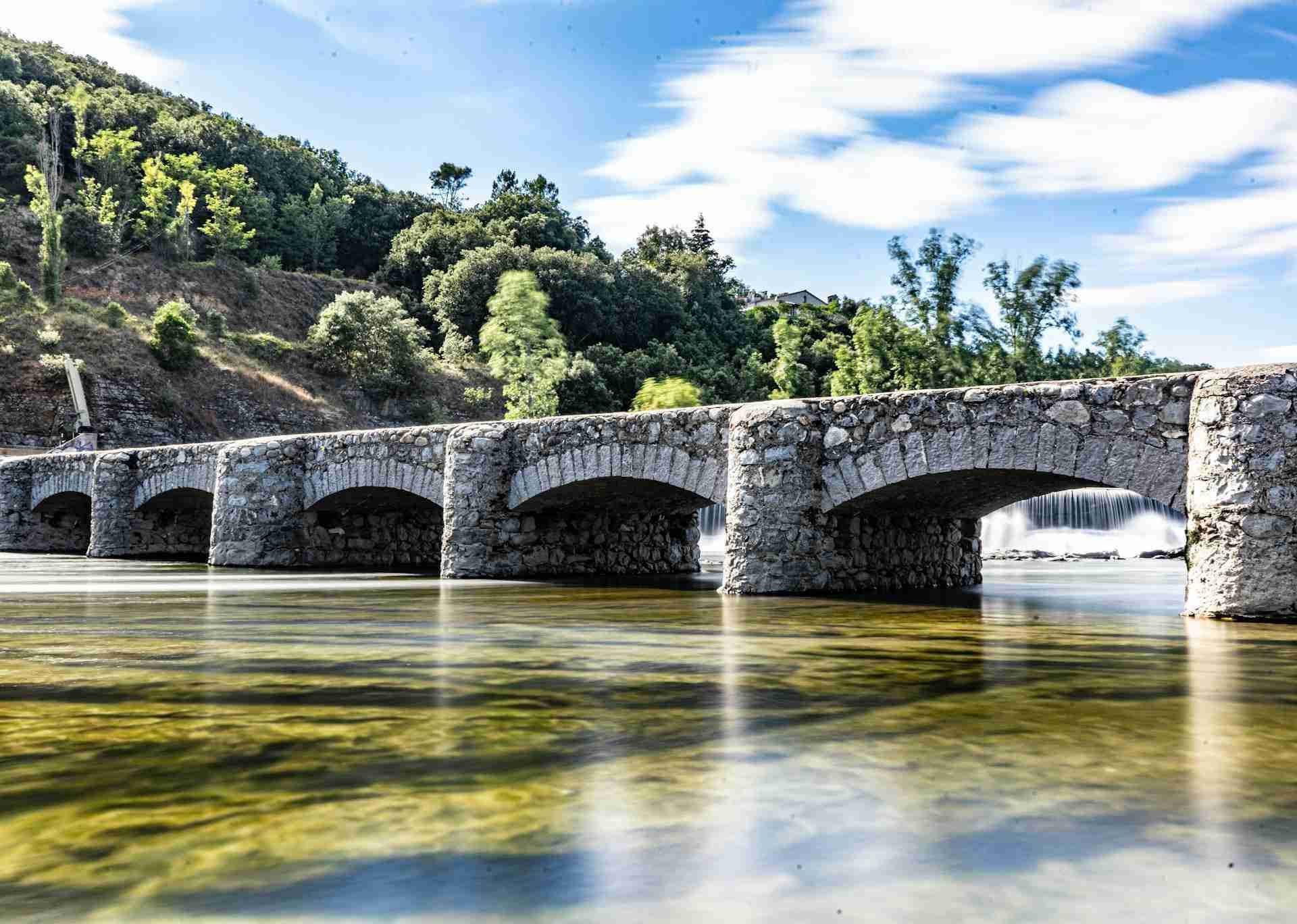
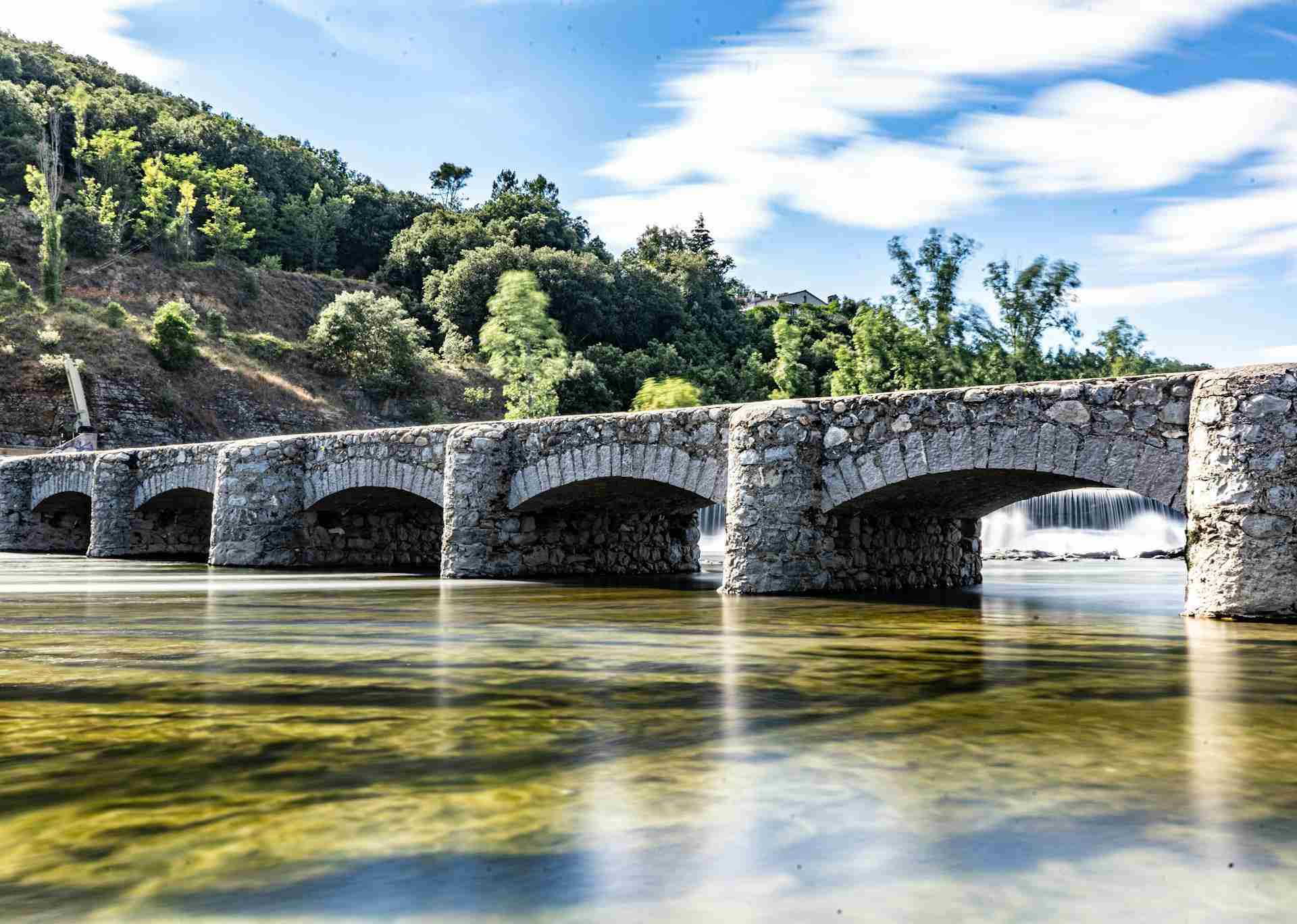
Hidden along a quiet country road in the Ardèche region of southern France, Pont du Moulin is a picturesque stone bridge that feels frozen in time. Nestled under a canopy of trees and stretching across a slow-moving river, this simple yet charming bridge captures the quiet beauty of the French countryside. The bridge's weathered stone, simple arches, and mirror-like reflections make it a perfect subject for photographers drawn to timeless textures, natural harmony, and the subtle interplay between light and landscape. Whether approached as a destination for contemplative compositions or as a quiet stop along a broader countryside itinerary, Pont du Moulin offers a tranquil and richly photogenic setting far removed from the bustle of tourist circuits.
Best Photography Opportunities
• Golden Hour Reflections beneath the Arches
: The river flowing under Pont du Moulin is typically shallow and slow-moving, creating glassy reflections in calm conditions. During golden hour, especially at sunrise or just before sunset, the warm light filters through the trees and reflects off the water, creating a soft glow that accentuates the bridge's curves and textures. A tripod-mounted camera at water level, angled just enough to catch both arches and their mirrored reflections, creates a symmetrical composition rich in atmosphere. Use a polarizing filter to enhance contrast and manage surface reflections, or shoot without one to intentionally include the mirrored surface for maximum depth.
• Close-Up Studies of Masonry and Texture
: The bridge's stonework shows signs of age and craftsmanship. Moss, lichen, and erosion create natural patterns across the surface, while ivy clings to corners and crevices in the arches. A macro or telephoto lens allows you to isolate these details and transform them into abstract studies in color and form. Overcast days work especially well for this style of shooting, as diffused light brings out the subtle textures without casting hard shadows. Look for opportunities to frame sections of wall with leaves or branches to create organic views that sshow the blending of built and natural environments.
• Framed Views through the Archways
: Shooting from just beside the riverbank allows for compositions that use the bridge's arches as natural frames. Position yourself to align the arch openings with the trees, hills, or winding river beyond, letting the stone structure become a visual border around the landscape. This approach works particularly well in the early morning when soft light streams through the archways, or during autumn when foliage adds an additional layer of color and texture. Use a mid-range lens and stop down to f/8 or f/11 to maintain depth of field across the entire composition.
• Wide-Angle Landscape from the Chemin du Moulin Approach
: As you walk toward Pont du Moulin from the road, a clearing opens that provides a clean, wide view of the bridge spanning the river with tree cover arching overhead. This is an ideal location for a wide-angle composition (16–24mm) that places the bridge in its broader landscape context. The light filtering through the trees creates shadows on the ground and a strong sense of depth along the footpath. Try incorporating elements like overhanging branches or stones in the foreground to create leading lines that guide the viewer's eye toward the structure.
• Seasonal and Weather-Based Variations
: While Pont du Moulin is quietly beautiful in any season, certain conditions can transform the scene entirely. In spring, fresh green foliage adds vibrancy and contrast to the stone; in autumn, golden leaves and a thicker river canopy create painterly tones ideal for color-saturated compositions. After a rain, the river rises slightly and water clarity improves, enhancing reflections and revealing pebbles and textures beneath the surface. In light fog or morning mist, the bridge emerges subtly from the background, providing a moody and minimalist aesthetic ideal for black-and-white treatments or high-key edits.
Best Time to Visit
The serene charm of Pont du Moulin is best experienced in the early morning or late afternoon, when soft directional light brings out the texture of the stone and casts warm highlights across the water. In the morning, the eastern exposure allows light to filter in gently through the forest canopy, illuminating both the bridge and the river surface. This is also when the area is most likely to be free of foot traffic, offering stillness and undisturbed reflections.
Late afternoon brings golden tones and elongated shadows, particularly effective when shooting from the trail approach or from across the river. In summer, early evening provides extended light windows and a tranquil ambiance as birds and insects stir near the water. Spring and autumn are ideal for foliage and color; the surrounding trees and undergrowth offer visual framing and seasonal contrast. Winter is quieter but equally beautiful, with low sun angles, bare branches, and icy reflections that give the scene a stripped-down, contemplative mood.
Overcast days are excellent for detail and texture photography, especially for close-ups of stonework or foliage. Avoid shooting around midday, when light is overhead and the contrast between bright sky and shaded river can be difficult to balance.
How to Get There
Pont du Moulin is located just outside the village of Sampzon in the Ardèche department of southern France. The bridge sits along the Chemin du Moulin, a narrow country lane that branches off the D111 road connecting Sampzon to nearby Vallon-Pont-d'Arc. The most convenient access is by car, with roadside parking available in the surrounding area—typically within a few minutes' walk of the bridge.
There is small parking area near the end of Chemin du Moulin. Follow the footpath until the bridge comes into view, roughly 200 meters of easy walking. There is no entry fee and no restriction on photography. The area is quiet and typically free from crowds, making it an ideal spot for tripod work or longer sessions without interruption. Take care if visiting during or after rain, as the riverbank and trail can become slippery in places.
Recommended Kit for Capturing the Scene at Its Best
Photographing Pont du Moulin calls for a lightweight, flexible kit suited to both wide landscape views and fine detail work. A full-frame or APS-C camera with high dynamic range will help manage the contrast between shaded forest and reflective river surfaces. Start with a wide-angle lens in the 14–30mm range for capturing the full span of the bridge along with surrounding trees, trail, and riverbank. This lens is also essential for compositions that include reflections and foreground framing elements like overhanging leaves or mossy rocks.
For architectural and textural studies, a mid-range zoom (24–70mm) or a macro lens will allow you to isolate features of the stonework, water surfaces, or seasonal foliage. A polarizing filter is especially useful here to reduce glare from the water and enhance saturation in both stone and vegetation. For sunrise and golden hour shots, a tripod is crucial—preferably a compact model with adjustable legs for stability on uneven riverbank terrain.
Pack a microfiber cloth for clearing mist or condensation from your lens in the morning, and consider a neutral density filter if you plan to blur the water surface for long exposures. A small folding stool or waterproof mat is helpful when shooting low to the ground. Because the scene is naturally quiet, an electronic shutter or silent shooting mode will prevent disruption to wildlife or other visitors.
Nearby Photography Locations
: One of the region's most photogenic natural formations, this immense stone arch spans the Ardèche River and is located just a short drive from Sampzon. Its massive scale and the dramatic gorge walls surrounding it provide opportunities for wide-angle landscape compositions and reflections, especially during golden hour when the river is calm.
: Set beside a winding river and framed by limestone cliffs, this historic village features cobbled lanes, stone houses, and scenic bridges. It's ideal for rustic architectural photography and intimate environmental portraits with soft, dappled light in the mornings and evenings.
: Located a few kilometers northeast in Labastide-de-Virac, this medieval fortress offers panoramic views over the surrounding countryside. The weathered stone towers and inner courtyard are excellent for architectural studies, especially in diffused light or with moody skies.
: A natural amphitheater formed by the Ardèche River, this dramatic cliff-lined bend is a favorite for panoramic landscape photography. Visit during the early morning for soft light across the limestone walls, or return at sunset to catch glowing hues reflected in the river's curve.
• Balazuc
: Another of Ardèche's stone-built villages, Balazuc is perched on a cliff above the river and offers a maze of steep lanes, arched bridges, and ivy-draped walls. The interplay between medieval architecture and natural surroundings makes it ideal for storytelling compositions and layered perspectives.
Pont du Moulin may not be a landmark by scale or fame, but its quiet elegance and richly textured setting make it a rewarding subject for photographers attuned to the subtleties of light, stone, and reflection. It's a place where simplicity is beautiful, a reminder that photogenic gems hide in the most unassuming corners of the countryside.
Comments
Loading comments…