
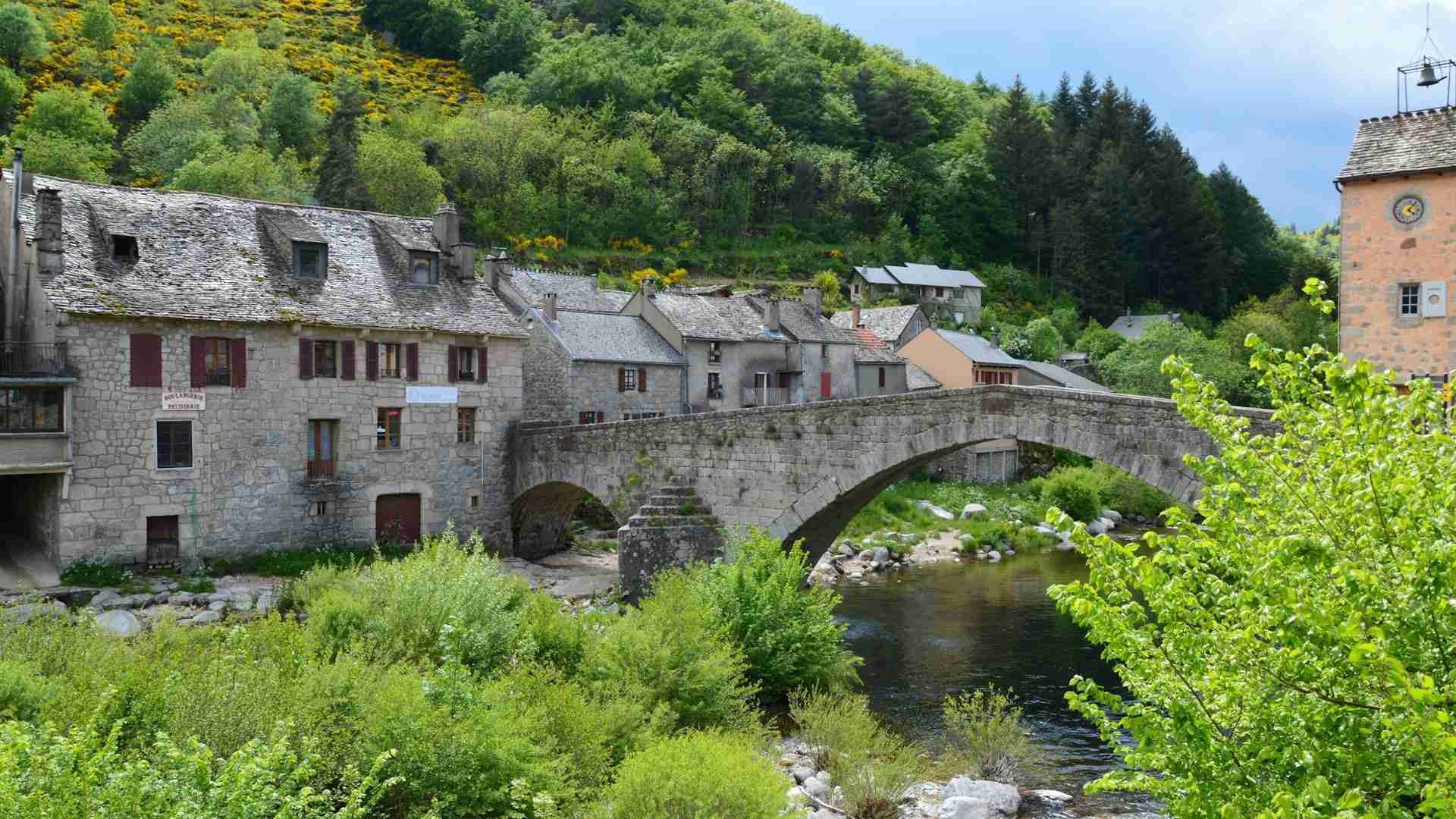
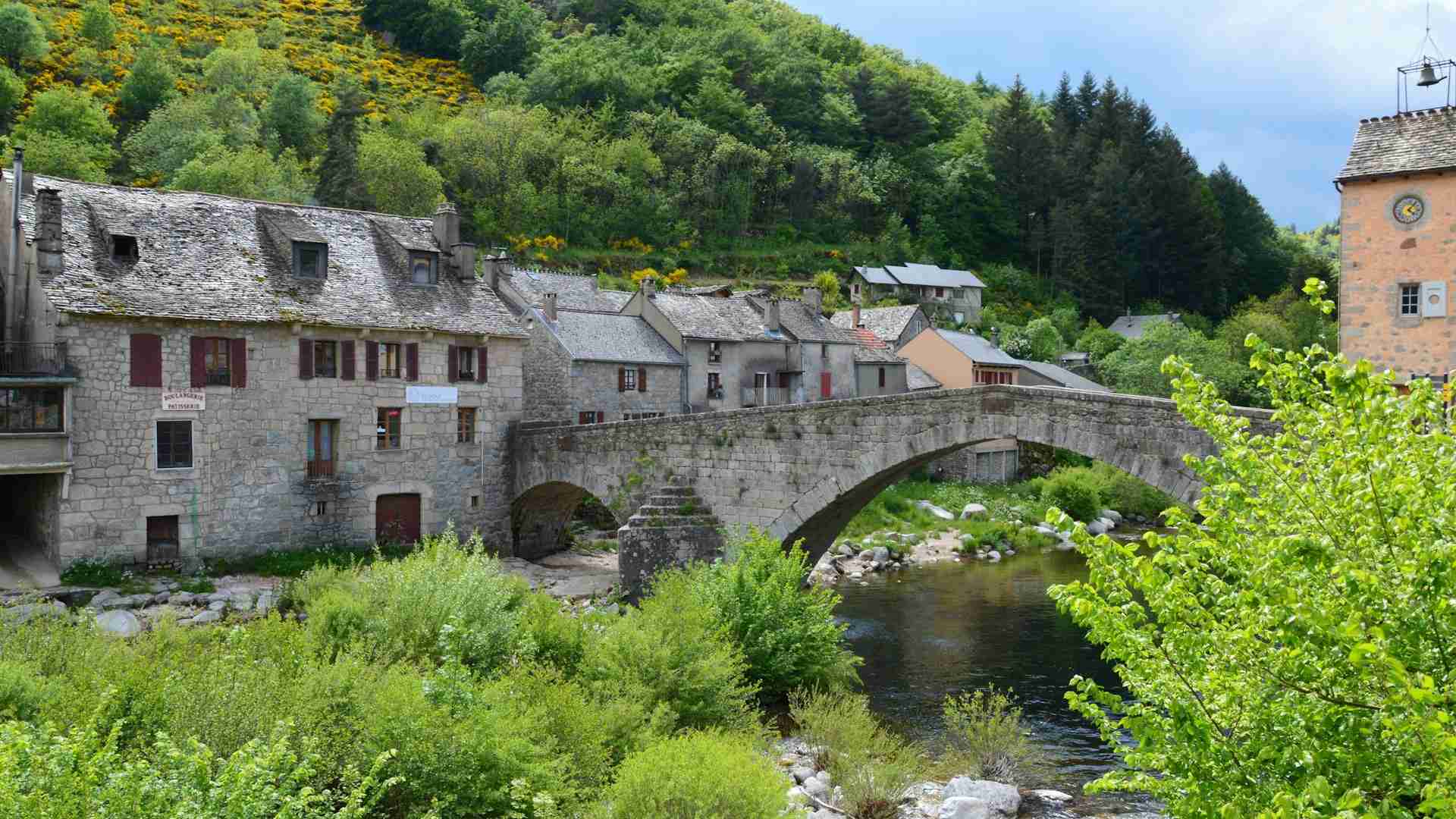
Pont Grand stands at the heart of Pont de Montvert in Sud Mont Lozère, southern France. This historic stone bridge crosses the Tarn River with a single broad arch, linking narrow village streets with water that flows beneath it. The structure is simple, solid, and deeply rooted in the landscape, built from pale stone that shifts in tone depending on light and season. Around it, you'll find traditional houses, small gardens, and rocky riverbanks that give you multiple angles within a compact area. What makes this location strong for photography is the relationship between bridge, village, and river. You're not just shooting an old structure. You're working with reflections, moving water, texture, and layers of elevation that change subtly depending on where you stand.
Best Photography Opportunities
• Arch Reflections –
One of the strongest compositions comes from the riverbank downstream, where you can frame the full arch with water flowing toward you. From this angle, the curve of the bridge becomes the dominant shape in the frame. During calm conditions, partial reflections form beneath the arch, creating a near circular shape when aligned carefully. A moderate wide lens works well, but keeping the horizon level and vertical lines clean is essential. Early morning light often strikes the stone at a low angle, bringing out surface texture without flattening detail. Take time to refine your foreground, as small rocks or ripples can either strengthen or clutter the composition.
• Village Backdrop –
Shooting from upstream allows you to include village houses rising behind the bridge. This adds context and makes the scene feel more layered. A mid range focal length helps compress the relationship between bridge and buildings without losing depth. Late afternoon light is particularly strong from this direction, warming the stone and separating the bridge from shaded background walls. Positioning yourself slightly lower along the riverbank adds depth and helps the arch stand out more clearly. Watch for distracting modern elements and adjust your framing to keep the scene feeling cohesive.
• Long Exposure of Flowing Water –
The Tarn River moves steadily, making it ideal for controlled long exposures. Using a tripod and neutral density filter, you can smooth the water while keeping the stone bridge sharp. This works especially well when the water level is moderate and flows cleanly under the arch. The contrast between soft water and solid masonry creates a strong visual balance. Early morning or overcast conditions are helpful for managing exposure times without overbright highlights. Keep shutter speeds controlled rather than excessively long to maintain subtle texture in the current.
• Detailed Stone and Texture –
Pont Grand's surface shows years of weathering. The individual stones, mortar lines, and subtle color variations offer strong detail subjects. Side lighting reveals depth in the stonework and highlights the curvature of the arch. A longer focal length helps isolate sections of the bridge without including unnecessary background. These tighter compositions are especially useful if midday light feels too flat for wide shots. Building a set of detail images adds variety beyond standard bridge views.
• Blue Hour –
As evening settles, the village quiets and the sky transitions into cooler tones. The bridge stands clearly against the fading light, and the river reflects subtle color shifts. A tripod becomes essential for maintaining sharpness in lower light. Including a small portion of illuminated village behind the bridge can add warmth without overwhelming the scene. Blue hour here feels calm and balanced rather than dramatic. This is often the most refined window for architectural compositions.
Best Time to Visit
Spring and early summer are excellent, as river flow tends to be stronger and surrounding greenery adds subtle contrast without blocking views. Early morning is particularly productive. The light is softer, the village is quieter, and reflections are more likely when wind is minimal.
Late afternoon into blue hour provides warmer tones on the stone and balanced exposures. Summer brings longer daylight hours but also more visitors. Autumn can introduce muted seasonal color and slightly lower water levels, which expose more riverbank textures. Winter is quieter but can bring higher water or unpredictable conditions after rainfall. Checking river levels and recent weather before visiting is worthwhile, especially if long exposure photography is a priority.
How to Get There
Pont Grand is located in Pont de Montvert within Sud Mont Lozère in southern France. The village is accessible by regional roads that wind through the Cévennes landscape. Parking is available near the village center, followed by a short walk to the bridge.
The area is pedestrian friendly and compact, making it easy to move between shooting positions along the riverbanks. There is no entrance fee to access the bridge or surrounding viewpoints.
Recommended Photography Gear
A wide lens is useful for capturing the full bridge with surrounding context. A mid range zoom offers flexibility when working between riverbank and village perspectives. A longer focal length helps isolate architectural details and compress background buildings.
A sturdy tripod is highly recommended, particularly for long exposures and blue hour shooting. Neutral density filters are useful if you want to smooth the water during brighter parts of the day. A polarizer can help reduce glare on the water surface and deepen sky tones. Keep your gear manageable, as you may need to reposition frequently along uneven ground near the river.
Nearby Photography Locations
offers sweeping mountain views, forested slopes, and winding rural roads. It provides broad landscape compositions that contrast with the tighter architectural setting of Pont Grand. Sunrise and sunset work particularly well on elevated viewpoints.
offers higher elevation terrain with open vistas and granite outcrops. It is ideal for wide landscape photography and layered ridge compositions. Clear days provide strong visibility across the region.
• Florac
is a larger nearby town with traditional architecture and river scenes. It offers additional bridge and water compositions in a different setting. The historic center provides street photography opportunities that complement Pont de Montvert.
• Tarn River
continues through dramatic gorges beyond the village. These sections provide rugged river landscapes with cliffs and moving water. Long exposures and elevated viewpoints both work well here.
• Stevenson Trail
passes through the region and offers varied terrain, from wooded paths to open ridge lines. It provides opportunities for environmental landscape photography and rural detail work. Morning light filtering through forest sections can be especially rewarding.
Comments
Loading comments…