
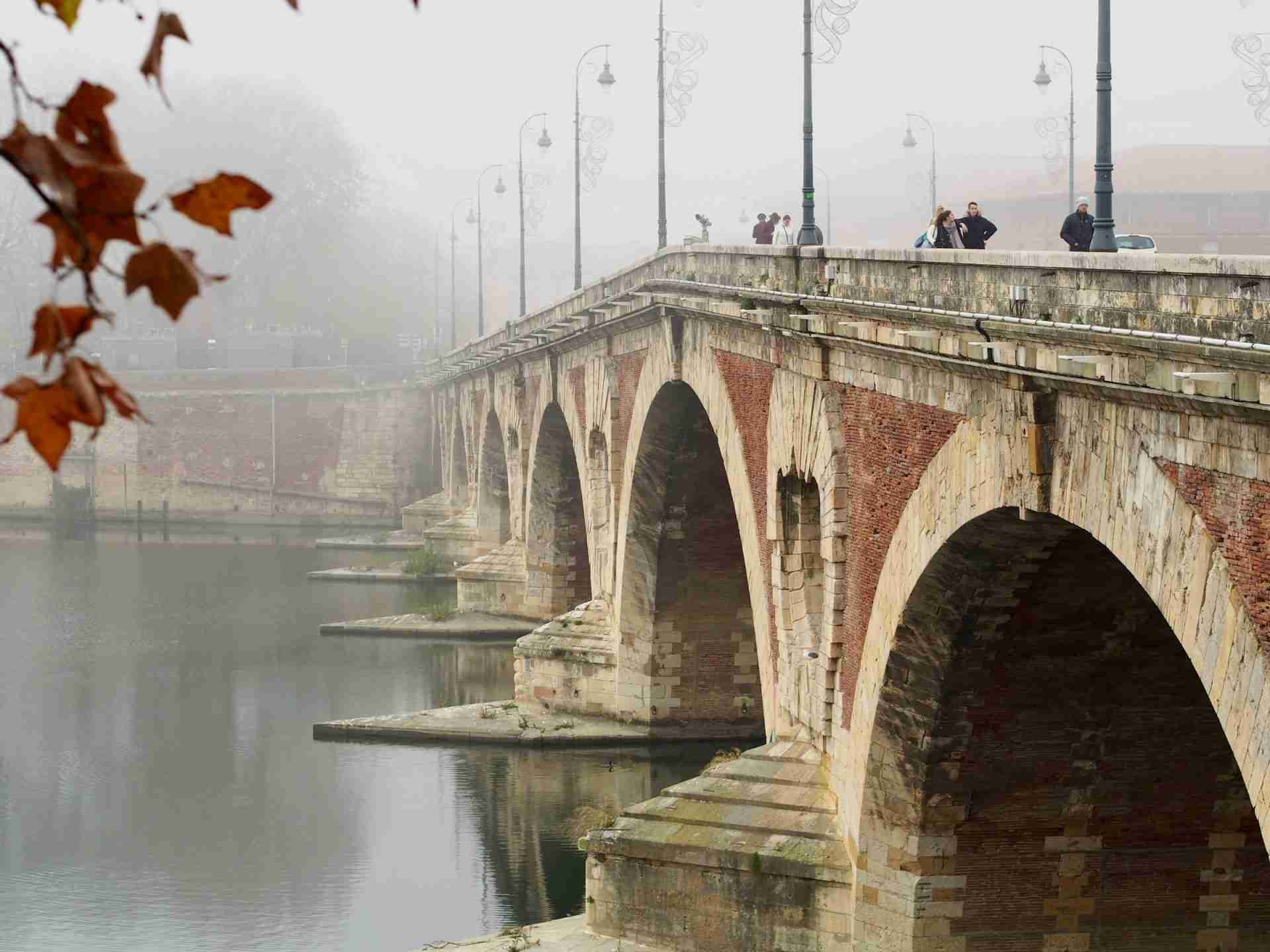
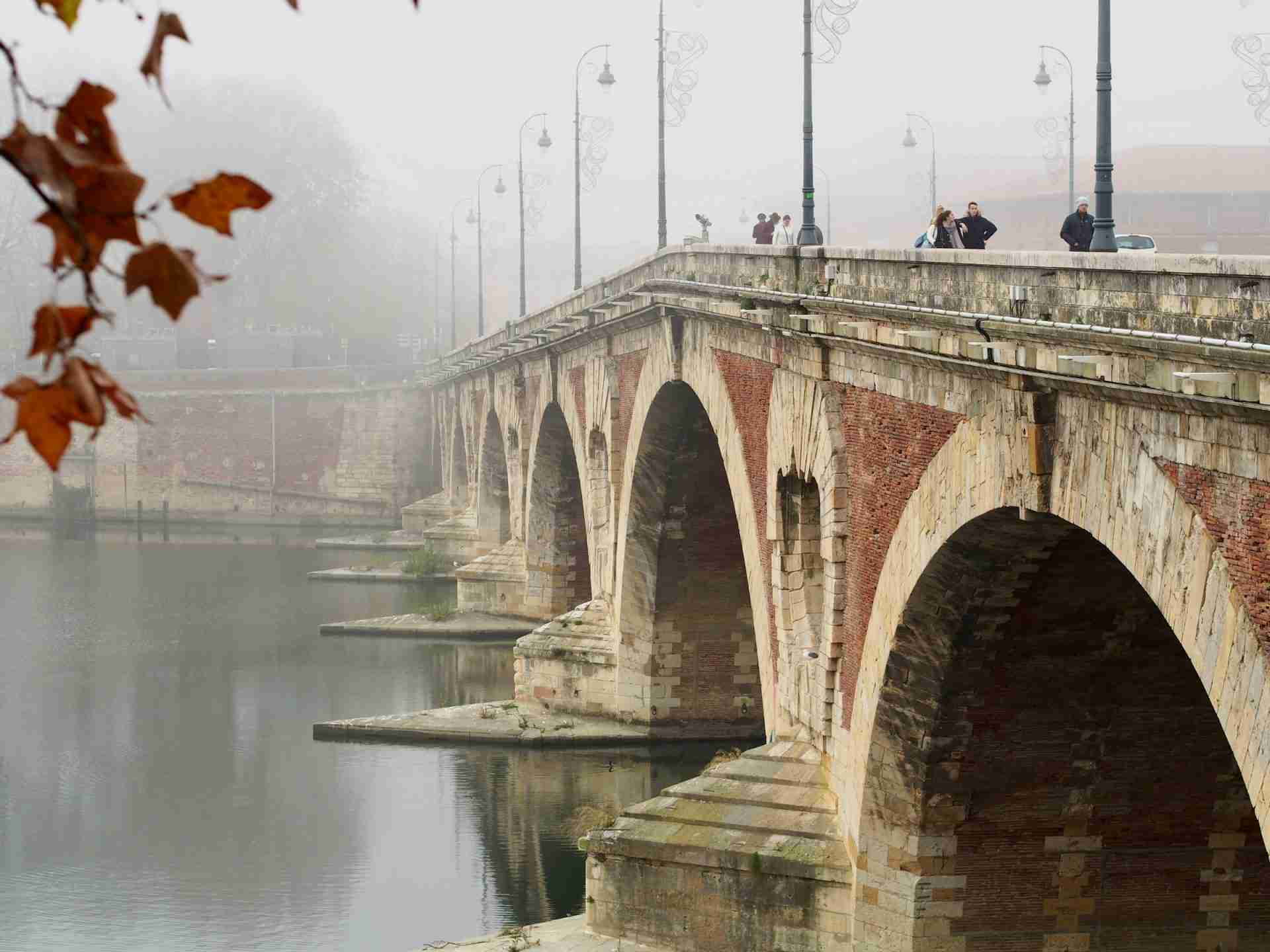
Pont Neuf is the oldest bridge in Toulouse, spanning the Garonne River with a sequence of wide stone arches that give it a steady, grounded presence. Despite its name meaning "New Bridge," it dates from the late 16th and early 17th centuries and is built from the region's pale stone, which catches light in a distinctive way. The structure feels solid and practical rather than ornate, with clean lines and evenly spaced arches that translate well into photographs. One of its defining features is the set of openings above the piers, designed to relieve water pressure, which also create visual breaks within the stone mass. From almost any angle along the riverbanks, the bridge reads clearly and confidently, making it one of the strongest architectural subjects in the city.
Best Photography Opportunities
• Wide Riverbank Views Showing the Full Span
From the quays on either side of the Garonne, the full length of Pont Neuf can be captured in a single composition. The repeating arches create a clear rhythm, while the pale stone contrasts gently with the darker river beneath. Moving slightly upstream or downstream changes how the arches overlap and how the openings above the piers line up visually. Calm water strengthens reflections and reinforces the repeating pattern. These compositions benefit from careful horizon control and attention to shoreline distractions.
• Focusing on the Openings Above the Piers
The distinctive circular and arched openings above the piers are one of the bridge's most recognizable details. Framing these elements tightly allows you to highlight both structure and design without needing the entire span in view. Side light emphasizes depth within the openings and brings out texture in the stone. Longer focal lengths help compress the arches and simplify the background. This approach works well when you want a more graphic interpretation of the bridge.
• Low Angles From the River's Edge
Closer to the water, the arches appear more imposing and curved. Shooting from a lower position strengthens the geometry and adds depth to the composition. Reflections become more pronounced from this angle, especially when the river surface is calm. Careful framing avoids modern elements along the banks that can interrupt the historic feel. This viewpoint is particularly effective in softer light.
• Views From the Bridge Looking Along the Parapet
Standing on Pont Neuf itself, you can photograph along the stone parapet toward the arches and city beyond. This angle emphasizes linear perspective and gives a sense of scale through receding lines. Including subtle elements of the river and opposite bank adds context without overwhelming the frame. Early morning is ideal for cleaner shots with fewer pedestrians. This perspective highlights the bridge as both structure and pathway.
• Reflections at Sunset and Blue Hour
As the sun lowers, the pale stone warms noticeably and reflects softly in the Garonne. During golden hour, the bridge gains depth and subtle color variation that enriches the scene. Blue hour offers a different mood, with cooler tones in the sky contrasting against the stone. A tripod helps maintain sharpness as light fades. These sessions often produce the most balanced and visually satisfying images.
Best Time to Visit
Early morning and late afternoon are the most productive times to photograph Pont Neuf. Morning typically offers softer light and fewer people crossing the bridge, making it easier to compose clean frames. Late afternoon and sunset bring warmer tones that enhance the pale stone and strengthen reflections in the river. Midday light can flatten texture and increase glare on the water, though overcast conditions are excellent for even architectural studies. Seasonal changes influence river levels and surrounding foliage, which can either frame the bridge or introduce visual clutter. Planning around calm weather improves the chances of strong reflections.
How to Get There
Pont Neuf is located in central Toulouse and is easily reached on foot from most parts of the historic center. Public transportation connects nearby districts, followed by a short walk to the riverbanks. There is no fee to access or photograph the bridge from public areas. Both sides of the Garonne feature pedestrian friendly quays that provide multiple vantage points. Arriving early helps secure quieter conditions, especially during tourist season.
Recommended Photography Gear
A standard zoom lens covers most needs, from full span compositions to tighter architectural details. A short telephoto lens is useful for compressing arches and isolating the openings above the piers. A tripod is recommended for sunset and blue hour sessions when shutter speeds lengthen. A polarizer can help manage glare on the river and deepen sky tones when conditions allow. Keeping the camera level is important to preserve clean lines, particularly when working with symmetry. Because the bridge is centrally located, a compact kit makes it easy to move between viewpoints quickly.
Nearby Photography Locations
The main square offers grand façades and open space, contrasting with the horizontal structure of the bridge. It works well for architectural symmetry.
This Romanesque church provides warm brick tones and vertical emphasis. It pairs nicely with the stone arches of Pont Neuf.
The cloister and interior columns offer controlled light and repeating forms. It is ideal for pattern focused photography.
Located along the Garonne, this quay provides alternate views of Pont Neuf and open riverside scenes.
This riverside complex offers strong façades and reflections opposite the bridge. It expands the visual story of Toulouse's waterfront.
Comments
Loading comments…