
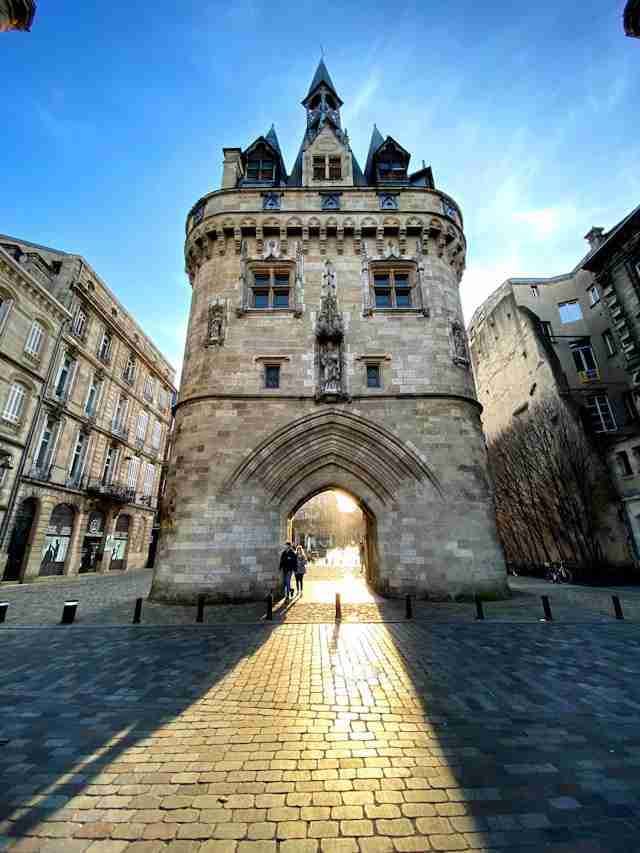
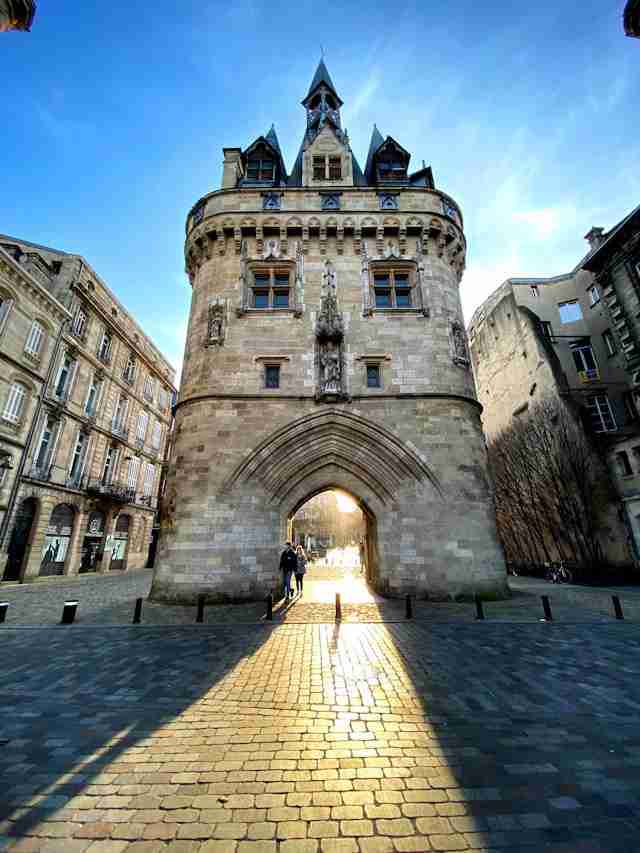
Standing sentinel at the edge of Bordeaux's medieval quarter, the Porte Cailhau is both a fortified gate and a Gothic-Renaissance hybrid, rich in architectural flourish and historical intrigue. Built in 1495 to commemorate King Charles VIII's victory at the Battle of Fornovo, this stone monument once formed part of the city's defensive walls. Today, it rises dramatically at the end of Rue du Quai Richelieu, its turrets, pointed arches, and slate rooflines presiding over the Garonne River with elegant austerity. For photographers, the Porte Cailhau offers a captivating interplay of textures, historical layers, and urban vibrancy—combining ornate medieval detail with a vibrant riverside location that transforms with every change in light.
Best Photography Opportunities
• Frontal Facade from Place du Palais
: The most rewarding view of Porte Cailhau is from directly across Place du Palais, where the full symmetry of the structure—its pointed archway, twin turrets, and slate-covered spire—can be composed head-on. Using a wide or standard lens, photographers can frame the gate cleanly while incorporating the cobblestone foreground or surrounding cafés to add scale and depth. Early morning light brings gentle, even illumination to the façade, while late afternoon casts long shadows that enhance architectural relief. For an elevated frame, position yourself near the corner café terraces to include natural leading lines and everyday context in the foreground.
• Architectural Detail Studies
: The gate is richly decorated with Gothic and Renaissance details, including carved crests, traceried windows, gargoyle heads, and flared slate rooftops. A medium telephoto lens allows you to isolate these elements, especially in soft sidelight when shadows add contrast to recessed carvings. Focus on the Charles VIII relief above the entrance, or the slender stone ribs and arches around the windows. Overcast conditions are excellent for flat light that reveals every curve and crevice without harsh contrast, making this the best time for black-and-white conversions or textural studies.
• Perspective Compressions from Rue du Quai Richelieu
: Shooting from further down Rue du Quai Richelieu offers compressed compositions that pull the viewer's eye toward the gate, framed by surrounding buildings and tram lines. A telephoto lens (100–200mm) enhances the visual weight of the gate while capturing modern urban energy around it—cyclists, café-goers, and public transit can be layered for contrast between eras. Late afternoon light skims the stone façade while leaving the street in partial shade, creating a natural focal point at the tower's center. Include streetlights, hanging signs, or reflections in shop windows to give your frame a lived-in, documentary feel.
• Evening Blue Hour and Illuminated Stonework
: After dusk, Porte Cailhau is lit from below by warm-toned spotlights that highlight its stone reliefs and architectural geometry. Blue hour offers the best balance of ambient sky and artificial light, especially when the slate spires glow against a deep cobalt backdrop. A tripod is essential here for long exposures. Compose from a low angle to include reflections in wet cobblestones, or wait for trams to pass and leave light trails that curve toward the gate. This is one of the best times for moody or cinematic interpretations of the gate, particularly in winter when foot traffic is minimal.
• Interior and River Views from the Tower
: The interior, when open, offers more intimate photographic moments—narrow staircases, rough-hewn stone walls, and small windows that frame views of the Garonne River and Pont de Pierre. A wide-angle lens is useful in tight quarters, while a fast prime handles the dim, ambient lighting without flash. Shooting through the windows lets you juxtapose medieval stonework with modern city vistas, especially in late afternoon when golden light streams into the upper chambers. These interior images add narrative context to your broader compositions of the structure.
Best Time to Visit
The most rewarding time to photograph Porte Cailhau is early in the morning, when the eastern sun casts soft, warm light across the façade. From about 7:30 to 9:00 in spring and autumn, the gate is illuminated in a way that highlights its intricate reliefs without strong shadow contrast, while the surrounding square remains relatively quiet. This time of day allows for clean compositions and architectural clarity, especially when shooting the full frontal elevation.
Late afternoon into golden hour offers more dramatic lighting, with stronger side shadows and a warm glow that enhances texture in the stone and slate. During this window, shooting from Rue du Quai Richelieu allows for long-axis compositions with directional light shaping the full depth of the scene.
Blue hour is especially effective for capturing the gate's illuminated profile against a deepening sky. The building is lit from below with warm spotlights, creating a striking balance between ambient cool tones and artificial warmth. Long exposures during this time are ideal for smooth light trails and reflective cobblestone foregrounds.
Seasonally, spring and fall offer the best atmospheric balance—clean air, angled sunlight, and lower foot traffic. Summer brings longer shooting windows but more crowds, requiring early arrival for unobstructed images. In winter, low midday sun and moody skies can lend the gate a brooding, monochrome feel that suits architectural detail work or subdued compositions.
Interior visits should be planned around the tower's opening hours, which vary by season. It is advisable to check local listings or Bordeaux's tourism office in advance. To shoot inside without distraction, visit near opening or closing time when crowds are thinnest, allowing for more control over your compositions and uninterrupted access to the interior viewpoints.
How to Get There
Porte Cailhau is located in the heart of Bordeaux's historic district, just steps from the Garonne River and easily accessible by foot, bicycle, or tram. From Place de la Bourse, walk east along the Quai Richelieu for approximately five minutes. If arriving by tram, take Line A to Place du Palais, which delivers you directly to the square at the base of the gate. This location is central to Bordeaux's old town and is connected by pedestrian routes, bike lanes, and nearby riverfront promenades.
There is no fee to photograph the exterior, and the square is publicly accessible at all hours. Interior access, which includes a small museum and viewing platform, requires a modest entrance fee and is typically open during the main tourist season from spring through autumn. Photography is allowed inside, though use of tripods and flash is discouraged to maintain the experience for other visitors. To capture the gate during its most photogenic light, plan your visit for early morning or late afternoon and scout the location in advance to find your preferred angles.
Recommended Photography Gear
A flexible, high-quality kit is ideal for capturing the full range of compositions available at Porte Cailhau. A wide-angle zoom (16–35mm) is essential for photographing the full gate from close range, especially in the confined space of Place du Palais. This lens also works well for angled compositions and interior scenes if accessing the tower.
A standard zoom (24–70mm) provides versatility for mid-range framing, including street views with layered elements such as cafés, pedestrians, or light poles. This range is especially useful when shifting between symmetrical architectural shots and contextual city scenes.
For detail work and compressing perspective down Rue du Quai Richelieu, a short telephoto lens (70–200mm) allows you to isolate carvings, windows, and reliefs while also capturing the gate within its architectural surroundings.
A lightweight tripod is necessary for long exposures, particularly during blue hour or when incorporating motion like tram light trails. A circular polarizer can improve contrast and reduce reflections in daytime shots, especially on wet surfaces or stone. A fast prime lens (35mm or 50mm) is helpful for handheld low-light shooting inside the tower or for creating shallow depth-of-field studies of architectural features.
Keep gear minimal and portable, as the area around the gate can be busy. A microfiber cloth and weather-resistant bag are useful in case of light rain or river mist from the nearby Garonne.
Nearby Photography Locations
: Just a short walk west along the riverfront, this neoclassical plaza and its shallow reflecting pool offer stunning symmetrical compositions at sunrise and blue hour. The reflections of the lit façades are particularly striking after sunset.
: This 19th-century stone bridge provides panoramic views back toward the city, with the spire of Porte Cailhau visible among Bordeaux's rooftops. Ideal for wide river views and long exposures during twilight or early morning.
: Another of Bordeaux's medieval gates, located along Rue Saint-James. Its bell tower and arched base offer moody architectural compositions and a strong vertical contrast with narrow surrounding streets.
• Rue Saint-James
: A pedestrian-friendly street filled with cafés, shops, and historic façades. It provides excellent opportunities for capturing the rhythm of daily life against a backdrop of old-world architecture.
: Further north along the river, this promenade offers a more industrial backdrop with open space, trees, and long sightlines back toward the heart of the city, allowing for clean skyline compositions and sunset panoramas.
Porte Cailhau stands as more than just a gate—it is a living threshold between eras, between defensive utility and civic pride. For the photographer, it offers a compact but endlessly varied canvas of stone, shadow, and city life—one that reveals more with each change of light and each shift in perspective.
Comments
Loading comments…