

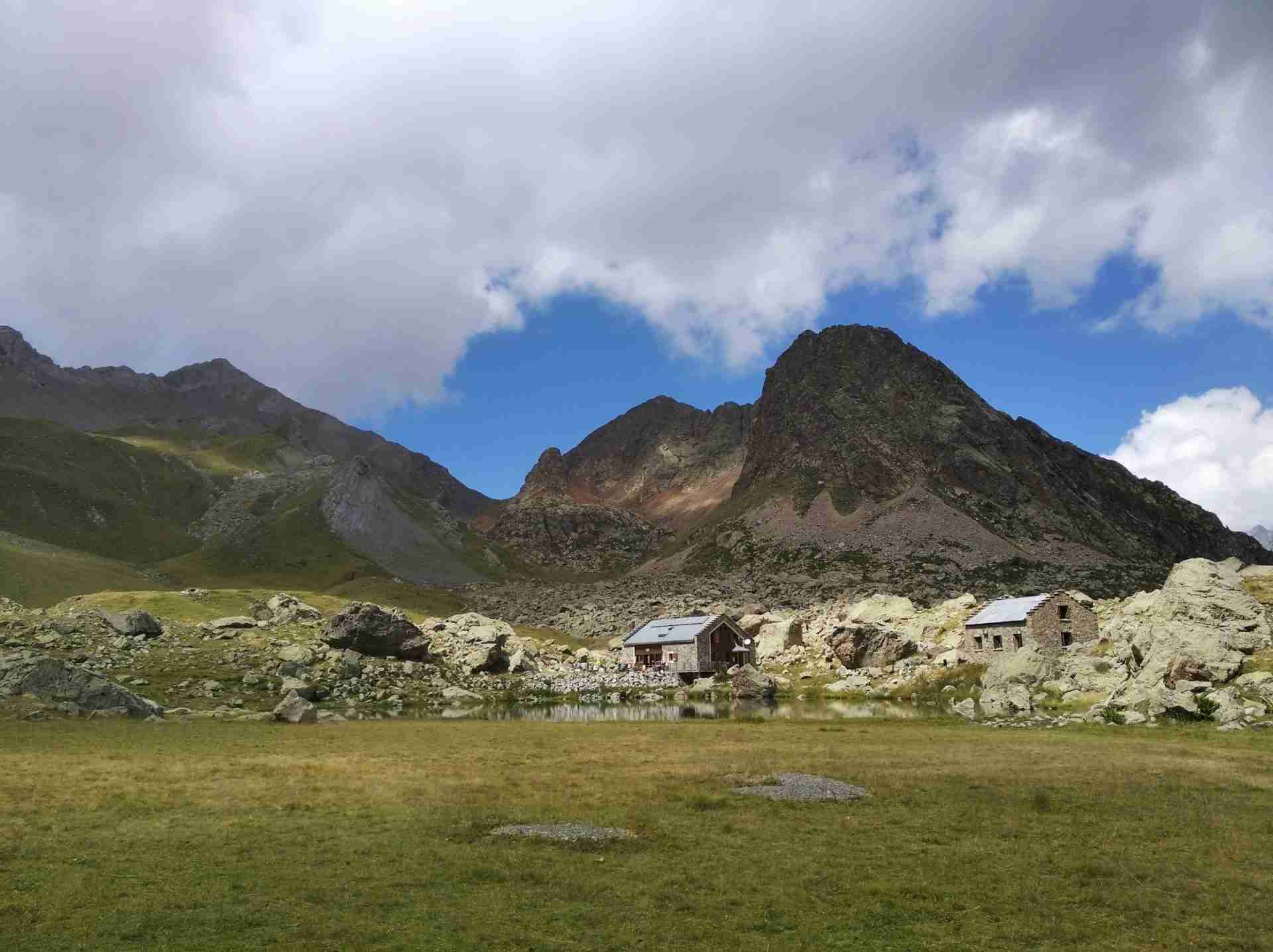
Refuge de Vallonpierre sits high in the Valgaudémar valley in the French Alps, surrounded by steep rock faces and a landscape that feels far removed from anything built or busy. The refuge itself rests beside a small alpine pond, with rugged terrain stretching out in every direction. It is the kind of place you reach on foot and immediately feel the distance from the outside world. The setting is open but enclosed by mountains, creating a natural basin where everything feels contained within the surrounding peaks. The approach to the refuge is part of the experience, with the trail gradually revealing wider views as you gain elevation. By the time you arrive, the combination of water, rock, and mountain backdrop gives you a complete scene without needing to move far. The area around the refuge is easy to explore once you are there, with subtle changes in position offering different compositions. It is not a location built for quick visits, but one that rewards time, patience, and a willingness to adapt to changing conditions.
Best Photography Opportunities
• Alpine Pond Reflections
The small pond beside the refuge is one of the strongest compositional elements in the area. When the water is calm, it reflects the surrounding peaks with surprising clarity, creating balanced and layered images. Positioning yourself low to the ground helps strengthen the reflection and bring more of it into the frame. Even slight ripples can change the look, so timing and patience are important. Moving around the edge of the pond gives you different alignments with the mountains behind. This is a key feature of the location and often the starting point for compositions.
• Wide Mountain Landscapes And Scale
The surrounding peaks rise sharply around the valley, creating a sense of scale that is difficult to ignore. Shooting wider allows you to capture the full environment, from foreground rock to distant ridgelines. Including elements like the refuge or a person in the frame can help communicate just how large the landscape is. Changing your position slightly can alter how the layers of mountains overlap. This approach works well when the light is soft and even. It is a location where stepping back often improves the composition.
• Foreground Texture With Rocks And Terrain
The rocky terrain around the refuge provides plenty of foreground interest to build depth into your images. Stones, uneven ground, and patches of alpine vegetation can all be used to anchor the frame. Placing these elements carefully in the foreground helps lead the viewer's eye toward the mountains beyond. Shooting from a lower angle can emphasize texture and create a stronger sense of depth. This technique is especially useful when the water is not perfectly still. It adds structure to otherwise open compositions.
• Changing Light And Weather Conditions
Light in the mountains shifts quickly, and this location responds strongly to those changes. Early and late light softens the scene and adds subtle contrast across the terrain. Cloud movement can introduce shadows that move across the peaks, adding variation to your images. Weather can change rapidly, bringing mist, low cloud, or sudden clearing skies. Being prepared to adapt is key, as these changes can create some of the most interesting conditions. This is a location where waiting often pays off.
• Compositions Along The Hiking Approach
The trail leading up to the refuge offers its own set of photographic opportunities. As you gain elevation, the valley opens up and provides different perspectives on the surrounding landscape. Stopping along the way allows you to capture views that are not visible from the refuge itself. These moments can add variety to your overall set of images. The changing terrain also introduces different textures and layers. Treating the hike as part of the shoot rather than just the approach can make a big difference.
Best Time to Visit
Early morning and late evening are the most effective times to photograph Refuge de Vallonpierre. The softer light during these periods helps bring out detail in the landscape while keeping contrast manageable. Morning is especially valuable if you want calm water for reflections, as wind tends to increase later in the day. Evening can introduce warmer tones across the peaks, adding variation to your images.
Seasonally, summer and early autumn are the most accessible times, when trails are clear and conditions are more stable. Weather in the mountains can change quickly at any time of year, so it is important to be prepared for shifting conditions. Overcast skies can work well for even lighting, while clear skies offer more defined light and shadow. Planning around weather forecasts is essential for this location.
How to Get There
Refuge de Vallonpierre is located in the Valgaudémar valley near La Chapelle en Valgaudémar in the French Alps, and is only accessible by hiking. The most common and practical starting point is near the parking area at Entre les Aygues. From here, a clearly marked trail leads up through the valley, gradually gaining elevation as the landscape opens into more rugged alpine terrain. The hike is considered moderate but steady, usually taking around 2.5 to 3.5 hours depending on your pace and how often you stop. An alternative route follows the Vallon de la Séveraisse, taking you deeper along the river before turning toward the refuge. This option is slightly longer but offers more variety along the way, with opportunities to photograph flowing water, rock formations, and changing light as the valley unfolds. It works well if you want the hike itself to be part of your photography rather than just the approach.
There are no fees to access the landscape, though staying at the refuge or using its facilities may involve a cost. Proper planning is important, including suitable footwear, water, and awareness of weather conditions. Once you arrive, the area is open to explore on foot, with plenty of flexibility to move between different viewpoints without restriction.
Recommended Photography Gear
A versatile zoom lens in the range of 24 to 70mm works well for most situations, allowing you to capture both wide landscapes and more focused compositions. A wider lens can help emphasize the scale of the mountains, while a longer lens can isolate details and compress layers in the landscape. A tripod is highly recommended, especially for low light conditions and reflection shots.
Neutral density filters can be useful if you want to smooth water or manage exposure in brighter conditions. A polarizing filter can help reduce glare on the water and enhance colour in the scene. Because this location requires a hike, keeping your gear as lightweight as possible is important. Balancing versatility with weight will make the overall experience more manageable.
Nearby Photography Locations
La Chapelle en Valgaudémar serves as the main access point to the valley and offers views of the surrounding mountains from a lower elevation. It provides a different perspective, with more human elements integrated into the landscape. This can be useful for adding variety to your images.
Cirque du Gioberney is a dramatic glacial valley with waterfalls and steep cliffs. It offers strong vertical elements and more dynamic terrain compared to Vallonpierre. The combination of water and rock creates powerful compositions.
Lac de Lauzon is another alpine lake in the region, known for its clear water and surrounding peaks. It provides additional opportunities for reflection photography in a slightly different setting. The location is quieter and offers a more contained scene.
• Séveraisse River Valley
The Séveraisse River runs through the valley and offers a series of accessible viewpoints with flowing water and mountain backdrops. It is a good option for combining landscape and water based compositions. The variety along the river makes it worth exploring.
• Pic de Vallonpierre Area
The higher terrain around Pic de Vallonpierre provides elevated views over the valley and surrounding peaks. It offers a more expansive perspective compared to the refuge area. This is a good option if you want to push further and capture a broader landscape.
Comments
Loading comments…