
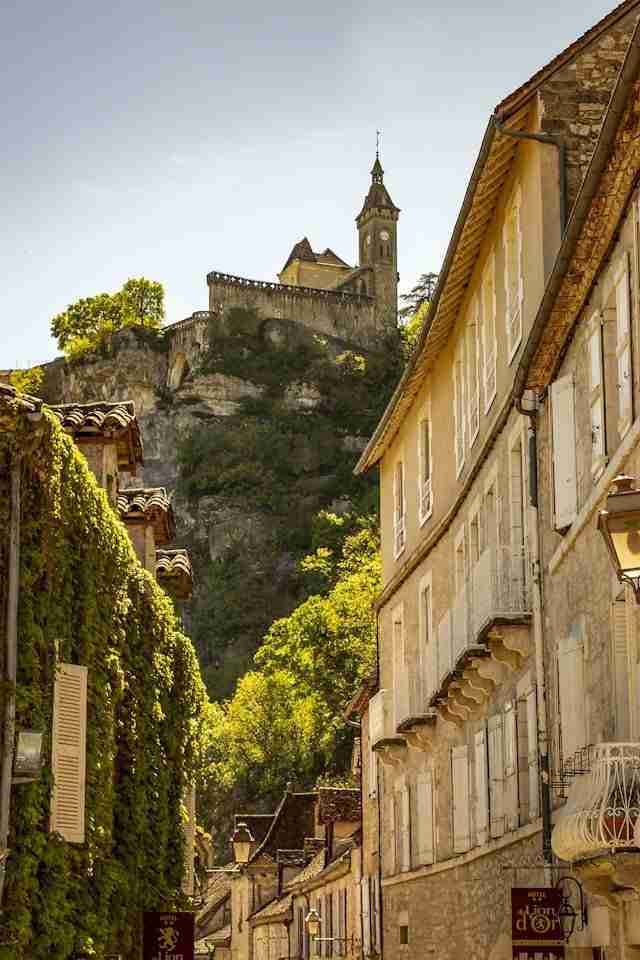
Rocamadour is one of France's most visually arresting destinations, a medieval village improbably built into the sheer cliffs of the Alzou canyon in the Lot department. Its layered stone façades, centuries-old sanctuaries, and dramatic vertical scale create a composition that seems more imagined than real. For photographers, Rocamadour is a convergence of architecture, landscape, and spiritual legacy—each frame telling a story carved into limestone. The village cascades downward from the cliffside sanctuary to the medieval lower town, all set within the sun-drenched tones of southwestern France. With golden-hour lighting across the valley, weathered textures, and impossibly scenic vantage points, Rocamadour is a location that delivers both postcard views and quiet architectural intimacy.
Best Photography Opportunities
• Clifftop Panoramas from L'Hospitalet Viewpoint
From the viewpoint at L'Hospitalet, located across the valley, photographers can capture the full vertical spectacle of Rocamadour. The view reveals the sanctuaries, the Château at the summit, and the medieval village terraces descending the cliff face. Shoot at sunrise or sunset for the most dynamic light—morning for soft side light on the façade, evening for full illumination and warm stone color. A mid-telephoto lens helps compress the scene and emphasize the architectural layering, while a wide-angle is ideal for including sky, cliff, and foreground terrain.
• Close Architectural Work in the Sanctuaries
At the heart of Rocamadour is the religious complex: chapels, stairways, and carved portals nestled into the rock. Photographing inside the courtyard of the Sanctuaire Notre-Dame offers intimate compositions of Romanesque stonework, Gothic archways, and devotional details. Light plays gently through the open passages and staircases, offering moments of contrast and texture. A standard zoom or fast prime is perfect here. Tripods are generally not permitted inside active chapels, so shoot handheld with a wide aperture and high ISO if necessary.
• The Grand Escalier and Pilgrimage Path
The Great Staircase (Le Grand Escalier), once climbed by pilgrims on their knees, connects the village to the sanctuary. This steep, stone-lined route offers strong diagonal compositions, human-interest storytelling, and opportunities for layered depth as people ascend or descend beneath arches and greenery. Look for morning light filtering down the stairwell or use overcast conditions to balance exposure. Candid shots of visitors offer scale and motion, especially when framed against the aged stone.
• Evening Blue Hour Over the Village
Rocamadour transforms dramatically at dusk. As lights flicker on in the sanctuary and village windows, the stone glows subtly against the darkening cliffs. Long exposures from L'Hospitalet or the upper Château ramparts create cinematic images—especially when the valley below is still and the sky retains residual color. Use a tripod, remote shutter, and bracketed exposures to manage highlights and shadows in this high-contrast scene.
• Details of Stone, Ironwork, and Frescoes
Throughout Rocamadour, there are endless small subjects for texture-rich photography: weathered wood doors, iron hinges, timeworn statues, and fragmentary frescoes. A short telephoto or macro lens captures these with nuance. Focus on patina, color variation in the stone, and the quiet harmony of medieval materials. These detail shots pair beautifully with wider compositions to create a full visual narrative of the site.
Best Time to Visit
Late spring (May to early June) and early autumn (September to early October) offer the best combination of light, weather, and manageable foot traffic. During these months, the cliffs are still green, the light is soft and warm, and the narrow streets are less crowded than in peak summer. Golden hour light tends to strike Rocamadour from the west, making late afternoon and early evening ideal for most compositions, especially those from the L'Hospitalet side.
Summer provides dramatic light and longer shooting hours, but the village can be extremely busy, especially mid-day. Plan early morning and late evening sessions to avoid crowds and capture quiet, contemplative images. Winter, while less visually lush, offers empty streets and low, crisp light—ideal for black-and-white photography and solitary exploration.
How to Get There
Rocamadour is located in the Lot department of southwestern France. By car, it's easily accessed from the A20 motorway via exits near Gramat or Souillac. The village has designated parking areas at the top (L'Hospitalet), mid-level, and valley floor. These lots are clearly signed and allow for easy pedestrian access along the village's steep pathways.
Photographers should park at L'Hospitalet for the best initial overview of the site and then descend into the village via footpaths. Alternatively, a small tourist train and elevators help navigate between levels, though most photographers will prefer the walk for access to varied compositions and views.
There is no entrance fee to photograph the village or exterior sanctuaries. Interior access to certain chapels and religious sites may be restricted during services, and flash or tripods may not be allowed indoors. Early arrival ensures the most flexibility.
Recommended Gear and Shooting Tips
A wide-angle zoom (16–35mm) is essential for interior shots and tight medieval streets. A standard zoom (24–70mm) provides excellent framing options for architecture and layered village views, while a telephoto lens (70–200mm) is perfect for compressing cliffside scenes from across the valley.
A tripod is necessary for low-light shooting and long exposures during blue hour, though you may need to work handheld in busier or restricted areas. A polarizer can help deepen skies and reduce reflections on stone, but be mindful of uneven sky tonality at wide focal lengths.
Shoot in RAW for optimal dynamic range, especially during times of mixed lighting, and consider exposure bracketing when photographing into bright skies or shadowed cliffside buildings. Golden hour light creates the best balance for Rocamadour's limestone hues, turning the entire cliff face into a warm canvas of texture.
Wear sturdy shoes—the village is vertical, and exploring fully means ascending and descending uneven stone stairs and paths. Plan your route in advance if you want to cover multiple elevations within the same light window.
Nearby Photography Locations
A dramatic underground river and cave system located about 20 minutes away. While interior photography is restricted, the site itself is visually impressive and excellent for architectural and atmospheric exterior compositions.
A nearby village with preserved stone houses, a stunning natural amphitheater of cliffs, and a waterfall—ideal for a combination of village and nature photography in a compact setting.
Often ranked among the most beautiful villages in France, this hilltop settlement above the Lot River offers exquisite medieval streets, dramatic views, and soft riverside light—perfect for golden hour walks and wide village vistas.
• Lacave Caves and Dordogne River Views
For wide landscapes and water-based photography, the Dordogne valley near Lacave offers mirror-like river reflections, cliffside castles, and picturesque villages within a short drive from Rocamadour.
If you're interested in capturing semi-wild animals in a natural setting, the park near Gramat offers opportunities for wildlife photography with local European species amid scenic terrain.
Rocamadour is more than a historic site—it's a visual and spiritual ascent, layered into the cliffs with centuries of devotion, architectural resilience, and natural drama. For photographers, it is a living composition, shaped by light, elevation, and time. Whether shooting from across the valley or from the shadowed stone steps within, Rocamadour offers scenes that inspire both awe and introspection.
Comments
Loading comments…