
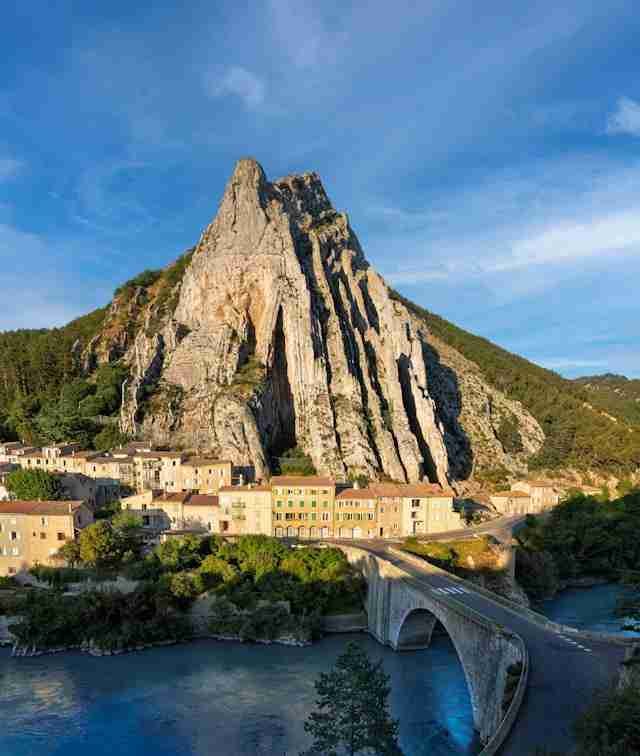
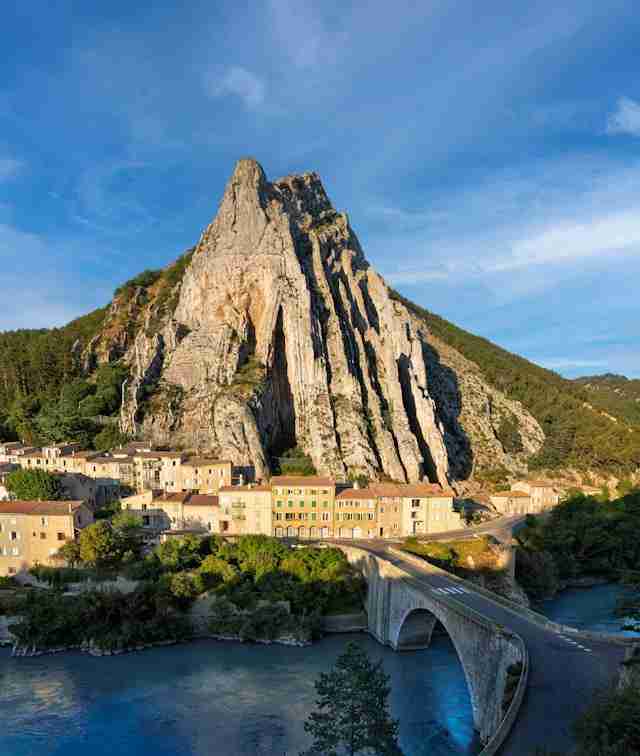
Perched dramatically over the Silamps Gorge near Sisteron, the rocky promontory known as Rocher de la Baume offers photographers a blend of vertical grandeur, sweeping valley views, and tranquil riverside scenes. This limestone outcrop, topped with medieval hermitage ruins and embraced by soaring cliffs, provides a versatile setting whether you're drawn to aerial panoramas, historic texture, or the play of light upon gorge walls and rippling water. Its commanding presence over the Durance River makes it an unforgettable destination for landscape and heritage photography alike.
Best Photography Opportunities
• Summit Vistas at Golden Hour
Climb the winding footpath to the upper ledges of Rocher de la Baume in time for the golden hour. The setting sun spills light across the Durance valley, igniting the cliff's warm limestone in radiant tones. A wide-angle lens (16–35mm) is ideal for framing expansive views across the river and over to Sisteron's historic citadel. Use foreground elements such as twisted shrubs or exposed stone to anchor your composition and create a sense of scale. The play of long shadows and glowing highlights against the textured rock enhances the feeling of height and timelessness.
• Dawn Reflections on the Durance River
In the early morning, the calm surface of the Durance River acts as a natural mirror. Set up along the riverbank beneath the rock to capture a symmetrical reflection of the towering cliff. A tripod and small aperture (f/11–f/16) ensure clarity from bank to summit. Include shoreline grasses or river rocks in the foreground to provide contrast and depth. Morning mist often lingers in the valley, adding soft layers of atmosphere that emphasize the vertical scale of the Rocher.
• Architectural Textures and Hermitage Ruins
Halfway up the cliff face, the crumbling remnants of a stone hermitage cling to a narrow ledge. These ruins offer a compelling contrast to the natural formations around them. Use a standard zoom (24–70mm) to isolate features like weathered lintels, crumbling masonry, or steps carved directly into the rock. Late afternoon light throws deep shadows that highlight the contours and textures of the structure. A polarizing filter helps enhance contrast and manage glare from light stone.
• Cliff Silhouettes Under Dramatic Skies
When storms roll through the valley or low clouds skim the gorge, the outline of Rocher de la Baume takes on a striking silhouette. From Sisteron's northern edge or nearby Route de la Baume, compose the rock against the swirling sky using a telephoto lens (70–200mm) to compress the background and heighten drama. Shoot in black and white or subdued color tones to enhance mood and emphasize shape over detail. These moments are fleeting, but they often produce the most impactful images.
• Nighttime Sky Over the Gorge
The elevated vantage of the cliff offers an exceptional setting for nighttime photography. On clear evenings, set up to capture star trails or the Milky Way above the sharp crest of the Rocher. Use a sturdy tripod, wide-angle lens with a fast aperture (f/2.8 or wider), and exposures of 20–40 seconds. Light pollution is minimal, and subtle light painting with a handheld LED can illuminate the foreground rock without overpowering the night sky. This setup allows for dynamic compositions that contrast the enduring earth with the motion of stars.
Best Time to Visit
Rocher de la Baume presents different photographic moods throughout the year. Spring (April–May) brings fresh greenery to the riverbanks and flowering vegetation that frames the cliff with bursts of color. Morning mists are common and create soft, layered compositions ideal for wide-angle landscapes. Summer (June–August) offers the clearest skies and most accessible trails, though mid-day sun can be harsh; plan shoots around golden hour and evening blue hour for balanced light.
In autumn (September–October), the surrounding vegetation turns amber and gold, providing a rich contrast to the pale stone of the cliff. The light in early autumn is particularly flattering, with warm tones and long shadows. Winter (December–February) brings low sun angles and, occasionally, light snow or frost on the upper slopes, making for stark and minimal compositions. Wind and weather can be unpredictable, but dramatic clouds and clear air enhance texture and contrast.
The best times of day are early morning for reflections and calm conditions, and late afternoon for warm light and shadow play. Overcast days are useful for detailed texture work and architectural studies, reducing the harsh contrast that can dominate sunny afternoons. If planning night photography, target new moon phases and clear forecasts.
How to Get There
Rocher de la Baume is located just across the river from central Sisteron, in the Alpes-de-Haute-Provence region of southeastern France. From the center of Sisteron, cross the Durance via the historic bridge on D951 and follow signs toward "Route de la Baume."
A small parking area is available at the base of the cliff. From here, a marked trail ascends the hillside, taking approximately 15–20 minutes on foot. The path is narrow and uneven in places, so wear supportive hiking shoes and avoid the route during heavy rain or icy conditions. There is no fee for access, and the trail remains open year-round. Photographers should plan for early arrivals to catch sunrise or stay into twilight for dramatic evening compositions.
Recommended Gear for Rocky Heights
Start with a solid tripod suited for uneven and potentially rocky terrain. A wide-angle lens (16–35mm) will allow you to capture expansive landscapes and full views of the Rocher from below or above. A standard zoom (24–70mm) is ideal for mid-range work and framing structures or textures along the cliff face. A telephoto lens (70–200mm) is useful for compressing the landscape, isolating distant details, or shooting silhouettes under dramatic skies.
Include a circular polarizer to deepen sky contrast and manage glare from stone surfaces. Neutral density filters (3–6 stop) allow for longer exposures during daytime, especially useful when capturing the Durance River. A lens cloth and weather-sealed bag are essential, particularly in misty or rainy conditions. For night shoots, a wide-aperture lens, remote shutter release, and a headlamp with a red light mode are recommended.
Trail conditions can change quickly, so wear sturdy hiking boots and consider bringing trekking poles for added stability. A light jacket, hat, and gloves are helpful during morning or evening shoots, especially in the shoulder seasons.
Nearby Photography Locations
Directly across the river from Rocher de la Baume, the Citadel offers sweeping views back toward the rock and down into the Durance Valley. The fortress walls, towers, and sloping terrain are best captured in soft morning light or from above during blue hour.
• Pont-Bleu Footbridge
Just downstream, this pedestrian bridge provides a strong geometric foreground and symmetry when aligned with the cliff. Use it for long exposures with flowing river and reflected light, especially on still, overcast days.
• Route de la Baume Pullouts
A short drive along this road leads to several natural pullouts and meadows. These elevated views show the full face of the cliff with river and citadel below, making them perfect for sunset or early evening compositions.
• Chapelle Saint-Marcel
Tucked away on a small plateau east of the Rocher, this old stone chapel framed by olive trees offers quiet, minimal scenes with high atmospheric potential. Great for isolating spiritual and historical contrasts in the landscape.
• Rocks and Rapids Below the Gorge
Descend to the riverbanks and explore the rocky shorelines for long-exposure water shots, or reflections of the cliff in the eddies. Late afternoon light plays especially well on the river surface and highlights subtle color variations in the stone.
Comments
Loading comments…