
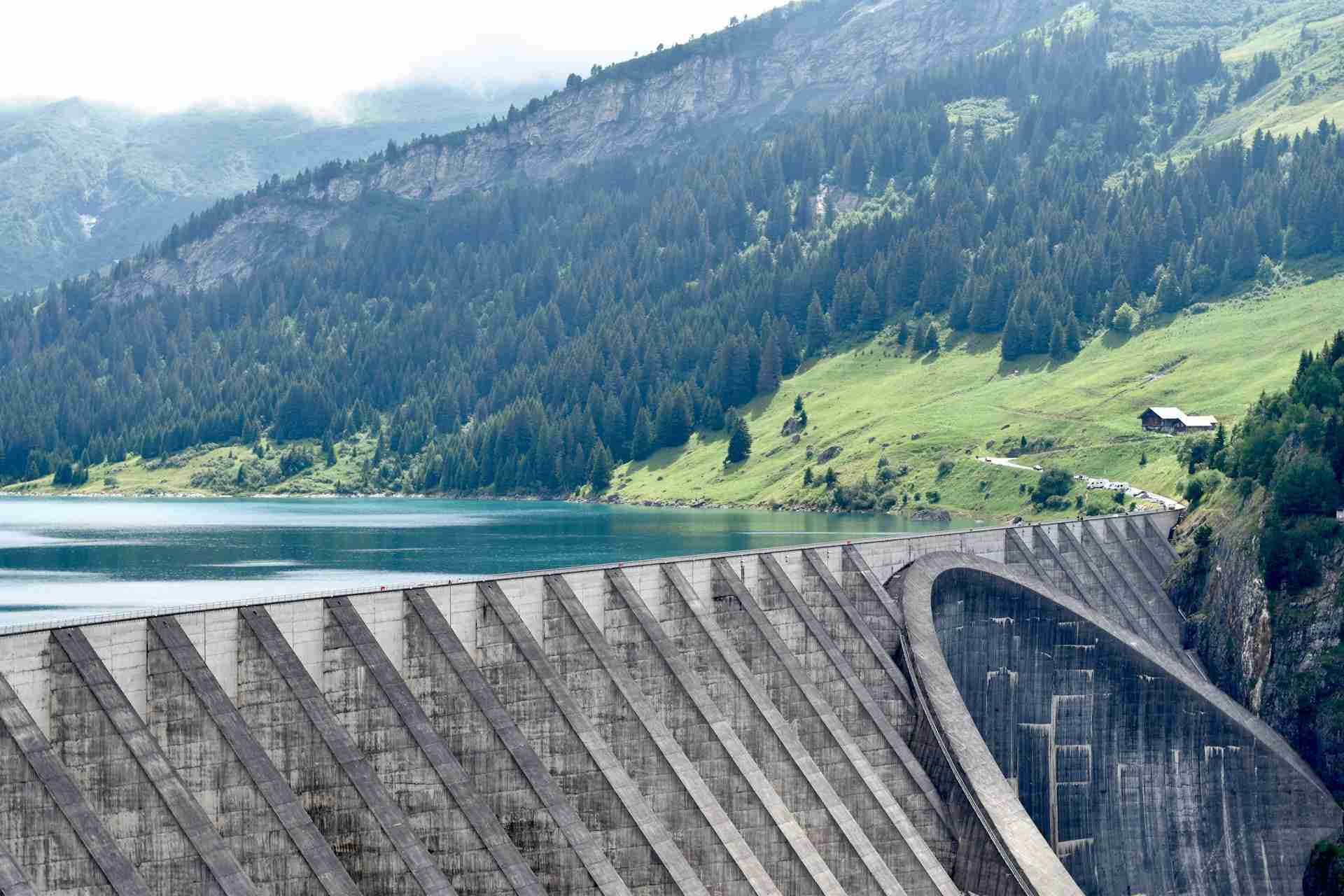
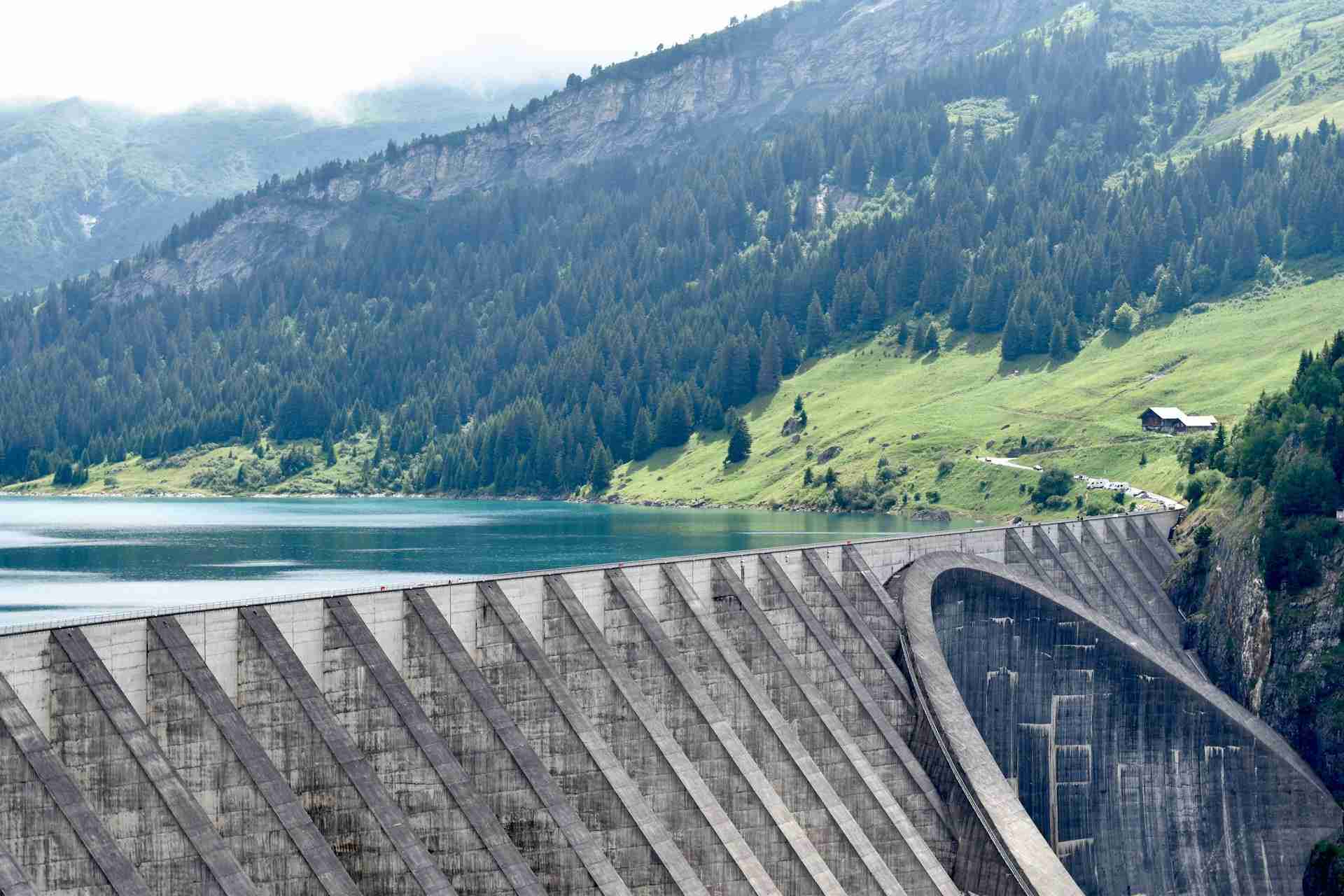
Roselend Dam, high in the Beaufortain region of southeastern France, carves a massive curve into the edge of the Lac de Roselend. Backed by the layered ridgelines of the French Alps, this hydroelectric structure feels both dominating and quiet. Its long, sweeping form creates a graphic break between the open lake and steep mountain slopes, offering a rare opportunity to shoot large scale engineering in a wild alpine setting. The dam's presence contrasts beautifully with the muted colors of the surrounding rock and vegetation, and under shifting weather, the mood can change completely from moment to moment. For landscape and architectural photographers alike, Roselend Dam offers endless ways to explore line, shape, scale, and light over water and stone.
Best Photography Opportunities
• Panoramic View from the Route du Barrage Overlook
One of the most commanding perspectives of the dam is from the elevated roadside overlooks along the Route du Barrage. From here, the dam reveals its full curve, stretching cleanly across the lake with the alpine ridges rising in the background. This angle allows you to work with sweeping compositions that emphasize structure and placement. Use a wide angle lens to capture foreground detail such as grass, rock, or fence lines to create layers and lead the eye toward the dam. Early morning light falls across the scene with gentle contrast, lighting up the eastern faces of the mountains while adding subtle texture to the dam's concrete surface. On cloudy days, the backdrop softens, letting the structure carry the composition.
• Reflection Work Along the Southern Shoreline
The calmer southern edge of the lake is a perfect place to work with mirror-like reflections. The best time is just after sunrise when the wind is low and the surface remains glassy. From this angle, you can create clean symmetry between the dam and its reflection while including mountain shapes and cloud movement above. Use a polarizing filter to control surface glare or a neutral density filter for long exposures that soften any water texture. This location benefits from consistent early light, and you can shift your position to explore how the reflection breaks or strengthens depending on how close you are to the waterline.
• Abstract and Textural Details from the Dam Walkway
When the top of the dam is accessible, you can shift your attention to the details of the structure itself. Shooting along the length of the walkway reveals repeating light poles, railing shadows, and fine lines in the poured concrete. These abstract compositions work well in soft side light, which creates dimension without extreme contrast. Use a mid range zoom to isolate textures, patterns, or graphic elements like repeating steps or surface stains. These images are more about rhythm and proportion than setting, and they add depth to any photo set built around broader landscape views.
• Framing the Dam Within the Surrounding Landscape from Higher Trails
Several trails climb the ridgelines above the lake and offer wide landscape views that include the dam as a central visual element. These angles are excellent for contextual work that places the structure within the larger basin. From these vantage points, the lake often appears emerald or deep blue, depending on sky conditions, and the curve of the dam draws a natural line across the lower frame. Use a 24 to 70 millimeter lens to work with depth and perspective. In the afternoon, side light rakes across the terrain, separating the ridges behind the dam and creating strong spatial definition.
• Atmospheric Conditions with Fog and Cloud Drift
When clouds settle over the lake or fog rolls in from the peaks, the entire area becomes soft and cinematic. The upper sections of the dam may disappear into cloud, while the lake surface turns muted and flat. These conditions are ideal for creating quiet, understated compositions. Work slowly with manual focus and spot metering to preserve detail in both highlights and deep shadows. Shooting during these moments gives you subtle gradients and changing shapes, which work beautifully in monochrome or subdued color edits. Be patient, as these conditions can shift quickly, offering different moods in a short span of time.
Best Time to Visit
The best time to photograph Roselend Dam is from late spring through early autumn, when the access roads are open and the lake is at its fullest. During this period, the dam is most visually striking and the surrounding meadows are green or golden, depending on the season. Snowmelt fills the lake with glacier-fed water, which tends to appear vibrant blue or green depending on light angle and cloud cover.
Mornings are ideal for calm water and clean reflections, especially along the southern shore. The sun rises from behind the mountains to the east and gradually lights the entire basin. Evenings are more dramatic from higher ground, as warm side light brushes across the ridges and adds depth to the dam's face. Cloud movement at this time of day also increases, offering a good chance for layered skies and shifting atmosphere.
Weather in the Alps changes fast, and the most interesting photographic conditions often appear between storms or during early morning fog. Bring extra layers and be prepared for sudden shifts in temperature and light. Winter access is limited due to snow closures, and while the structure can be partially visible from some high points, it is not easily reached without proper alpine equipment.
How to Get There
Roselend Dam is located above the village of Beaufort in the Savoie region of southeastern France. From Beaufort, follow signs to the D925 toward the Cormet de Roselend mountain pass. A well-maintained side road, the Route du Barrage, leads directly to the dam and loops around the lake. This route is typically open from late May through October, depending on snow levels.
There are several small parking areas along the road that offer direct access to viewing points, as well as a larger gravel lot near the southern end of the dam. From here, short trails lead to lake access and ridge overlooks. The dam walkway may be open to the public, but access varies seasonally and may be restricted for maintenance. There is no fee to enter the area or photograph from public paths and roads. Tripods are allowed and are especially useful when working at low light or with long exposure techniques.
If visiting during peak hiking season, arrive early to avoid crowds. While the area is popular with hikers and cyclists, there is plenty of space to work around others, especially along the lake or from higher trails. Bring all supplies with you, as there are limited facilities directly at the dam site.
Recommended Photography Gear
A wide angle lens in the 16 to 24 millimeter range is essential for capturing the dam's curve and its surrounding alpine basin. A 24 to 70 millimeter lens offers flexibility for mid distance compositions and textural detail. For tighter framing of distant peaks or compression effects with the dam in the background, a 70 to 200 millimeter lens works well from higher trails or roadside viewpoints.
A sturdy tripod is crucial for working in low light, shooting long exposures, or bracketing in shifting conditions. A polarizing filter helps manage reflections on the lake and can deepen color in the water and sky. Neutral density filters are useful for smoothing water or capturing cloud motion. A remote trigger or interval timer makes it easier to avoid camera shake during long exposures.
Weather protection is necessary for both you and your gear, especially if you plan to shoot in fog or after recent rain. Bring lens cloths and a small towel to wipe down equipment. Sturdy shoes or light hiking boots are helpful for moving between viewpoints, and layered clothing is recommended to handle fast temperature changes throughout the day.
Nearby Photography Locations
This high mountain pass provides one of the best elevated views of the entire lake and dam basin. From here, you can include wildflowers, distant peaks, and atmospheric skies. Sunrise is particularly strong from this location, with first light hitting the lake below.
• Cormet de Roselend
Just beyond the dam, this alpine pass opens into a remote, high-elevation landscape with broad views and shifting weather. It is ideal for photographing mountain terrain and for building a larger alpine photo series that connects to the Roselend area.
The nearby village of Beaufort offers traditional architecture, narrow lanes, and mountain views. It's a good base for photographers interested in quiet street scenes or architectural details in natural light.
Another reservoir with a more compact dam and wooded surroundings, this lake offers a completely different mood. The area is quieter, with soft reflections, a footbridge, and access to trails through pine forests and pastures.
This alpine hiking route leads into higher terrain with open ridgelines, rock fields, and distant views of Mont Blanc. It is a strong companion to the more structured setting of Roselend, and it allows you to capture the larger alpine environment with different compositional possibilities.
Roselend Dam offers the kind of scale and stillness that gives you time to work slowly and with intent. With so many natural and structural elements intersecting in one place, it encourages careful framing, patience with changing conditions, and a thoughtful approach to light and texture. Whether your interest is large-scale composition, detail, or atmosphere, the dam rewards every hour you spend walking its edge and watching the landscape shift.
Comments
Loading comments…