
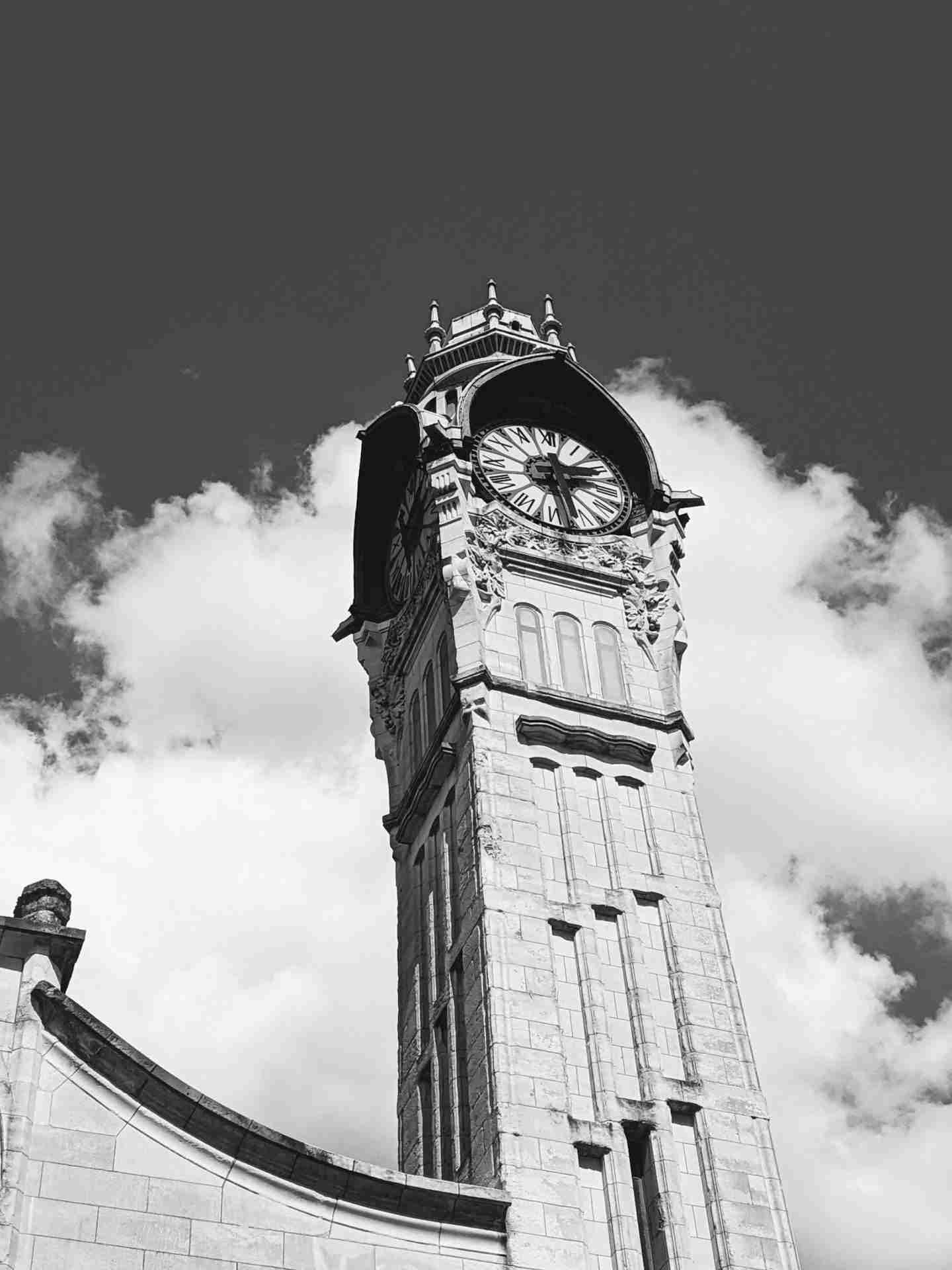
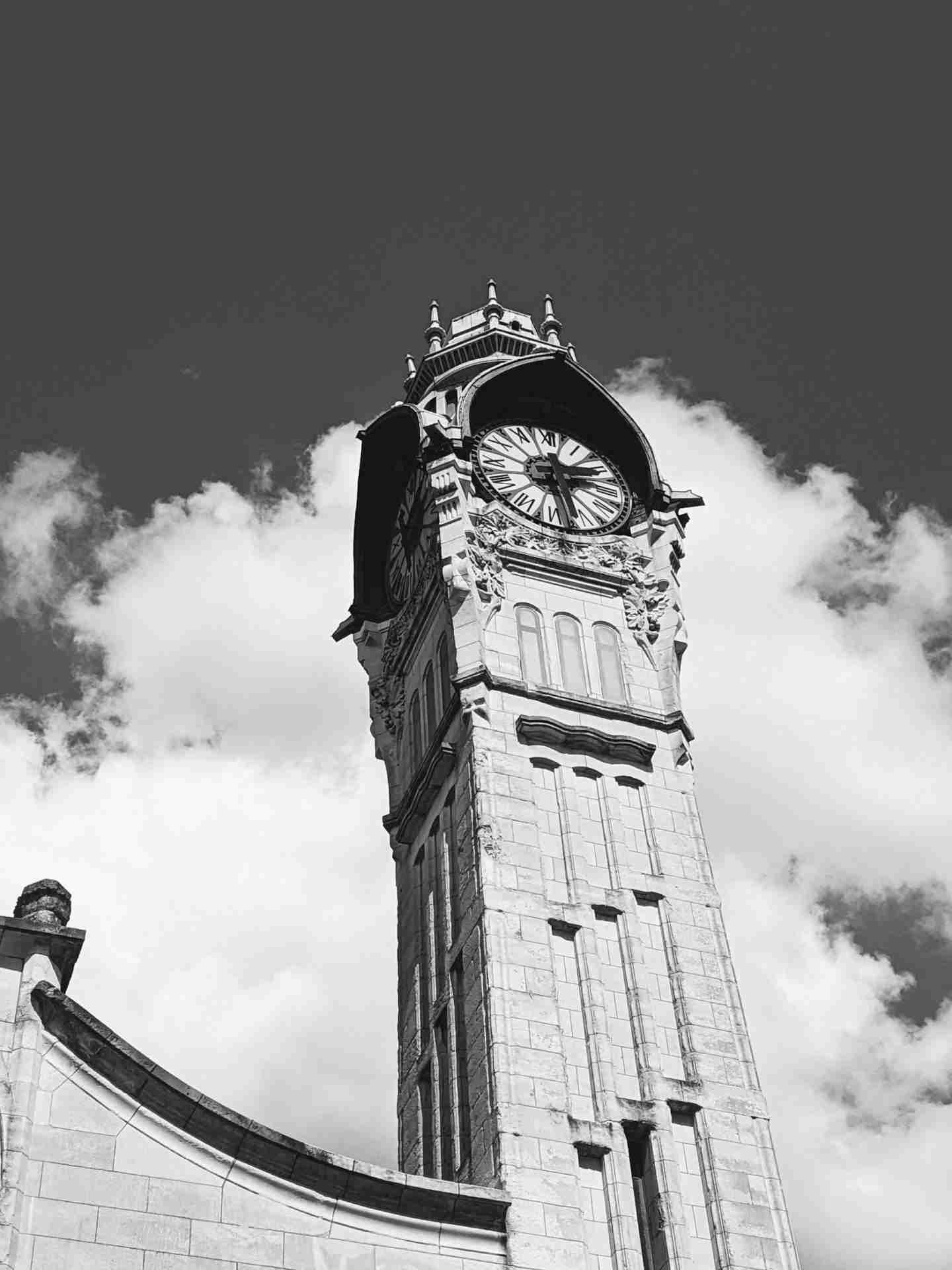
Situated in the heart of Normandy's capital, the Rouen-Rive-Droite Train Station is more than a hub for regional and intercity transit—it is a blend of Art Deco elegance, industrial heritage, and urban rhythm that offers photographers a rewarding range of compositional possibilities. Originally opened in the 19th century and reconstructed in 1928, the station combines a soaring iron-and-glass train shed with ornate facades, clock towers, and interior detail that reflect France's golden age of rail travel. For those interested in architectural photography, urban mood, or travel-inspired storytelling, Rouen-Rive-Droite presents a visually rich environment, particularly when explored during off-peak hours or in transitional light.
Best Photography Opportunities
• Main Façade and Clock Tower
: The exterior entrance of Rouen-Rive-Droite is a commanding structure with carved stonework, geometric bas-reliefs, and a central clock tower that rises above the street below. Shoot this elevation with a wide-angle lens (16–24mm) from across the plaza to include the full architectural breadth and street-level activity. Early morning or late afternoon light rakes across the facade, enhancing the contrast in the Art Deco patterns and giving depth to the reliefs. Including elements like passing bicycles, trams, or waiting travelers adds life and context to the frame. A medium telephoto (70–100mm) from further down Rue Verte compresses the perspective for a more formal, monumental look.
• Interior Hall and Iron Vaulting
: Once inside, the main hall opens into a spacious atrium where ironwork, glass panels, and suspended lighting fixtures create a harmonious blend of utilitarian function and period ornamentation. A standard zoom (24–70mm) works well for capturing the balance between vertical beams, skylights, and the crowd movement below. The ceiling's metal ribs form repeating patterns that are ideal for symmetrical compositions. Use a centered, low-angle shot looking up into the roofline, or step back to photograph diagonally across the terminal to capture light filtering through glass and steel.
• Train Platforms and Industrial Geometry
: The long open-air platforms beyond the hall are ideal for minimalist compositions that emphasize lines, repetition, and negative space. Stand at the end of a platform and use the steel canopy as a natural frame, letting the tracks lead the eye toward a waiting train or vanishing point. Overcast days work particularly well for reducing contrast and highlighting textures in the weathered platforms, signage, and overhead catenary systems. Shoot at twilight or dusk for dramatic scenes with platform lights reflecting in the rails and ambient blue hour tones lingering in the sky. For environmental portraits, the platform area provides natural depth and a strong sense of place.
• Ticket Hall and Art Deco Details
: The smaller halls and waiting areas in the station feature period elements like vintage clocks, ceramic tiling, iron-framed windows, and wood-paneled service booths. These details reward close attention and work well with a fast prime lens (35mm or 50mm) to isolate forms under ambient interior lighting. Capture diagonal light cutting through windows to create contrast on tiled walls, or use reflections in the polished floor for layered compositions. These quieter spaces are best photographed during early morning when foot traffic is minimal, allowing for uninterrupted studies of architectural texture and tone.
• Urban Context from Overpasses and Adjacent Streets
: For broader views, nearby overpasses or high points along Rue Verte and Rue Jeanne d'Arc provide elevated perspectives of the station's roofline, tracks, and integration into the Rouen cityscape. A medium telephoto lens compresses the surrounding buildings with the train shed's metal frame, offering urban landscape compositions with depth and form. These vantages are particularly effective during sunrise when the eastern light hits the station's glass and metal surfaces, or after rain when the rails glisten beneath the city lights.
Best Time to Visit
The station's architectural features and lighting conditions change markedly throughout the day, making timing a critical consideration. The best time for exterior photography is early morning, just after sunrise, when the main façade and clock tower receive soft, directional light from the east. This also coincides with quieter activity in the square, allowing for clean compositions with minimal foot traffic or vehicles.
Inside the station, mid-morning and late afternoon offer the most favorable conditions for natural light streaming through the high windows and train shed roof. These times highlight the interplay of light and structure, casting long shadows and illuminating the interior with warm, diffuse glow. Overcast weather is also beneficial, especially for even exposure across high-contrast scenes such as the interior hall or train platforms.
Blue hour transforms the exterior with glowing station lights and backlit windows, ideal for long exposure shots of street life, passing trams, and light trails from vehicles along Rue Verte. Rainy evenings, with their reflective surfaces and softened ambient light, add cinematic atmosphere—particularly on the platforms or under the vaulted canopies.
Weekdays see the most commuter activity during peak hours, so early mornings (before 8:00) or mid-afternoons (around 2:00–4:00) are best for working unobtrusively. Sundays and holidays offer emptier interiors and slower pedestrian flow, ideal for detailed architectural work and compositions requiring patience and clean lines.
How to Get There
Rouen-Rive-Droite Train Station is centrally located in Rouen, Normandy, and easily accessible by public transit, car, or on foot from the city center. If arriving by train, it serves as the primary arrival point for intercity routes from Paris (Gare Saint-Lazare), Caen, Le Havre, and other regional destinations. From within Rouen, local bus and tram routes stop directly at the station, and there is a designated drop-off point and taxi stand in front of the main entrance on Place Bernard Tissot.
For drivers, several nearby parking garages are available within walking distance, including Indigo Rouen Gare and Parking Relais TEOR Boulingrin. The area is pedestrian-friendly, with multiple access points to the platforms, interior hall, and side streets offering alternative perspectives of the station.
The station is open daily from early morning until late evening, with full access to platforms, halls, and the front plaza. Photography is permitted for personal use throughout, though tripods should be used discreetly and not during busy hours to avoid obstructing pedestrian traffic. For commercial shoots or filming, inquiries should be made through SNCF's regional office in advance.
Recommended Photography Gear
A standard zoom lens (24–70mm) will cover the majority of opportunities at Rouen-Rive-Droite, from wide hall shots and platform perspectives to detail-oriented interior frames. For architectural symmetry and compressed views of the tracks and platforms, a longer telephoto (70–200mm or 100–400mm) is useful, particularly when working from the overpass or distant points along the tracks.
A wide-angle lens (16–35mm) is ideal for capturing the clock tower and exterior façade from close range, or for emphasizing scale and verticality inside the main atrium. A fast prime (35mm or 50mm f/1.4–f/1.8) is excellent for handheld work in low light conditions, such as within the ticket halls, waiting areas, or detail studies under ambient lamps.
Use a tripod for long exposures during twilight or in low-traffic hours indoors, especially on platforms where artificial light can produce dramatic highlights. A circular polarizer can reduce glare on glass surfaces and enhance tonal richness in overcast light. Be mindful of reflections when photographing through the train shed windows or polished tile.
Carry a small, discreet bag that allows for mobility in tight or crowded areas, and always respect signs and security protocols within the active transit environment.
Nearby Photography Locations
• Rouen Cathedral (Cathédrale Notre-Dame de Rouen)
: Just a 15-minute walk south, this towering Gothic cathedral is a masterpiece of verticality and detail. The façade is particularly photogenic at sunset and after dark, when it is illuminated and casts dramatic shadows across the plaza.
• Gros-Horloge and Rue du Gros-Horloge
: This medieval astronomical clock and the surrounding half-timbered buildings provide a rich blend of architectural styles and textures. It's an excellent location for street photography and symmetry-focused compositions, especially in golden hour light.
: The historic market square features a mix of old-world charm and modern design, including the Church of Saint Joan of Arc. Its curved rooflines and stained glass offer a contrast to the classic stone and timber structures around it.
• Quai de la Bourse and the Seine Riverfront
: For urban landscapes and reflections, the quays along the Seine offer expansive views of bridges, barges, and the city skyline. Blue hour and sunrise are ideal here for capturing the interplay between river, architecture, and soft atmospheric light.
: Located southeast of the station, this botanical garden offers colorful floral compositions, quiet paths, and greenhouse structures—perfect for macro photography or peaceful wide-angle scenes in natural light.
Rouen-Rive-Droite is more than a transport link; it's a photographic crossroad where industry, design, and daily life converge. Whether you're drawn to its architectural lines, its quietly bustling platforms, or the shifting moods of light through glass and iron, the station offers a unique blend of historic form and modern motion—a place where time is measured not just by timetables, but by shadows, steel, and silence.
Comments
Loading comments…