
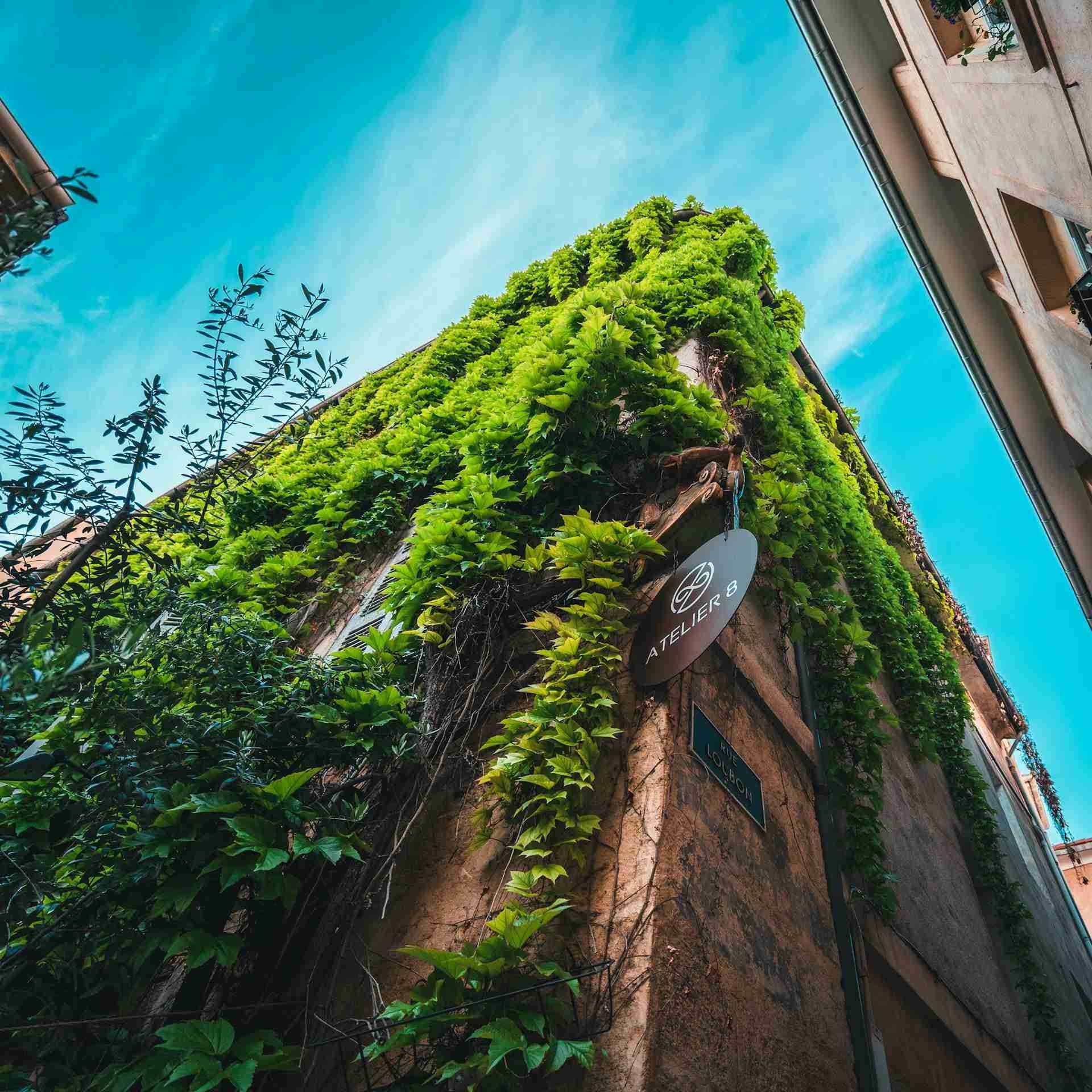
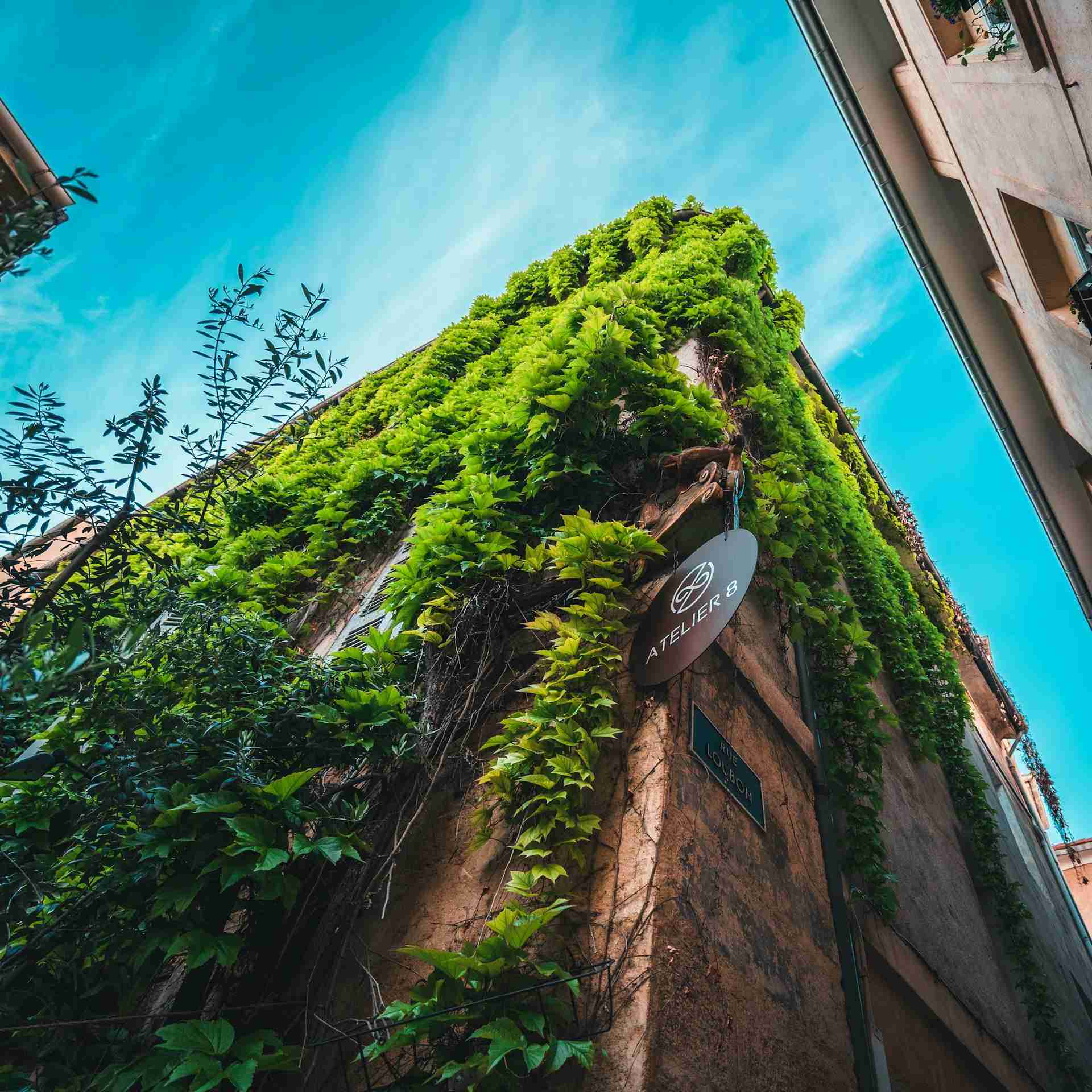
At the quiet, shaded corner where Rue du Puits Juif meets Rue Loubon in the heart of Aix-en-Provence, a building stands almost entirely embraced by nature. Its soft ochre walls—typical of the Provençal palette—are nearly overtaken by dense greenery, with vines and climbing plants wrapping around windows, balconies, and shutters like a living tapestry. This unexpected eruption of foliage in an urban setting makes the building a striking photographic subject, marrying the geometry of southern French architecture with the organic chaos of nature. Whether seen through the filtered light of early morning or in the golden haze of late afternoon, this corner represents a poetic contrast: cultivated stone and wild growth, permanence and impermanence, all in one frame.
Best Photography Opportunities
• Full-Façade Street Corner Perspective
: This is the definitive vantage point for capturing the character of the entire building. From across the street at the intersection of Rue du Puits Juif and Rue Loubon, use a wide-angle lens to take in the full height and width of the façade as it gently wraps around the corner. The symmetry of the architecture combined with the wild asymmetry of the creeping vines makes for a rich visual contrast. In the morning, soft directional light spills over the rooftops, casting elongated shadows and bringing out the structure's textures—aged stucco, moss-lined window frames, and the velvety depth of the foliage. This is a moment to capture the harmony between manmade form and natural growth, especially if you wait for a passerby or cyclist to animate the frame and give scale to the composition.
• Vertical Framing for Vines and Sky
: Directly beneath the front wall, aim your camera upward to create a powerful vertical composition that stretches from the cobblestone street up to the rooftop chimney stacks. This angle accentuates the vertical energy of the vines as they crawl skyward, embracing balconies and window frames along the way. If the sky is clear, use it as negative space to frame the green against blue for high-contrast compositions. On cloudy days, the even light flatters fine textures, and the milky sky adds a timeless softness. A tilt-shift lens can correct for converging verticals, but even without it, a low-angle shot here conveys the overwhelming scale of nature overtaking architecture in a poetic climb.
• Architectural and Organic Detail Shots
: Look closely at the areas where the ivy meets architectural details—cracked plaster, chipped paint, curled iron railings, or sun-bleached shutters. Use a macro or short telephoto lens to isolate these interactions. A shutter partly obscured by leaves, a rusted balcony bracket enveloped by greenery, or a weathered window frame peeking through dense vine cover can all become standalone compositions. Capture the different textures—the smooth gloss of foliage, the matte roughness of old stucco, the irregular curves of vines in contrast to rigid architectural lines. Early morning or overcast conditions are best here to avoid harsh shadows and preserve subtle detail.
• Afternoon Light and Dynamic Shadows
: As the sun drops westward, warm golden light skims across the building, creating deep relief and long shadows that amplify the surface variation of the walls and vegetation. Here, the mood shifts from bright and airy to intimate and dramatic. Photograph the façade in partial sunlight, with some windows glowing warmly and others still in shade. Observe how shadows from the vines and balconies trace patterns on the walls. Try bracketing exposures or using spot metering to preserve both highlight and shadow detail. A warm white balance enhances the Provençal tones, but you can also push the scene toward a cinematic palette with more muted color grading.
• Framed Views and Urban Context
: Use surrounding elements—doorways, iron gates, arched passageways, or street signage—to create frames within the frame. This approach adds visual interest and embeds the subject within its environment. For example, shooting from farther down Rue Loubon through the overhanging branches of a plane tree creates a layered composition that builds mystery and depth. Alternately, look through a nearby window or shopfront reflection for a more abstract urban portrait. A longer focal length compresses these elements into a flatter, more graphic image, while a wider lens allows you to play with depth of field to lead the viewer's eye toward the façade's living surface.
Best Time to Visit
Spring and early summer offer the most vibrant conditions for photographing this location, when the vines are fully leafed out and the contrast between greenery and ochre walls is at its peak. During this time, morning light from the east side of the building is crisp and warm, highlighting the dew-flecked foliage and casting gentle shadows along the street. The intersection remains relatively quiet before 10 a.m., allowing for clean frames without foot traffic or parked vehicles.
Autumn introduces golden and russet tones into the vine-covered façade, adding complexity and warmth to your compositions. The lower angle of the sun throughout the day creates long, flattering light for shooting the textured surfaces and shifting shadows. Even overcast days provide excellent diffused light that brings out color without harsh contrast.
Winter, though less lush, offers an opportunity to capture the bones of the building—bare vines tracing graphic patterns across the walls and windows, revealing architectural forms that are hidden in other seasons. This time of year favors black-and-white interpretations or minimalist compositions emphasizing shape and line.
Evenings in summer bring rich golden light down Rue Loubon, casting the building in a soft glow that enhances the interplay between warm walls and cool greenery. Twilight and blue hour also work well here, especially for street scenes that blend architectural detail with ambient city life.
How to Get There
The building sits at the corner of Rue du Puits Juif and Rue Loubon in the Mazarin Quarter of Aix-en-Provence. From Cours Mirabeau, the city's central boulevard, it's a pleasant 5–7 minute walk through the historic center. The streets here are narrow, mostly pedestrian, and lined with Renaissance and Baroque-era architecture.
There is no dedicated parking nearby; the best option is to use one of the paid parking garages around the edge of the old town, such as Parking Mignet or Parking Carnot. From there, it's a short walk into the heart of the old quarter.
The area is accessible 24 hours a day, and there are no restrictions on photographing the exterior. Be mindful of private residences and respect property lines when setting up close or using a tripod. The corner tends to be quiet in the mornings and evenings, while midday brings more tourist foot traffic.
Recommended Photography Gear
A wide-angle lens (24mm or wider) is useful for capturing the entire façade from across the street or for emphasizing perspective when shooting from the ground up. It's ideal for placing the building within its urban context and showing the contrast between nature and structure.
A mid-range zoom (24–70mm) allows flexibility to capture full façade compositions, portrait-orientation studies, or tighter context shots with surrounding architectural elements. This lens works well for shifting quickly between street scenes and architectural studies.
A short telephoto (85mm–135mm) is perfect for isolating details like vines wrapping around shutters, wrought iron balconies, or the texture of stone framed by leaves. It's especially effective when used with shallow depth of field to create soft, painterly images.
A circular polarizer can help deepen the greens of the foliage and cut glare off windows or walls. A tripod is optional but useful for low-light or blue hour photography, especially if you're including ambient street lighting or attempting long exposures during twilight.
Nearby Photography Locations
: Just a short stroll away, this elegant 17th-century fountain is nestled at a quiet intersection surrounded by warm-toned townhouses. It's particularly photogenic in the morning when soft shadows fall across the stone pavement, and it's ideal for street photography with classical Provençal flair. The surrounding balconies and ironwork offer excellent detail shots.
: A beautifully preserved Baroque residence with manicured gardens and symmetrical architecture, perfect for balanced compositions and formal framing. The building's façade changes character with light and season, and the tree-lined paths allow for seasonal framing—from blossom-lined spring walkways to golden autumn leaf canopies.
: The church's tall spire and Romanesque details create a striking contrast with the flatter façades of nearby residential buildings. Try shooting from narrow Rue Cardinale for strong perspective lines and high contrast between stone and sky. Interior shots are also possible if the church is open, offering cool light and classical vaulting.
• Rue Fernand Dol
: This narrow residential lane features vibrant shutters, overgrown vines, and intimate architectural vignettes. The interplay of light and shadow in the late afternoon makes it excellent for detail work or candid street scenes. Its slight curves and irregular paving also make for dynamic vanishing-point compositions.
: For those interested in mixing art and architectural context, the museum's inner courtyard is a hidden gem with clean lines, soft lighting, and beautifully proportioned masonry. The colonnades and stone detailing provide a minimalist counterbalance to the overgrown façade of Rue du Puits Juif.
Comments
Loading comments…