
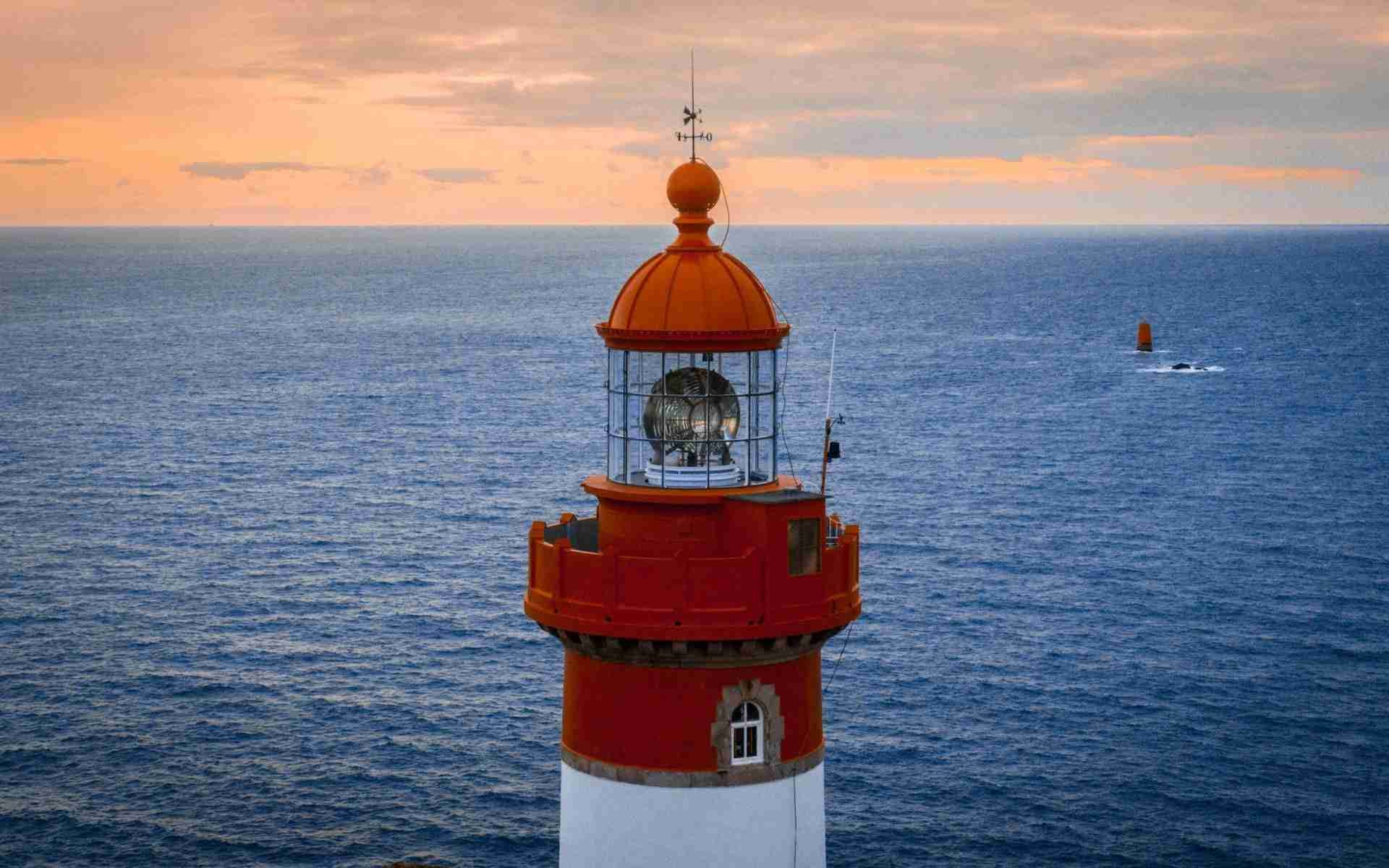
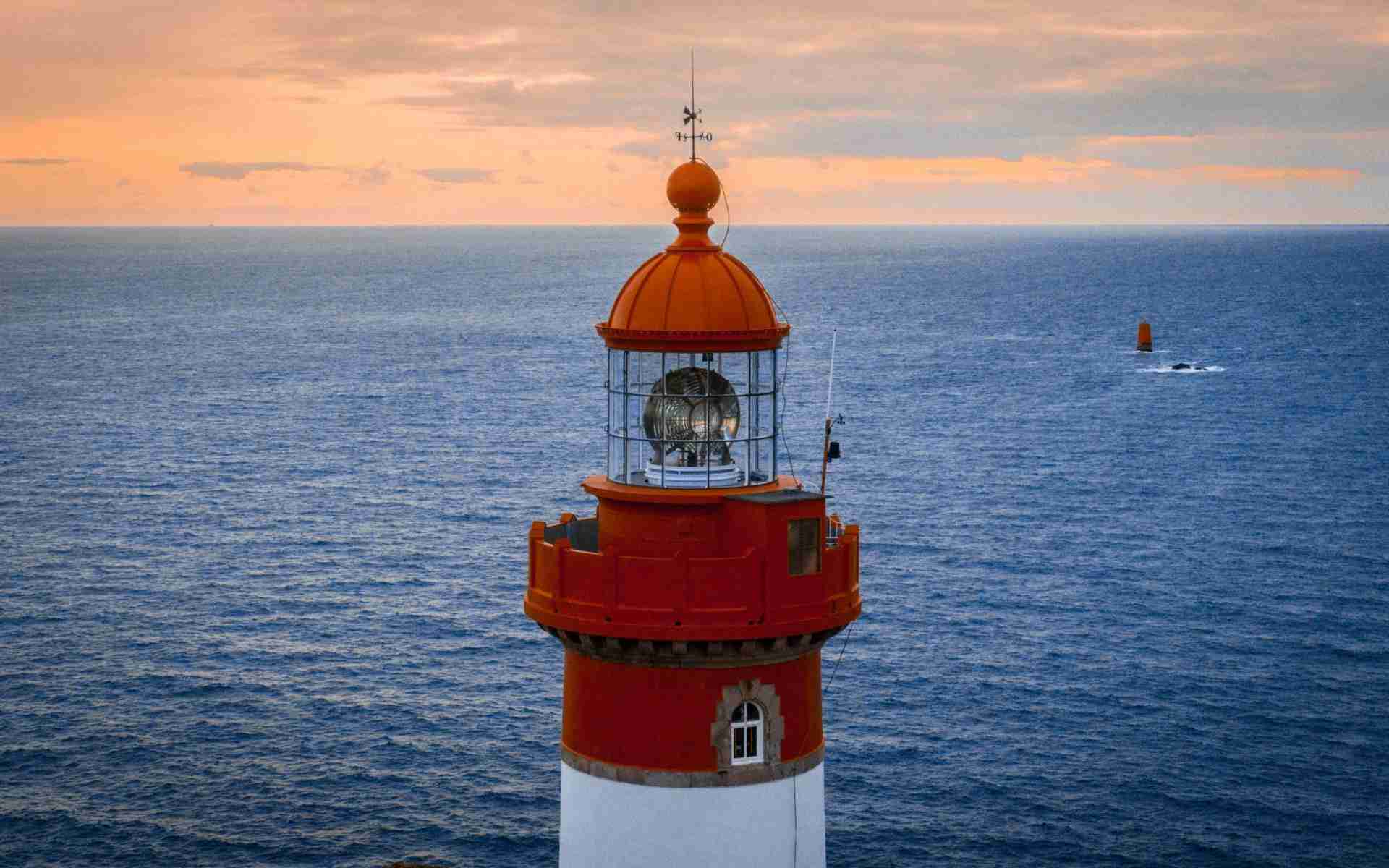
Perched on the rugged cliffs of Pointe Saint‑Mathieu overlooking the Bay of Brest, the Saint‑Mathieu Lighthouse (Phare Saint‑Mathieu) is a beacon of history and dramatic coastal vistas. Framing the lighthouse alongside the haunting ruins of an abbey, crashing waves, and a backdrop of open ocean, this location delivers strong visual narratives. Whether capturing sunrise over battered stone, long exposures with lighthouse beams, or moody twilight seascapes, Saint‑Mathieu is a magnet for photographers seeking raw maritime beauty and historic atmosphere.
Best Photography Opportunities
• Sunrise behind the ruined abbey tower:
Early morning is an especially rewarding time to photograph Saint-Mathieu, when the sun rises behind the ruined abbey and casts golden light on the lighthouse and surrounding cliffs. Positioning yourself slightly east of the ruins allows the light to spill through the ancient arches and windows, creating natural framing elements for the scene. Using a wide-angle lens, you can include foreground rocks, grassy cliff tops, and even low tide pools reflecting the morning color. Consider layering your composition by including wildflowers or sea-worn stones in the immediate foreground to add scale and detail. Bracketing your exposures here is important, as the sky may be significantly brighter than the shadowed abbey.
• The lighthouse beam in long-exposure twilight:
As dusk transitions into night, the Saint-Mathieu Lighthouse activates its rotating beacon, creating a rhythmic beam of light that pierces the darkening sky. A long exposure—between 15 to 30 seconds—captures the sweeping motion of the light as a glowing arc, adding a surreal, kinetic element to your composition. Mount your camera on a sturdy tripod and compose your shot to include the lighthouse tower, surrounding ruins, and a portion of sky large enough to showcase the beam's arc. Using a low ISO and narrow aperture preserves fine details while adding starburst effects to light sources. Adding clouds or distant stars can further enrich your twilight captures.
• Clifftop compositions with crashing waves:
The Atlantic's force is on full display along the cliffs below the lighthouse. These rocky ledges are ideal for dynamic compositions that emphasize power and motion. From designated safe viewpoints, you can frame the lighthouse atop the cliffs while waves crash against the rock below. Use a mid-range zoom like a 24–70mm to compress the cliffs and water, or go wider to include the sky. A fast shutter speed will freeze the moment a wave explodes upward, while longer exposures in the 1 to 4 second range will create silky water textures. Including leading lines like fissures in the rock or pathways can help draw the viewer's eye into the drama of the scene.
• Historic framing through the abbey arches:
The ruins of the ancient abbey adjacent to the lighthouse offer architectural elements that serve as perfect compositional frames. By aligning your lens with a doorway or arched window, you can isolate the lighthouse against the open sky, transforming the scene into a layered story of past and present. A mid-telephoto lens works best here to compress the perspective and keep the lighthouse proportional within the stone framing. Consider shooting during blue hour or just before sunrise when subtle light casts soft shadows across the abbey interior. Silhouetting the lighthouse within a shadowed arch adds drama and mystery to your image.
• Stormy weather drama and moody skies:
When storms roll in from the Atlantic, Pointe Saint-Mathieu becomes a theatrical setting for atmospheric images. Dark clouds, churning waves, and high winds create compositions filled with texture and emotion. A wide-angle lens allows you to include both the dramatic sky and the jagged coastline in one frame. Use a neutral density filter to extend your exposure and turn turbulent seas into misty abstractions, contrasting with the solid, immovable form of the lighthouse. Adjust your white balance for cooler tones to emphasize the brooding mood. Rain jackets and waterproof covers are essential if you're shooting in these conditions, but the reward is a collection of deeply evocative, powerful photographs.
Best Time to Visit
Saint‑Mathieu is compelling during both golden and blue hours, with dramatic shifts in mood and light assisting diverse photographic outcomes. Late spring through early autumn provides longer daylight hours, wildflowers on the cliff tops, and relatively calm seas, ideal for sunrise and sunset shoots. These seasons also offer warmer temperatures and increased clarity in the atmosphere, which are beneficial for long-distance compositions and sharp details in architectural features. The golden hour light during these months bathes the lighthouse and ruins in warm hues, accentuating the texture of ancient stone and enhancing the deep blues of the surrounding sea.
During summer, extended twilight gives photographers more flexibility to experiment with various compositions, while late sunsets allow for multiple lighting conditions within a single session. Autumn brings a richer color palette to the foliage around the site, and the softer light of shorter days enhances the contrast between rugged cliffs and smooth water. Early morning fogs in fall can add a dreamlike veil to your images, especially when the lighthouse beam cuts through the mist.
In contrast, late autumn and winter offer a completely different experience. These seasons are marked by stormier seas and turbulent skies, yielding dark, atmospheric seascapes. The violent energy of crashing waves under heavy clouds is a powerful counterpoint to the serene scenes of summer. Photographers should come prepared for unpredictable conditions, including high winds and intermittent rain, but those who do will be rewarded with moody and evocative photographs rich in emotion and texture.
Twilight sessions in winter are particularly striking, with the deep blue of the sky merging with the beam of the lighthouse to create surreal, almost cinematic frames. This is also the best time to shoot long-exposure light trails of the rotating beacon against starry skies. Photographers should aim to arrive at least one hour before sunset or remain after nautical dusk to make the most of the shifting light and capture a wide range of compositions. Always check tidal charts, sunrise and sunset times, and weather forecasts in advance to align surf conditions and atmospheric mood with your photographic intent.
How to Get There
Saint‑Mathieu Lighthouse sits at the tip of Pointe Saint‑Mathieu, approximately 15 kilometres west of Brest. From Brest, drive along the D52 road toward the Plougastel-Daoulas peninsula, following signs for Pointe Saint‑Mathieu and the abbey. A small parking lot is available near the visitor centre, with pedestrian trails leading to the lighthouse and abbey across gentle, cliff‑top paths. The site is open year‑round, though winter storms may bring spray up onto the paths. There is a modest entrance fee for access to the lighthouse tower and onsite museum, but the grounds and nearby cliffs are free to explore. Be mindful of safety barriers near cliff edges and watch for wet or slippery stones caused by wave spray.
Recommended Gear for Saint‑Mathieu Lighthouse
Start with a wide‑angle lens in the 16–35 mm range to encompass the cliff, abbey ruins, lighthouse, and ocean in sweeping panoramas. Use a mid‑range zoom such as a 24–70 mm for more composed scenes or to include beach and surf details. A telephoto lens (70–200 mm) helps isolate the lighthouse beam or dramatic waves scraping the cliffs. Bring a sturdy tripod capable of long‑exposure stability, especially during gusty coastal conditions.
Use a circular polarizer to reduce glare on sea spray and enhance sky contrast. A 6‑stop neutral density filter will allow for long exposures in bright conditions to smooth surf and capture motion. Carry lens cloths and waterproof protection for unpredictable sea spray. A remote shutter release or built‑in timer is essential for vibration‑free long exposures. For night shoots, a headlamp and extra batteries are crucial, as coastal breezes can be brisk after dark.
Nearby Photography Locations
provides a ruined medieval setting with tidal flats and fields leading toward the river estuary. Golden‑hour lighting enhances the stone textures and quiet pastoral atmosphere.
offers cliffside views south of Saint‑Mathieu, featuring wildflower‑draped paths, jagged rocks, and sweeping sea vistas. A wide‑angle lens is perfect for capturing scale and openness.
is home to a picturesque red‑and‑white lighthouse and rocky cove at the entrance to Brest harbour. Sunset and stormy skies are especially dramatic from this vantage point.
• Portzic Fortress and Lighthouse
sits near the mouth of the harbour, providing history‑rich architecture and sea views. Low‑light photography here captures moody ramparts with twin beacons gleaming.
features a calm sandy bay with reflections and sheltered dunes. Sunrise and early‑morning light reveal pastel tones and peaceful seascapes ideal for minimalist compositions.
Comments
Loading comments…