
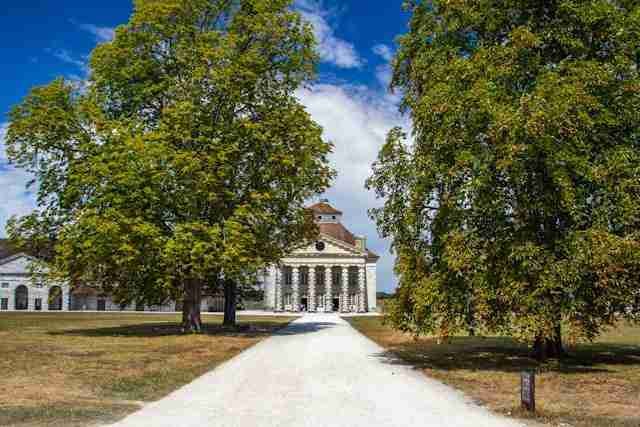
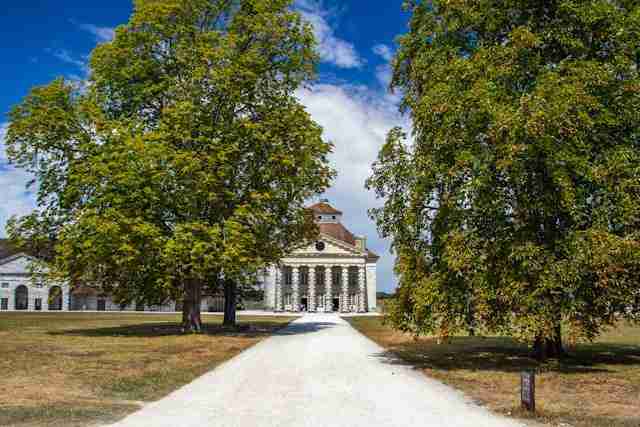
The Saline Royale d'Arc-et-Senans is one of France's most visually structured and conceptually ambitious architectural sites. Built in the 18th century as a state of the art saltworks, this semicircular complex was designed by architect Claude-Nicolas Ledoux as both a functional space and a utopian vision of industrial order. For photographers, it offers a rare opportunity to explore precise symmetry, monumental stone structures, and wide open spaces that shift dramatically with the light. The balance of clean geometry, historic detail, and rural surroundings gives the site a distinct visual rhythm. Whether shooting from the central court, framing columns against the sky, or exploring abstract textures along the outer arc, the Saline Royale offers endless ways to work with form, scale, and shadow.
Best Photography Opportunities
Symmetry of the Central Courtyard
The main courtyard is enclosed by a broad arc of buildings that create perfect symmetry from the center point. This space lends itself to wide compositions that showcase the repeating columns, rooflines, and the open sky above. Shooting from a low angle allows you to include foreground texture such as gravel or grass while maintaining balance across the frame. A wide angle lens is ideal here, giving you full coverage without distortion if positioned correctly. Early and late light helps bring depth to the stone surfaces and gives shadow lines that define structure clearly.
Architectural Details and Decorative Stonework
Each building along the arc features sculpted columns, arches, and carved stone details that are perfect for midrange and close compositions. These subjects work well under soft or overcast light, which helps reveal surface texture without harsh contrast. Framing these elements at an angle adds a sense of dimension and prevents your images from feeling flat. Black and white photography works well in these situations, emphasizing contrast and form over color. These shots pair well with wider environmental frames to create a complete visual story of the site.
Reflections and Texture After Rain
After rainfall, the surface of the courtyard often holds shallow puddles that mirror the buildings and sky. These reflections add drama and depth to architectural scenes, especially when shot from a low viewpoint. The symmetry of the site becomes even more striking when paired with a clean reflection in the water. A polarizing filter can help you manage glare or deepen the reflection depending on the conditions. These moments are best captured shortly after the rain stops, when the ground is still wet but the light is returning.
Interior Vaulted Spaces and Exhibition Halls
Some of the former production buildings now serve as gallery spaces with tall ceilings, simple lines, and directional light. These interiors are ideal for leading lines, soft shadow compositions, and architectural studies. Shooting from one room into another through open doors or arches allows you to create images with depth and layered framing. A fast lens helps maintain sharpness without the need for a tripod. These areas tend to be quiet, especially early in the day, allowing time to work through compositions without interruption.
Tree-lined Paths and Open Gardens
Beyond the formal structures, the grounds include straight walking paths, rows of trees, and grassy clearings that offer softer, more natural compositions. These areas are especially photogenic during the golden hour, when the warm light filters through the trees and creates gentle contrast between shadow and ground. Framing the main buildings with foliage or shooting through branches helps contextualize the architecture within the landscape. The seasonal changes in the trees and ground cover also provide variety across different times of year.
Best Time to Visit
The most rewarding times to visit for photography are spring and early autumn. These seasons bring moderate temperatures, shifting light, and fewer visitors, which allows for clean compositions and quiet work. Summer brings more activity and stronger midday contrast, though mornings and evenings remain productive. Winter light is lower and cooler in tone, which works well for detail and contrast, especially when shooting under clear skies.
Morning visits offer the best chance for photographing the courtyard and arc without people. The low angle of the sun at this time creates long, directional shadows that define structure. Overcast days are excellent for texture and surface studies, removing glare and balancing exposure. After a light rain, the entire site becomes visually richer, with reflections, darker stone surfaces, and a stillness that enhances the atmosphere.
How to Get There
Saline Royale is located in Arc-et-Senans, about halfway between Besançon and Dole in eastern France. It is easily accessed by regional train via the Arc-et-Senans station, which is about a ten minute walk from the museum entrance. By car, it can be reached from the A36 motorway, and visitor parking is available on site with clear signage.
Admission is required to access the full complex, including the courtyard and museum spaces. Photography is permitted for personal use, with most areas open to cameras. Tripods are generally allowed outdoors but may be restricted indoors during busy hours or special exhibitions. Lockers, restrooms, and a visitor café are located near the entrance, making it easy to spend several hours exploring. Staff at the entrance can provide guidance on any current restrictions related to photography.
Recommended Photography Gear
Photographers visiting Saline Royale should plan for a flexible and lightweight kit. A wide angle lens is important for capturing the full sweep of the central arc and courtyard. A 24 to 70 millimeter zoom is ideal for moving between architectural scenes, detail shots, and interior work without swapping lenses. A fast prime lens in the 35 or 50 millimeter range is helpful for shooting inside the exhibition halls or capturing texture studies where depth of field can add focus and softness.
A tripod is useful for low light conditions and for composing long exposures in the early morning or late afternoon. A circular polarizer helps with managing reflections on wet ground or enhancing the depth of color in the stone. A small cloth for lens cleaning is helpful, especially after working near puddles or on damp days. A light shoulder bag or backpack is sufficient for carrying gear around the site, and comfortable walking shoes are strongly recommended.
Nearby Photography Locations
This historic fortress offers wide views, stone ramparts, and long sightlines that are especially effective in the early morning. Its elevated position makes it ideal for cityscapes and moody light conditions.
Another key site in the region's salt production history, this location offers a more industrial environment with underground passages and mechanical remains. It provides contrast to the more formal style of Saline Royale.
Set beside the Loue River, this castle is surrounded by green spaces and stone bridges. Reflections in the water and soft afternoon light make it a strong secondary location for landscape and architecture photography.
Villages of the Loue Valley
The surrounding countryside features quiet villages, stone walls, and gentle terrain that work well for rural storytelling and environmental photography. These locations are often empty and allow for long, uninterrupted sessions.
Forêt de Chaux
This nearby forest includes long straight paths, moss-covered ground, and scattered historic structures. It is an excellent setting for soft light, color studies, and natural framing techniques.
Saline Royale d'Arc-et-Senans is a place where geometry, history, and light come together in quiet harmony. It offers photographers a clean, focused space to explore visual balance, texture, and mood at their own pace. With every change in light or weather, the site reveals new possibilities for composition, making it one of France's most rewarding architectural locations to photograph.
Comments
Loading comments…