
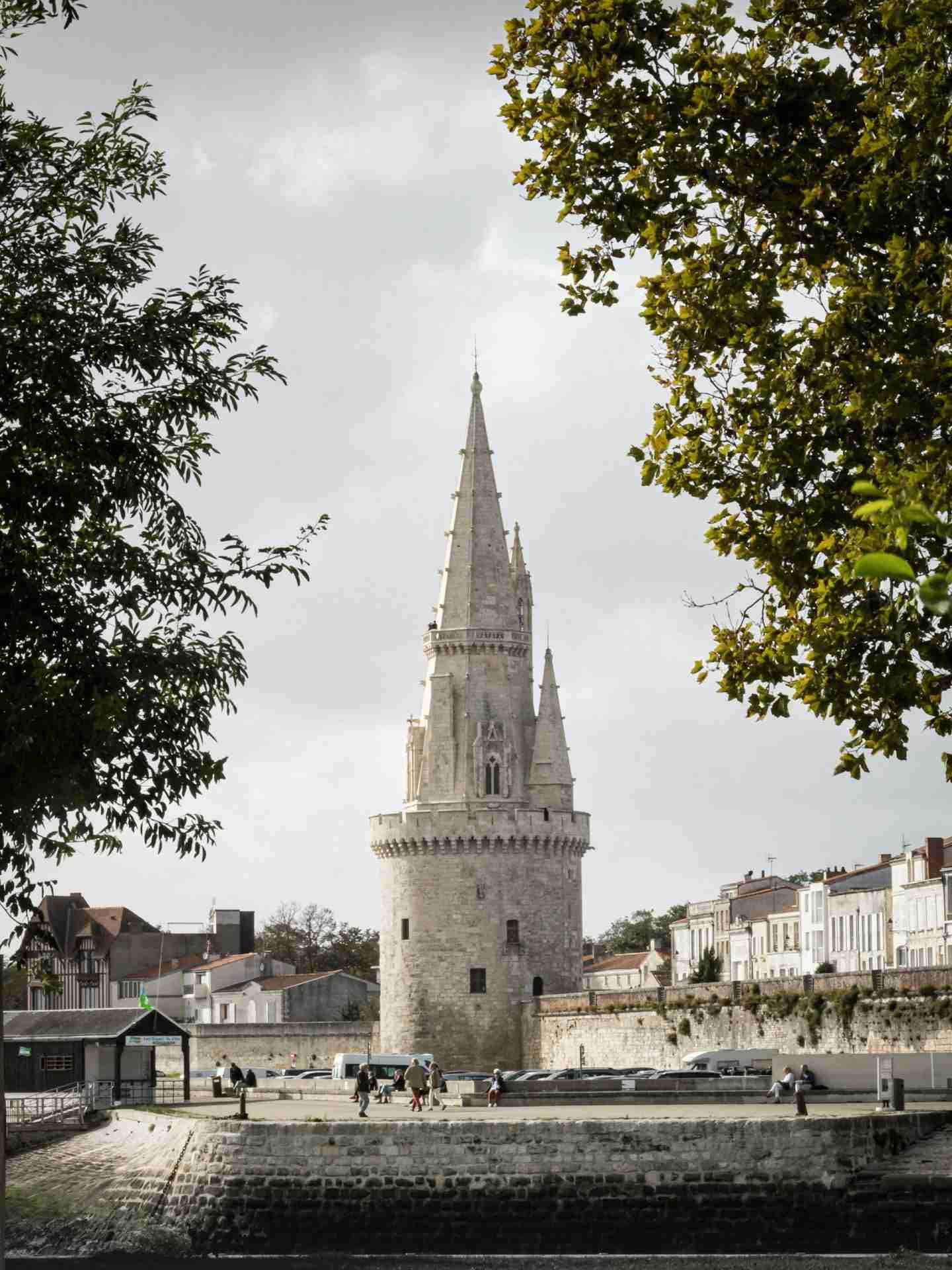
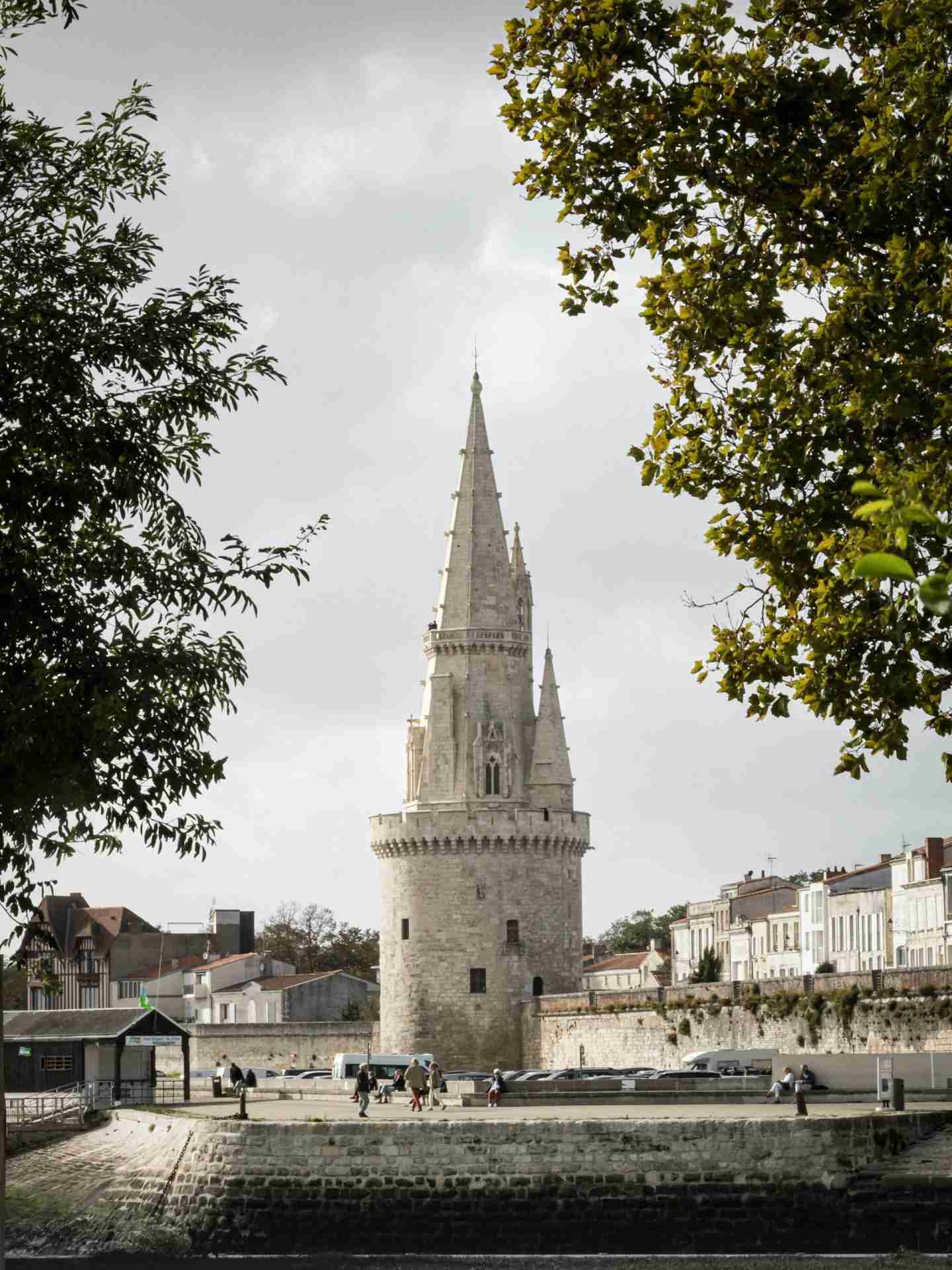
Rising above the historic port of La Rochelle, the Lantern Tower has stood for centuries as both a lighthouse and a defensive watchtower. Built in the 15th century, it is the tallest of the three medieval towers that guard the entrance to the harbor. Its slender form topped with a distinctive conical spire is instantly recognizable, and its combination of Gothic detail and maritime purpose makes it one of France's most intriguing coastal landmarks. Once used to guide ships into the port, it also served as a prison, with centuries of graffiti still visible inside. For photographers, the Lantern Tower offers a perfect blend of architectural interest, cultural history, and maritime setting. Framed by the harbor waters, nearby fortifications, and the bustling life of La Rochelle, it is a subject that rewards both wide cityscapes and intimate architectural studies.
Best Photography Opportunities
• Tower framed from across the harbor
: One of the most effective ways to photograph the Lantern Tower is from the opposite side of the Old Port, along the walkway near the Saint-Nicolas Tower. From this position, you can create strong horizontal compositions that include all three medieval towers. These alignments allow for symmetry, reflections, and a clear sense of the city's historic harbor defenses. The late afternoon light is ideal here because the sun moves low in the sky and lights the tower's face evenly, emphasizing both its height and the detail in its stonework. A wide-angle lens will help incorporate foreground elements such as docked boats or stone moorings that add depth and context. Long exposures during twilight can soften the water's surface and enhance the tower's reflection in a compelling, layered composition.
• Detail shots of carved stone and prison graffiti
: Inside the Lantern Tower, centuries of use as a prison have left behind etched names, dates, and maritime symbols carved into the walls. These details offer excellent material for macro and close-up photography, revealing the marks of human history in a personal and tactile way. Look for directional light from the narrow windows, which casts hard shadows and brings the carvings into relief. These conditions create contrast and make for high-impact black and white imagery. A fast lens is essential in this low-light environment, and tripods may be restricted, so plan accordingly. Capturing these small but powerful moments adds another layer to your photographic story and complements the broader architectural shots.
• Climbing the spiral staircase for symmetry
: The narrow spiral staircase inside the tower provides one of the most visually rewarding compositions in the entire structure. Its repeated curves and stone steps create natural leading lines, making it ideal for abstract or geometric photography. Shooting upward from the base, or downward from the top, can emphasize the sense of motion and vertical space. Subtle changes in light filtering through slits in the wall add visual breaks that help to separate different sections of the image. A standard zoom or 35mm prime lens works well here, especially in tight quarters. Because light levels vary, be prepared to shoot handheld with a high ISO and steady posture if tripods are not permitted.
• Panoramic views from the top of the tower
: Reaching the top of the Lantern Tower gives photographers access to a sweeping view of La Rochelle. The port below, filled with boats and edged by tiled rooftops, unfolds in all directions. This setting is perfect for wide-angle lenses that can encompass both the city and the sea. A short telephoto lens also works well if you want to isolate scenes within the landscape, such as the market rooftops or the city's cathedral tower. Golden hour enhances the colors of the terracotta roofs and the water's edge, while early mornings often offer misty conditions that add depth to the composition. Timing your visit around the light will determine whether you capture contrast, mood, or even symmetry between land and sky.
• Night photography along the Quai Duperré
: After sunset, the Lantern Tower is illuminated by warm-toned spotlights that highlight its stone surface against the evening sky. The harbor waters often become smooth and reflective at this time, making long exposures particularly effective. From the edge of Quai Duperré, you can frame the tower's reflection with added foreground elements such as mooring posts or ropes. A tripod is essential for these low-light compositions, and lenses in the 24 to 50 millimeter range allow you to frame precisely without introducing distortion. The soft glow from surrounding streetlights also adds depth and subtle color variation that is best captured during the blue hour.
Best Time to Visit
The Lantern Tower of La Rochelle presents different photographic strengths throughout the year, with each season offering its own atmosphere and lighting conditions. From late spring through early autumn, the weather is generally mild and skies are clearer, allowing for more consistent lighting during golden hour and fewer disruptions due to rain or strong wind. May and June offer long daylight hours and fewer crowds compared to the height of summer, making these months ideal for quiet exploration both inside and outside the tower. In July and August, the sun sets later in the evening, giving you a longer window to capture the tower in golden or blue hour conditions. However, these months are also the busiest, so interior shots may be more difficult without visitors in your frame. Early mornings during this time offer the most solitude and often reveal calm harbor reflections and soft light that gently illuminates the eastern walls of the tower.
Autumn brings cooler air and softer, lower-angle sunlight that enhances surface detail in the tower's stonework. September is especially rewarding, as the light is warm and angled, and the number of visitors drops significantly. Mornings can feature light mist rising off the harbor, creating mood without overwhelming contrast. Winter months, while colder and often overcast, are ideal for capturing more dramatic or subdued images, particularly in monochrome or moody color palettes. Harsh shadows are rare, and the lack of foliage means uninterrupted views through the old port. The tower's lighting remains consistent throughout the year, making it a reliable night photography subject in every season. Overall, the best time of day for capturing the Lantern Tower is either just after sunrise or late in the evening, when directional light grazes the stone and enhances its shape and structure without flattening the textures.
How to Get There
The Lantern Tower is located at the western edge of La Rochelle's Old Port, an area well-connected and easy to navigate on foot. If you arrive by train, it is about a 15-minute walk from the main station, La Rochelle Ville. You can follow signs through the old town and reach the harborfront via Rue sur les Murs, which leads directly to the tower. For those driving into the city, parking is available at the Vieux-Port Ouest lot, though it may fill quickly during high season. The tower is managed by the Centre des Monuments Nationaux, and there is an entry fee required to access the interior and the upper levels. The climb to the top involves a long spiral staircase without an elevator, so carry only what you need and use a comfortable bag or harness. Early mornings or weekday visits are best if you want to avoid crowds and have more freedom to compose your shots.
Recommended Photography Gear
To get the most out of your time photographing the Lantern Tower, it helps to pack a focused but flexible set of equipment suited to the wide range of lighting conditions and compositional challenges this location presents. A full-frame camera body with strong dynamic range will allow you to handle both bright harbor scenes and low-light interiors without sacrificing image quality. A wide-angle zoom lens in the 16 to 35 millimeter range is essential for capturing the tower in context, especially when shooting from across the harbor or framing the city from the top level. For tighter architectural shots or detail-oriented compositions inside the tower, a fast prime lens such as a 35 or 50 millimeter f/1.8 performs well in low-light situations and helps isolate texture and depth, especially when photographing carved stone or staircase geometry.
A short telephoto lens in the 70 to 200 millimeter range is useful for compressing scenes across the rooftops from the top of the tower, as well as isolating compositional elements such as moored boats, window details, or movement in the harbor. Night photographers should absolutely bring a sturdy but lightweight tripod that is compact enough to carry through the narrow staircases yet stable enough to manage long exposures along the Quai Duperré. A remote shutter release or two-second timer will help minimize shake during long exposures. A circular polarizer is helpful for managing glare off the water and enhancing mid-day contrast in the sky when conditions are clear. If you plan to photograph interior details, consider bringing a small LED panel or flashlight to help with focus and light painting in darker corners. Weather-sealed gear or a rain cover is advisable if you are working near the harbor, as the wind can shift suddenly and salt spray may reach your equipment. Lastly, a microfiber cloth and blower are essential for keeping your lenses clean in this coastal environment, where fine mist and airborne grit can quickly degrade image sharpness.
Nearby Photography Locations
: Just across the bridge from La Rochelle, this coastal island is a favorite for photographers looking for long beaches, fishing huts, and soft, pastel evening light. The lighthouse at the far end, Phare des Baleines, is a rewarding sunrise destination with strong east-facing compositions and wide views over the ocean. The island's villages and salt marshes also offer colorful, textural subjects best explored by bike.
: This market is a vibrant location for street and documentary photography. The structure itself, made of iron and glass, provides beautiful filtered light that changes throughout the morning. You will find a mix of color, motion, and detail here, especially at the fish counters or produce stalls, which are active from early morning until midday.
: Located just south of the Old Port, this marina offers lines of sailboats, clean water reflections, and broad seascapes framed by the breakwater. Late afternoon light here adds warmth to the white hulls and creates interesting interplay between light and shadow along the docked boats. The marina's breakwater is also a good place for long-lens work and horizon-based compositions.
: These small botanical gardens in the heart of the city are a quiet option for macro work and environmental portraits. The garden is surrounded by stone architecture that can be incorporated into your compositions. Seasonal plantings and changing light throughout the day give you plenty of options for natural textures and subtle color.
: This historical site offers an entirely different visual experience, with its stark concrete rooms and preserved wartime features. The bunker's dim lighting and sharp shadows require careful exposure, but they reward photographers who enjoy shooting in challenging conditions. High ISO performance or a fast lens is essential here, and monochrome processing can work especially well.
Whether you are chasing the changing light across the harbor or climbing stone staircases in search of a unique angle, the Lantern Tower rewards photographers who take their time and pay attention to subtle shifts in perspective. Its blend of medieval architecture, historical texture, and waterfront placement makes it one of the most rewarding subjects along the French Atlantic coast.
Comments
Loading comments…