
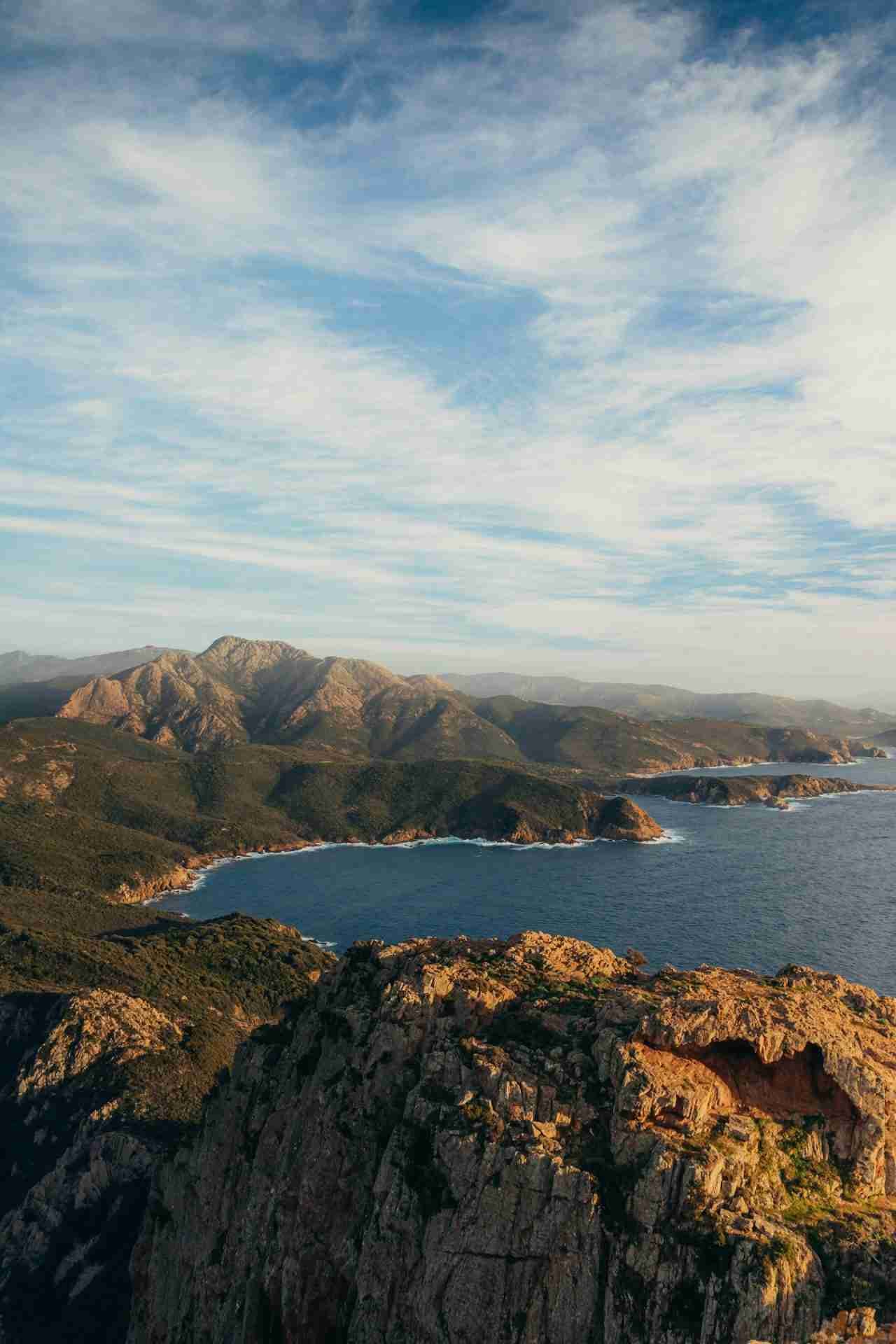
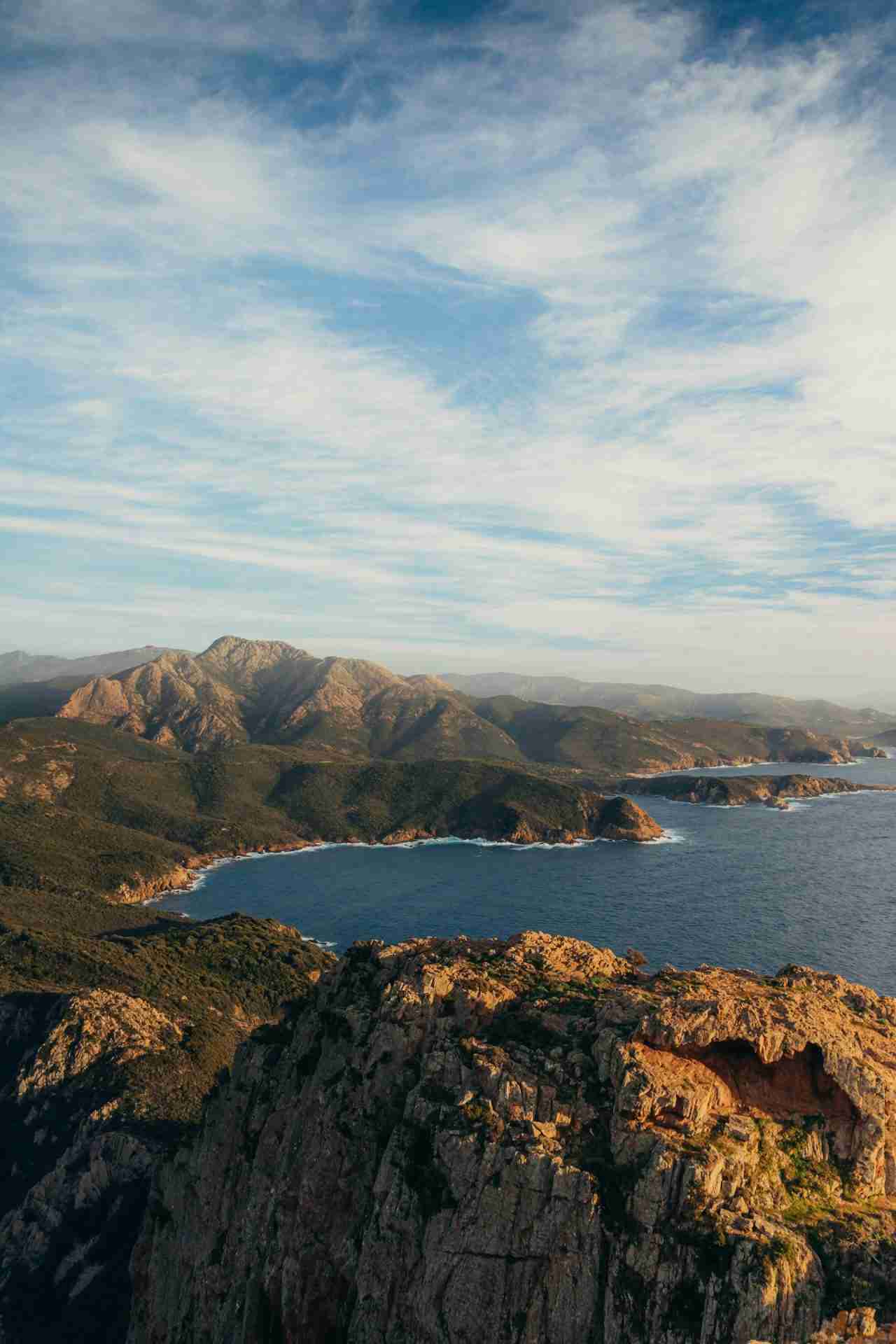
Torra di Turghju sits on the headland of Capu Rossu near Piana, high above the Mediterranean on Corsica's west coast.It's a 17th century Genoese watchtower, but its real strength for photography comes from its position high above the Mediterranean. The tower stands on top of deep red granite cliffs that drop sharply into bright blue water, and the contrast between those colors is what gives this place real visual strength. From below, the tower looks small against the scale of the rock and sea. Once you reach the top, though, the views open in every direction and you realize how exposed and dramatic the location really is. This is a place where light direction, rock texture, and horizon control matter more than anything else.
Best Photography Opportunities
• Tower With Open Sea Background
One of the cleanest compositions is framing the tower against the open Mediterranean. Because the summit is relatively compact, you'll need to move around to find an angle where the tower separates clearly from the horizon. If the roof line overlaps distant cliffs, the image can feel cluttered, so take your time adjusting position. A moderate focal length keeps the proportions natural and shows the relationship between structure and sea without compressing everything too tightly. Late afternoon light is especially strong here, warming the stone and giving the cliffs depth. If you wait for softer light rather than harsh midday sun, the tower's texture becomes much more defined.
• Cliff Lines Leading to the Tower
On the hike up, the granite forms natural curves and ridge lines that point toward the summit. Shooting from lower down allows you to use those rock shapes as leading lines. This works best when the tower is placed slightly off center so the eye moves through the frame rather than stopping in the middle. The red tones of the granite become more pronounced as the sun lowers, which strengthens the composition. Even on overcast days, the cliff texture is strong enough to carry the frame. This approach gives the image more depth than a straightforward summit shot.
• Summit Panorama
From the top, you can shoot outward across the Gulf of Porto and along the Corsican coastline. Including part of the tower or summit rocks in the foreground helps anchor the scene. Without a foreground element, the horizon can feel flat and distant. Clear days offer the best visibility, but a few clouds can add structure to the sky. A slightly longer focal length can compress headlands and create layered coastal compositions. This is where you can step back and show how isolated Capu Rossu really is.
• Golden Hour on the Granite
This is one of the best places in Corsica to photograph warm light hitting red rock. As the sun drops, the cliffs glow and the textures become much more pronounced. The difference between midday and late afternoon here is significant. In strong overhead light, the rock can look flat. In angled light, every crack and contour becomes visible. Plan your timing so you're near the summit as the light softens rather than racing up at the last minute.
• Trail Approach
The path itself offers strong storytelling compositions. As you climb, there are sections where the tower appears above the ridge line. Position yourself lower on the trail and use the curve of the path to guide the eye upward. Including a small figure on the trail can help show scale, especially since the tower itself is not large. This gives you a sense of journey rather than just destination. It's worth turning around occasionally on the way up to see how the tower lines up with the terrain behind you.
Best Time to Visit
Late afternoon into early evening is the most reliable window for strong images. The headland faces west, so the cliffs and tower receive warm, directional light as the sun lowers. This is when the red granite really shows depth and contrast. Sunset can also produce strong sky color over the sea, but even the hour before sunset often delivers the most consistent results.
Morning light is softer but less dramatic on the cliff faces. Midday can be harsh, especially in summer, with strong contrast and flat textures. Spring and autumn are ideal for comfortable hiking temperatures and clearer air. Summer works well for color, but expect heat and stronger light. Wind can pick up near the summit, so factor that into tripod use.
How to Get There
Torra di Turghju is reached via a marked hiking trail from the Capu Rossu parking area near Piana. The trail is rocky and steadily climbs, with consistent elevation gain rather than steep scrambling. Most people complete the round trip in around one and a half to two hours, depending on pace and how long they spend at the top.
There is no entrance fee to access the tower itself, but parking regulations apply at the trailhead. The path is exposed in sections, so bring water, especially in warmer months. Sturdy footwear is important because of loose rock and uneven ground. Plan your timing carefully if you want to stay for late light, as the descent will be in lower light conditions.
Recommended Photography Gear
A standard zoom lens will handle most compositions here. It gives you flexibility for both environmental shots and tighter framing of the tower. A short telephoto can help compress cliff layers and isolate sections of coastline. A tripod is recommended if you plan to stay for sunset or shoot in lower light.
Keep your kit manageable since the hike involves elevation gain. A polarizer can help control glare on the water and deepen sky tones, though be cautious with uneven sky darkening at wider focal lengths. Wind protection for your tripod can be useful on the exposed summit. As always on rocky terrain, stable hiking shoes are just as important as camera gear.
Nearby Photography Locations
These sculpted red granite formations line the coastal road and offer dramatic rock shapes at both sunrise and sunset. They complement the Capu Rossu cliffs with different angles and elevations.
• Gulf of Porto
A broad coastal bay with layered headlands and open sea views. It provides expansive landscape compositions that balance the tighter summit views at Torra di Turghju.
Accessible by boat, this protected area features rugged volcanic cliffs and deep blue water. It adds variety to a coastal photography itinerary in the region.
A calmer sandy beach framed by cliffs, offering softer shoreline compositions and turquoise water.
• Porto
A small harbor town with waterfront scenes and elevated viewpoints over the gulf. It adds architectural and maritime context to the dramatic cliffs of Capu Rossu.
Comments
Loading comments…