
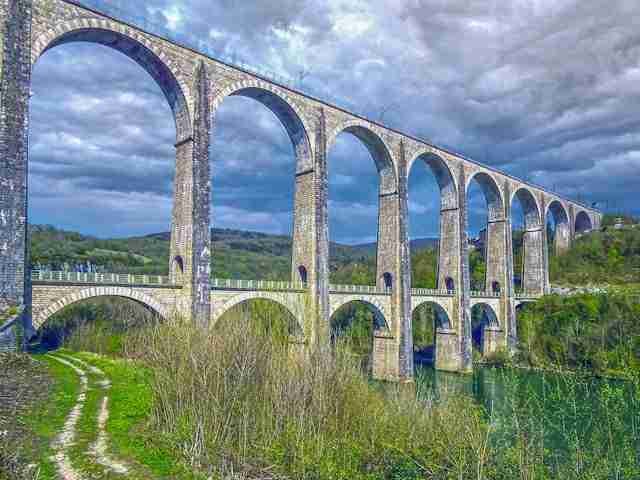
Soaring across the Ain River valley in eastern France, the Viaduc de Cize-Bolozon is a stunning double-deck stone bridge that blends engineering precision with natural grandeur. Originally built in the 19th century and later reconstructed after World War II, the viaduct features graceful arches spanning the turquoise waters of the river below. With trains running on the upper deck and road traffic below, this structure creates a rare harmony between transportation, landscape, and architecture. For photographers drawn to symmetry, texture, and sweeping perspectives, the Viaduc de Cize-Bolozon offers a wealth of visual material framed by cliffs, water, and light.
Best Photography Opportunities
• Wide Landscape Compositions from the Riverbank
From the banks of the Ain River, the full sweep of the viaduct arches becomes visible, framed by wooded hills and limestone cliffs. Use a wide-angle lens to include reflections in the water and lead the eye through the archways toward the vanishing point. Early morning or late afternoon light adds dimension and reveals the warm tones of the stonework.
• Reflections from Below the Bridge
The calm, clear waters of the Ain often produce mirror-like reflections of the viaduct's arches. Set up from a low vantage point near the river's edge with a tripod and polarizing filter to enhance detail and control glare. Symmetrical compositions work especially well here, particularly in autumn when foliage colors frame the scene.
• Long Exposure with Train or Traffic Motion Blur
Capture a passing train on the upper deck or a vehicle on the lower deck using long exposure to blur motion against the static structure. Shoot from the cliffs or riverside path with a mid-telephoto lens to compress perspective and emphasize the dynamic interaction of speed and stone.
• Drone Perspectives Over the Viaduct and River
With appropriate permissions and adherence to local drone laws, aerial photography reveals the elegant curvature of the viaduct as it crosses the Ain. Fly parallel for a side profile of the arches or directly overhead for a top-down view of the structure blending into the surrounding landscape. Soft light or early morning fog adds atmosphere to the graphic composition.
• Detail Studies of Arches, Texture, and Engineering
Up close, the viaduct's stone blocks, railings, and supporting columns offer rich material for architectural detail shots. Isolate repeating forms like archways or patterns in the masonry using a short telephoto lens. Overcast light works best for these compositions, preserving subtle contrast in the stone's texture.
Best Time to Visit
The Viaduc de Cize-Bolozon is photogenic throughout the year, but late spring and early autumn offer the best blend of light, color, and foliage. In spring, new growth along the valley adds softness to the scene, while autumn brings a warm palette that enhances the bridge's natural stone tones.
Golden hour light—especially in the morning—illuminates the eastern face of the viaduct and produces long shadows across the valley floor. Overcast days are ideal for detail shots and controlled exposures of the structure's stonework.
Misty or foggy mornings can elevate drone and riverside shots with atmosphere and depth, particularly when the bridge begins to emerge through the haze. Water levels in the Ain tend to be calmer in late summer and autumn, improving the chances for crisp reflections.
How to Get There
The Viaduc de Cize-Bolozon is located near the commune of Bolozon in the Ain department of eastern France, roughly halfway between Bourg-en-Bresse and Oyonnax. The site is best accessed by car, though there is a small train station at Bolozon on the TER Auvergne-Rhône-Alpes line.
Roadside pull-offs and nearby trails provide access to both upper and lower vantage points, with signage leading to scenic overlooks and walking paths. The riverbank can be reached via short, sometimes steep trails, so appropriate footwear and a light gear load are recommended.
Tripods are useful for both long exposures and architectural studies, and a drone (if flying legally) expands the available viewpoints dramatically. Bring filters to manage river glare and a weatherproof pack if exploring during misty or changeable conditions.
Exploring the Surrounding Area
The Ain Valley surrounding the viaduct is rich with photographic opportunity. The river winds through limestone cliffs, thick forest, and small farming hamlets, offering a mix of natural beauty and rural character. Trails above the viaduct lead to elevated views over the valley, while riverside paths provide peaceful reflections and quiet compositions of nature meeting infrastructure.
In spring and autumn, the changing vegetation around the viaduct enhances its visual harmony with the land. Wildflowers, fallen leaves, and moss-covered stones create soft foreground textures for more intimate frames of the larger scene.
Nearby villages like Cize and Bolozon add charm and context to a day of shooting, with narrow streets, stone houses, and timeless rural views ideal for documentary or travel photography.
Nearby Photography Locations
A few kilometers downstream, these dramatic limestone gorges offer towering rock walls, turquoise waters, and narrow bends—perfect for wide-angle landscapes and long-exposure river studies.
• Pont de Serrières-sur-Ain
Another beautiful bridge crossing the Ain, this arched structure is smaller but no less scenic, especially during sunset when its reflection lights up in the still water below.
Located to the northeast, this alpine lake is framed by steep cliffs and forested slopes. Ideal for early morning mirror shots and peaceful wide compositions with dramatic sky and water interactions.
A masterpiece of Gothic architecture with ornate facades and peaceful cloisters, the monastery provides a change of pace from landscape photography and offers richly detailed historic interiors.
This high-elevation plateau offers sweeping countryside views, open skies, and forested paths. Ideal for hiking photography, especially in spring and autumn when the light travels low and long across the fields.
The Viaduc de Cize-Bolozon is more than a transportation link—it's a sculptural form etched into the landscape, gracefully uniting structure and scenery. Whether you're capturing reflections in the Ain's turquoise waters, tracking a train across the upper deck, or watching morning mist gather around the arches, the viaduct offers countless ways to connect light, line, and land into a timeless image.
Comments
Loading comments…