
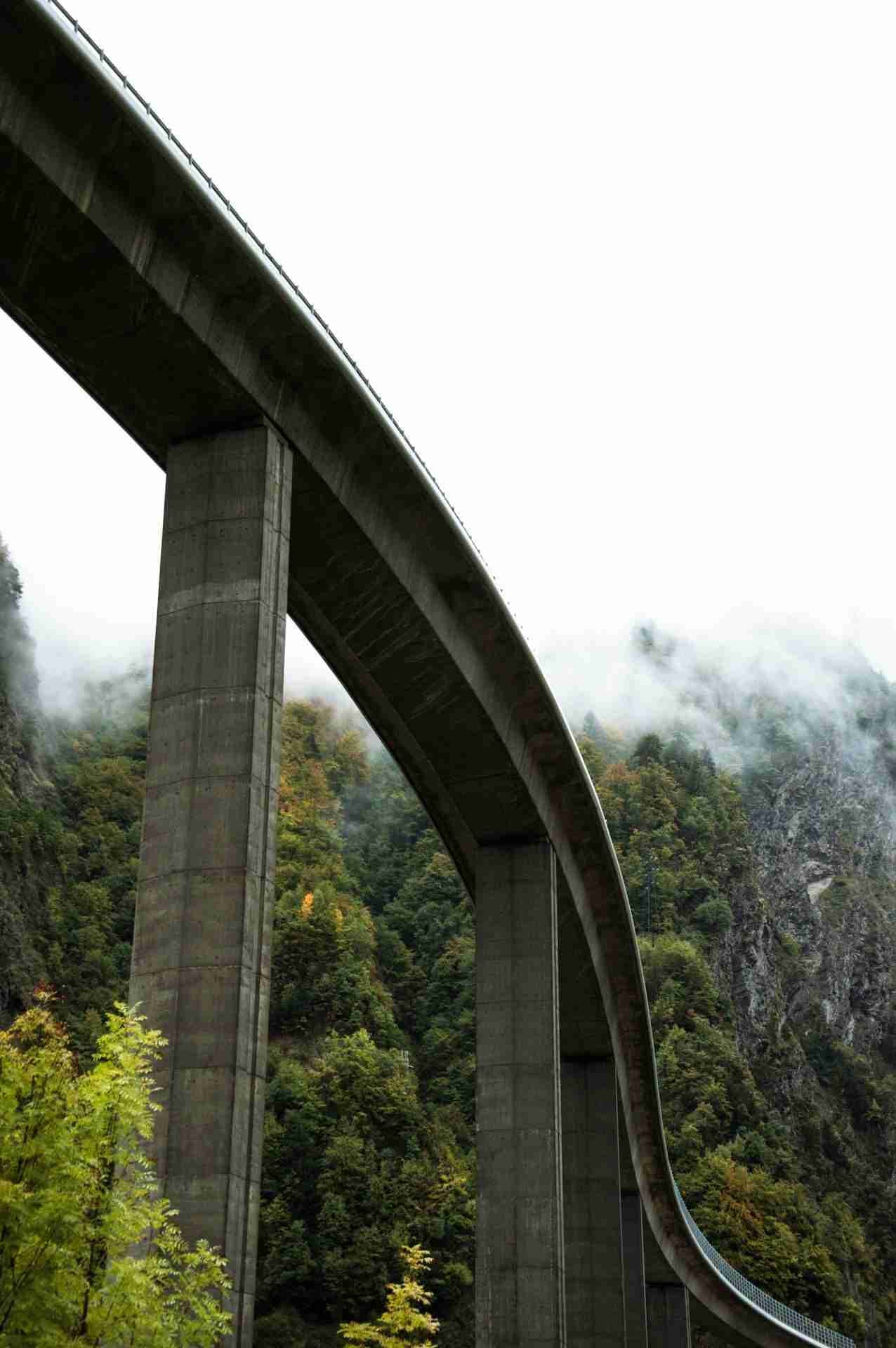
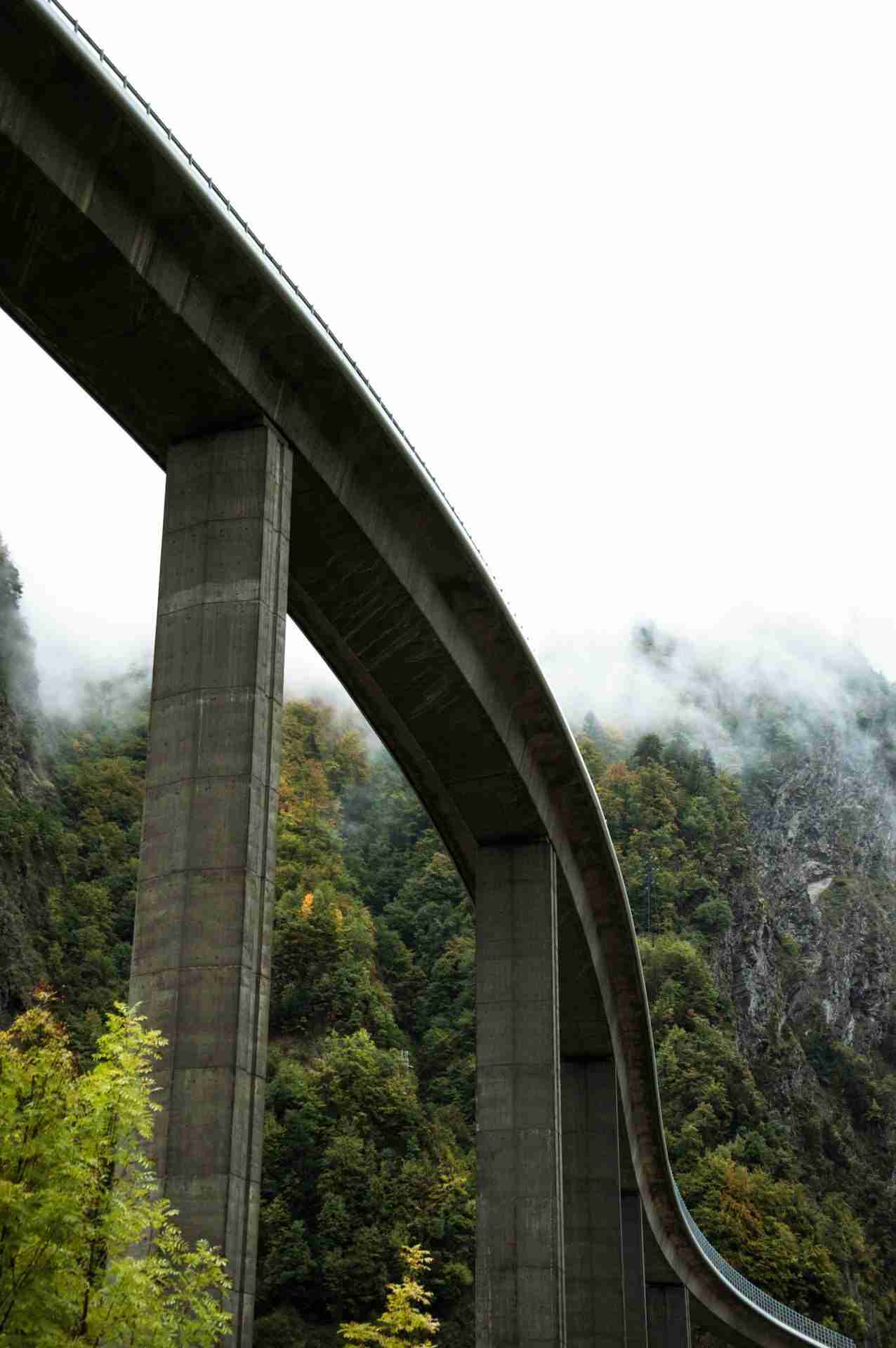
Suspended along the sheer rock walls of the Arve Valley in the Haute-Savoie region, the Viaduc des Égratz offers a bold architectural presence in one of the most naturally dramatic corridors of the French Alps. This curving motorway viaduct connects the commune of Passy with the Mont Blanc Tunnel route and carries the A40 autoroute through steep alpine terrain. While it serves a practical function as part of a vital transportation link, the viaduct's sweeping curve, elevated pillars, and mountain backdrop make it a compelling and often underrated subject for landscape and infrastructure photography.
Positioned just west of Chamonix, the viaduct is nestled between rock faces and forested slopes, creating a layered scene where man-made structure and natural elements meet. It is especially interesting for photographers who enjoy working with line, scale, and depth—offering the chance to contrast the engineered form of the viaduct with the raw textures of the surrounding cliffs and alpine vegetation. Mist often rolls through the valley, light changes quickly, and the sound of cars fades into the background as you focus in on shape and motion. It's a place where timing and vantage point make all the difference.
Best Photography Opportunities
• Wide-Angle Views from Elevated Lookouts
: The best way to capture the viaduct's full curve is from higher ground on the northern slope of the valley. From here, a wide-angle lens allows you to fit the entire arc of the roadway into frame, with the cliffs and forest adding context. Try shooting during early morning when side light defines the structure and adds contrast between the concrete viaduct and the dark rock behind it. Foreground elements like alpine shrubs or tree branches help anchor the image and give it scale.
• Compression with Telephoto from Across the Valley
: From the southern side of the Arve Valley, especially near Plateau d'Assy or the approach to Lac Vert, a long lens can compress the viaduct into the mountain backdrop. This view is especially effective when low clouds partially cover the peaks, creating a moody and layered atmosphere. With a 200mm or longer lens, you can isolate parts of the viaduct and the vehicles moving across it, capturing the contrast between movement and the stillness of the cliffs.
• Fog and Cloud Interaction
: The Arve Valley frequently fills with fog or low-lying cloud, especially in the cooler months and after rain. When the viaduct peeks through the mist, it creates a surreal and almost dreamlike image. These moments are brief but powerful. Use a mid-range zoom and a tripod to wait for the right moment when the structure is partly revealed and light breaks through to catch the roadway. This is also an excellent time to work in black and white, emphasizing texture and form over color.
• Night Photography and Light Trails
: The viaduct is illuminated by vehicle headlights throughout the evening and night. If you can safely access a viewpoint with a stable base, this becomes an excellent setting for long exposure photography. Use a tripod and a shutter speed between 10 and 30 seconds to capture sweeping light trails as cars move along the curve. The best results happen just after sunset, when the sky still holds color and contrast, and the lights begin to stand out.
• Environmental Details and Textures
: Beyond the full view of the viaduct, the area around Passy offers rich opportunities to shoot close-up details. Rust patterns on safety rails, moss-covered concrete, or lines of bolts and rivets along maintenance paths all give strong graphic elements for texture studies. On cloudy days, these shots benefit from the even light. These compositions may not feature the full viaduct, but they still speak to its structure and place within the landscape.
Best Time to Visit
The Viaduc des Égratz is accessible and photogenic throughout the year, though different seasons bring different challenges and rewards. Spring offers fresh growth in the forests and clear air after snowmelt, giving you strong visibility and natural color to contrast with the man-made form. Morning light is especially effective in spring, casting soft shadows and defining the contours of the bridge against the cliffs.
Summer brings more consistent weather and longer daylight hours. While midday light can be harsh, late afternoon and golden hour are productive windows for color and sky texture. Summer also brings more vehicle traffic, which can help when capturing light trails or adding scale to the viaduct.
Autumn introduces warm tones to the trees along the valley walls and is perhaps the best time for wide compositions with natural color variation. Cloud cover is more frequent in fall, and light tends to be softer throughout the day, which works well for structure-focused compositions.
Winter creates a very different kind of scene. The viaduct often appears against snow-covered rock and dusted trees, creating a clean and minimal palette. Morning fog is common, and the sun stays low enough to allow for long shadow play on the bridge deck and supports. If you're shooting during winter, be aware of road conditions and plan accordingly, especially if you are aiming to reach elevated viewpoints.
How to Get There
The Viaduc des Égratz spans the Arve Valley near Passy, just off the A40 autoroute heading toward Chamonix. If you are driving from Geneva, the route takes roughly one hour via the A40 eastbound. From Chamonix, it is a short drive down the valley toward Sallanches.
There are several potential viewpoints to photograph the viaduct, but they are not always marked with signs. One accessible route is to approach from the Plateau d'Assy area, where small rural roads wind uphill and offer occasional pull-offs or trail access. Some trails in this region lead to higher ground overlooking the valley. Another useful route is near Lac Vert, where clearings between trees allow views across to the viaduct from a distance. Bring a detailed local map or GPS coordinates, as cell reception can be inconsistent in the upper valley.
There is no entrance fee to access viewpoints near the viaduct, and the structure itself is not open to pedestrians or interior access. Photography is allowed from public trails and roadside clearings, though you should take care not to trespass on private property. Parking is available at small pull-offs or near local trailheads. Early morning visits offer the best combination of soft light and quiet roads, while sunset tends to bring warmer tones and more sky variation.
Recommended Photography Gear
Photographing the Viaduc des Égratz requires a flexible kit that can handle both wide scenes and distant detail. A DSLR or mirrorless camera with strong dynamic range will help when balancing bright skies with shaded cliffs. A wide-angle lens in the 16 to 35 millimeter range is ideal for shooting from elevated vantage points where you want to include the full curve of the viaduct and the surrounding terrain. For shooting across the valley or compressing layers, a 70 to 200 millimeter lens or longer is essential.
A tripod is highly recommended for long exposures, light trails, or waiting for shifting weather. Use a circular polarizer to manage glare on rock surfaces and to deepen the sky when clouds are sparse. A neutral density filter is helpful for smoothing motion in trees or clouds, especially during longer exposures. Lens cloths, rain covers, and a lightweight pack are useful if you're hiking to higher points, particularly in variable weather.
Bring warm clothing and gloves if you plan to shoot during colder months, and sturdy footwear for navigating rocky or uneven terrain. If you are aiming to photograph during sunrise or just after dark, a headlamp will make trails safer and help with camera setup in low light.
Nearby Photography Locations
Just a short drive above Passy, this small alpine lake is surrounded by pine trees and mountain views. Early in the morning, the water often reflects Mont Blanc and surrounding peaks, offering a peaceful contrast to the industrial curve of the viaduct below.
: This high plateau above Passy features a network of short trails with wide-open views of the Arve Valley, the viaduct, and Mont Blanc in the distance. In autumn, the trails are lined with warm-toned foliage, and on clear days, the light quality is excellent.
: Less than thirty minutes away, the valley around Chamonix offers endless photographic opportunities, from glacier-fed rivers to towering peaks like the Aiguille du Midi. It's an ideal spot to build a full-day photography trip before or after shooting the viaduct.
: Located near Servoz, this scenic gorge features waterfalls and boardwalk paths through narrow stone walls. It provides a completely different kind of subject—intimate and focused on motion, texture, and the play of water and light.
• Mont Blanc from Le Signal Forbes
: A short hike from the upper lift station in Chamonix, this viewpoint gives you wide, elevated views across the Chamonix Valley to Mont Blanc. Use a long lens here to compress ridgelines and capture light rolling over the glacier fields.
The Viaduc des Égratz may not be the first destination that comes to mind for photography in the Alps, but it offers a rare blend of infrastructure and natural scale that creates visually rich, layered compositions. With shifting light, seasonal changes, and multiple vantage points, this location is well worth the extra time it takes to scout and plan. Whether you're capturing the full sweep of the structure or focusing in on texture and detail, the viaduct stands as a reminder that human-made elements can sit just as beautifully in the landscape as any peak or waterfall.
Comments
Loading comments…