
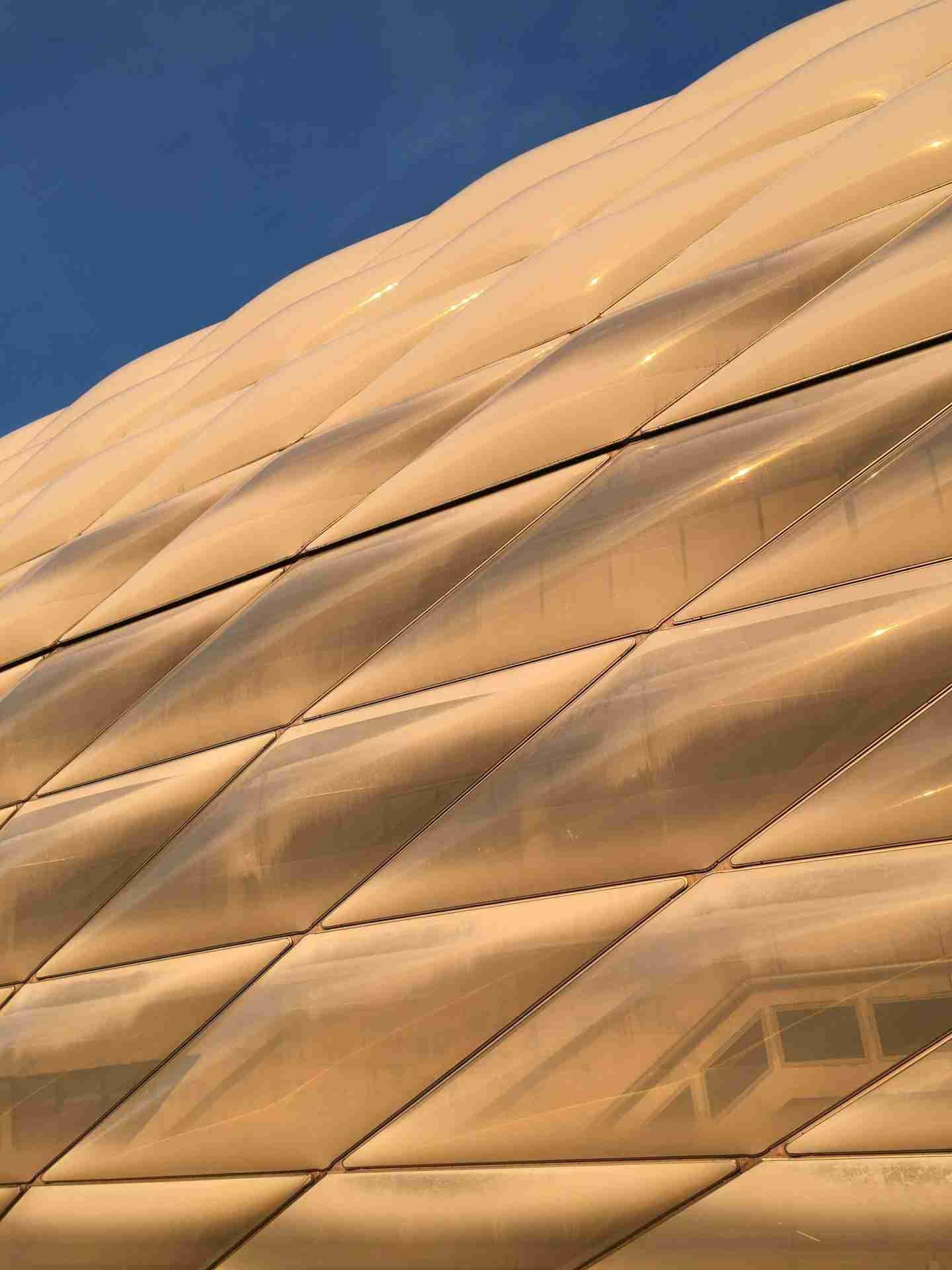
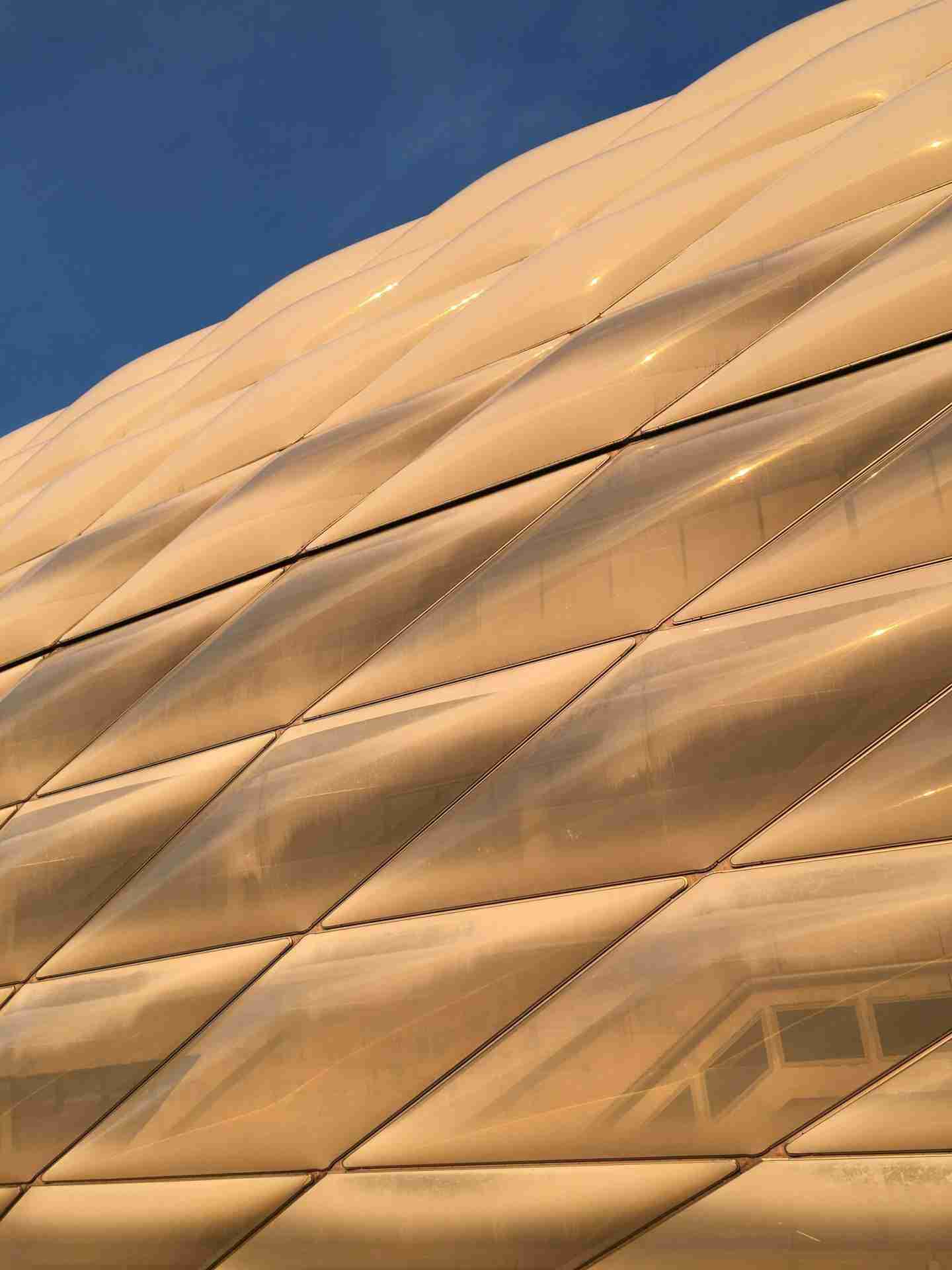
Allianz Arena, the home stadium of FC Bayern Munich, is one of Europe's most visually striking and photographically rewarding sports venues. Designed by Herzog & de Meuron and clad in over 2,700 inflated ETFE panels, the stadium's skin can change color—glowing red, blue, or white depending on the team or occasion. Its unique façade and its sheer scale make it a beacon of modern design, visible from the highway and standing out starkly against the natural surroundings on the city's northern edge. For photographers, Allianz Arena presents an incredible combination of architectural form, atmospheric lighting, and urban isolation. Whether you're shooting long exposures of the glowing exterior at night or capturing rhythmic patterns across its outer shell, the arena is as much a canvas for light as it is a monument to sport.
Best Photography Opportunities
• Twilight and Night Exterior with Illuminated Facade
: The most iconic view of Allianz Arena is undoubtedly its glowing façade after dark. The stadium lights up at sunset, transitioning from soft ambient dusk to its full color display, which is visible from miles away. From elevated pedestrian bridges or roadside clearings, a tripod and long exposure can yield stunning results—sharp structure, smooth traffic trails, and rich ambient glow. Use a mid-to-wide lens (24–35mm) to capture the entirety of the stadium while including the environment: silhouetted trees, roads, or reflections in rain-soaked pavement. If you're lucky enough to shoot during fog or snowfall, the diffusion of light around the panels adds a dreamlike atmosphere to the structure's sharp geometry.
• Pattern Studies of the ETFE Panel Surface
: Up close, the stadium becomes a study in repeated form and texture. Each diamond-shaped panel is inflated slightly outward, creating soft shadows and highlights that shift with the light throughout the day. Abstract compositions are easy to craft here, especially using a telephoto lens to flatten the perspective and isolate patterns. Shooting early or late in the day, when the low sun rakes across the façade, enhances the dimensionality of each panel. On overcast days, the surface becomes soft and monochromatic, perfect for black-and-white interpretations that emphasize shape over color. Consider focusing on transitional areas where the light shifts or where maintenance access points interrupt the pattern—these subtle details bring human scale to an otherwise massive form.
• Stadium Interior and Symmetry from Upper Tiers
: If you're photographing during a stadium tour or on match day, the interior reveals its own visual language. The oval symmetry of the seating bowl, concentric lines, and consistent use of red make for strong geometric images when viewed from higher tiers. From the north or south ends, you can center the goal and let the rows of seats and ceiling ribs converge toward a single vanishing point. Use a wide lens and shoot from just off-center for added dynamism. On match days, capture the energy of the crowd from higher vantage points to contrast the fixed structure with human emotion. Long shutter speeds during chants or goal celebrations can blur crowd movement into waves of color.
• Skyline Silhouettes and Sunset Framing from Fröttmaning Hill
: Located just across the Autobahn from Allianz Arena, Fröttmaning Hill offers an excellent vantage point for distant shots. From here, you can frame the stadium against the backdrop of Munich's outskirts or catch sunset colors pooling behind the stadium's form. This viewpoint is particularly strong during winter when the sun sets to the southwest, casting golden light across the structure and allowing for silhouette work with the skyline in soft focus. A 70–200mm lens compresses the background and foreground elements while still isolating the stadium. On clear days, the horizon line can be placed just above or below the arena for compositions that highlight its futuristic isolation from the urban core.
• Dramatic Leading Lines from the Entrance Plaza
: The large plaza that leads from the Fröttmaning U-Bahn station to the stadium's main entrance offers strong lines and perspective. The concrete walkway, punctuated by support poles and pathway lights, funnels toward the arena's outer ring and gives you an ideal setup for leading line compositions. Shoot low with a wide lens (16–24mm) to exaggerate foreground elements like textured pavement, or use converging verticals from the base of the stadium to push the viewer's eye upward. During match nights, crowds can become part of the visual narrative—long exposures turn them into streams of movement, while short bursts can isolate emotional moments, team flags, or fans framed against the glowing structure.
Best Time to Visit
Allianz Arena's mood and appearance shift dramatically depending on the time of day and season, making timing essential for capturing its most evocative visuals. The absolute best time to visit is during the golden hour leading into blue hour on a match night. As the sun sets behind the structure, it casts warm tones across the arena's façade just as the lights begin to glow. This transition allows for balanced exposures that show both the structure's form and its interior light without losing sky detail. Match nights also guarantee that the stadium will be lit—usually red for FC Bayern Munich home games—creating a strong focal color that can dominate the frame.
Morning shoots are best for quieter exterior compositions. With the stadium largely empty, the outer paths and adjacent greenspaces provide solitude for long-lens shots and macro pattern studies. Midday is less favorable due to the even overhead lighting, but it can be effective for graphic compositions of the ETFE panels when the sky is deep blue and shadows fall precisely along their seams.
In winter, low sun angles throughout the day allow for longer windows of sculptural lighting. Snow or frost on the ground adds visual contrast to the stadium's luminous panels, and cloudy conditions often create a soft box effect—ideal for even, moody exposures. Summer evenings bring longer golden hour light and more foot traffic, which can enhance the vibrancy of your scenes if human presence is part of your visual plan.
How to Get There
Allianz Arena is located in the Fröttmaning district in northern Munich and is one of the easiest major stadiums to reach via public transportation. The U-Bahn line U6 runs directly to the Fröttmaning station, just a 10-minute walk from the stadium entrance via a dedicated pedestrian bridge and walkway. The route is well-lit and designed with photography in mind—open sightlines, elevated approaches, and framed views all guide you toward compelling compositions even before you reach the arena.
If you're arriving by car, the stadium features large multi-level parking structures, although match days can bring congestion and limited availability. Access to the surrounding area is unrestricted outside of game hours, and there is no fee to walk around the stadium or photograph from exterior public areas. However, interior access is only available via stadium tours or ticketed matches, and photography may be restricted to handheld shooting—tripods are not generally permitted inside without press credentials.
The open areas surrounding the arena, including Fröttmaning Hill and adjacent green belts, are accessible year-round and provide excellent external vantage points. Drone use is prohibited due to airspace regulations and the proximity to a major event venue, so aerial shots are limited to elevated public perspectives.
Recommended Kit for Capturing the Scene at Its Best
To get the most out of a photographic session at Allianz Arena, versatility is key. A wide-angle lens (14–30mm) will allow you to fully capture the exterior's expansive scale, especially from close range or low perspectives on the approach plaza. This is also your go-to lens for interior symmetry shots and dramatic low-light compositions from the upper stands or walkways. For these, a camera body with strong high ISO performance is crucial, as stadium lighting can vary dramatically between areas and handheld shooting is often your only option.
A 24–70mm zoom covers most walkaround scenarios, including twilight cityscapes from Fröttmaning Hill, product-style closeups of stadium materials, or capturing fans and ambiance on game nights. For isolating architectural patterns or compressing views, a 70–200mm lens will help you find detail and repetition in the façade, and can also be used from distant viewpoints like pedestrian bridges or elevated terrain.
Bring a sturdy tripod for night and long-exposure work outside the stadium. This is essential for light trails, low-light architectural studies, and framing ambient glow in context with the surrounding landscape. A remote shutter release or timer function will help eliminate vibration. Circular polarizers are effective for managing glare on the ETFE panels, especially on sunny days, and an ND filter can help smooth movement or sky transitions during long daylight exposures.
Rain gear or lens wipes are essential in poor weather, as the stadium's reflective materials accentuate moisture streaks and smudges. A weather-sealed body and lens setup is ideal, especially in winter. Lastly, consider bringing a compact LED light or smartphone flashlight if you're planning detail shots at night—you can use it to add highlights to close-up textures or control reflections on nearby surfaces.
Nearby Photography Locations
, directly across from the stadium, provides one of the best elevated viewpoints in the area. From here, photographers can capture Allianz Arena in full profile, especially at sunset or during blue hour. The hill's grassy slope also creates opportunities for silhouette compositions and layered environmental portraits that place the stadium in a broader landscape.
, a 20-minute drive or train ride south, offers a completely different take on sports architecture. Its tensile-roof stadiums, twisting walkways, and artificial lake provide rich options for wide compositions, long exposures, and reflection photography. The contrast between Allianz Arena's high-tech sheen and Olympiapark's sculptural design is especially appealing for architectural photographers.
, located near Olympiapark, are essential for lovers of modern design and industrial minimalism. Both offer metallic surfaces, dramatic interiors, and reflective architecture that pairs beautifully with the visual language of Allianz Arena. Twilight and interior detail work are particularly strong here.
, closer to the city center, offers soft natural compositions with bridges, rivers, and classical pavilions. After the stark modernity of Allianz Arena, this park provides a visual and thematic counterpoint—ideal for diversifying a Munich photography itinerary with greenery, texture, and organic forms.
, including Marienplatz and the Frauenkirche, is a short U-Bahn ride away. This historic core provides rich architectural contrast to the arena's futuristic design, allowing photographers to explore themes of old versus new across one of Europe's most photogenic cities.
Allianz Arena is more than just a stadium—it's a luminous sculpture, a shrine to sport, and a testament to the architectural possibilities of light and repetition. Whether you visit on a quiet winter morning or a buzzing Champions League night, the arena offers photographers a stage on which form, scale, and spectacle converge. For those seeking to explore the geometry of modern architecture or capture the spirit of a city through its icons, few subjects are more compelling.
Comments
Loading comments…