
Bogenbrücke Nordsternpark: Industrial Elegance and Geometric Precision in Germany's Ruhr Valley
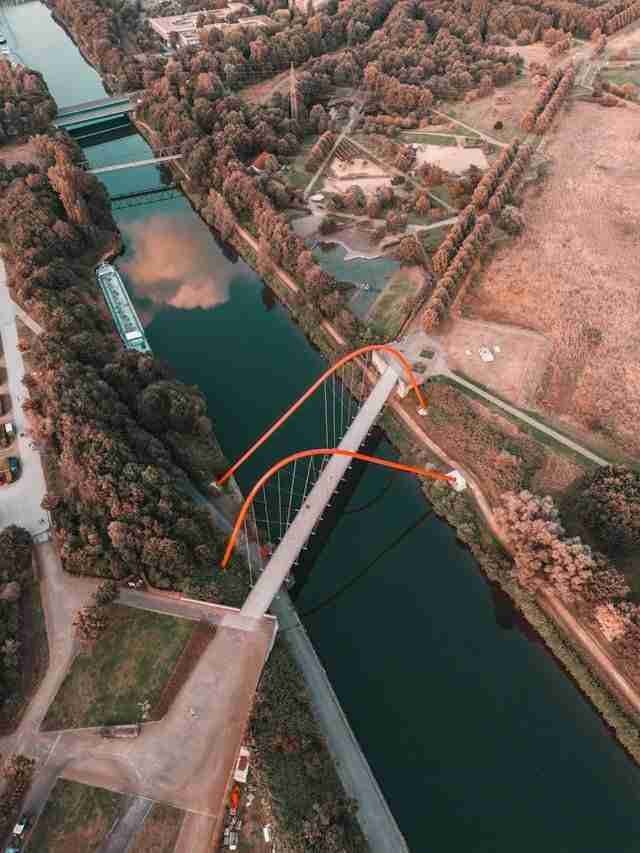
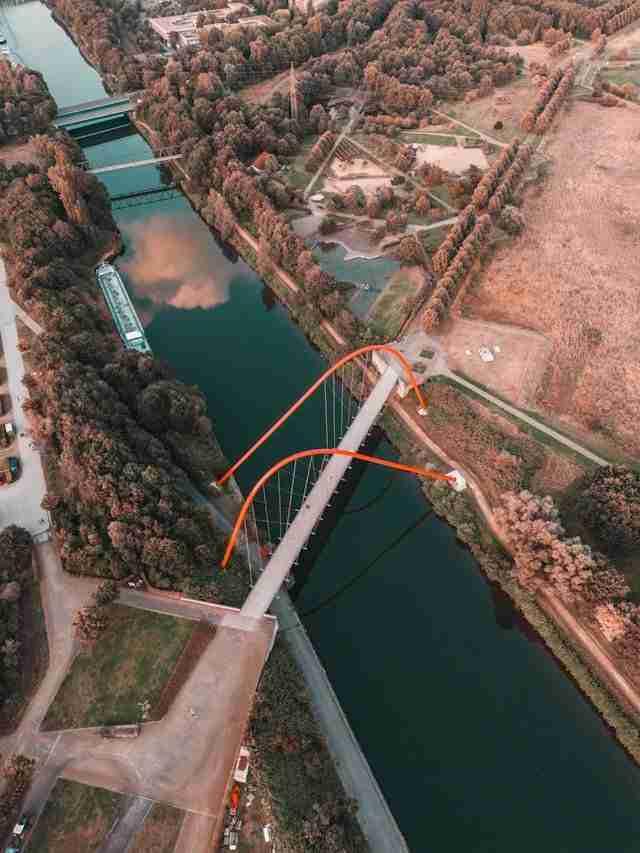
Located in the heart of Gelsenkirchen's Nordsternpark, the Bogenbrücke (Arch Bridge) offers photographers a striking blend of industrial history and contemporary design. Once a symbol of the Ruhr region's coal-mining legacy, Nordsternpark was transformed into a public green space following the 1997 Bundesgartenschau (National Garden Show), and the Bogenbrücke has since become one of its visual and structural anchors. The bridge's sweeping steel arch, minimalist symmetry, and integration with surrounding water features make it a standout subject for both architectural and landscape photography. Whether capturing the play of light on riveted steel or the reflection of its curve in the Rhine-Herne Canal, the bridge presents endless compositional opportunities in a setting steeped in regional transformation.
Best Photography Opportunities
• Wide-Angle Perspectives of the Arch Structure
: The most compelling images of the Bogenbrücke often come from a low angle using a wide lens (16–24mm) to exaggerate the arc of the steel and emphasize its commanding presence over the canal. Photographing from the southern bank gives you clean sightlines and a natural leading line from the path. Early morning light is particularly effective, grazing the metal and casting long shadows on the walkway and water surface below. Composing from slightly off-center can add depth and highlight the structural asymmetry introduced by surrounding landscape features. Including people or cyclists in the frame can enhance the scale and functional aspect of the structure.
• Reflection Shots in the Canal
: On calm days, the Rhine-Herne Canal offers a near-perfect mirror of the bridge's symmetrical arch. Position yourself downstream to frame the reflection and bridge together in one composition. Shoot with a mid-range zoom (24–70mm) to compress the frame slightly, reducing distraction while preserving depth. Sunset is ideal for this approach, as golden-hour light warms the steel and intensifies contrast between structure and sky. Use a polarizing filter sparingly to balance reflection clarity without eliminating the natural glow of the water's surface. Experiment with vertical compositions to capture more sky or include foreground elements like reeds or canal banks.
• Detail Compositions of Structural Elements
: The Bogenbrücke rewards photographers who pay attention to close-up geometry. Focus on repeating rivets, bolt patterns, and diagonal struts to create abstract, high-contrast images that explore the bridge's design language. A 50mm or 85mm prime is well suited for isolating these elements. Overcast days are ideal for minimizing glare and achieving even light across metal surfaces. Try capturing rust patterns or weathered paint textures that tell a story of time and use. These detail shots make excellent black-and-white conversions, emphasizing form over color.
• Human Scale and Minimalist Symmetry
: To emphasize the scale and functionality of the bridge, include a person walking or cycling across it. This not only introduces human interest but enhances the minimalist composition with a sense of scale. Use a telephoto lens (100–200mm) from a distance to compress the arch and path, capturing the symmetry and linearity while keeping the subject small within the frame. Position the person at one-third or midpoint of the arch to maximize visual balance. Shooting during low traffic periods allows for clean backgrounds and clear silhouettes.
• Night Photography and Bridge Illumination
: The Bogenbrücke is subtly illuminated at night, particularly during events and festivals. Long exposures (15–30 seconds) reveal ambient glows and water reflections with smooth, polished effects. A sturdy tripod and low ISO settings help maintain detail, while compositions from the canal banks or pedestrian pathways offer strong visual lines. Capture light trails from cyclists or reflections of nearby structures to add dynamism to your images. Plan your session around blue hour to transition from natural to artificial lighting in a single shoot.
Best Time to Visit
The Bogenbrücke can be photographed year-round, but the best conditions typically occur from April through October, when foliage around the park is at its most vibrant and daylight hours are long enough to explore multiple lighting conditions. Mornings are quietest and offer side light from the east that highlights the metal arch without harsh glare.
Sunset sessions often yield the most dramatic color gradients in the sky, which reflect beautifully off the steel surfaces and water below. In winter, the bridge takes on a minimalist starkness, with bare trees and snow adding contrast for black-and-white compositions.
Weekdays offer fewer pedestrians and cyclists, making it easier to shoot unobstructed frames. Arriving early or late in the day improves both lighting and access to prime vantage points without distraction.
How to Get There
Bogenbrücke is located in Nordsternpark in Gelsenkirchen, Germany, situated in the Ruhr region of North Rhine-Westphalia. From central Gelsenkirchen, the park is easily reached by car, bike, or public transport. Take tram line 301 to the "Nordsternpark" stop and walk northeast into the park. The bridge is accessible by footpaths that follow the Rhine-Herne Canal and cut through landscaped green spaces and former industrial sites.
If arriving by car, parking is available at Nordsternpark's main entrance near the amphitheater. From there, it is a short 10-minute walk to the bridge. The entire park is open-access and free to enter. There are no photography permits required for casual or personal work, and tripods are permitted throughout the area.
Be aware of occasional events and festivals, which can draw large crowds. These can either disrupt your planned compositions or offer opportunities to document the bridge as part of a lively public space.
Recommended Gear and Shooting Tips
Bring a wide-angle lens (16–35mm) for architectural overviews and a mid-range zoom (24–70mm) for tighter landscape compositions along the canal. A telephoto lens (70–200mm) is useful for compressing human figures against the arch and for isolating design details from a distance.
A lightweight tripod is essential for long exposures, especially in low light or during night photography. Use a polarizing filter to manage reflections on the water and reduce glare off the bridge's metal surfaces. ND filters can also extend exposure times for smooth water effects and motion blur in clouds or pedestrian activity.
Pack light and wear comfortable shoes—Nordsternpark is expansive and offers multiple compositions that require movement around the area. Use the bridge itself as a framing tool for other scenes in the park, including the amphitheater and former industrial buildings in the background.
Avoid cluttered compositions by scouting in advance. Overhead power lines and signage can distract from minimalist scenes if not carefully excluded. Revisit the bridge at different times of day to capture changes in light and mood, and don't shy away from shooting in varied weather—fog, rain, or snow can all create distinctive atmospheres.
Nearby Photography Locations
Just a short walk from the bridge, this observation tower and performance space blends post-industrial design with modern cultural function. Ideal for both wide architectural shots and crowd-focused event photography.
• Rhine-Herne Canal Towpaths
: Extending beyond the bridge in both directions, these towpaths offer leading lines, reflections, and opportunities for early morning mist or long-exposure water compositions. Excellent for cycling and walking-based photo excursions.
: Located less than 30 minutes away, this UNESCO World Heritage Site is one of Germany's most iconic former coal-mining complexes. Rich in industrial geometry and textures, it's a must for architectural and documentary photographers alike.
• Nordsternpark Landscape Features
: Throughout the park, you'll find sculpture installations, formal gardens, and remnants of coal infrastructure that blend nature and industrial history. These secondary compositions can complement your Bogenbrücke images and tell a broader visual story.
: Located in nearby Gelsenkirchen-Ückendorf, this man-made hill offers panoramic views over the Ruhr region and is topped by a surreal concrete spiral known as the "Himmelstreppe." Excellent at sunset or under cloud drama.
Comments
Loading comments…