
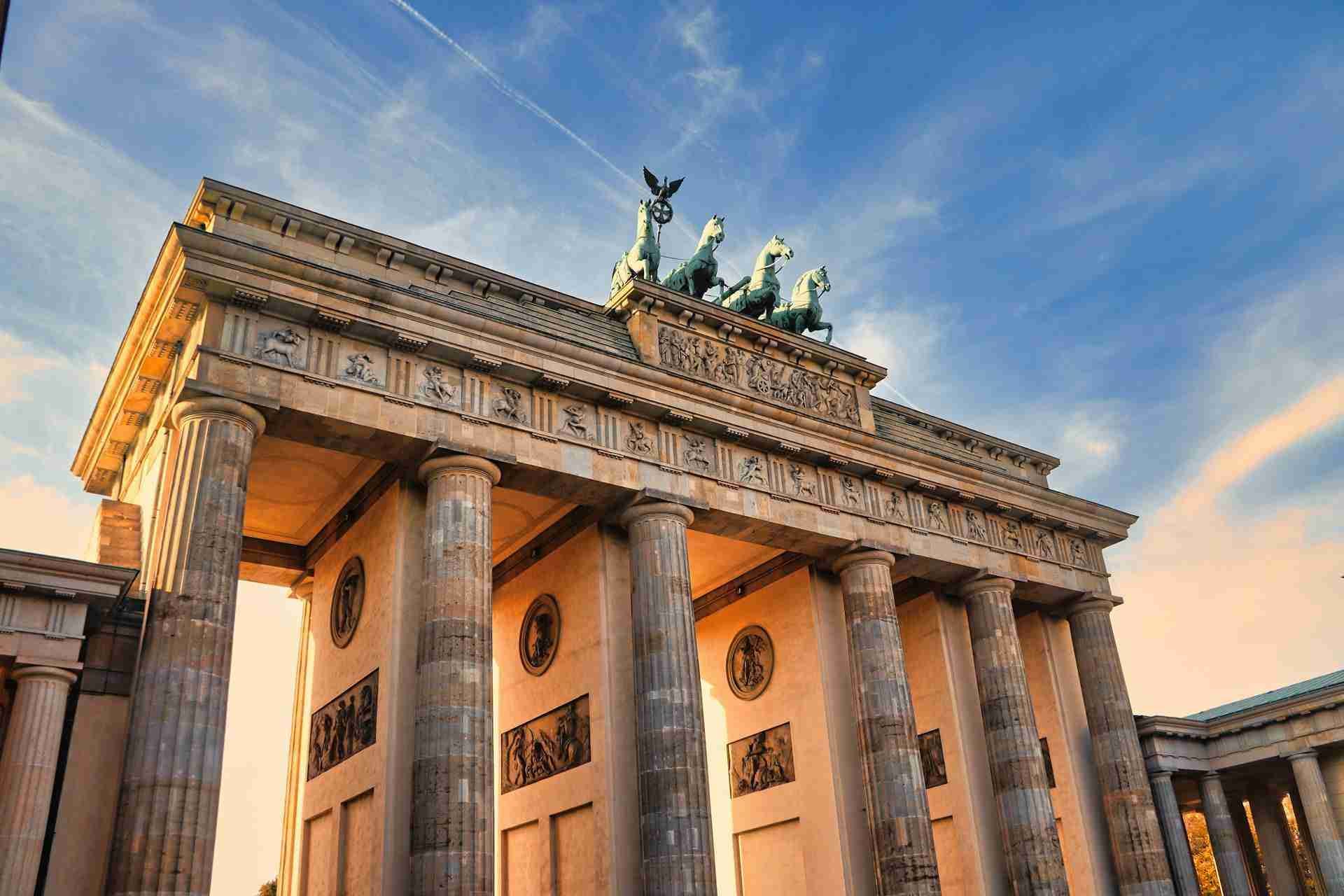
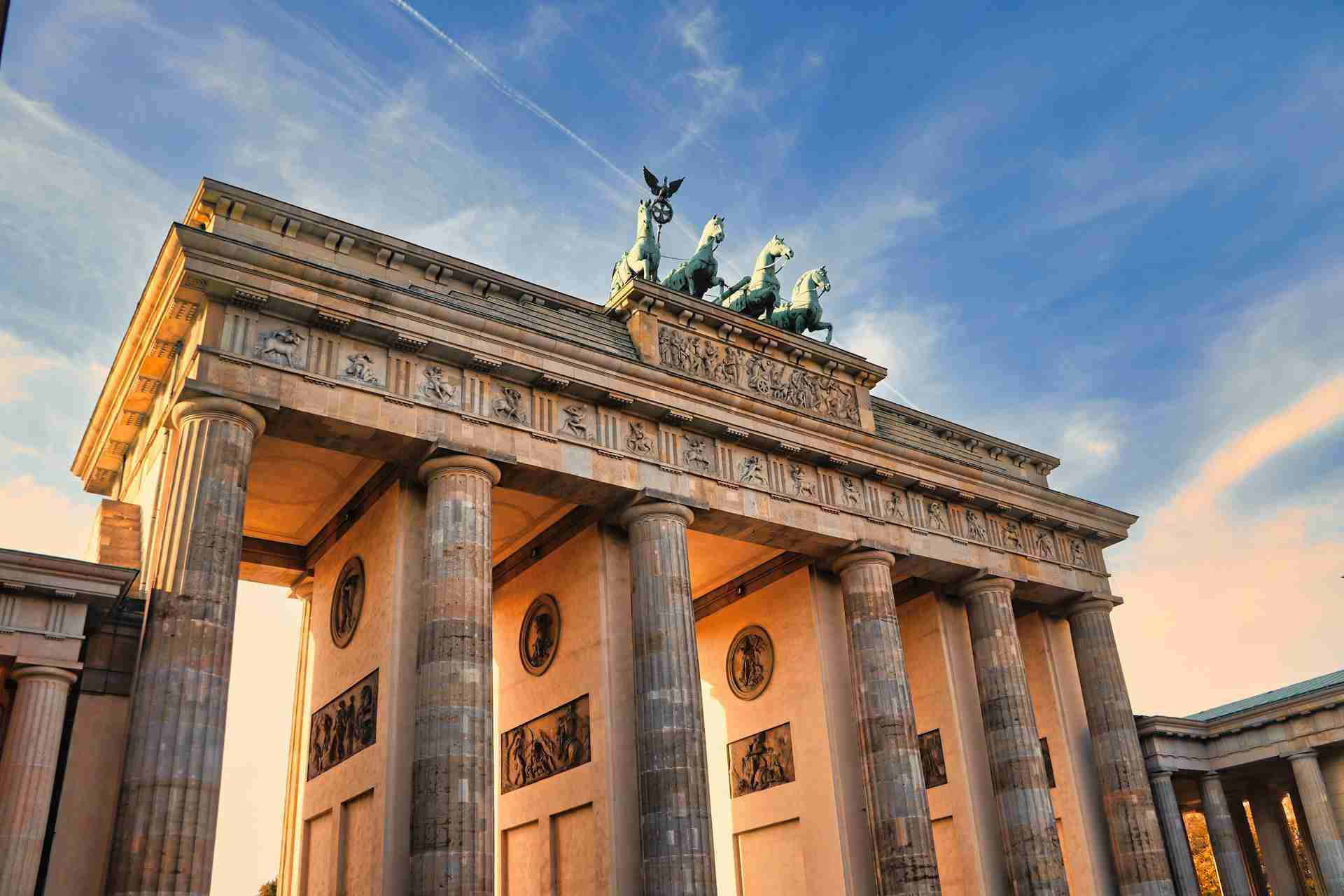
The Brandenburger Tor, or Brandenburg Gate, stands at the heart of Berlin as both a historical landmark and an architectural centerpiece. Completed in 1791, the neoclassical gate has witnessed the rise and fall of empires, the division of the city, and its reunification. For photographers, it offers a subject that is as much about cultural resonance as visual impact. With its massive columns, Quadriga sculpture, and open position at the end of Unter den Linden, the gate works equally well in grand, sweeping frames or intimate detail shots. Surrounded by wide boulevards and pedestrian squares, it provides space to experiment with perspective and light across the day and throughout the year.
Best Photography Opportunities
• Frontal Symmetry from Pariser Platz
Standing directly in front of the gate on Pariser Platz allows you to capture its neoclassical proportions in full. A wide-angle lens emphasizes symmetry, with the columns and Quadriga aligned along a clean central axis. Early morning is best for this shot, when the square is quiet and the light is soft, casting gentle shadows along the fluted columns. Midday light can be harsh, but the sun's high position reveals surface detail and creates strong contrast in black-and-white conversions. Including pedestrians in the frame adds scale and energy without distracting from the overall composition.
• Side Angles and Depth Along Unter den Linden
Approaching from Unter den Linden offers oblique angles that emphasize the depth of the gate's colonnade. Shooting from slightly off-center allows you to layer the columns and capture the Quadriga in profile. A standard zoom lens works well here, providing flexibility for both tight and wide framing. Late afternoon and golden hour bring warm light from the west, creating long shadows that enhance the sense of depth. These side views also highlight the way the gate connects to its surrounding boulevard and architecture.
• Night Photography and Illuminated Columns
At night, the Brandenburg Gate is lit with warm spotlights that create striking contrast against the dark sky. A tripod and long exposure are essential for capturing both the gate and the movement of passing people or traffic. Blue hour provides the best balance between ambient sky light and artificial illumination, producing rich tones and balanced exposures. Reflections from wet pavement after rain can add another compositional layer. This is also an excellent time to experiment with symmetry, as artificial lighting highlights the gate's architectural rhythm.
• Close-Up Details of the Quadriga and Sculptural Reliefs
The Quadriga, a four-horse chariot driven by the goddess of victory, crowns the gate and makes for a dramatic detail subject. A telephoto lens is ideal for isolating the sculpture against the sky. Early morning light from the east creates subtle modeling on the horses and driver, while late afternoon side light brings out shadowed relief. Lower relief carvings on the columns also provide strong material for close-ups, especially in softer light that emphasizes their depth without harsh highlights. These shots work well as companions to wider contextual frames.
• Seasonal and Event Photography
The gate often serves as the backdrop for cultural events, public demonstrations, and seasonal festivals. During winter, Christmas lights along Unter den Linden frame the gate, adding festive contrast to its neoclassical form. In summer, late sunsets allow for long golden hour sessions with warm tones across the columns. Large gatherings provide opportunities for street photography that places the monument within the flow of Berlin's civic life. Shooting during these events requires adaptability, but the energy and context can create powerful documentary images.
Best Time to Visit
The Brandenburg Gate can be photographed year-round, though each season shapes the mood of the location. Spring brings fresh greenery along Unter den Linden and softer light that works well for daytime shoots. Summer offers long hours of usable light and vibrant activity around Pariser Platz, though crowds are at their peak. Autumn provides warm tones in the surrounding trees and cleaner air that enhances detail in both sky and stone. Winter offers the quietest atmosphere and dramatic low sun angles, with the added possibility of snow adding texture and contrast.
Time of day is crucial. Early morning is best for minimal crowds and balanced light across the eastern façade. Late afternoon and golden hour work well for capturing the western side and for long shadow play. Blue hour and night sessions are especially rewarding due to the gate's illumination, though expect more people in the square during these times. Overcast conditions are useful for detail and black-and-white work, as the soft light minimizes glare and allows even exposure across the stone surface.
How to Get There
The Brandenburg Gate is located at Pariser Platz, marking the western end of Unter den Linden in central Berlin. It is easily accessible by public transportation. The closest stop is Brandenburger Tor station, served by the S-Bahn and U-Bahn, with exits leading directly to the square. Several bus routes also stop nearby, and it is within walking distance of the Reichstag and Tiergarten.
For those arriving by car, parking is limited in the immediate area, and public transport is far more practical. The square is pedestrianized, allowing for freedom of movement and safe tripod use. Access to the gate itself is unrestricted and free at all hours of the day, making it possible to shoot sunrise, sunset, and night scenes without issue. Because of its prominence, the site is busiest during midday and weekends, so planning around peak times is recommended for cleaner compositions.
Recommended Photography Gear
A wide-angle lens is essential for capturing the full scale of the gate, especially when working in tight spaces on Pariser Platz. A standard zoom lens, such as 24 to 70 millimeters, is ideal for flexible framing along Unter den Linden or for isolating specific sections of the gate. A telephoto lens helps capture the Quadriga in detail and compresses surrounding architectural elements into tighter compositions.
A tripod is useful for night and blue hour sessions, particularly for long exposures of the illuminated gate and moving crowds. A circular polarizer helps reduce glare on the stone during bright midday light and enhances color in the sky. Neutral density filters can be useful for creating long exposures of passing crowds, softening movement while keeping the gate sharp. Comfortable footwear and a discreet bag are practical, as photographing here often involves long periods on foot in a busy urban environment.
Nearby Photography Locations
Just a short walk from the gate, the Reichstag offers dramatic architectural lines, a glass dome, and elevated city views. Golden hour is ideal for capturing the building's façade and the surrounding lawn.
This expansive park begins just west of the Brandenburg Gate and provides wooded paths, open meadows, and reflective ponds. It offers natural counterpoints to the gate's urban setting, especially in spring and autumn.
Located a few minutes south of the gate, this site offers powerful opportunities for abstract and conceptual photography, with its grid of concrete stelae and shifting light patterns.
The boulevard leading east from the gate is lined with historic buildings, statues, and tree-lined views. It provides strong leading lines that naturally guide the eye toward the Brandenburg Gate itself.
A 10-minute walk south brings you to this modern urban district, filled with glass towers, sharp architectural forms, and strong contrasts to the classical style of the gate.
The Brandenburg Gate is more than an architectural subject—it is a living symbol that shifts in meaning depending on how it is framed. Whether you capture its symmetry in quiet dawn light, its grandeur illuminated at night, or its role as a backdrop to the life of the city, it rewards patience and thoughtful composition. For photographers in Berlin, it is a subject worth revisiting under every season and every sky.
Comments
Loading comments…